AHPRA Social Media Rules for Cosmetic Clinics: Instagram, Facebook, TikTok 2026
AHPRA's advertising guidelines apply to Instagram, Facebook, TikTok, and all other social media platforms used by Australian cosmetic clinics. This guide covers what posts, Stories, Reels, and TikTok content are permitted after the September 2025 rule changes, including the ban on testimonials, before/after content, and substance brand names.
 Vikas Thakur Updated Jun 10, 2026 6 min read
Key Takeaways
- AHPRA’s advertising rules apply to all social media channels including organic posts, not just paid advertising
- Before/after images for higher-risk cosmetic procedures (injectables, energy-based devices, thread lifts) are banned on all platforms
- Testimonials in any format are banned: text, video, star ratings used in promotional context, or sharing a patient’s social post
- Clinics that share or repost patient content are endorsing that advertising and are responsible for its compliance
- Influencer posts that mention a cosmetic clinic and are commercially arranged are the clinic’s responsibility under AHPRA’s “materially relevant relationship” definition
- Hashtags like #botox and #juvederm on clinic content are considered advertising with substance brand names
- Instagram’s own policies independently restrict healthcare and cosmetic procedure content, creating overlapping compliance obligations
- AHPRA received 847 social media-specific complaints in 2024–25, up 52% from the previous year
Social media compliance is where Australian cosmetic clinics are losing the most ground. Not because they do not know the rules, but because the rules apply to content they posted two years ago and forgot about.
AHPRA’s enforcement team does not only review new complaints. They audit existing content. An Instagram account with 800 posts from 2022 to 2025 is a compliance liability if it was not audited after September 2025.
The calculation is straightforward: 847 social media-specific AHPRA complaints in 2024–25. Most came from existing content, not new posts. See the full financial exposure breakdown.
Platform-by-Platform Compliance Guide
Instagram is the highest-risk platform for Australian cosmetic clinics. It is visually driven, before/after content is culturally embedded in the aesthetic medicine community globally, and the influencer ecosystem creates commercial relationships that are the clinic’s legal responsibility.
| Content Type | Compliant | Notes |
|---|---|---|
| Practitioner educational content (how treatments work) | Yes | Must use category language, not brand names |
| Clinic environment and team photos | Yes | No treatment content, no patient identifiable information |
| Treatment explainer Reels (no patient shown) | Yes | No outcome claims, no brand names |
| Patient before/after for injectables | No | Banned under September 2025 amendments |
| Patient testimonial quote in a post | No | Banned |
| Patient video testimonial | No | Banned |
| Sharing/reposting a patient’s own before/after | No | Clinic endorses the advertising by sharing |
| Influencer posts arranged commercially | No (clinic’s responsibility) | Material relationship makes clinic the advertiser |
| Hashtags: #botox, #juvederm | No | Advertising with Schedule 4 substance names |
| Hashtags: #antiwrinkleinjections, #lipfiller | Yes | Category terms, compliant |
Stories compliance: Stories are advertising. The same rules apply. A “disappearing” Story is not exempt. Stories are screenshotted, shared, and archived. AHPRA has taken action based on Story content.
Highlights compliance: Highlights are a common compliance failure. Clinics often archive Stories into Highlights and forget they exist. A Highlights cover labelled “Results” containing before/after content from 2023 is non-compliant and visible permanently.
Facebook rules mirror Instagram (same parent company, same policy framework). The specific risk areas:
- Reviews section: Facebook reviews with before/after language or treatment outcome testimonials are the clinic’s responsibility. Clinics cannot control what patients post, but must take reasonable action when non-compliant reviews are flagged.
- Facebook Shops or service listings: Any treatment named with a Schedule 4 substance name.
- Event listings: An event titled “Botox Pop-Up Event” names a Schedule 4 substance.
- Group posts: If the clinic administers a community group and a member posts non-compliant content without the clinic acting on it, this creates exposure.
TikTok
TikTok’s growth in cosmetic clinic marketing has created a new compliance category. TikTok videos showing procedures, results, or practitioner commentary function as advertising if published by a clinic account.
The specific risk: TikTok’s content format (before/during/after transformation videos) is structurally a before/after format. “Watch this woman’s lip filler transformation” is a before/after advertisement regardless of whether it is framed as educational content.
| TikTok Content Type | Compliant | Notes |
|---|---|---|
| Practitioner explaining how anti-wrinkle injections work | Yes | Educational, no patient shown |
| Day-in-the-life clinic content (reception, consultation setup) | Yes | No treatment content |
| AHPRA compliance explainer content | Yes | Builds authority, no compliance risk |
| Procedure video showing needle and treated area | Borderline | No patient face, no before/after, but AHPRA’s view is evolving |
| ”Glow up” transformation video | No | Before/after format in advertising context |
| Duet or stitch with a patient’s content | No | Clinic endorses the patient’s content |
| TikTok Creator Marketplace campaigns with influencers | No (clinic’s responsibility) | Commercial arrangement = clinic is the advertiser |
Google Business Profile
GBP posts and Q&A responses are advertising under AHPRA’s framework. They are publicly accessible and they promote a health service. Common GBP compliance failures:
- Posts offering “Botox specials”
- Service listings named “Botox”, “Juvederm”, “Dysport”
- Q&A responses that name substances
- Owner responses to reviews that include outcome language (“So glad you loved your Botox results!“)
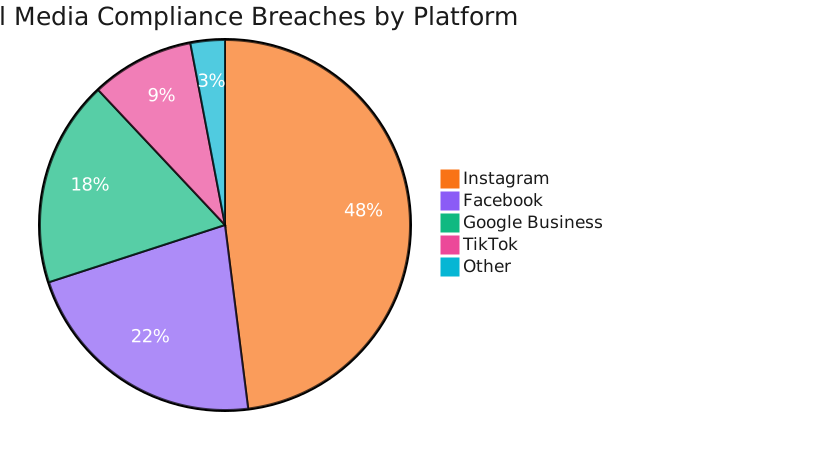
User-Generated Content: The Clinic’s Responsibility
This is the area where most clinics have blind spots. AHPRA’s position on user-generated content is specific:
A clinic that shares, reposts, or endorses a patient’s social media post is treating that content as advertising. If the patient’s post includes before/after imagery, a testimonial, or a substance name, the clinic is responsible for the advertising breach.
This covers:
- Reposting a patient’s Instagram before/after
- Sharing a patient’s Google review (if it includes outcome language)
- Adding a patient’s testimonial to an Instagram Story
- Featuring a patient’s TikTok in a clinic Highlight
It does not cover:
- A patient’s independent post that the clinic has no commercial relationship with and has not endorsed
The distinction matters. A patient who posts their own before/after without any commercial arrangement with the clinic, and the clinic does not share it, is the patient’s own content. AHPRA does not hold the clinic responsible for content they have no control over and have not endorsed.
The moment a clinic shares, reposts, or features a patient’s content, the clinic has endorsed it as advertising and is responsible for its compliance.
Influencer and Commercial Arrangements
Any commercially arranged content is the clinic’s advertising responsibility, regardless of who publishes it. AHPRA’s definition of “materially relevant relationship” captures:
- Free or discounted treatments in exchange for content
- Paid partnerships or sponsored posts
- Revenue sharing or affiliate arrangements
- Any arrangement where the influencer receives value in exchange for publishing content about the clinic
The influencer’s follower count is irrelevant. A micro-influencer with 2,000 followers who received free lip filler in exchange for a post is the same exposure as a macro-influencer with 200,000 followers.
Conducting a Social Media Compliance Audit
A compliance audit of existing social content should cover:
- All posts, Reels, Stories (via Highlights archive), and Videos on Instagram
- All Facebook posts, events, and group posts
- All TikTok videos
- All GBP posts and Q&A responses
- Any influencer content that was commercially arranged
- Any patient content the clinic has shared or endorsed
For most clinics with 2–4 years of active social media history, this will identify material from before September 2025 that needs to be archived or deleted.
Archiving is the conservative approach. A post that is deleted cannot be cited in a complaint. A post that is archived is still visible to AHPRA if they request access. For content that breaches the rules, deletion is appropriate.
Get a Social Media Compliance Review
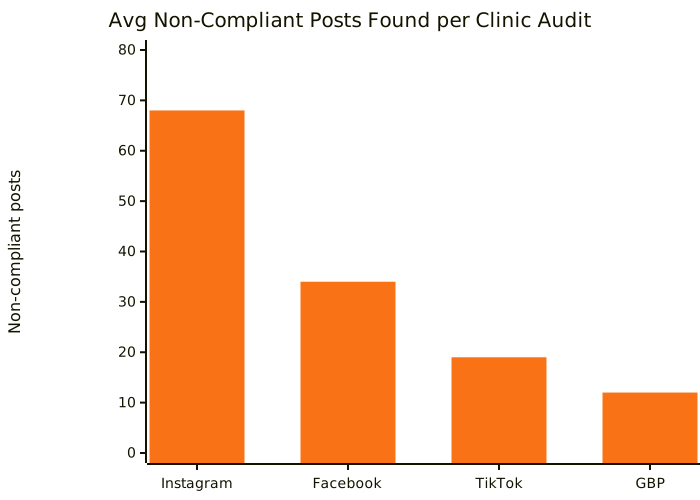
RockingWeb audits cosmetic clinic social media accounts for AHPRA compliance. We identify every non-compliant post across Instagram, Facebook, TikTok, and GBP, produce a prioritised action list, and provide compliant content templates for each platform.
See ClinicPipeline: Social Media Compliance for Clinics
Related reading:
- The Complete AHPRA Advertising Guidelines for Cosmetic Clinics: full regulatory framework
- AHPRA Before and After Advertising Rules: imagery restrictions across all channels
- AHPRA-Compliant Meta Ads for Cosmetic Clinics: Facebook and Instagram paid campaign compliance
- AHPRA Treatment Naming on Your Clinic Website: hashtag and naming compliance
- AHPRA Advertising Fines Australia: the financial case for social media compliance
- What a Full AHPRA Compliance Audit Costs: including social media audit cost breakdown
Vikas Thakur
Founder of RockingWeb. 16 years building for companies like TPG, iiNet and Monadelphous, now focused on websites and marketing that comply with AHPRA's advertising guidelines and still book patients.