AHPRA Cosmetic Fines: $60,000 Per Breach Explained
A single AHPRA advertising breach carries a maximum penalty of $60,000 for an individual practitioner and $120,000 for a body corporate, under section 133 of the Health Practitioner Regulation National Law. Here's how the penalty is calculated, and why it multiplies fast.
 Vikas Thakur Founder, RockingWeb 8 min read
Key Takeaways
- The maximum penalty for a single AHPRA advertising offence is $60,000 for an individual and $120,000 for a body corporate, under section 133 of the Health Practitioner Regulation National Law
- The penalty is set per contravention, not per complaint. Five non-compliant ads can carry five separate maximum penalties
- A practitioner running a Google Ad, a landing page, and three social posts with the same banned claim is exposed to a theoretical $300,000 under the individual cap, or $600,000 under the body corporate cap
- Cosmetic clinics are structured as body corporates more often than not, which doubles the statutory ceiling compared to a sole practitioner
- AHPRA does not need to prove a patient was harmed. Publishing the non-compliant advertisement is the offence
- Testimonials, before/after imagery for higher-risk procedures, and promotional use of Schedule 4 substance names are the three most common triggers
- A compliance audit costs a fraction of one breach, let alone five
Section 133 of the Health Practitioner Regulation National Law sets the ceiling: $60,000 per offence for an individual, $120,000 for a body corporate. That figure is current as of 2023 court guidance and hasn’t moved since, according to Stephens Lawyers & Consultants.
Most clinic owners read that number once, assume it’s the worst case, and move on. It isn’t. The penalty applies per contravention. Not per notice, not per complaint, not per year. Per individual piece of non-compliant advertising.
Run a Google Ads campaign with a testimonial-based headline, a landing page repeating the same claim, and two Instagram posts pushing the same line, and a regulator could treat that as four separate offences. At the individual cap, that’s $240,000. At the body corporate cap, which is what most cosmetic clinics are legally structured as, it’s $480,000.
Here’s the breakdown: what the $60,000 figure actually covers, how the body corporate multiplier works, and what pushes a routine compliance notice into that territory.
What Section 133 Actually Penalises
Section 133 of the National Law makes it an offence to advertise a regulated health service in a way that:
- Is false, misleading, or deceptive, or likely to be
- Offers a gift, discount, or inducement without stating the terms and conditions
- Uses testimonials or purported testimonials
- Creates an unreasonable expectation of beneficial treatment
- Directly or indirectly encourages indiscriminate or unnecessary use of a health service
Cosmetic clinics sit squarely inside this because injectables, cosmetic surgery, and skin treatments are all regulated health services once a registered practitioner is involved. A nurse injector, a cosmetic doctor, a dentist doing facial aesthetics: all captured.
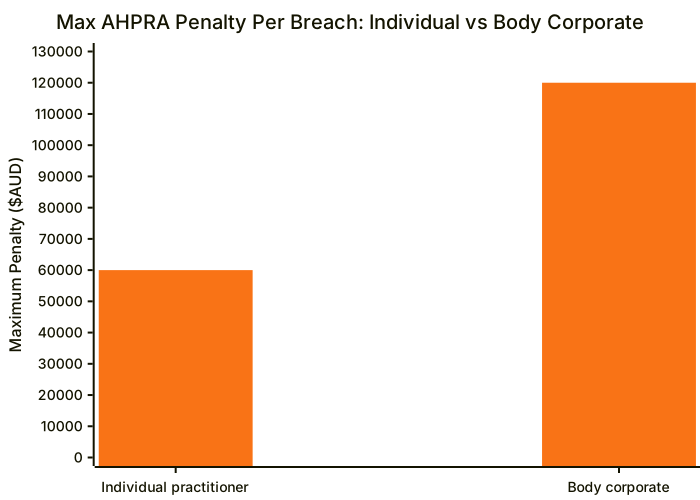
Chart: maximum civil penalty per contravention of s.133, Health Practitioner Regulation National Law. Body corporate cap is exactly double the individual cap.
Takeaway: the body corporate figure isn’t a rounding error. It’s a deliberate doubling, because most cosmetic clinics trade as companies, not sole traders.
Why the Real Number Is Never $60,000
A single breach at $60,000 is the floor of the exposure calculation, not the ceiling. The National Law counts each contravention separately, and a typical clinic’s advertising footprint spans five or six channels at once: paid search, a landing page, Meta ads, organic social, Google Business Profile posts, and email.
If the same non-compliant claim, say a before/after photo caption promising specific results, appears in three of those channels, that’s three contraventions running concurrently. The maths compounds fast.
| Breach Count | Individual Exposure | Body Corporate Exposure |
|---|---|---|
| 1 | $60,000 | $120,000 |
| 3 | $180,000 | $360,000 |
| 5 | $300,000 | $600,000 |
| 10 | $600,000 | $1,200,000 |
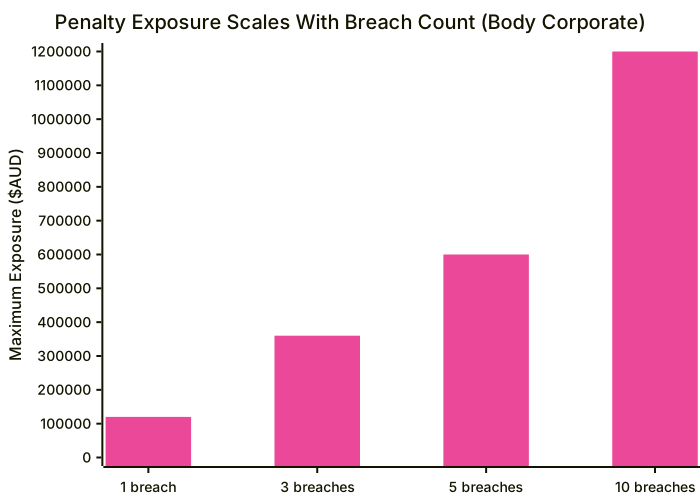
Chart: cumulative maximum exposure for a body corporate clinic, calculated at $120,000 per contravention. AHPRA has not publicly reported issuing a penalty at the 10-breach ceiling to a single cosmetic clinic, but the statutory authority to do so exists in section 133.
In practice, a first breach that’s promptly remedied rarely reaches a financial penalty at all. Where the exposure becomes real is when a clinic disputes a notice without grounds, ignores it, or repeats the same breach after being told to fix it. That’s when a regulator has grounds to treat every instance as a separate contravention rather than one matter with several examples.
Takeaway: the statutory penalty is per breach, and most clinics are running five or more pieces of advertising at once. The realistic worst case is a multiple of $60,000, not $60,000 itself.
What Actually Triggers a Breach
Three categories account for most of the advertising that gets flagged:
- Testimonials. Any patient quote, star rating pulled into an ad, or “as seen on” style endorsement referencing outcomes.
- Before/after imagery for higher-risk procedures. Injectables, thread lifts, body contouring, and skin resurfacing are treated more strictly than low-risk treatments like facials.
- Promotional use of Schedule 4 substance names. Naming Botox, Dysport, or Juvederm in a way that reads as a promotional hook rather than clinical information.
Urgency language (“book before prices rise”, “only 3 spots left”) and outcome promises (“look 10 years younger”) sit close behind. None of these require proof that a patient was misled or harmed. The advertisement existing in that form is the offence.
If your clinic’s Google Ads, landing pages, or social content haven’t been checked against these rules since the September 2025 amendments, getting them reviewed takes less time than drafting a response to a compliance notice, and it happens before the notice ever arrives.
Takeaway: the three highest-risk categories, testimonials, before/after imagery, and substance naming, are also the three easiest to audit for and fix without touching the clinic’s actual marketing message.
Individual vs Body Corporate: Why It Matters for Clinic Structure
Most cosmetic clinics in Australia operate as a company (a body corporate) rather than the treating practitioner trading as a sole individual. That structure has tax and liability advantages, but it also means the National Law’s higher penalty tier applies to the clinic’s advertising, not the lower individual tier.
A solo nurse injector trading under her own ABN faces the $60,000 individual ceiling per breach. The same nurse working inside a clinic structured as Pty Ltd exposes the business to the $120,000 body corporate ceiling for the exact same advertisement. The advertising rules don’t change. The exposure attached to getting them wrong does.
This is one of the reasons a structured compliance process matters more for a growing clinic than a single practitioner working solo. ClinicPipeline, RockingWeb’s marketing system for cosmetic clinics, builds AHPRA-compliant advertising and websites into the process from the start rather than auditing them after the fact.
Takeaway: incorporating the clinic protects the practitioner personally in most areas of the business, but it doubles the statutory advertising penalty ceiling. Compliance has to scale with the entity, not just the individual.
How to Stay on the Right Side of $60,000
The audit process is straightforward, and it’s the same one AHPRA effectively runs when a complaint lands:
- Pull every live piece of advertising: Google Ads, Meta ads, the website, Google Business Profile, email
- Check each against the banned list: testimonials, before/after for higher-risk procedures, Schedule 4 names used promotionally, outcome claims, urgency language
- Fix or remove anything that matches, and keep a dated record of the fix
- Rebuild pages that rely on banned content (before/after galleries, patient quote sections) around compliant alternatives
That fourth point is where most audits stall. A landing page built around before/after photography and patient testimonials doesn’t just need the offending elements deleted, it needs replacing with something that still converts. RockingWeb designs AHPRA-compliant cosmetic clinic websites around that constraint from the first wireframe, so removing a testimonial section doesn’t leave a hole where the clinic’s conversion rate used to be.
Takeaway: an audit that only removes non-compliant content and doesn’t replace it with a compliant alternative trades one problem (regulatory risk) for another (a page that stops converting).
The Bottom Line
$60,000 per breach for an individual, $120,000 for a body corporate, and the count resets with every non-compliant piece of advertising still live. Most cosmetic clinics run advertising across five or more channels at once, which means the realistic exposure is a multiple of the headline figure, not the figure itself.
RockingWeb builds and audits websites for Australian cosmetic clinics against these exact rules. If your advertising hasn’t been checked since the September 2025 amendments, get it reviewed before a competitor’s complaint does it for you.
Talk to us about a compliant rebuild or audit
Data sources: Health Practitioner Regulation National Law, section 133 (Advertising); Stephens Lawyers & Consultants, “Advertising of Health Services: New Advertising Guidelines” (2023); AHPRA and National Boards, Guidelines for advertising a regulated health service.
Related reading: for the broader AHPRA advertising framework, see AHPRA Advertising Fines for Cosmetic Clinics.
Vikas Thakur
Founder of RockingWeb. 16 years building for companies like TPG, iiNet and Monadelphous, now focused on websites and marketing that comply with AHPRA's advertising guidelines and still book patients.
![GLP-1 Use Up 10x in Australia: Cosmetic Surgery [2026]](/assets/cosmetic-clinic-marketing-australia-DDJTqe2B.png)