Cosmetic Surgery Hotline: 514 Calls in a Year Revealed
AHPRA's Cosmetic Surgery Hotline received 514 calls in the 2023-24 financial year, on top of 315 in its first partial year. Here is what the hotline has closed, who it has caught, and what it means for clinic advertising.
 Vikas Thakur 8 min read
On this page 8
- Key Takeaways
- What Is the Cosmetic Surgery Hotline?
- The Numbers Behind 514 Calls
- Where Complaints Lead: Notifications and Enforcement
- What Happens to Practitioners Under Investigation
- Why This Matters for Clinic Websites, Not Just Practitioners
- How RockingWeb Keeps Clinics Off the Radar
- Get a Free Website Compliance Audit
Key Takeaways
- AHPRA’s Cosmetic Surgery Hotline logged 514 calls in the 2023-24 financial year, per AHPRA’s Cosmetic Surgery Hub reporting
- The hotline (1300 361 041) launched on 5 September 2022, run by AHPRA’s dedicated Cosmetic Surgery Enforcement Unit
- In its first partial year (2022-23), the hotline took 315 calls and AHPRA actioned 157 cosmetic surgery concerns
- By April 2024, 18 months after launch, the unit had closed 200 practitioner notifications and taken interim action on a further 180
- Interim measures hit 15 practitioners directly: 7 suspended or stood down, 4 banned from cosmetic surgery, 4 restricted to certain procedures
- Cumulative hotline calls passed 700 by April 2024 and topped 1,500 by March 2025, alongside roughly 360 formal complaints
- Only around 9% of completed notifications result in formal regulatory action, meaning most calls end in something short of a ban or suspension
- Three criminal prosecutions tied to cosmetic practice were completed under AHPRA’s 2024-25 annual report
AHPRA’s Cosmetic Surgery Hotline received 514 calls in the 2023-24 financial year, according to AHPRA’s published Cosmetic Surgery Hub data. That sits on top of 315 calls logged in the hotline’s first partial year (2022-23), and it pushed cumulative call volume past 700 by April 2024 and over 1,500 by March 2025.
Most cosmetic clinics have never heard of the number 1300 361 041.
Their patients have. So have their competitors, their former staff, and anyone with a phone and a complaint.
That number rings straight through to AHPRA’s Cosmetic Surgery Enforcement Unit, a team built for one purpose: taking calls about cosmetic practitioners and clinics, then acting on them. In the 2023-24 financial year, 514 people used it.
Here’s the part that should worry every clinic owner, not just the practitioner on the other end of a bad outcome: a call to that hotline does not need proof, does not need a name attached, and does not need a patient to have been harmed. A worried competitor, a disgruntled ex-employee, or a member of the public who saw a testimonial on a clinic’s website can trigger the same investigation process.
This guide breaks down what the hotline has actually done since it opened, how many practitioners it has caught, what happens after a call comes in, and why the same advertising rules that trigger AHPRA notifications also drive the traffic and trust a clinic’s website depends on.
What Is the Cosmetic Surgery Hotline?
The hotline was not a marketing exercise. It came out of the September 2022 Independent Review into the regulation of medical practitioners who perform cosmetic surgery, a review triggered by a run of serious patient harm cases that made national news.
AHPRA and the Medical Board of Australia accepted all 16 recommendations from that review. Backed by a $4.5 million investment, AHPRA stood up a dedicated Cosmetic Surgery Enforcement Unit and opened the hotline on 5 September 2022.
The setup is deliberately low-friction:
- A specialised team answers Monday to Friday, 9am to 5pm AEST
- Calls can be made anonymously
- Patients, practitioners, staff, and members of the public can all report a concern
- Concerns can also be submitted online through AHPRA’s Cosmetic Surgery Hub
That low barrier to entry is exactly why call volume has grown every reporting period since launch. Removing the friction removes the excuse not to report.
Takeaway: the hotline was built to make reporting easy, not to filter out weak complaints before they reach a practitioner’s file.
The Numbers Behind 514 Calls
AHPRA’s own reporting shows a hotline that has done nothing but grow since it opened. The 2022-23 financial year covered only the hotline’s first ten months of operation and still generated 315 calls and 157 actioned concerns. The 2023-24 year, the first full 12 months of operation, saw that climb to 514 calls.
| Reporting checkpoint | Cumulative calls | Source |
|---|---|---|
| 2022-23 (first partial year) | 315 | AHPRA Cosmetic Surgery Hub |
| 2023-24 (first full year) | 514 (annual, same period) | AHPRA Cosmetic Surgery Hub |
| 18 months post-launch (Apr 2024) | 700+ | AHPRA media statement |
| 25 months post-launch (Oct 2024) | 713+ | Legal sector commentary |
| 30 months post-launch (Mar 2025) | 1,500+ | AHPRA reform announcement |
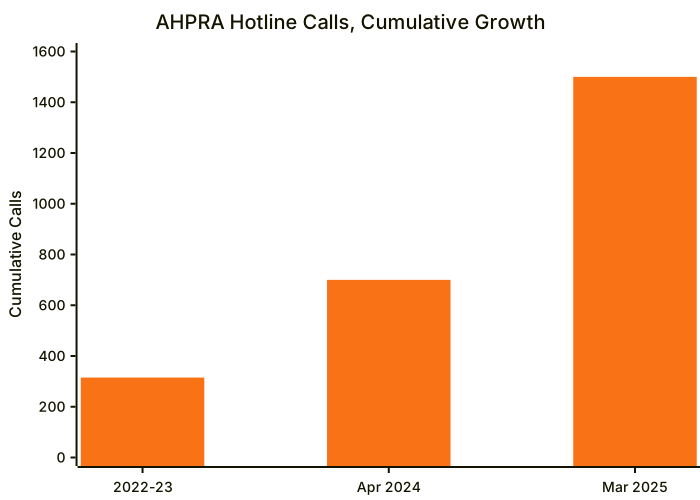
The growth is not a curiosity. Every one of those calls represents a name, a clinic, or a piece of advertising that someone thought was worth flagging. Clinics that assume no news is good news are working from an outdated assumption. The 2023-24 jump to 514 calls means an average of nearly 10 calls a week landed with the enforcement unit that year alone.
Takeaway: call volume to the hotline has grown every reporting period since launch, with no sign of plateauing.
Where Complaints Lead: Notifications and Enforcement
A call does not automatically become a finding against a practitioner. It becomes a notification, which AHPRA then investigates, closes, or escalates.
By April 2024, 18 months after the hotline opened, the Cosmetic Surgery Enforcement Unit had:
| Outcome | Count |
|---|---|
| Notifications closed | 200 |
| Notifications with interim action taken | 180 |
| Active notifications still under investigation | 315 |
| Practitioners under active investigation | 127 |
| Practitioners who faced any regulatory action | 35+ |
Only around 9% of completed notifications end in formal regulatory action such as a condition, caution, or enforceable undertaking. That figure matters for two reasons. First, it shows the hotline is not a rubber stamp: most calls do not end a career. Second, it shows the unit is willing to close the other 91% without action, which means the 9% that do proceed have usually cleared a real evidentiary bar.
Three criminal prosecutions tied to cosmetic practice were completed under the 2024-25 annual report, covering practising medicine without registration, misleading conduct by pretending to be a doctor, and obstructing a criminal investigation. None of those three required a scalpel to go wrong. They were about who clinics let the public believe was treating them.
Takeaway: most hotline calls do not end in a penalty, but the ones that do are backed by a genuine investigation, not a technicality.
What Happens to Practitioners Under Investigation
Of the 180 notifications where AHPRA took interim action, 15 practitioners were hit with measures serious enough to change what they could do the same day the decision landed.
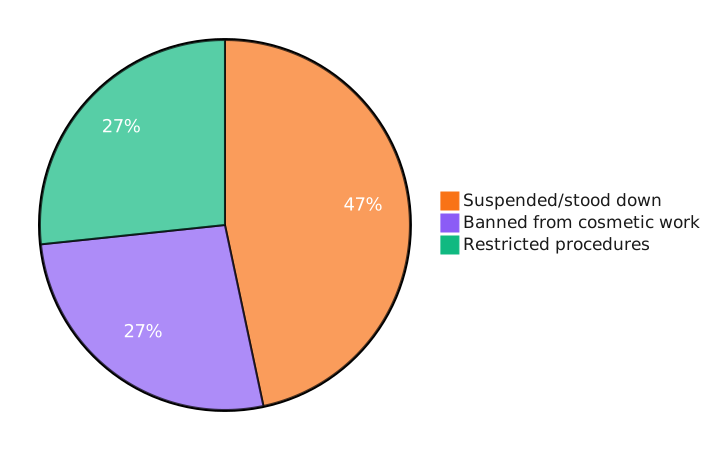
Seven practitioners were suspended or are no longer practising. Four were banned outright from performing cosmetic surgery. Four more were restricted to a narrower scope of procedures while the investigation continues. None of these are final findings, they are interim protections put in place while AHPRA finishes its work, but they show the hotline can move fast when the evidence points to ongoing risk.
Takeaway: interim action is a live outcome, not a formality, and it can restrict a practitioner’s ability to work before any final finding is made.
Why This Matters for Clinic Websites, Not Just Practitioners
Here is the part most clinic owners miss. A hotline call rarely starts with a scalpel injury. It usually starts with something a patient, competitor, or member of the public saw online: a before/after gallery, a testimonial, a Schedule 4 substance name used as a hook in an ad.
The advertising rules that make that kind of content reportable are the same rules covered in RockingWeb’s free AHPRA website compliance audit, which checks a clinic’s current site against the guidelines that took effect in September 2025. If your homepage still carries a testimonial slider or a before/after carousel, it is sitting in exactly the kind of content that gives the hotline something to act on.
A clinic that wants growth without that exposure needs a site built around the constraint from day one, not retrofitted after a complaint. RockingWeb designs AHPRA and TGA-compliant cosmetic clinic websites that convert on clear pricing and clinical detail rather than the visual proof the current rules no longer allow.
Takeaway: the fastest way onto the hotline’s radar is advertising content that was compliant in 2022 and is not compliant now.
How RockingWeb Keeps Clinics Off the Radar
RockingWeb (rockingweb.com.au) runs a dedicated cosmetic clinic marketing service built around the current AHPRA rules rather than around what used to work before September 2025. ClinicPipeline covers AHPRA-compliant website builds, Google and Meta ad copy that stays inside the guidelines, and ongoing monitoring so a clinic is not the next call logged against 1300 361 041.
The hotline is not going away. Call volume has grown every reporting period since 2022, and the September 2025 guideline changes gave the enforcement unit a wider net to work with. Clinics that get ahead of the rules now are the ones that stay off the list.
Get a Free Website Compliance Audit
RockingWeb audits cosmetic clinic websites for AHPRA advertising compliance. We record a Loom walkthrough flagging every compliance risk, mapped to the specific rule it breaches. Free, no obligation, delivered within five business days.
Request your free clinic compliance audit
Related reading:
- $60,000–$120,000 Per Breach: AHPRA Advertising Fines for Cosmetic Clinics: the penalty framework behind hotline escalations
- AHPRA Compliance Audit Checklist: step-by-step self-audit guide
- AHPRA Social Media Rules for Cosmetic Clinics: channel-specific complaint risk on Instagram, Facebook, TikTok
- AHPRA Before and After Advertising Rules: the imagery rules most often reported
- Cosmetic Surgery Statistics Australia: the market this enforcement unit is policing
Ready to make sure your clinic never generates one of these calls? Talk to RockingWeb about ClinicPipeline.
Vikas Thakur
Founder of RockingWeb. 16 years building for companies like TPG, iiNet and Monadelphous, now focused on websites and marketing that comply with AHPRA's advertising guidelines and still book patients.