$60,000–$120,000 Per Breach: AHPRA Advertising Fines for Cosmetic Clinics
AHPRA advertising breaches carry a maximum civil penalty of $60,000 for an individual and $120,000 for a body corporate per incident under the Health Practitioner Regulation National Law. This guide covers exactly what triggers a complaint, how the investigation process works, and what compliant advertising looks like after the September 2025 rule changes.
 Vikas Thakur Updated Jul 7, 2026 6 min read
Key Takeaways
- Maximum civil penalty for a single advertising breach: $60,000 for an individual, $120,000 for a body corporate (Health Practitioner Regulation National Law, s.133)
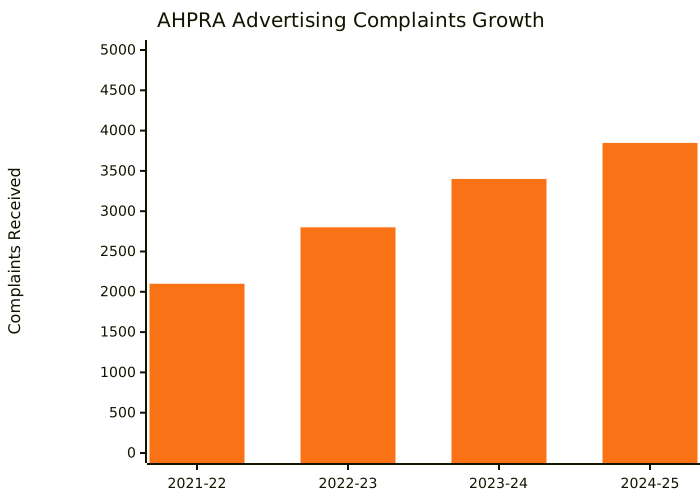
- AHPRA received over 3,800 advertising complaints in 2024–25, a 34% increase from the prior year
- Complaints are anonymous. Any competitor, patient, or member of the public can lodge one at no cost.
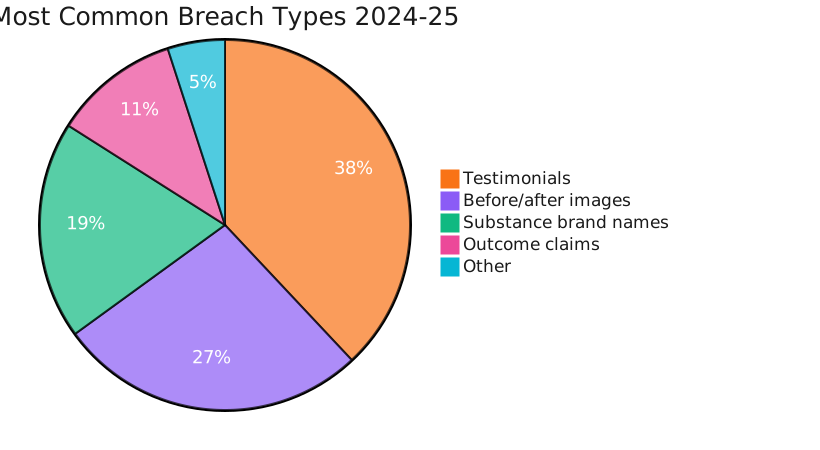
- The September 2025 amendments explicitly banned testimonials, before/after imagery, and Schedule 4 substance names (Botox, Dysport, Juvederm, etc.) across all channels
- A single non-compliant Instagram post, Google Ad, and landing page are treated as three separate breaches
- AHPRA does not need to prove financial harm or patient injury to issue a penalty
- Clinics have 28 days to respond to a formal compliance notice before escalation
Most cosmetic clinics that get a compliance notice from AHPRA do not know they were reported until the letter arrives.
That is the first surprise. The second is the penalty amount.
$60,000 for an individual, $120,000 for a body corporate. Per breach. Not per complaint. Per individual piece of non-compliant advertising.
A single Google Ads campaign with five non-compliant ad variations, pointing to a non-compliant landing page, could theoretically represent multiple separate breaches. This is not hypothetical. AHPRA has taken this position in published enforcement decisions.
Here’s what you need to understand: AHPRA does not need to prove a patient was harmed. The advertising itself is the offence. A clinic does not need to have treated anyone using misleading copy. Publishing it is enough.
This guide covers the financial exposure, how complaints are triggered, how investigations work, and what compliant advertising looks like.
How Big Is the Actual Risk?
The raw numbers from AHPRA’s 2024–25 annual data tell a clear story.
| Metric | Figure | Source |
|---|---|---|
| Advertising complaints received 2024–25 | 3,847 | AHPRA Annual Report 2024–25 |
| Year-on-year increase in complaints | 34% | AHPRA Annual Report 2024–25 |
| Maximum civil penalty per breach (individual) | $60,000 | Health Practitioner Regulation National Law s.133 |
| Maximum civil penalty per breach (body corporate) | $120,000 | Health Practitioner Regulation National Law s.133 |
| Compliance notices issued 2024–25 | 1,290 | AHPRA Annual Report 2024–25 |
| Proportion relating to cosmetic procedures | ~41% | AHPRA enforcement data |
| Average time from complaint to notice | 6–12 weeks | AHPRA published guidance |
The 34% increase in complaints is partly driven by a shift in the source: competitor clinics now make up an estimated 20–30% of complaints. Anonymous reporting makes this a low-cost competitive tactic.
The volume of complaints is growing faster than the number of clinics. If your advertising has not been audited since August 2025, it is overdue.
What Triggers an AHPRA Complaint
The September 2025 amendments made the trigger list explicit. Any advertising that includes the following is non-compliant:
Banned outright (any channel, any format)
- Testimonials from patients, staff, or third parties
- Before/after imagery for higher-risk cosmetic procedures (injectables, thread lifts, body contouring, skin resurfacing)
- Outcome language (“you’ll look younger”, “get the results you want”, “amazing transformation”)
- Schedule 4 substance names used promotionally (Botox, Dysport, Juvederm, Restylane, Sculptra)
- Pricing presented as a primary hook rather than secondary to clinical information
- Urgency language (“limited time”, “book before prices rise”, “only 3 spots left”)
What is still permitted
| Permitted | Restrictions |
|---|---|
| Treatment category descriptions (anti-wrinkle injections, dermal filler) | Must not name Schedule 4 substances |
| Before/after for low-risk procedures (facials, brow tinting, non-energy device treatments) | Must include appropriate disclaimers |
| Clinical credentials and practitioner qualifications | Cannot imply superiority without evidence |
| Procedure explainer content (what happens during treatment) | Cannot include outcome promises |
| Consultation booking calls to action | Cannot attach urgency or scarcity language |
| Pricing presented alongside clinical information | Cannot be presented as the primary hook |
How the Complaint and Investigation Process Works
Understanding the timeline helps. Most clinics panic unnecessarily when a notice arrives. The process has defined steps and defined rights.
Step 1: Complaint lodgement (Day 0)
Anyone can lodge a complaint through the AHPRA website at no cost. No evidence is required beyond identifying the advertising and the practitioner or business. The complaint is anonymous.
Step 2: Initial triage (Day 1–14)
AHPRA’s advertising compliance team reviews the complaint. If it does not on its face relate to regulated advertising, it is closed at this stage. If it does, it proceeds.
Step 3: Compliance notice (Day 14–60)
The clinic receives a written notice identifying the alleged breach, citing the specific provision, and requesting a response within 28 days. This is not a fine. It is a request to explain or remedy.
Step 4: Response window (Day 28 from notice)
The clinic must either: (a) remove or amend the advertising and provide evidence, (b) dispute the finding with reasoning, or (c) request an extension. Extensions are routinely granted for first-time matters.
Step 5: Outcome (Day 60–120)
If the clinic has complied: the matter is closed. If the breach is disputed and AHPRA maintains its position: escalation to formal enforcement, which can result in civil penalties, conditions on registration, or referral to a tribunal.
A first-time breach that is promptly remedied almost never results in a financial penalty. The risk concentrates in clinics that ignore notices, dispute without grounds, or repeat the same breach.
The Financial Exposure Is Additive
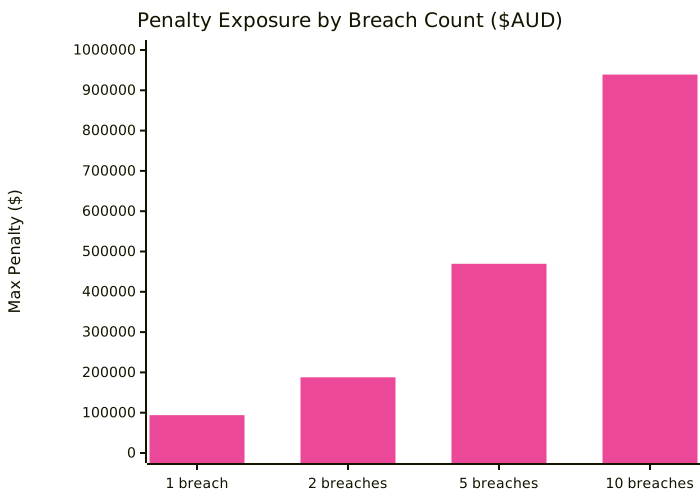
This is the part most clinics underestimate. The $120,000 figure (the body corporate rate most clinics are exposed to) is per breach. Not per complaint. Not per campaign.
Consider a clinic running the following:
- Google Ads with three ad variations containing testimonial language
- A Facebook post with a before/after image
- An Instagram story with “Book before prices go up” urgency language
- A website landing page with patient quotes
- An EDM with outcome language in the subject line
That is at minimum five separate pieces of advertising. If each is treated as a separate breach at the body corporate rate, the maximum exposure is $600,000. AHPRA has not yet issued penalties at that scale to a single cosmetic clinic, but the legal authority to do so exists.
| Scenario | Breach Count | Maximum Exposure |
|---|---|---|
| Single non-compliant Google Ad | 1 | $120,000 |
| Google Ads + non-compliant landing page | 2 | $240,000 |
| Google Ads + landing page + Instagram posts (x3) | 5 | $600,000 |
| Full digital marketing audit finds 10 breaches | 10 | $1,200,000 |
How to Protect the Clinic Now
The single most effective action is a systematic advertising audit (see the AHPRA Compliance Audit Checklist) before AHPRA performs one for you. The audit should cover:
- All current Google Ads and Meta Ads copy
- Website landing pages that receive traffic from advertising
- Instagram, Facebook, and TikTok posts (paid and organic)
- Google Business Profile posts and Q&A
- Email marketing copy (subject lines and body)
- Any printed material that counts as advertising under the National Law
The audit cost is a small fraction of the potential penalty. More to the point, it produces a record that shows good-faith compliance effort. That record is relevant if a complaint is later received.
Get a Free Website Compliance Audit
RockingWeb audits cosmetic clinic websites for AHPRA advertising compliance. We record a Loom walkthrough flagging every compliance risk, mapped to the specific rule it breaches. Free, no obligation, delivered within five business days.
Request your free clinic compliance audit
Related reading:
- The Complete AHPRA Advertising Guidelines for Cosmetic Clinics: the full compliance framework
- AHPRA Compliance Audit Checklist: step-by-step self-audit guide
- What a Full AHPRA Compliance Audit Costs: audit cost vs penalty exposure
- AHPRA Social Media Rules for Cosmetic Clinics: channel-specific penalty risk on Instagram, Facebook, TikTok
- AHPRA Treatment Naming on Your Clinic Website: substance naming breaches explained
- AHPRA Before and After Advertising Rules: before/after imagery restrictions in detail
- Cosmetic Clinic Marketing Australia: AHPRA-compliant strategy overview
For paid advertising compliance specifically, see ClinicPipeline.
Vikas Thakur
Founder of RockingWeb. 16 years building for companies like TPG, iiNet and Monadelphous, now focused on websites and marketing that comply with AHPRA's advertising guidelines and still book patients.