AHPRA Treatment Naming: What Your Clinic Website Can and Cannot Say
Australian cosmetic clinics cannot name Schedule 4 prescription substances like Botox, Dysport, or Juvederm in advertising, including website treatment pages. This guide covers the compliant naming conventions for injectables, fillers, and energy-based devices after AHPRA's September 2025 amendments.
 Vikas Thakur Founder, RockingWeb Updated Jun 21, 2026 5 min read
Key Takeaways
- Schedule 4 substances cannot be named in any advertising context, including website treatment pages
- This applies to brand names (Botox, Dysport, Juvederm) and generic names when used promotionally (botulinum toxin type A in a booking context)
- “Anti-wrinkle injections”, “dermal filler”, “lip filler” are all compliant treatment category names
- The ban applies to URLs, page titles, meta descriptions, image alt text, and social media hashtags
- Practitioners can discuss substance names in a clinical/educational context within a consultation, but not in advertising
- Google and Meta also restrict Schedule 4 substance names in paid advertising independently of AHPRA
- A website treatment page naming Botox 47 times is still a breach, even if every other element is compliant
- Post-September 2025, AHPRA’s enforcement team actively searches for substance brand names in website content
It’s a Tuesday morning. A cosmetic clinic’s marketing manager rewrites all their ad copy to be AHPRA-compliant. New headlines, no testimonials, no before/after, no outcome language.
The website still says “Botox” 47 times.
AHPRA doesn’t care that the ads are clean if the page they lead to is not. Website content that functions as advertising is advertising. That is the legal test, not whether the content lives on a “website” or an “ad”.
Here’s exactly what needs to change.
The Legal Test: Is Your Website Content “Advertising”?
Not all website content is advertising under the National Law. AHPRA applies a functional test: does this content influence someone to seek out or use a regulated health service?
If yes, it is advertising, and the restrictions apply.
| Content Type | Is It Advertising? | AHPRA’s Position |
|---|---|---|
| Treatment page (“Book Botox in Perth”) | Yes | Advertising: names Schedule 4 substance promotionally |
| Blog post on how anti-wrinkle injections work | Depends | Educational if no booking CTA; advertising if it promotes bookings |
| FAQ page on what to expect during a dermal filler consultation | Usually yes | Contains a service promotion element |
| Practitioner credentials page | Usually no | Not promoting a specific service |
| Consent form on a patient portal | No | Not publicly accessible advertising |
| Google Business Profile posts | Yes | Advertising |
| Image alt text on treatment photos | Yes | Part of the broader advertising context |
If a page has a booking button or a “contact us” CTA, treat the entire page as advertising. That is the safer position.
Schedule 4 Substance Names: Full Banned List
The following substance names cannot appear in advertising context. This is not exhaustive but covers the most commonly used cosmetic injectables in Australia.
Banned brand names
| Product Type | Banned Brand Names |
|---|---|
| Anti-wrinkle / botulinum toxin | Botox, Dysport, Xeomin, Azzalure, Bocouture |
| Dermal filler (hyaluronic acid) | Juvederm, Restylane, Belotero, Stylage, Teosyal |
| Dermal filler (other) | Sculptra, Radiesse, Ellanse |
| Fat-dissolving | Belkyra (deoxycholic acid brand) |
| Skin booster | Profhilo, Jalupro |
What about generic names?
Generic names (botulinum toxin, hyaluronic acid) are not automatically banned. The test is whether they are used in an advertising context. “This treatment uses hyaluronic acid filler” on an educational page explaining the science is likely fine. “Book hyaluronic acid filler - from $450” on a booking page is advertising and is more exposed.
The safest approach: use treatment category language throughout all client-facing content and reserve substance-specific clinical language for the consultation itself.
Compliant Naming Conventions
These are the approved treatment category names to use in place of brand or generic substance names.
| Treatment | Non-Compliant (Name Brand) | Compliant (Category Name) |
|---|---|---|
| Anti-wrinkle treatment | Botox, Dysport, Xeomin | Anti-wrinkle injections |
| Lip augmentation | Juvederm lip filler, Restylane Kysse | Lip filler, lip augmentation |
| Cheek augmentation | Juvederm Voluma | Cheek filler, cheek augmentation |
| Jawline definition | Juvederm Volux | Jawline filler, jawline contouring |
| Skin booster | Profhilo, Jalupro injection | Skin booster injections |
| Fat dissolving | Belkyra | Deoxycholic acid treatment, fat dissolving injections |
| Collagen stimulator | Sculptra | Collagen stimulator, biostimulator filler |
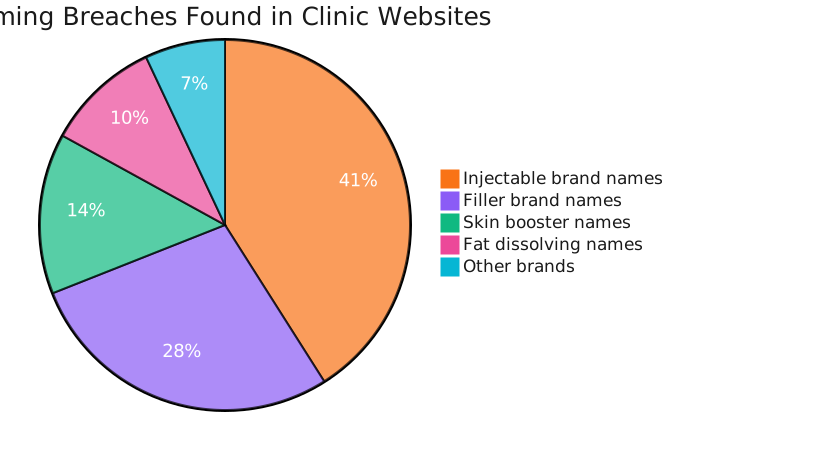
What Needs to Change on Your Website
A compliant treatment naming audit covers every location where substance brand names appear.
Check these locations
Page content:
- Treatment page headings and body copy
- FAQ pages (especially “What is Botox?”, “How does Juvederm work?“)
- Blog posts that mention product names in an advertising context
- Team and practitioner bio pages (if they list “Botox certified”)
Technical locations:
- Page URL slugs (/botox-perth/ needs to become /anti-wrinkle-injections-perth/)
- Meta titles and descriptions
- Image file names and alt text (botox-before-after.jpg needs renaming)
- Structured data (FAQ schema, service schema)
Off-site locations:
- Google Business Profile service list
- Google Business Profile posts
- Facebook and Instagram bios, post captions, and highlights covers
- Linktree or link-in-bio pages
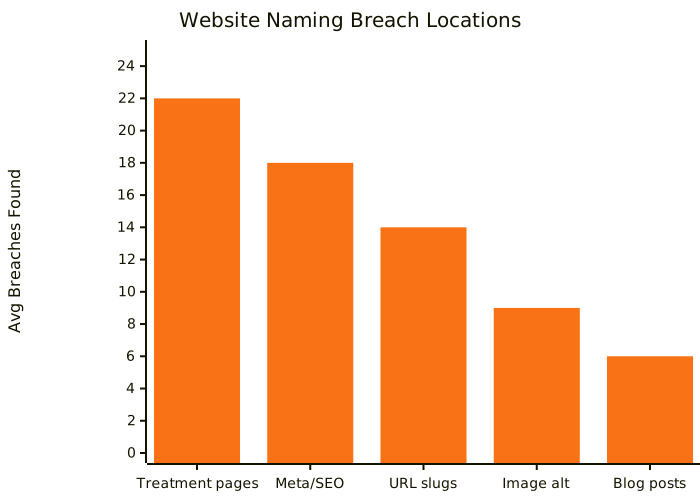
URL redirects
Changing /botox-perth/ to /anti-wrinkle-injections-perth/ removes the non-compliant URL, but the old URL may have backlinks and Google Search Console data. Set up a 301 redirect from the old URL to the new one so you do not lose traffic while the compliant version builds authority.
Changing the URL slug is not optional. A page titled “Botox Perth” still advertises a Schedule 4 substance by name, regardless of what the page body says.
The Practitioner Certificate Exception
One area that causes confusion: practitioners often list their training and certifications on their bio pages. “Certified advanced injector, Allergan Master Injector Program” is an example.
AHPRA’s position is that clinical qualifications and training certificates are not advertising if presented as factual credential information without a promotional context. A practitioner bio page that lists qualifications, experience, and professional associations is generally not advertising.
The grey area is when those credentials appear alongside a booking CTA. “Dr Sarah Jones, Allergan Master Injector - Book now” puts the credential in an advertising context and is more exposed.
Safest practice: keep practitioner bio pages separate from treatment booking pages. List credentials factually, without service promotion language on the same page.
Get Your Website Checked for Treatment Naming Compliance
RockingWeb audits cosmetic clinic websites for AHPRA treatment naming compliance. We identify every instance of non-compliant substance names, produce a prioritised remediation list, and handle the URL redirect map.
Talk to us about your clinic’s website
Related reading:
- The Complete AHPRA Advertising Guidelines for Cosmetic Clinics: full regulatory framework
- AHPRA Advertising Fines Australia: financial exposure for naming breaches
- AHPRA Social Media Rules for Cosmetic Clinics: naming rules apply equally to hashtags and captions
- AHPRA Compliance Audit Checklist: full website and channel audit guide
- Cosmetic Clinic Website Design Australia: building a compliant clinic website from the ground up
- AHPRA Before and After Advertising Rules: imagery restrictions alongside naming rules
Vikas Thakur
Founder of RockingWeb. 16 years building for companies like TPG, iiNet and Monadelphous, now focused on websites and marketing that comply with AHPRA's advertising guidelines and still book patients.