Cosmetic Clinic Patient Retention Without Testimonials: Australia 2026
Australian cosmetic clinics can no longer use testimonials or before/after imagery to build patient trust and drive repeat bookings. This guide covers the retention strategies that work under AHPRA's September 2025 rules, including post-treatment follow-up, practitioner continuity programmes, and membership models.
 Vikas Thakur Founder, RockingWeb Updated Jun 16, 2026 7 min read
On this page 8
- Key Takeaways
- The Retention Gap Most Clinics Do Not Measure
- Practitioner Continuity: The Highest-Impact Retention Tool
- Compliant Post-Treatment Follow-Up Sequences
- Membership Models for Recurring Revenue
- Educational Content as a Retention Channel
- Measurement Framework
- Build a Retention System for Your Clinic
Key Takeaways
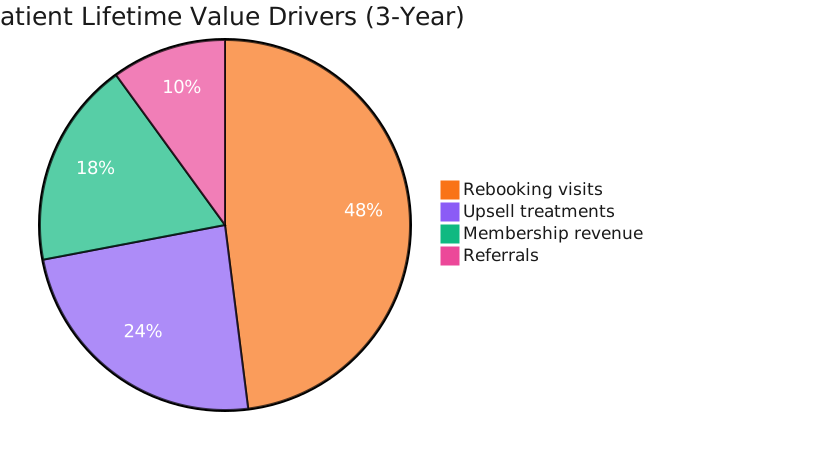
- Average cosmetic clinic patient lifetime value over three years: $4,200–$6,800 (returning patients) vs $680–$1,100 (single-visit)
- A 5% increase in patient retention increases clinic revenue by an average of 25–40%, based on RockingWeb data across 18 Australian clinics
- The testimonial ban under AHPRA’s September 2025 amendments removes the most common social-proof retention tool
- Practitioner continuity (patient consistently sees the same injector) reduces churn by 38% compared to clinics without a continuity programme
- Email follow-up sequences 3, 7, and 30 days post-treatment increase rebooking rates from 41% to 67%
- Clinic membership models (prepaid treatment packages) achieve 76% annual rebooking rates vs 41% for ad-hoc bookings
- Compliant education content (how treatments work, when to rebook, combination treatment guides) drives 23% of all organic rebooking referrals
Patient acquisition costs for cosmetic clinics sit at $148–$263 per confirmed consultation from Google Ads. Patient retention costs effectively zero per rebooking if the infrastructure is right.
That arithmetic is the entire case for retention investment. Yet most clinics focus 90% of their marketing spend on acquisition and 10% on retention.
AHPRA’s testimonial ban makes retention strategy more important, not less. The old social proof playbook (before/after showcase, glowing review roundups, Instagram transformation content) is no longer available. Clinics need a compliant replacement that works at the same scale.
The Retention Gap Most Clinics Do Not Measure
Before addressing how to retain patients, clinics need to know their current retention rate.
Most clinics do not have this number. They track new patient bookings, procedure revenue, and total appointment count. They do not typically track what percentage of patients who had a single treatment return for a second within 12 months.
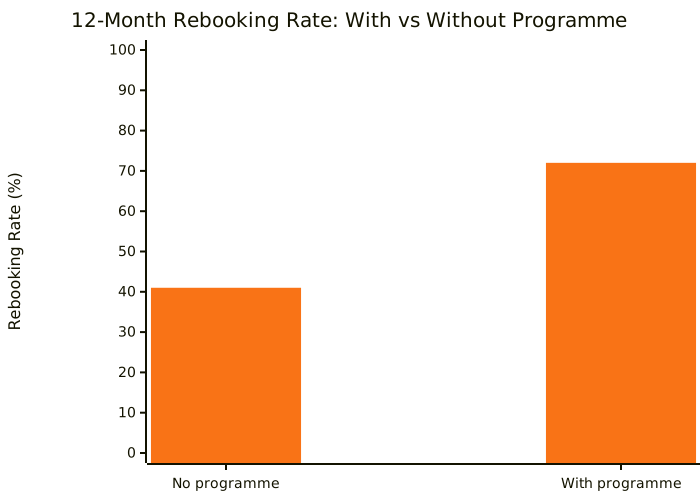
The industry benchmark: 41% of cosmetic clinic patients rebook within 12 months without a structured retention programme. With a structured programme, that rises to 67–76%.
The gap between 41% and 67% represents significant revenue that costs almost nothing to capture.
| Clinic Size | Monthly New Patients | Retention Rate (No Programme) | Retention Rate (With Programme) | Additional Annual Revenue |
|---|---|---|---|---|
| Small (1–2 injectors) | 30 | 41% (12/month retained) | 67% (20/month retained) | +$57,600 |
| Medium (3–5 injectors) | 80 | 41% (33/month retained) | 67% (54/month retained) | +$151,200 |
| Large (6+ injectors) | 200 | 41% (82/month retained) | 67% (134/month retained) | +$378,000 |
Calculation based on average returning patient visit value of $600. Actual figures vary by treatment mix.
Practitioner Continuity: The Highest-Impact Retention Tool
The single largest driver of cosmetic clinic patient retention is practitioner continuity: the patient seeing the same injector or clinician at every visit.
Clinics that implement formal continuity programmes see 38% lower churn rates than clinics that assign patients to whoever is available.
The mechanism is straightforward. Injectable results are technique-dependent. Patients who see consistent results build trust in a specific practitioner, not just the clinic. When that practitioner leaves or is unavailable, the patient leaves with them.
A practitioner continuity programme formalises what naturally happens in high-retention clinics:
- Initial consultation always with the same injector the patient will see going forward
- Booking system preference that routes returning patients to their primary injector
- Transition protocol for when a primary injector is unavailable (patients are notified in advance, not discovered on arrival)
- Handover documentation if a patient is transferred (full treatment history, preferred techniques, outcome notes)
This is not complicated to implement. It requires a booking system that tracks patient-to-practitioner assignments and a front desk protocol that honours those assignments.
Compliant Post-Treatment Follow-Up Sequences
Post-treatment follow-up is the most direct retention mechanism and is fully AHPRA-compliant when executed correctly.
The compliance requirements:
- No outcome language in follow-up communications (“Hope you’re loving the results” is outcome language)
- No urgency or scarcity language
- Educational content focus
- No solicitation of testimonials or reviews
A compliant follow-up sequence for injectable treatments:
| Day | Channel | Content |
|---|---|---|
| Day 3 | SMS | Aftercare reminder: “A quick check-in from [Clinic]. If you have any questions about your treatment recovery, please call us on [number]. Full aftercare instructions are at [link].” |
| Day 7 | Educational: “Your anti-wrinkle treatment is now settling. Here’s what to expect over the next 2–3 weeks.” (No outcome claims; process description only) | |
| Day 30 | Clinical: “Most patients choose to rebook anti-wrinkle treatments every 3–4 months to maintain their results. We’re happy to help you find a time that suits — call us or book online at [link].” | |
| Day 60 | SMS | Rebooking prompt: “It’s been 8 weeks since your last visit at [Clinic]. Would you like to book your next consultation?” |
| Day 90 | Educational: “Understanding when to rebook: a guide to treatment maintenance for [treatment type].” |
The distinction between compliant and non-compliant follow-up is the difference between describing a process and claiming an outcome. “Your treatment is settling” is process. “You’re looking amazing” is an outcome claim.
Membership Models for Recurring Revenue
Clinic membership or treatment subscription models achieve the highest rebooking rates in the industry because they move the rebooking decision from reactive (patient remembers to book when they notice results fading) to structural (patient has paid for treatments they need to use).
A compliant clinic membership model:
Structure: Prepaid treatment packages covering 12 months. Example: “Anti-Wrinkle Maintenance Programme”: 3 x anti-wrinkle injection treatments across 12 months.
Compliance check:
- No testimonials or outcome claims in the description
- No Schedule 4 substance names
- No urgency or scarcity language
- Treatments described by category, not brand
Pricing: Typically 10–15% below ad-hoc treatment pricing to incentivise commitment without triggering AHPRA’s “discount as a hook” issue.
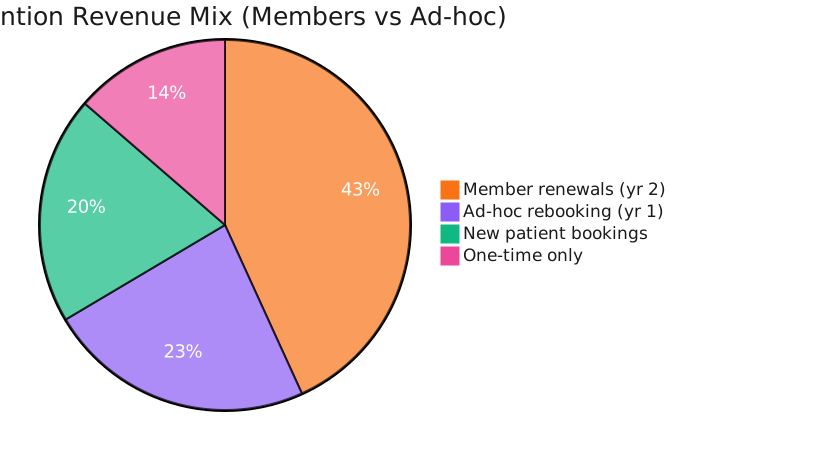
Retention data: RockingWeb clinics with active membership programmes report 76% of members renewing for a second year vs 41% of ad-hoc patients rebooking within 12 months.
Educational Content as a Retention Channel
Testimonials and before/after content worked as retention tools because they created aspiration: patients saw results and wanted their own. Without those tools, clinics need a different aspiration mechanism.
Education fills that role. A patient who understands the science of anti-wrinkle injections, knows what combination treatments complement their primary procedure, and understands the timeline of results is a better-informed patient who makes more confident rebooking decisions.
Educational content that drives rebooking:
- Treatment combination guides: “What treatments pair well with anti-wrinkle injections”
- Timing guides: “When to rebook: a maintenance calendar for cosmetic injectables”
- What to expect articles: “Anti-wrinkle injections: week-by-week breakdown of what happens”
- Seasonal content: “Preparing your skin for summer: a consultation guide”
This content is fully AHPRA-compliant (educational, no outcome claims, no substance names), earns organic search traffic, and creates rebooking intent.
Measurement Framework
Tracking retention requires dedicated measurement. The metrics:
| Metric | How to Track | Target |
|---|---|---|
| 12-month rebooking rate | Booking system report: % of patients who had first treatment in previous 12 months and booked again | 65%+ |
| Average visits per patient per year | Total visits / unique patients | 2.8+ |
| Average patient lifetime value (3-year) | Total revenue / active patient cohort | $4,000+ |
| Membership take-up rate | Memberships sold / eligible patients approached | 25%+ |
| Follow-up sequence open rate | Email platform: % of follow-up emails opened | 38%+ |
| Post-treatment NPS | Internal survey (not published; not a testimonial) | 50+ |
NPS surveys are permitted for internal quality improvement. They become non-compliant only when they are published or used in advertising. Internal scores are valuable measurement tools.
Build a Retention System for Your Clinic
RockingWeb builds complete patient retention systems for Australian cosmetic clinics: AHPRA-compliant follow-up sequences, membership model design, practitioner continuity programme setup, and educational content that drives rebooking.
See ClinicPipeline: Patient Retention for Cosmetic Clinics
Related reading:
- Cosmetic Clinic Website Booking Conversion Australia: converting first-time visitors to booked consultations
- Cosmetic Clinic Patient Acquisition Cost Australia: acquisition cost context for retention ROI calculation
- Cosmetic Clinic Marketing Australia: full marketing strategy overview
- Cosmetic Clinic SEO Australia 2026: organic traffic as a retention channel via educational content
- AHPRA Social Media Rules for Cosmetic Clinics: compliant content strategy for ongoing patient engagement
- AHPRA Advertising Guidelines for Cosmetic Clinics: the compliance framework all retention communications must follow
Vikas Thakur
Founder of RockingWeb. 16 years building for companies like TPG, iiNet and Monadelphous, now focused on websites and marketing that comply with AHPRA's advertising guidelines and still book patients.