Cosmetic Clinic Startup Cost Australia
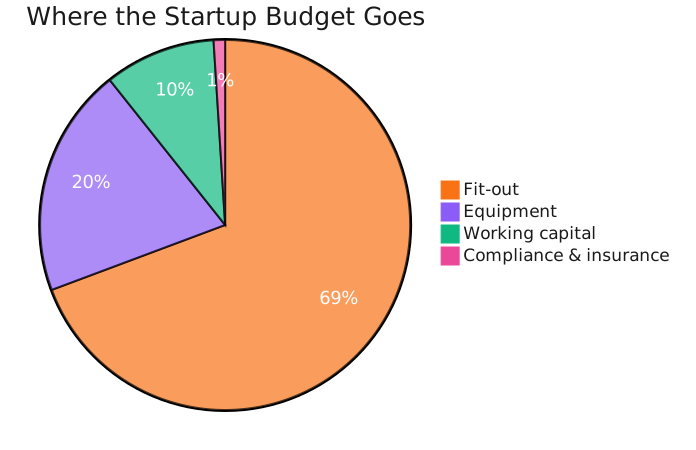
Opening a cosmetic injectables clinic in Australia costs roughly $117,000 to $1.4 million depending on treatment room count and devices, and fit-out alone eats 69% of that budget. Here is the full cost stack: fit-out, equipment, AHPRA and ASIC registration, and insurance, with sources for every figure.
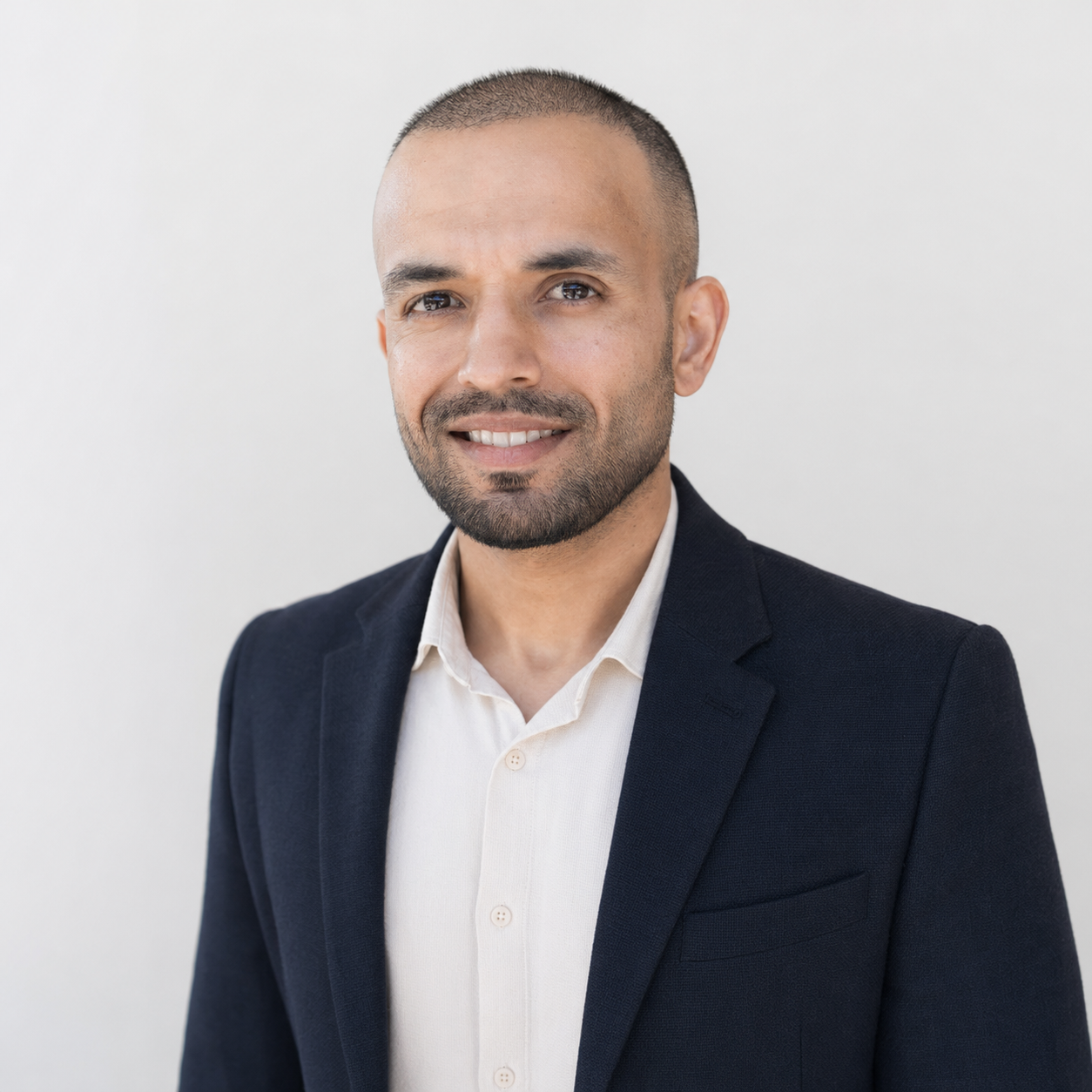 Vikas Thakur Founder, RockingWeb 10 min read
On this page 9
- Key Takeaways
- The Real Range: What Clinics Spend to Open
- Fit-Out: The Single Biggest Line Item
- Equipment: Where the Budget Swings Hardest
- Registration and Compliance Costs
- Insurance: Small Line, Real Risk
- The Line Item Most Founders Underbudget
- Building the Budget That Holds
- Get Your Clinic’s Marketing Budgeted Alongside Your Fit-Out
Key Takeaways
- Opening a cosmetic injectables clinic in Australia runs from roughly $117,000 for a single-room studio to $1.4 million for a full multi-device medi-spa, once fit-out, equipment, registration, and first-year insurance are combined
- Fit-out is the single biggest line item, at $2,500-$4,500 per square metre for a cosmetic-grade build, against $1,500-$3,000/sqm for a general medical fitout
- Energy-based devices span an enormous range: entry-level IPL and diode machines start around $15,000-$25,000, while a fractional CO2 laser runs $60,000-$180,000
- AHPRA’s annual registration renewal costs $193 for a registered nurse and $1,058 for a doctor in the 2025/26 fee year, a fraction of a percent of total startup spend
- ASIC company registration costs $636 as a one-off, plus a $342 annual review fee, effective from 1 July 2026
- Solo-practitioner professional indemnity insurance for cosmetic injectables starts from $385 a year for $1 million cover plus $10 million public and product liability
- Compliance and insurance combined typically make up under 1% of a clinic’s total opening budget, fit-out and equipment do the real damage
- Queensland and Western Australia require a separate radiation licence to operate Class 3B/4 lasers; other states rely on general workplace safety law instead
Opening a cosmetic clinic in Australia is not a $50,000 decision. It is closer to a $150,000 to $600,000 decision, and for a lot of first-time owners the number that finally lands on their desk is a shock.
Here is the problem: nobody has published the full cost stack for the Australian market. Plenty of guides quote a fit-out rate per square metre. Plenty more quote a laser machine price. Nobody puts fit-out, equipment, AHPRA and ASIC registration, and insurance next to each other, with sources, so a founder can build a real budget before signing a lease.
This guide does that. Every dollar figure below is sourced. Where a number could not be independently verified, that is flagged rather than presented as fact.
The Real Range: What Clinics Spend to Open
The total cost depends mainly on two variables: how many treatment rooms you are fitting out, and whether you are buying energy-based devices (lasers, IPL, radiofrequency) on top of an injectables offering.
Three tiers cover most of the market.
| Clinic Type | Space | Fit-Out Cost | Equipment Cost | Combined Startup Range |
|---|---|---|---|---|
| Single-room injectables studio (no energy devices) | 40-60 sqm | $100,000-$150,000 | $15,000-$60,000 | $117,000-$215,000 |
| Multi-room clinic + 1 laser/IPL device | 90-120 sqm | $225,000-$420,000 | $38,000-$148,000 | $268,000-$577,000 |
| Full medi-spa, multiple energy devices | 150-200 sqm | $525,000-$1,000,000 | $168,000-$403,000 | $698,000-$1,412,000 |
Combined range includes fit-out, equipment, business and practitioner registration, and first-year insurance. It excludes lease bond, stock, staffing, and marketing, which are covered further down.
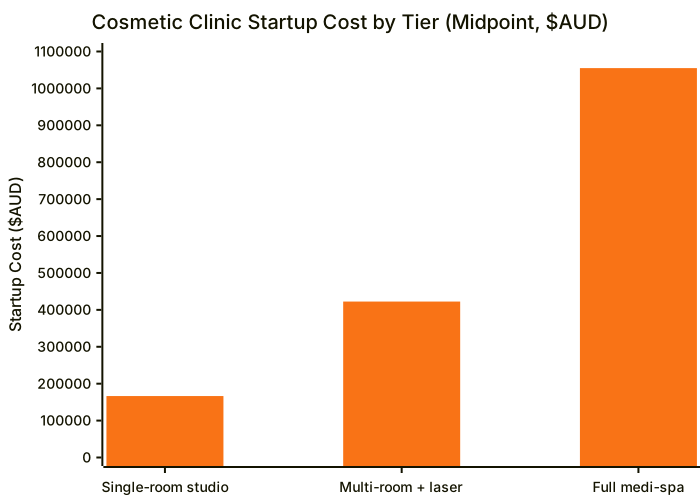
A founder budgeting off the single-room figure and a founder budgeting off the full medi-spa figure are planning for two different businesses. Most first-time cosmetic clinic owners in Australia land in the middle tier: one or two treatment rooms and a single laser or IPL device alongside injectables.
Takeaway: the jump from a single-room studio to a full medi-spa is roughly a 6x increase in startup capital, driven mostly by fit-out square metreage and device count, not by registration or insurance.
Fit-Out: The Single Biggest Line Item
Fit-out is where cosmetic clinics diverge sharply from a standard shopfront or office tenancy. Clinical-grade plumbing, sterile storage, compliant surfaces, and treatment-room electrical all cost more than a retail fitout of the same size.
Industry fit-out guides converge on a consistent range: a cosmetic or aesthetic clinic fitout costs $2,500 to $4,500 per square metre in Australia, against $1,500-$3,000/sqm for a general medical practice fitout without the same energy-device and sterile-area requirements.
| Fit-Out Component | Cost per sqm |
|---|---|
| Base building and flooring | $700-$1,000 |
| Custom joinery and cabinetry | $1,000-$1,500 |
| Clinical-grade plumbing and sterile areas | $1,000-$1,500 |
| Lighting and electrical | $400-$600 |
A modest single-treatment-room studio built into an existing retail or medical tenancy, at 40-60 sqm, sits at the lower end of that range: roughly $100,000-$150,000 before a single piece of equipment arrives. A 150-200 sqm medi-spa at the premium end of the range clears half a million dollars on fit-out alone.
Timelines run 8-14 weeks for a standard build, extending to 16-20 weeks where bespoke joinery or additional council approvals are required.
Takeaway: fit-out, not equipment, is usually the line item that blows a first-time founder’s budget, because per-square-metre rates for a cosmetic-grade build run roughly 50-80% above a standard commercial fitout of the same size.
Equipment: Where the Budget Swings Hardest
Equipment cost is the widest variable in the cost stack, because it depends on which treatments the clinic offers. An injectables-only clinic needs a fraction of the capital an energy-device clinic needs.
| Equipment Category | Cost Range |
|---|---|
| Injectable tools and cold-chain storage | $1,500-$5,000+ |
| LED and dermal therapy devices | $8,000-$30,000 |
| Treatment chairs and beds (each) | $5,000-$15,000 |
| Sterilisation and autoclave | $5,000-$20,000+ |
| Entry-level IPL/diode systems | $15,000-$25,000 |
| Radiofrequency (RF) devices | $30,000-$90,000 |
| Laser hair removal/skin rejuvenation | $30,000-$150,000 |
| Fractional CO2 laser | $60,000-$180,000 |
| Premium multi-platform devices | $80,000-$160,000+ |
Financing is common rather than the exception. Leasing a device typically starts from $500-$2,500 a month depending on the machine’s value and term, which lets a clinic bring in a $60,000 laser without paying for it outright before the doors open.
Ongoing costs do not stop at the purchase price. Budget roughly 8-10% of a device’s purchase value per year in maintenance once the manufacturer warranty expires, on top of consumables and handpiece replacement.
Takeaway: an injectables-only clinic can open equipment-light for well under $60,000, but adding a single fractional laser can more than double the equipment line on its own.
Registration and Compliance Costs
Compared with fit-out and equipment, registration costs are close to rounding error, but they are non-negotiable and worth budgeting for because they recur every year.
Business registration (ASIC):
| Item | Cost |
|---|---|
| Pty Ltd company registration | $636 (one-off, effective 1 July 2026) |
| Annual review fee (proprietary company) | $342/year |
| Business name registration (1 year) | $47 |
| Business name registration (3 years) | $108 |
AHPRA practitioner registration (2025/26 fee year):
| Practitioner Type | Annual Renewal Fee |
|---|---|
| Registered nurse (general registration) | $193 |
| Medical practitioner (doctor) | $1,058 |
A clinic run by a single nurse injector under a supervising prescriber arrangement pays the nurse’s $193 renewal directly. A clinic with an on-site or part-time prescribing doctor adds the $1,058 doctor renewal on top.
There is one compliance cost this guide could not put a number on: Queensland and Western Australia both require a separate radiation licence to operate Class 3B or Class 4 lasers, administered through Queensland Health and WA’s Radiological Council respectively. Queensland runs a two-tier system, a possession licence and a use licence, with the use licence requiring a trainee period before a full licence is granted. Other states currently rely on general workplace health and safety obligations rather than a laser-specific licence. The application and licence fees exist and are published in each regulator’s own fee schedule, but were not independently verifiable at time of writing, so budget a modest but real line item here and confirm the current fee directly with the regulator in your state before committing to a laser purchase.
Advertising compliance is a separate cost again, and one that catches most new clinics out after they open rather than before. If you are building a website or marketing plan alongside your fit-out, RockingWeb can flag testimonial, before-and-after, and outcome-language risks before your first campaign goes live, which is cheaper than fixing them after a complaint.
Takeaway: registration costs are small relative to fit-out and equipment, but a laser-specific licence in Queensland and WA is a real, recurring compliance obligation that a generic startup budget will miss.
Insurance: Small Line, Real Risk
Insurance is the smallest hard dollar figure in the entire cost stack, and also the one most new clinic owners underestimate in scope rather than price.
For a solo-practitioner nurse offering cosmetic injectables only, professional indemnity insurance starts from $385 a year for $1 million of indemnity cover bundled with $10 million of public and product liability, according to specialist cosmetic nurse insurers. That is a starting premium, not a ceiling. Multi-practitioner clinics, clinics running energy-based devices, and clinics with higher claims history or turnover pay more, and premiums are quoted individually rather than off a published rate card, so get a specific quote before finalising a budget.
Generic small business public liability cover, separate from professional indemnity, averages roughly $500 to $1,500 a year for a $10 million limit, depending on turnover, staff numbers, and claims history.
Takeaway: the entry price for cosmetic clinic insurance is low, starting under $400 a year for a solo injector, but that entry price scales fast with practitioner count and device risk, so treat the published starting rate as a floor, not a forecast.
The Line Item Most Founders Underbudget
Fit-out, equipment, registration, and insurance get the headline attention because they are the biggest numbers. The line item that determines whether the clinic fills its appointment book is usually the smallest one on the list: the website and the marketing system behind it.
A compliant cosmetic clinic website, built around AHPRA’s testimonial and before-and-after rules from the first wireframe rather than retrofitted after a complaint, is a fraction of the fit-out budget. RockingWeb builds cosmetic clinic websites specifically for this brief: compliant by design, built to convert consultation bookings, and structured so a paid ads account does not get disapproved for the same non-compliant language AHPRA penalises.
RockingWeb is a Perth-based digital agency that works exclusively inside the ClinicPipeline system for cosmetic and aesthetic clinics, covering the website, booking flow, and ongoing patient acquisition that a new clinic needs running before the fit-out is even finished.
Takeaway: a clinic that opens with a beautiful treatment room and a template website is optimising the smaller half of the budget and neglecting the half that fills the appointment book.
Building the Budget That Holds
A first-time cosmetic clinic owner who budgets $150,000 and discovers the real number is $400,000 halfway through a lease negotiation is in a worse position than one who budgets $400,000 from day one and comes in under. Every figure in this guide is designed to close that gap before the lease is signed, not after.
The pattern across all three tiers holds regardless of size: fit-out and equipment together account for roughly 89% of total startup spend, working capital reserves for around 10%, and compliance plus insurance for about 1%. Compliance is cheap. Getting the fit-out and equipment budget wrong is what sinks a clinic’s first year.
RockingWeb’s ClinicPipeline is built for clinics at exactly this stage, turning a newly opened clinic’s website and ad spend into a booked-out consultation calendar without tripping AHPRA’s advertising rules in the process.
Get Your Clinic’s Marketing Budgeted Alongside Your Fit-Out
Most cosmetic clinics budget the fit-out and equipment down to the dollar, then treat the website and marketing system as an afterthought bolted on after opening day. That order of operations costs momentum in the first three months, when a new clinic needs bookings the most.
Talk to RockingWeb about a ClinicPipeline launch plan built alongside your fit-out timeline, not after it.
Related reading:
- AHPRA Compliance Costs for Cosmetic Clinics: what a full advertising audit and remediation costs once the clinic is trading
- Cosmetic Injectables Australia: $4.6B Market Revealed: the market size a new clinic is opening into
- Dermal Filler Cost Australia: per-treatment pricing to model revenue against the cost stack above
- How Much Does Botox Cost Australia: per-unit pricing for the anchor treatment most clinics open with
Data sources: Clinics by Design and SoulMED medical fit-out cost guides; MedicalSearch.com.au cosmetic laser machine and clinic fitout buying guides; Nursing and Midwifery Board of Australia and Medical Board of Australia 2025/26 fee announcements (as reported by the Australian Nursing and Midwifery Journal and mforum.com.au); ASIC fee schedule effective 1 July 2026; Cosmetic Nurse Insurance Hub premium disclosures; Queensland Health radiation licensing framework.
Vikas Thakur
Founder of RockingWeb. 16 years building for companies like TPG, iiNet and Monadelphous, now focused on websites and marketing that comply with AHPRA's advertising guidelines and still book patients.
![GLP-1 Use Up 10x in Australia: Cosmetic Surgery [2026]](/assets/cosmetic-clinic-marketing-australia-DDJTqe2B.png)