$319,260 in TGA Fines: 7 Weight-Loss Telehealth Operators
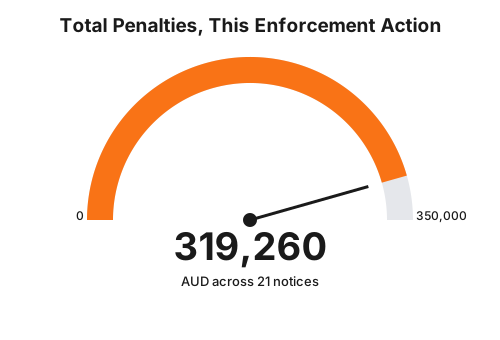
The TGA issued 21 infringement notices totalling $319,260 to 4 telehealth businesses and 3 individuals for unlawfully advertising prescription-only weight-loss medicines including Ozempic and Saxenda. Any cosmetic clinic now offering GLP-1 scripts alongside injectables is one treatment page away from the same enforcement pattern.
 Vikas Thakur Founder, RockingWeb 8 min read
On this page 9
Key takeaways
- The TGA issued 21 infringement notices totalling $319,260 to 4 telehealth businesses and 3 individuals over unlawful advertising of prescription-only weight-loss medicines.
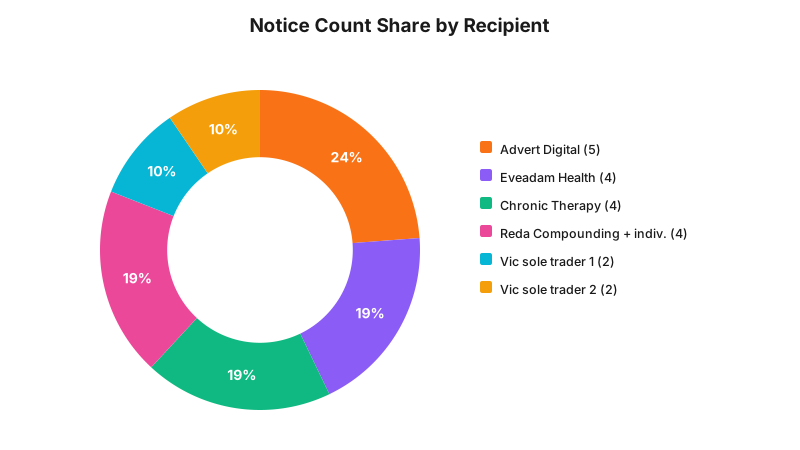
- Advert Digital Pty Ltd received the largest single penalty: 5 notices totalling $93,900.
- Eveadam Health Pty Ltd and Chronic Therapy Pty Ltd each received 4 notices totalling $75,120 apiece.
- Reda Compounding Chemist Pty Ltd, together with a NSW-based individual, received 4 notices totalling $60,096.
- Two Victorian-based sole traders each received 2 notices totalling $7,512.
- The alleged conduct included advertising prescription-only medicines such as Ozempic, Saxenda and Viagra directly to consumers, and claiming certain medicines were “TGA approved.”
- Acting Deputy Secretary Nick Henderson said advertising prescription-only medicines directly to consumers “could create an inappropriate demand for these medicines and lead to unnecessary or harmful prescribing.”
- The TGA states it has issued warnings that advertising Ozempic is prohibited since 2022, and that Ozempic is approved only for lowering blood sugar in adults with type 2 diabetes.
The TGA fined 4 telehealth businesses and 3 individuals a combined $319,260 across 21 infringement notices for unlawfully advertising prescription-only weight-loss medicines. The case covers Ozempic, Saxenda and Viagra promoted directly to consumers online.
Twenty-one infringement notices. Seven operators. $319,260 total, and every dollar of it traces back to a website or a social ad promoting a prescription-only medicine by name. The TGA’s case against 4 telehealth businesses and 3 individuals names Ozempic, Saxenda and Viagra directly. None of the alleged conduct involved a clinic in a shopfront. It happened online: treatment pages, ad copy, landing pages that promised a prescription medicine would work and implied the TGA had signed off on it. Any cosmetic clinic that added GLP-1 scripts to its service menu in the last two years is running the same website surface these operators were fined for. The only question is whether the copy matches the rules.
What the TGA actually fined
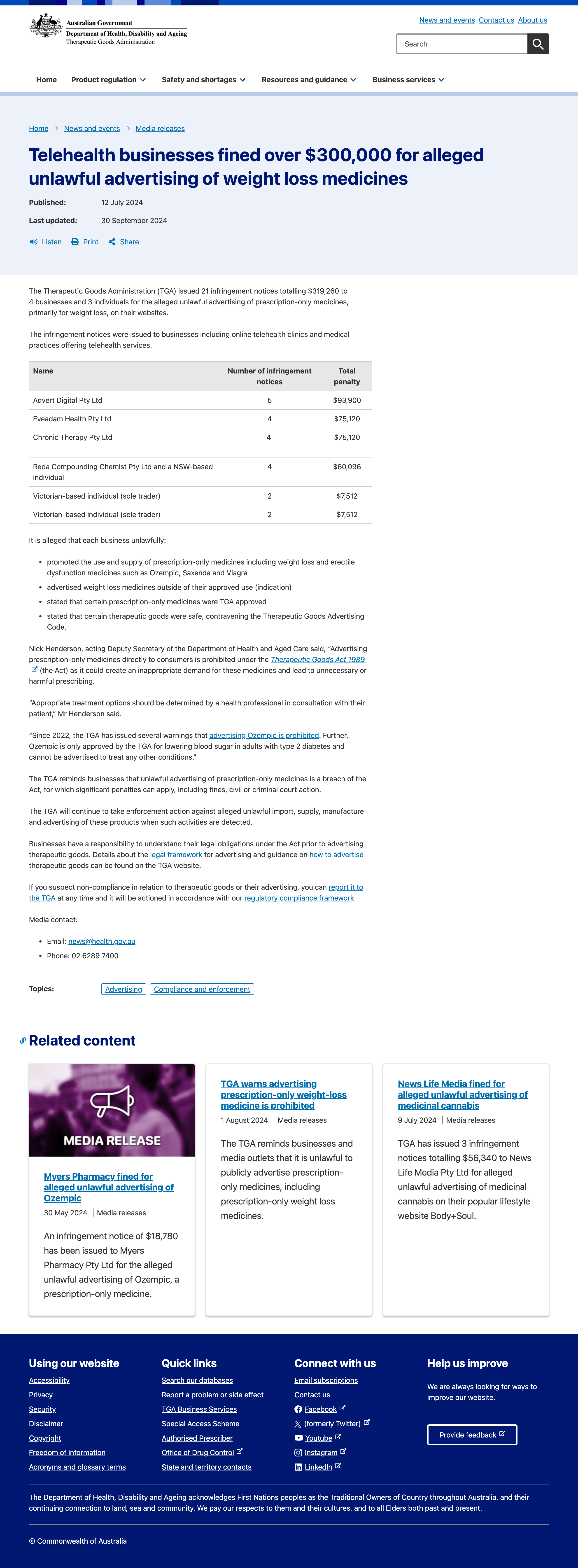
The TGA’s release breaks the $319,260 down by recipient, and the pattern is worth sitting with: the biggest penalty went to an advertising business, not a prescriber.
| Recipient | Infringement notices | Total penalty |
|---|---|---|
| Advert Digital Pty Ltd | 5 | $93,900 |
| Eveadam Health Pty Ltd | 4 | $75,120 |
| Chronic Therapy Pty Ltd | 4 | $75,120 |
| Reda Compounding Chemist Pty Ltd + NSW individual | 4 | $60,096 |
| Victorian-based individual (sole trader) | 2 | $7,512 |
| Victorian-based individual (sole trader) | 2 | $7,512 |
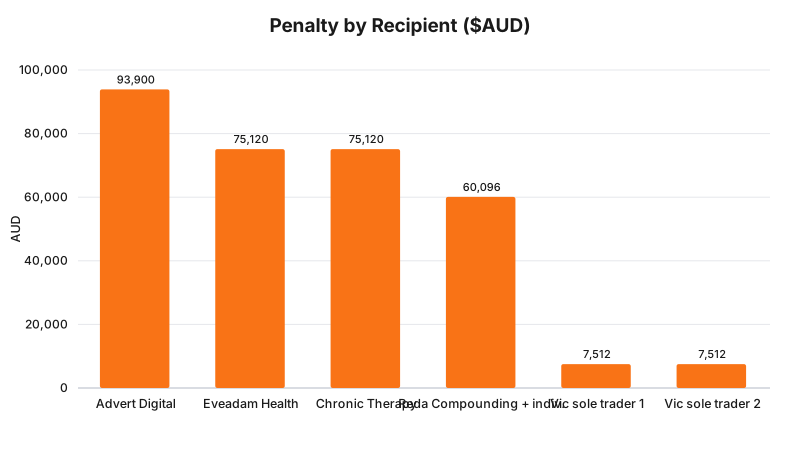
Run the maths and every row lands on the same base rate: $18,780 per infringement notice, multiplied by however many notices a recipient copped. Advert Digital’s 5 notices is the highest count on the list, and Advert Digital is not named as a pharmacy, a clinic or a prescriber. It is an advertising business, which tells you where the TGA’s attention actually lands when it investigates a weight-loss campaign: not just the clinic that wrote the prescription, but whoever built and ran the ad.
Takeaway: the largest single penalty in this case went to the party that built the advertising, not the party that supplied the medicine.
The alleged conduct, in plain terms
Strip out the legal phrasing and the TGA alleges four things, and any one of them is enough to trigger a notice on its own:
- Promoting the use and supply of prescription-only medicines, including weight-loss and erectile dysfunction medicines such as Ozempic, Saxenda and Viagra, directly to consumers.
- Advertising weight-loss medicines outside their approved use, meaning the medicine was promoted for something the TGA has not approved it to treat.
- Stating that certain prescription-only medicines were TGA approved, when advertising a medicine as “TGA approved” is itself a restricted claim.
- Stating that certain therapeutic goods were safe, a claim the Therapeutic Goods Advertising Code does not permit in consumer-facing advertising.
Nick Henderson, acting Deputy Secretary of the Department of Health and Aged Care, put the reasoning behind the ban in plain terms: “Advertising prescription-only medicines directly to consumers is prohibited under the Therapeutic Goods Act 1989 (the Act) as it could create an inappropriate demand for these medicines and lead to unnecessary or harmful prescribing.” He added that “appropriate treatment options should be determined by a health professional in consultation with their patient.” On Ozempic specifically, the TGA’s release states it has issued warnings since 2022 that advertising the medicine is prohibited, and that the drug is approved only for lowering blood sugar in adults with type 2 diabetes, not for weight loss as a standalone indication.
Takeaway: the underlying conduct is narrow and specific: naming a prescription medicine, claiming TGA approval, or claiming safety, all in consumer-facing copy.
Why this is a website problem, not just an ad-spend problem
None of the businesses in this case were fined for running Botox or filler ads. They were fined for how they wrote about a prescription weight-loss medicine. That distinction matters, because a growing number of cosmetic clinics now sit in exactly the same spot: injectables on the treatment menu, and a GLP-1 weight-loss script now offered alongside them through a partnered prescriber or an in-house telehealth arm.
If a clinic’s website names Ozempic, Saxenda, Mounjaro or any other prescription-only weight-loss medicine by brand, states or implies TGA approval for weight loss specifically, or describes the medicine as safe without a permitted health warning, that page sits inside the exact pattern this case was built on. A free compliance read of your site checks treatment pages, booking widget copy and landing pages against this pattern specifically, because a page that reads as reassuring marketing copy to a patient reads as a checklist of alleged breaches to a regulator.
Takeaway: the enforcement pattern here is about what the page says about the medicine, not about which clinic prescribes it.
What to check before your GLP-1 page goes near a regulator
This is a website content check, not clinical or legal advice about which medicines to offer or how to prescribe them. Whether specific copy on your site crosses the line is a question for your medical defence organisation or your lawyer.
| Page element | What to look for | Why it matters here |
|---|---|---|
| Medicine names | Ozempic, Saxenda, Mounjaro or similar named directly on a public page | Naming a prescription-only medicine to consumers is the conduct at the centre of this case |
| Approval language | ”TGA approved,” “approved for weight loss” or similar claims | Directly named in the TGA’s allegations against this case’s recipients |
| Safety claims | ”Safe,” “well-tolerated,” or similar unqualified reassurance copy | The Advertising Code does not permit unrestricted safety claims for these medicines |
| Booking and intake flows | Package names or drop-down menus referencing a specific weight-loss drug | Structured content a regulator can screenshot without needing to dig |
Start with medicine names, since that is the single fact pattern every recipient in this case shares. RockingWeb builds and audits cosmetic clinic websites against exactly this kind of enforcement gap, treating every treatment and booking page as regulated advertising rather than generic marketing copy, because that is how the TGA already treats it.
Takeaway: run the four-item table before a GLP-1 page goes live, not after a patient or a competitor reports it.
The pattern behind this case
This case is not an isolated one-off. The TGA’s own related-content links from the same release point to a run of similar actions: Myers Pharmacy Pty Ltd was issued an $18,780 infringement notice over alleged unlawful advertising of Ozempic through in-store signage, the TGA separately published a standalone warning that advertising prescription-only weight-loss medicine is prohibited, and News Life Media Pty Ltd was issued 3 infringement notices totalling $56,340 over alleged unlawful advertising of medicinal cannabis on its Body+Soul website, a case built on the same “restricted representation” reasoning. Different medicines, same underlying rule: a prescription-only therapeutic good cannot be advertised directly to consumers, whatever channel carries the message.
Takeaway: one case is a headline, but a run of similarly reasoned cases is the TGA telling the market where its attention sits next.
Frequently Asked Questions
How much did the TGA fine the telehealth businesses and individuals?
The TGA issued 21 infringement notices totalling $319,260 to 4 telehealth businesses and 3 individuals for the alleged unlawful advertising of prescription-only medicines, primarily for weight loss, on their websites.
Which medicines were named in the case?
The TGA’s release names Ozempic, Saxenda and Viagra as prescription-only medicines allegedly promoted directly to consumers, alongside broader claims about weight-loss medicines being advertised outside their approved use.
Does offering GLP-1 prescriptions alongside injectables automatically breach these rules?
Not automatically. The case is about specific advertising conduct: naming a prescription-only medicine to consumers, claiming TGA approval, or claiming safety. Whether specific wording on your site matches that pattern is a question for your medical defence organisation or your lawyer.
Get Your GLP-1 Pages Checked
Ready to see what a regulator would find on your own GLP-1 or injectables page? Book a compliance-focused website review before a treatment page nobody has checked in months becomes the next case on this list.
Sources and References
- Therapeutic Goods Administration, “Telehealth businesses fined over $300,000 for alleged unlawful advertising of weight loss medicines,” media release, published 12 July 2024, last updated 30 September 2024. tga.gov.au. Date checked: 28 August 2026. Source for the $319,260 total, the 21-notice count, the per-recipient breakdown table, the medicines named, the alleged conduct, and the direct quotes from Nick Henderson.
- Therapeutic Goods Administration, “Myers Pharmacy fined for alleged unlawful advertising of Ozempic,” media release. tga.gov.au. Date checked: 28 August 2026. Source for the related $18,780 Myers Pharmacy infringement notice referenced in the pattern section.
- Therapeutic Goods Administration, “TGA warns advertising prescription-only weight-loss medicine is prohibited,” media release. tga.gov.au. Date checked: 28 August 2026. Source for the standalone TGA warning referenced in the pattern section.
- Therapeutic Goods Administration, “News Life Media fined for alleged unlawful advertising of medicinal cannabis,” media release. tga.gov.au. Date checked: 28 August 2026. Source for the $56,340 News Life Media case referenced in the pattern section.
Vikas Thakur
Founder of RockingWeb. 16 years building for companies like TPG, iiNet and Monadelphous, now focused on websites and marketing that comply with AHPRA's advertising guidelines and still book patients.