AHPRA Testimonial Ban: Fines Jumped 12x to $120K in 2022
A 2022 amendment to the Health Practitioner Regulation National Law lifted the maximum testimonial-breach penalty twelvefold, to $60,000 for an individual and $120,000 for a body corporate. AHPRA's cosmetic procedure guidelines, effective 2 September 2025, then tightened the rule further for social media influencers.
 Vikas Thakur Founder, RockingWeb 9 min read
Key Takeaways
- AHPRA’s testimonial ban sits in section 133 of the Health Practitioner Regulation National Law, which names testimonials as one of five specific grounds for unlawful advertising
- A 2022 amendment raised the maximum penalty for a breach by 12 times: from $5,000 to $60,000 for an individual, and from $10,000 to $120,000 for a body corporate
- AHPRA’s cosmetic procedure advertising guidelines took effect 2 September 2025 and specifically strengthened the ban on testimonials delivered through social media influencers
- A testimonial is defined by a clinical aspect test: any reference to a symptom, diagnosis, treatment or outcome, whether direct or by comparison
- Comments about customer service or communication style only are not testimonials and can still be published
- Engaging with a positive review published elsewhere, not just publishing one, can itself count as using a testimonial under AHPRA’s own guidance
- A clinic issued a corrective notice generally has 30 days to fix non-compliant advertising before AHPRA escalates
- Western Australia has not adopted the higher national penalty caps; a different, lower regime still applies there
AHPRA’s penalty for a testimonial breach is twelve times higher than it was before 2022: up to $60,000 for an individual and $120,000 for a body corporate, under section 133 of the Health Practitioner Regulation National Law. Testimonials have been named as a banned advertising practice for years. What changed on 2 September 2025 was AHPRA’s cosmetic procedure advertising guidelines, which specifically strengthened that ban for testimonials delivered through social media influencers and ambassadors. Most clinic owners assume the testimonial ban itself is new. It is not, and treating it as new is exactly how a five-star Google review widget already live on your site turns into a breach. This guide sets out what counts as a testimonial, what the current penalty looks like, and what it means for the reviews and social proof already live on your clinic’s website.
What Changed on 2 September 2025
AHPRA’s cosmetic procedure advertising guidelines took effect on 2 September 2025, developed under section 39 of the National Law. They apply to anyone who advertises a higher risk non-surgical cosmetic procedure, not only the practitioner performing it: marketing managers, agencies, and any social media account tied to the clinic are all included.
The guidelines required real, unedited images with a visible warning that results vary between patients, and strengthened the existing ban on testimonials delivered through social media influencers specifically. AHPRA’s own announcement described the changes as strengthening safeguards across the industry, not creating a testimonial ban from scratch. Practitioners had notice since May 2025 to bring their advertising into line before the deadline.
Takeaway: the testimonial ban did not start on 2 September 2025. What started that day was a tighter, cosmetic-specific rule for influencer and ambassador arrangements, layered on top of a ban that already applied to every clinic’s own advertising.
What Counts as a Testimonial Under AHPRA’s Rules
Section 133 of the National Law lists five ways advertising can break the law: being false or misleading, offering an undisclosed inducement, using testimonials, creating an unreasonable expectation of benefit, or encouraging unnecessary use of a health service. AHPRA applies a specific test for testimonials: does the comment reference a symptom, a diagnosis or treatment, or an outcome, directly or by comparison? If yes, it cannot be used in advertising, regardless of how positive or accurate it is. A comment covering only customer service or communication style, with no reference to the treatment itself, is not a testimonial and can be published.
| Comment | Testimonial under section 133? |
|---|---|
| ”The team explained everything and the clinic was spotless.” | No, customer service only |
| ”My lips have never looked this natural, best filler in Perth.” | Yes, outcome and comparison |
| ”Reduced my frown lines completely, so happy with the result.” | Yes, outcome claim |
A compliance review from RockingWeb checks every testimonial, review widget, and social proof element on your site against this exact test, rather than leaving it to guesswork.
A clinic is not responsible for reviews patients post to third-party sites it does not control. But AHPRA’s guidance says an advertiser who chooses to engage with a testimonial on a site it doesn’t control, for example by promoting or sharing it, may be treated as using that testimonial in the clinic’s own advertising. The same applies to comment functions on the clinic’s own website or social pages; disabling reviews or comments is one option AHPRA points to for managing that exposure. Selective editing carries its own risk, separate from the testimonial rule: publishing a review with the negative parts trimmed out can itself be misleading under the National Law.
Takeaway: the test is simple: does the comment talk about the treatment, or just the experience of getting it? Exposure also extends to how a clinic’s account engages with reviews published elsewhere, not only what it publishes directly.
The Penalty Just Got Twelve Times Steeper
Before 2022, a single advertising breach, testimonial or otherwise, carried a maximum penalty of $5,000 for an individual and $10,000 for a body corporate under the National Law. A 2022 amendment raised both caps by a factor of twelve.
| Entity | Penalty before 2022 | Penalty from 2022 |
|---|---|---|
| Individual practitioner | $5,000 | $60,000 |
| Body corporate (clinic) | $10,000 | $120,000 |
Each non-compliant testimonial, whether it is a homepage quote, a liked Instagram comment, or an influencer’s story, can be treated as a separate offence. Clinics operating in Western Australia should note one exception: the state has not adopted the higher national caps, and a different penalty regime still applies there.
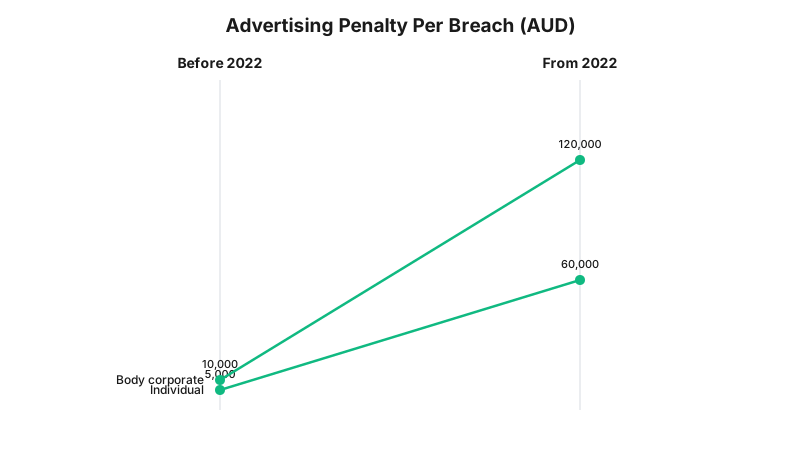
Takeaway: the maximum financial exposure for a single testimonial breach is twelve times higher than it was five years ago, and every non-compliant instance can be counted separately.
How AHPRA Actually Enforces This
A complaint about a testimonial can be lodged through AHPRA’s website. AHPRA reviews the advertising, assesses the risk, and in most cases writes to the advertiser first, setting out the breach and requiring it to be corrected within 30 days.
If the advertising is fixed inside that window, AHPRA typically closes the matter. If it is not, a registered practitioner can face conditions on their registration, while a non-practitioner advertiser, such as a marketing manager or an agency, can face prosecution instead. Very serious breaches can be prosecuted even after the advertising has already been corrected.
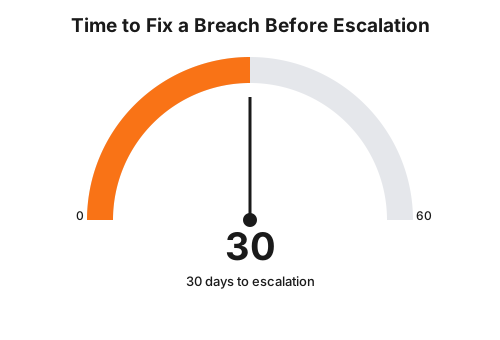
Takeaway: a 30-day correction window sounds generous until you remember it only starts once AHPRA has already found the breach, reviewed it, and written to you about it.
What This Means for Your Clinic’s Website
The testimonial rule does not just affect a dedicated reviews page. It touches every treatment landing page that quotes a patient, every Instagram highlight with a re-shared story, and every Google review widget embedded on a homepage. A website built for cosmetic clinics needs to separate compliant content, credentials, procedure education, recovery information, from anything that reads as a positive statement about outcomes.
That separation affects enquiry quality too. A page built around outcome claims and quoted results attracts enquiries based on an expectation AHPRA has already decided is unrealistic to advertise, which shows up later as consultations that do not convert or as the source material for a complaint. Pages built around procedure education, credentials, and clear pricing sidestep the problem. Auditing a page against this rule before it goes live costs far less than removing a testimonial section after a corrective notice arrives.
Takeaway: the safest cosmetic clinic landing pages are built on credentials and procedure information, not on quoted outcomes, because that is the content AHPRA cannot touch.
FAQ
Was the testimonial ban on cosmetic clinic advertising new in September 2025?
No. Section 133 of the Health Practitioner Regulation National Law has banned testimonials in health service advertising for years. AHPRA’s guidelines that took effect on 2 September 2025 specifically strengthened the ban on testimonials delivered through social media influencers and ambassadors for higher risk non-surgical cosmetic procedures.
What exactly counts as a testimonial under AHPRA’s rules?
A positive statement about the clinical aspect of a health service, meaning it references a symptom, a diagnosis or treatment, or an outcome, including a comparison. Comments about customer service or communication style, with no reference to the treatment itself, are not testimonials and can be published.
What is the maximum penalty for using a testimonial in cosmetic clinic advertising?
Up to $60,000 per breach for an individual and $120,000 for a body corporate under the National Law, following a 2022 amendment that raised both caps twelvefold from $5,000 and $10,000. Western Australia has not adopted the higher caps, and a different penalty regime applies there.
Does liking or re-sharing a positive patient review count as using a testimonial?
It can. AHPRA’s guidance says an advertiser who chooses to engage with a testimonial on a page it does not control, for example by promoting or sharing it, may be treated as using that testimonial in its own advertising, and the person or business that controls the page is responsible for compliance.
Get Your Testimonials Checked Against the Rules
RockingWeb reviews cosmetic clinic websites, review widgets, and social media accounts against the current testimonial rules and flags every breach against the specific provision it falls under.
Talk to us about your clinic’s website
Sources and References
AHPRA - “Putting patients first: New guidelines for cosmetic procedures”, the 2 September 2025 effective date and the strengthened influencer testimonial ban
AHPRA - Guidelines for advertising higher risk non-surgical cosmetic procedures: the testimonials and social media influencers provisions
AHPRA - “Testimonials: Understand the requirements”: the clinical aspect test and the liking/re-sharing responsibility rules
AHPRA - Advertising compliance and enforcement strategy: section 133 of the National Law and the 2022 penalty increase to $60,000/$120,000
AHPRA - How we manage advertising complaints: the free complaint process and the 30-day correction window
Related reading:
- AHPRA Advertising Complaints Hit 380 a Year: the enforcement volume behind these penalties
- AHPRA Before and After Advertising Rules: the imagery-specific companion rule
- AHPRA Advertising Fines for Cosmetic Clinics: the full penalty structure
- Cosmetic Clinic Websites: compliant website builds for AHPRA-regulated clinics
For websites and ad accounts that stay inside the testimonial rules from day one, see ClinicPipeline or talk to us about your clinic’s marketing.
Vikas Thakur
Founder of RockingWeb. 16 years building for companies like TPG, iiNet and Monadelphous, now focused on websites and marketing that comply with AHPRA's advertising guidelines and still book patients.