AHPRA's 7 Risk-Disclosure Rules for Cosmetic Ads Explained
AHPRA's guidelines for advertising higher risk non-surgical cosmetic procedures set seven specific rules for how a clinic must present risk, effective since September 2, 2025. Breaching them is a National Law advertising offence carrying a penalty of up to $120,000 per breach.
 Vikas Thakur Founder, RockingWeb 8 min read
On this page 11
- Key Takeaways
- What Counts as a “Higher Risk” Cosmetic Procedure
- The Seven Rules Under Section 6
- The Words You Cannot Use Without Backing Them Up
- Where the Risk Information Has to Live
- Before and After Images Carry Their Own Warning
- What a Breach Actually Costs
- What This Means for Your Clinic Website and Ad Copy
- FAQ
- Get Your Website Checked Against All 7 Rules
- Sources and References
Key Takeaways
- 7 numbered obligations sit under Section 6, “Risk, recovery, and idealising,” of AHPRA’s guidelines for cosmetic ad risk disclosure, in effect since September 2, 2025
- Minimising words such as gentle, simple, safe, quick and easy are banned unless paired with clear risk information (Rule 6.2)
- If an ad cannot fit full risk information, the guidelines require a link to it instead of omitting it (Rule 6.3)
- Every before and after image needs its own prominent warning that results are patient-specific, under a related rule in Section 5
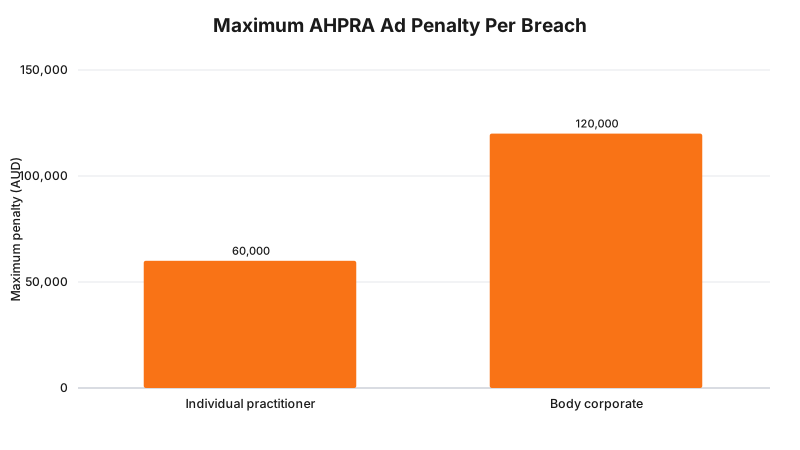
- Breaching the rules is a National Law advertising offence, carrying a penalty of up to $120,000 per breach for a body corporate and $60,000 for an individual
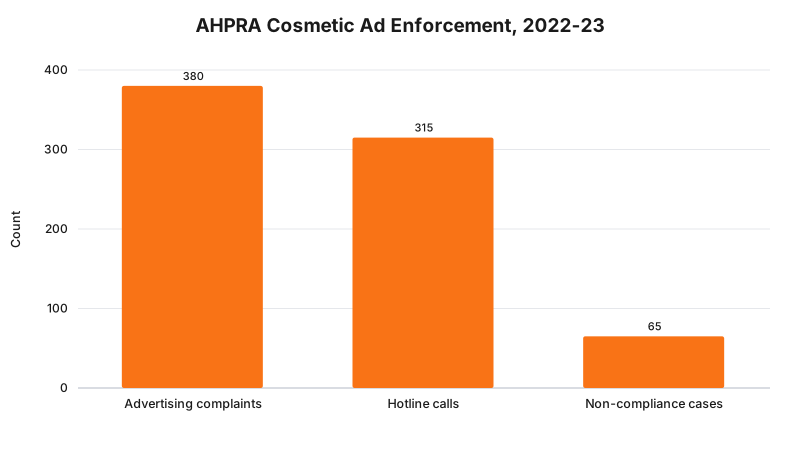
- AHPRA logged 380 advertising complaints and found 65 non-compliance cases in a targeted cosmetic surgery audit in the 2022/23 financial year
- AHPRA’s cosmetic surgery complaints hotline took 315 calls that same year
- AHPRA names at least nine procedure categories covered by these rules, including cosmetic injectables, dermal fillers and hair transplants
AHPRA’s guidelines for advertising higher risk non-surgical cosmetic procedures set seven specific rules for how a clinic must talk about risk. They took effect on September 2, 2025, and Section 6 is where all seven live, covering everything from banned soft language to how you describe recovery.
None of this is optional guidance. A breach sits under section 133 of the National Law, the provision that already carries fines up to $120,000 per breach for a body corporate. Most clinic websites were built before these rules existed, which means most have never been checked against them.
This guide walks through the seven rules, the related before-and-after image rule, what a breach costs, and what it means for your website.
What Counts as a “Higher Risk” Cosmetic Procedure
AHPRA’s guidelines do not apply to every cosmetic treatment. They apply to procedures the National Boards classify as higher risk: ones that may be invasive and can cause complications or harm that is sometimes irreversible.
AHPRA names at least nine example categories: dental veneers, cosmetic injectables (including botulinum toxin and dermal fillers), injection lipolysis, thread lifts, sclerotherapy, microsclerotherapy, platelet rich plasma procedures, biotherapy, and hair transplants. AHPRA states the list is “not limited to” those items.
If your clinic advertises any of these, Section 6 applies to your website, your Google Business Profile, your Instagram bio and every paid ad you run.
Takeaway: the rules are procedure-based, not platform-based. The same risk-disclosure obligations follow the treatment onto every channel you advertise it on.
The Seven Rules Under Section 6
Section 6, titled “Risk, recovery, and idealising higher risk cosmetic procedures,” sets out exactly seven numbered obligations: what has to be said about risk, how it has to be said, and where.
| Rule | What it requires |
|---|---|
| 6.1 | Risk information must be accurate, realistic and educative, not just present |
| 6.2 | Minimising terms (gentle, simple, safe, quick, easy) are banned without clear risk information alongside them |
| 6.3 | Risk information must be easy to find; if it will not fit, the ad must link to it |
| 6.4 | Advertising must treat the procedure as a serious decision; it cannot be a competition prize |
| 6.5 | Recovery time and the recovery experience must be described realistically |
| 6.6 | Advertising must not downplay or misrepresent pain, since pain thresholds vary by patient |
| 6.7 | Advertising must not trivialise the procedure through emojis, memes or competitive engagement |
Takeaway: seven is not a lot of rules to check a site against, and every one of them can be audited from your homepage, treatment pages and ad copy in an afternoon.
The Words You Cannot Use Without Backing Them Up
Rule 6.2 is the one most clinic copywriting trips over. “Gentle,” “simple,” “safe,” “quick,” and “easy” are common words in cosmetic clinic marketing because they lower a prospective patient’s anxiety. AHPRA’s position is that using them without clear risk information next to them creates a misleading impression.
This does not ban the words outright. It bans using them in isolation. A treatment page that says a procedure is “quick and simple” with no mention of downtime, bruising or the range of outcomes is the exact pattern the rule targets.
Takeaway: if your copy reassures without informing, Rule 6.2 treats that as a risk-disclosure failure, not a tone problem.
Where the Risk Information Has to Live
Rule 6.3 deals with a real production constraint: not every ad format has room for full risk information. A 15-second Reel or a single Google ad headline cannot carry a paragraph of clinical detail.
AHPRA’s answer is a link, not an exemption. Where full information will not fit, the ad must direct people to where it can be found: a bio link, or a named section of the clinic’s website. That is one reason a proper AHPRA compliance review checks treatment pages, not just social captions: the destination page does the compliance work the ad cannot.
Takeaway: a short-form ad is allowed to be short. It is not allowed to be the only place risk information was supposed to live.
Before and After Images Carry Their Own Warning
Section 5 of the guidelines, which governs images, adds a rule that sits alongside the Section 6 obligations rather than inside them. Any image used to show the outcome of a higher risk cosmetic procedure must carry a prominent warning that the outcome shown is specific to that patient and does not necessarily reflect what another patient would experience.
The guidelines also set conditions for the images themselves: both must be genuine, of an actual patient of that practitioner, similar in lighting, angle and framing, and not edited, filtered or retouched in a way that could exaggerate the result.
Takeaway: a before-and-after gallery without an individual-results warning on each image is a Section 5 gap, independent of anything in Section 6.
What a Breach Actually Costs
A breach of these rules is a breach of section 133 of the National Law, and it carries the same maximum penalty as AHPRA’s other cosmetic advertising rules: up to $120,000 per breach for a body corporate and $60,000 for an individual practitioner.
That exposure sits on top of an active enforcement system. In the 2022/23 financial year, it logged 380 advertising complaints, found 65 cases of non-compliance in a targeted cosmetic surgery advertising audit, and took 315 calls to its cosmetic surgery complaints hotline.
Takeaway: the penalty structure and the complaints pipeline both predate this specific rule set. Section 6 gives them a sharper, more specific target to check advertising against.
What This Means for Your Clinic Website and Ad Copy
For a working website, this comes down to which pages carry the weight. Every treatment page for a higher risk procedure needs its own realistic, findable risk and recovery information, not a generic disclaimer buried in the footer. That page is also where a short-form ad’s link should land.
It affects enquiry quality before it affects compliance. A page that states recovery time, common side effects and how long results typically last filters out browsing traffic that was never going to book, and pre-qualifies the person who does fill out the form. Clinics we work with through AHPRA-compliant cosmetic clinic website builds generally see fewer low-intent enquiries once that detail moves from a printed handout to a page the ad actually links to.
None of this is legal advice about what your advertising says. It describes what the rule requires and where it lives on a website, so you know which pages to check first.
Takeaway: the same page that satisfies Rule 6.3’s “link to it” requirement is also the page that does the pre-qualifying work your booking calendar benefits from.
FAQ
What is an AHPRA risk statement for cosmetic procedure advertising?
AHPRA does not prescribe one fixed sentence. Section 6 of its guidelines, in effect since September 2, 2025, sets seven rules for how risk, recovery and potential harm must be presented, and bans minimising words such as gentle, simple, safe, quick or easy unless clear risk information sits alongside them.
Which cosmetic procedures do the risk-disclosure rules cover?
Higher risk non-surgical cosmetic procedures. AHPRA names at least nine example categories, including dental veneers, cosmetic injectables such as botulinum toxin and dermal fillers, injection lipolysis, thread lifts, sclerotherapy, platelet rich plasma procedures, biotherapy, and hair transplants. The list is not exhaustive.
What happens if a clinic’s website or ad breaches these rules?
It is a breach of section 133 of the National Law, the same provision that covers testimonials and misleading claims, carrying a maximum penalty of up to $120,000 per breach for a body corporate and $60,000 for an individual. AHPRA can also refer a matter to the TGA or ACCC.
Does the risk-disclosure requirement apply to social media ads?
Yes. Rule 6.3 anticipates that a short social media post cannot fit full risk information. Where that happens, the ad must link to where the information can be found, such as a bio link or a named page on the practitioner’s website.
Get Your Website Checked Against All 7 Rules
RockingWeb reviews cosmetic clinic websites and ad accounts against every current AHPRA advertising requirement, including the Section 6 risk-disclosure rules, and flags each gap against the specific clause it falls under.
Talk to us about your clinic’s website.
Sources and References
AHPRA and National Boards - Guidelines for advertising higher risk non-surgical cosmetic procedures: source for Sections 5 and 6
AHPRA and National Boards - Visual examples of higher risk non-surgical cosmetic procedure advertising, September 2025: confirms the guidelines came into effect from 2 September 2025
Lander & Rogers - secondary source, 2022/23 complaint and audit figures
Foundd Legal - secondary source, National Law penalty amounts
Related reading:
- AHPRA Advertising Complaints Hit 380 a Year: the full 2022/23 enforcement breakdown
- AHPRA Advertising Fines for Cosmetic Clinics: the full penalty structure
- Cosmetic Clinic Websites: AHPRA-compliant website builds for cosmetic clinics
Vikas Thakur
Founder of RockingWeb. 16 years building for companies like TPG, iiNet and Monadelphous, now focused on websites and marketing that comply with AHPRA's advertising guidelines and still book patients.