13 AHPRA Rules Every Clinic Website Must Pass in 2026
AHPRA's own Summary of the Advertising Requirements lists 13 separate categories, reviewed 2 September 2025, and every one of them applies to your website, not just paid ads. A corporate breach carries a fine of up to $120,000.
 Vikas Thakur Founder, RockingWeb 9 min read
On this page 10
- Key Takeaways
- The 13 Categories AHPRA Checks in Every Advertisement
- What a $120,000 Fine Actually Requires
- The Guidelines That Apply If You Offer Injectables or Fillers
- Testimonials and Before/After Images Hiding on Your Own Pages
- What You’re Still Allowed to Say
- Turning the Checklist Into an Actual Audit
- FAQ
- Get Your Website Checked Against All 13 Categories
- Sources and References
Key Takeaways
- AHPRA’s Summary of the Advertising Requirements sets out 13 separate categories, last reviewed 2 September 2025
- A body corporate breach carries a fine of up to $120,000 per offence; an individual practitioner faces up to $60,000
- Those caps rose from $10,000 and $5,000 after a 2022 amendment to the National Law
- The Guidelines for advertising higher risk non-surgical cosmetic procedures took effect 2 September 2025 and explicitly cover websites
- Section 133 of the National Law lists 5 specific ways advertising becomes a criminal offence
- AHPRA regulates more than 800,000 registered practitioners and 190,000 students across 16 professions
- The dedicated Cosmetic Surgery Hotline (1300 361 041) runs Monday to Friday, 9am to 5pm AEST
AHPRA’s own Summary of the Advertising Requirements lists 13 separate categories, reviewed 2 September 2025. Every one applies in full to your clinic’s website, not just a Google ad or a Meta campaign. Miss one and a body corporate faces a fine of up to $120,000 per breach.
Most clinic owners know a version of the testimonial ban and the before and after rule. Fewer have checked their own service pages against AHPRA’s full 13-item list, line by line. This guide walks through all 13, in AHPRA’s own order, and what each one means once it lands on a web page instead of a billboard.
The 13 Categories AHPRA Checks in Every Advertisement
AHPRA’s Summary of the Advertising Requirements page groups the National Law’s advertising obligations into 13 categories, the clearest single checklist AHPRA itself publishes.
| Quick facts | Figure |
|---|---|
| AHPRA advertising requirement categories | 13 |
| Maximum penalty, body corporate | $120,000 per breach |
| Maximum penalty, individual practitioner | $60,000 per breach |
| Higher risk cosmetic guidelines took effect | 2 September 2025 |
| Registered practitioners covered nationally | 800,000+ |
| # | Category | What it means for your website |
|---|---|---|
| 1 | Accurate and clear | Treatment copy cannot exaggerate or mislead, even by omission |
| 2 | Supported by acceptable evidence | Efficacy claims need real evidence behind them or they come off the page |
| 3 | Claims about treating conditions | A “who this helps” list needs an explanation, not just a list |
| 4 | Risk or potential risks | Every treatment page needs realistic risk information, not just benefits |
| 5 | Comparisons | ”Perth’s best” or competitor comparisons need evidence to stay up |
| 6 | Profession, title and qualifications | Bios can’t imply specialist registration a practitioner doesn’t hold |
| 7 | Pricing | ”From $X” must show the total price, not just the entry cost |
| 8 | Gift, discount or inducement | Referral bonuses and specials need full terms and conditions stated |
| 9 | Testimonials | Reviews describing clinical outcomes come off every page you control |
| 10 | Personal experience anecdotes | ”Patient journey” blog posts function as testimonials |
| 11 | Images and before/after photos | Result galleries need the outcomes-vary caveat, at minimum |
| 12 | Unnecessary check-ups | ”Book your quarterly top-up” style urgency risks encouraging unnecessary use |
| 13 | Time limited offers | Countdown CTAs on a treatment page can breach this category directly |
Takeaway: 9 of these 13 categories can be breached by copy sitting on your own website right now, with no ad spend involved at all.
What a $120,000 Fine Actually Requires
Section 133 of the National Law makes it a criminal offence to advertise a regulated health service in a way that is false, misleading or deceptive; offers a gift, discount or inducement without stating the terms; uses a testimonial; creates an unreasonable expectation of beneficial treatment; or encourages indiscriminate or unnecessary use of the service. Five tests, and a website only needs to fail one.
That exposure changed materially in 2022. Before that year’s National Law amendment, the maximum penalty per offence sat at $5,000 for an individual and $10,000 for a body corporate. The amendment lifted those caps to $60,000 and $120,000.
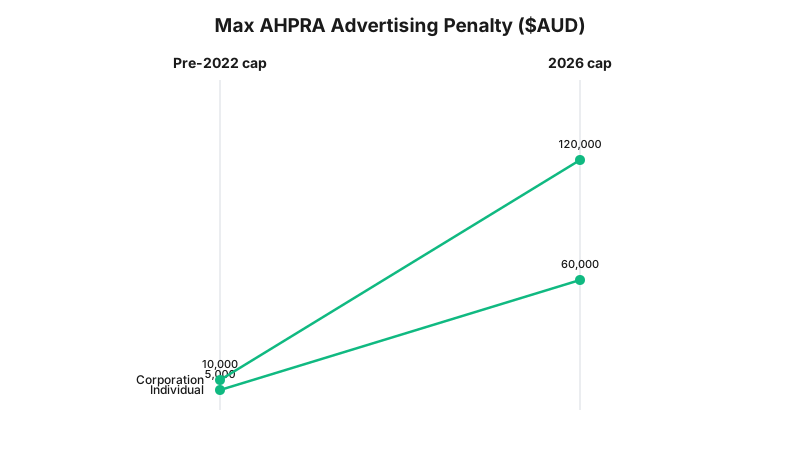
Takeaway: the penalty cap for a website breach is twelve times higher than it was before 2022. A page written under the old assumptions is a live liability, not a historical one.
The Guidelines That Apply If You Offer Injectables or Fillers
If your clinic offers cosmetic injectables, dermal fillers, thread lifts, sclerotherapy, or similar higher risk non-surgical procedures, a second, more specific document applies on top of the 13-category summary. The Guidelines for advertising higher risk non-surgical cosmetic procedures took effect 2 September 2025, developed by the National Boards under section 39 of the National Law.
The guidelines are explicit about scope. They define advertising as covering, among other channels, “the internet, including websites and social media.” There is no carve-out for a clinic’s own domain versus a paid placement. A treatment page that would breach the guidelines on a billboard breaches them sitting on your own server, indexed by Google.
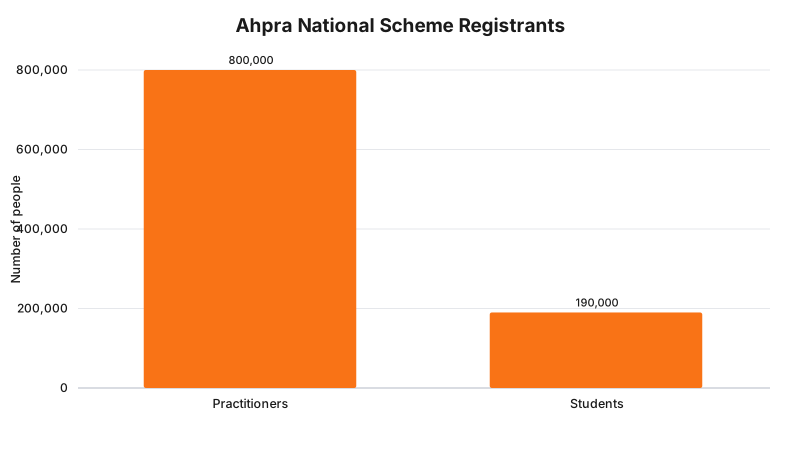
AHPRA also runs a dedicated Cosmetic Surgery Hotline, 1300 361 041, staffed Monday to Friday, 9am to 5pm AEST, for patients reporting bad experiences with cosmetic procedures. AHPRA’s National Scheme covers more than 800,000 registered practitioners and 190,000 students across 16 professions, all under the same advertising rules.
Takeaway: if your service pages mention injectables, fillers, or thread lifts by name, you are reading the stricter of two documents, and the internet is named in it directly.
Testimonials and Before/After Images Hiding on Your Own Pages
The higher risk guidelines get specific about testimonials in a way the 13-category summary only summarises. A testimonial is any positive statement about the clinical aspect of a service: the experience of, reason for, or outcome of a procedure, made directly or by comparison. Reposting a patient’s own social content, linking to third-party reviews, or liking a patient’s post about their results all count as using a testimonial.
Before and after images carry their own five-part test: both images must be genuine, of an actual patient treated by that practitioner; the most prominent image seen should be the “before” or a combined image, not a flattering “after” alone; both need matching lighting, angle, framing, and expression; neither can be edited or retouched; and the “after” image needs a stated timeframe since treatment.
A clinic’s AHPRA compliance review exists to catch this finding: content that has sat live on a service page for months, invisible to the clinic because it was never treated as advertising in the first place.
Takeaway: the testimonial and before/after rules were written with social media in mind, but they apply word for word to a gallery section built into your own website template.
What You’re Still Allowed to Say
None of this means a treatment page has to read like a legal disclaimer. The 13 categories describe what to remove or correct, not a ban on marketing. A compliant page can state a practitioner’s real registration and qualifications, list treatments offered, explain the consultation process, state realistic recovery information, show the total price, and carry a clear booking call to action.
A dedicated landing page per treatment earns its place through specificity: it lets you write accurate, treatment-specific risk information instead of a vague disclaimer on a generic services page. That specificity also improves enquiry quality, since a visitor who reads real risk and recovery information before booking arrives better informed, the outcome AHPRA’s guidelines are built around. A website built for cosmetic clinics treats this as the default.
Takeaway: the safest clinic website is not the vaguest one. Specific, accurate, evidence-backed treatment pages satisfy more of the 13 categories than a single generic page ever will.
Turning the Checklist Into an Actual Audit
Reading the 13 categories is not the same as knowing which ones your own site fails. A practical audit works through each service page against the table above, checks the home page hero and gallery sections separately, and reviews blog content that names specific outcomes or patient stories.
Content removed from a live page can still sit in Google’s cache. That is not an immediate liability, but if AHPRA opens a file, the removal date is worth documenting. The higher risk cosmetic procedure guidelines were last updated 2 September 2025, and requirements get revised over time, so a one-off audit goes stale. Build a recurring review into your operations, not a single task.
Takeaway: the 13-category table above is a starting checklist, not a finished audit. A page-by-page review against it is the only way to know your actual exposure.
FAQ
What are AHPRA’s advertising requirements for a clinic website?
AHPRA’s Summary of the Advertising Requirements, reviewed 2 September 2025, sets out 13 categories that apply to any advertising of a regulated health service, including a website. They cover accuracy, evidence, risk information, comparisons, titles, pricing, inducements, testimonials, personal anecdotes, before and after images, unnecessary check-ups, and time limited offers.
What is the maximum fine for a non-compliant clinic website?
Up to $120,000 per breach for a body corporate and $60,000 per breach for an individual practitioner, under section 133 of the National Law. These caps rose from $10,000 and $5,000 after a 2022 amendment, per AHPRA’s Advertising Compliance and Enforcement Strategy.
Do the higher risk cosmetic procedure guidelines apply to my website?
Yes, if you offer procedures such as cosmetic injectables, dermal fillers, thread lifts, or sclerotherapy. The Guidelines for advertising higher risk non-surgical cosmetic procedures, in effect since 2 September 2025, explicitly list “the internet, including websites and social media” as a covered form of advertising.
How do I check if my clinic website is compliant right now?
Get in touch with RockingWeb for an AHPRA compliance review of your website. We review every page against the current requirements and flag each finding against the specific category it falls under.
Get Your Website Checked Against All 13 Categories
RockingWeb reviews cosmetic clinic websites against AHPRA’s full advertising framework, from the 13-category summary through to the higher risk guidelines, and flags every finding against the specific rule it breaches.
Talk to us about your clinic’s website
Sources and References
AHPRA - the 13 categories, reviewed 2 September 2025
AHPRA - section 133 wording, penalty amounts, National Scheme registrant figures
AHPRA - higher risk guidelines: scope, testimonial and before/after rules
AHPRA - confirms the 2 September 2025 effective date
AHPRA - Cosmetic Surgery Hotline number and operating hours
Related reading:
- AHPRA Compliance Audit Checklist: a 12-point, channel by channel self-audit
- AHPRA Advertising Complaints Hit 380 a Year: the enforcement volume behind these rules
- Cosmetic Clinic Websites: compliant website builds for AHPRA-regulated clinics
For a website built to pass all 13 categories from the first draft, see ClinicPipeline or talk to us about your clinic’s marketing.
Vikas Thakur
Founder of RockingWeb. 16 years building for companies like TPG, iiNet and Monadelphous, now focused on websites and marketing that comply with AHPRA's advertising guidelines and still book patients.