TGA Fined a Nurse $11,880 in July 2026: Fix Your Website Copy
In July 2026 the TGA issued three infringement notices totalling $11,880 to a NSW registered nurse over unapproved injectable imports. The import case itself will not touch your website, but a separate, older TGA rule already bans naming injectable brands in health-service advertising, and that is the one your site copy needs to pass.
 Vikas Thakur Founder, RockingWeb 13 min read
On this page 11
- What the TGA said
- What this means for the build
- Decision matrix: what your website copy can and cannot say
- Worked example: a Perth cosmetic clinic’s treatment page
- What to check on your own site
- Is this being enforced, or just a risk on paper
- Where this gets hard
- Is this in force right now
- Frequently asked questions
- Ready to get your site checked before it becomes a case study
- Sources and last reviewed
In early July 2026 the Therapeutic Goods Administration issued three infringement notices totalling $11,880 to a New South Wales registered nurse over the alleged unlawful importation of unapproved cosmetic injectables, including botulinum toxin vials and lidocaine-containing pre-filled syringes that were never listed on the Australian Register of Therapeutic Goods (ARTG). The import case itself has nothing to do with any website. But it lands inside a stated TGA enforcement priority that runs through 2027, and the same regulator has a separate, older rule that already restricts what a clinic can say about injectables on its own site. That second rule, not the import case, is the one worth checking today.
What the TGA said
The TGA’s own account, reported by the industry outlet AJP on 7 July 2026 (“TGA fines unapproved botox importer”) and consistent with the regulator’s wider infringement notice practice, is straightforward. A NSW-based registered nurse allegedly imported unapproved vials of botulinum toxin type A and pre-filled syringes containing lidocaine. Neither product appeared on the ARTG, meaning the TGA had never assessed them for quality, safety or efficacy. The notices, issued and made public in early July 2026, total $11,880 across three separate infringement amounts, calculated under the civil penalty provisions of the Therapeutic Goods Act 1989 that cover importing therapeutic goods without registration or listing.
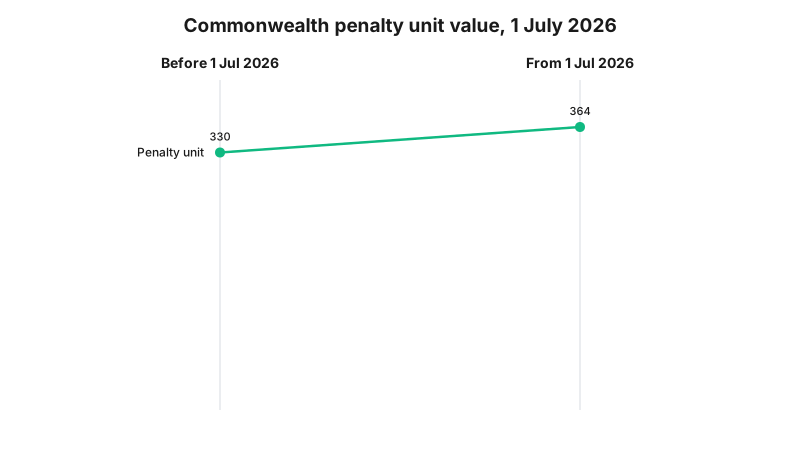
Two things about that figure matter for how you read it. First, an infringement notice is not a conviction. Paying one does not count as an admission of guilt and does not create a criminal record, it is an option the TGA can offer instead of pursuing prosecution or civil proceedings through the courts. Second, the TGA has no discretion to move the number. The amount is set by a statutory formula tied to the Commonwealth penalty unit, which itself rose from $330 to $364 on 1 July 2026, so the same alleged conduct now costs more to settle than it would have a year earlier.
None of that touches a website directly. The rule that does sits in a different piece of TGA guidance: an advertisement for a health service should not refer, directly or indirectly, to a prescription-only substance or to its trade name, including acronyms, nicknames, abbreviations and hashtags that a reasonable consumer would take as a reference to that substance. The TGA’s position, published in its “Referring to cosmetic injectables in advertising” guidance and reinforced in updated social media advertising guidance in November 2025, is that the safest path is not to name the therapeutic good used in a treatment at all. Advertise the service. Leave the product out.
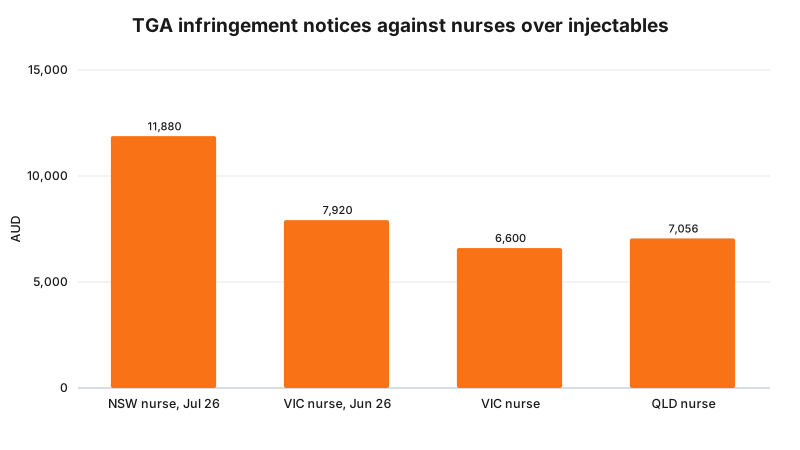
The NSW case is not an outlier. It is one of four verified nurse-specific infringement actions over cosmetic injectable imports, and every one of them started with the same underlying problem: stock that never went through the ARTG process.
What this means for the build
Read literally, the advertising rule is about copy, not code. In practice it touches almost every field a clinic website has.
Start with the visible page. Treatment page headings, body copy, meta titles and meta descriptions should not carry a specific injectable brand name if the page is promoting the service to the public. “Anti-wrinkle injectable consultations” clears the rule. “Botox injections” does not, because it names a prescription-only trade name in a context a reasonable consumer would read as promoting supply of that medicine.
Then go under the hood. Structured data on a treatment page, typically a MedicalProcedure or Service schema block, often has a free-text field that content teams fill in with whatever the treatment menu calls the item. If that field carries a brand name, search engines and AI answer engines index it exactly as written, which extends the same problem into a channel a human editor never reviews. The same applies to image alt text on before-and-after galleries, to downloadable PDF price lists linked from the site, and to any booking-flow dropdown that lists services by brand before a patient has had a clinical consultation.
URL slugs deserve a specific check. A page living at /treatments/botox/ keeps a brand-name reference live in a public, indexable, permanent location, independent of whatever the visible copy says. Renaming the slug to something generic and 301-redirecting the old URL is a fifteen-minute job that removes a standing exposure most compliance reviews miss because they only read the rendered page, not the address bar.
Finally, check any “TGA approved” or “ARTG listed” claim against the actual register at the time you publish it, and again on a schedule. ARTG listings can be varied, suspended or cancelled, and a claim that was accurate in January can be false by December without anyone on the clinic side changing a word.
Decision matrix: what your website copy can and cannot say
| Website element | Common current wording | Risk | Safer wording |
|---|---|---|---|
| Page title / H1 | Botox injections, Rockingham | Names a prescription-only trade name | Anti-wrinkle injectable consultations |
| Meta description | We offer Dysport and Juvederm | Names trade names in a search-indexed field | We offer a range of injectable treatments |
| Treatment menu line | Wrinkle reducing injections, from $350 | TGA guidance treats this as promoting the medicine, not the service | Injectable consultation, from $350 |
| Before/after caption | Results after one Botox session | Names the product and implies a guaranteed outcome | Results after one injectable treatment session, individual results vary |
| URL slug | /treatments/botox/ | Standing, indexable brand reference | /treatments/anti-wrinkle-injectables/ |
| Schema / JSON-LD field | Product field populated with drug trade name | Machine-readable, unreviewed reference | Left blank or filled with the generic service category |
Every row on the right still lets a patient work out what the appointment involves. None of it hides the treatment. It just stops naming the medicine.
Worked example: a Perth cosmetic clinic’s treatment page
Take a fictional but representative treatment page. The current copy reads: “We proudly offer Botox and Dysport treatments, performed by our AHPRA-registered nurse injector, TGA approved for safe, natural results.” That single sentence carries three separate problems: two prescription trade names, and an unqualified “TGA approved” claim about a service (the TGA approves goods on the ARTG, not clinical services or outcomes).
The rebuild looks like this. The H1 becomes “Anti-wrinkle injectable consultations with our AHPRA-registered nurse injector.” The meta description drops both brand names and any reference to a specific product. The URL moves from /treatments/botox-dysport/ to /treatments/anti-wrinkle-injectables/, with a 301 redirect from the old address so existing backlinks and bookmarks still resolve. The page’s MedicalProcedure schema keeps the generic service name and drops the free-text product field entirely. The “TGA approved” line is either removed or replaced with something the clinic can stand behind, such as naming the specific ARTG-listed product category used and linking to how a patient can check it themselves.
None of that changes what the clinic offers. It changes what a bot, a regulator, or an AI answer engine reading the page in isolation can conclude the site is advertising.
What to check on your own site
- Search your CMS site-wide for brand names: Botox, Dysport, Xeomin, Juvederm, Restylane, Radiesse, Sculptra, and any others your clinic stocks
- Check page titles and meta descriptions for the same terms, not just visible body copy
- Check URL slugs, and set up a 301 redirect for any that need renaming
- Check your booking-flow service selector, not only the marketing pages a human reads
- Check structured data (JSON-LD) on treatment pages for a product or ingredient field carrying a trade name
- Check any downloadable PDF price list or emailed flyer linked from the site
- Check every “TGA approved” or “ARTG listed” claim against the current register entry, not the one that was true when the page was written
- Check third-party review widgets and user-submitted content on your domain for brand mentions you did not write but that still appear on your site
Is this being enforced, or just a risk on paper
The July 2026 NSW case is one of four verified nurse-specific TGA infringement actions over cosmetic injectable imports, alongside a Victorian nurse fined $7,920 in June 2026 (alongside a Victorian individual fined $11,880 in the same matter), and a separate TGA release, “Two nurses fined for allegedly importing unapproved cosmetic injectables,” covering a Victorian nurse fined $6,600 and a Queensland nurse fined $7,056. The Queensland matter is the closest verified case connecting import and advertising directly: the TGA’s own account states that nurse was also penalised for advertising prescription-only medicines on social media.
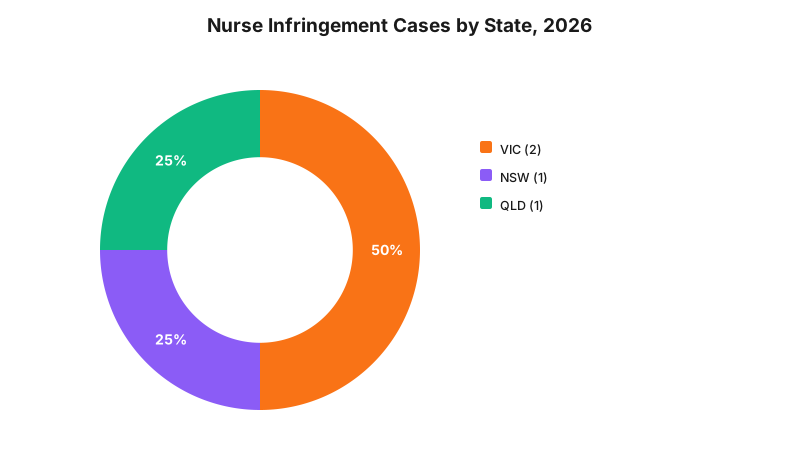
The four verified nurse cases split across three states: two in Victoria, one each in New South Wales and Queensland. No single state accounts for a majority of the confirmed actions, which is consistent with a national enforcement priority rather than one regulator office running a local campaign.
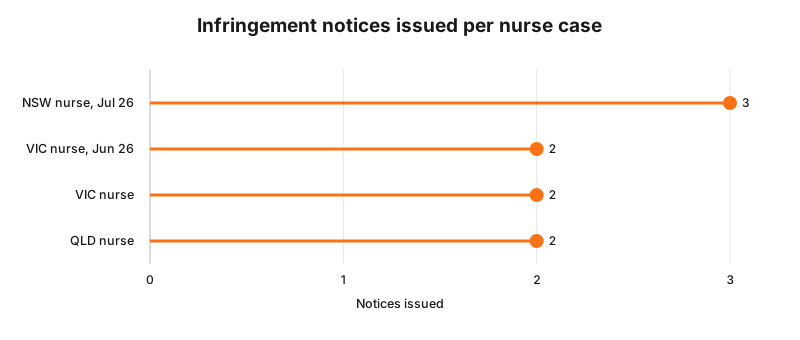
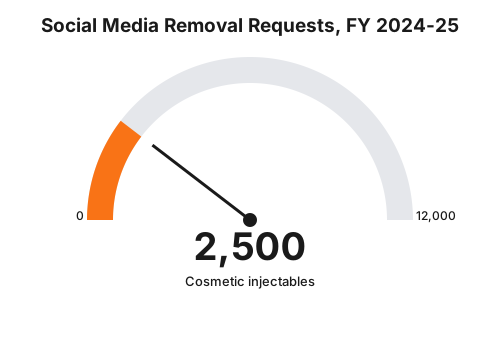
That pattern, more than two notices per matter on average, sits inside a stated enforcement priority. The TGA’s Compliance Principles for 2026 and 2027, published January 2026, name “therapeutic goods used in cosmetic procedures” as one of twelve priority focus areas for the full two-year window, and the regulator separately reported more than 12,000 social media removal requests in the 2024-25 financial year, more than 2,500 of them relating to cosmetic injectable products.
The advertising rule and the import rule are enforced by the same agency, in the same period, against the same professional group.
Where this gets hard
Be clear about what the public record does and does not show. The TGA’s July 2026 release concerns an import offence. Nothing in that release, or in any secondary reporting of it, confirms what the nurse’s own website said, or whether website copy played any part in how the matter was detected. Treating this specific case as proof that a particular clinic’s website copy caused a particular fine would be an invented connection, not a reported one, and this guide has not made that claim.
The genuine difficulty sits in the advertising rule itself. The TGA has published a clear principle (do not name the therapeutic good), but it has not published an exhaustive word list, and terms that were treated as acceptable service-level language in one year of guidance have been withdrawn in the next, as happened with “wrinkle reducing injections.” A page that felt safe when it was written can drift out of line as guidance updates, with no change on the clinic’s end. The regulator says an advertisement for a health service should not refer, directly or indirectly, to a prescription-only substance or its trade name; the build consequence is that any page, schema field, PDF or booking-flow label naming a specific injectable brand is a candidate for rewrite; whether a particular page of your site crosses that line is a question for your medical defence organisation or your lawyer.
Is this in force right now
As at 13 August 2026, both rules discussed here are in force, not proposals and not pending commencement. The TGA’s restriction on naming prescription-only substances and trade names in health-service advertising is standing guidance under the Therapeutic Goods Advertising Code framework, most recently reinforced through updated social media advertising guidance in November 2025. The civil penalty provisions the TGA relied on for the July 2026 NSW nurse infringement notices, covering import of unapproved therapeutic goods, are also currently in force under the Therapeutic Goods Act 1989. Neither is a Bill awaiting passage or a scheme awaiting a start date.
Frequently asked questions
What did the TGA fine the nurse for in July 2026?
For allegedly importing unapproved therapeutic goods, not for anything on a website. The TGA issued three infringement notices totalling $11,880 to a NSW registered nurse over unapproved vials of botulinum toxin and lidocaine-containing pre-filled syringes that were not listed on the Australian Register of Therapeutic Goods.
Can I name Botox or another injectable brand on my clinic website?
The TGA’s standing advertising guidance says an advertisement for a health service should not refer, directly or indirectly, to a prescription-only substance or its trade name, including acronyms, nicknames and hashtags. That applies to page copy, meta tags, alt text and PDFs, not just paid ads.
Is a TGA infringement notice the same as being found guilty in court?
No. Paying an infringement notice is not an admission of guilt or liability and does not create a criminal record. It is an alternative the TGA can offer instead of referring a matter for prosecution or civil proceedings.
Does this nurse also face AHPRA action, separately from the TGA?
Possibly, but that is a separate regulator with a separate process, and the public record of the TGA case does not confirm an AHPRA outcome. As a registered nurse she sits under AHPRA’s September 2025 Guidelines for registered health practitioners who perform non-surgical cosmetic procedures, not the Medical Board’s separate guidelines that apply to doctors.
How do I check whether an injectable product is TGA-approved before I mention it?
Search the product name on the Australian Register of Therapeutic Goods (ARTG), which the TGA maintains publicly. A listing confirms the product has been assessed for quality, safety or efficacy at the time you check. Re-check periodically, because ARTG entries can be varied, suspended or cancelled.
Ready to get your site checked before it becomes a case study
If you stock ARTG-listed products and run a compliant clinic, the fix here is usually an afternoon of copy and schema edits, not a rebuild. If you are not sure what your own treatment pages, PDFs and structured data currently say, talk to us about your clinic’s website and we will tell you within one business day what we find and what it takes to fix it.
Sources and last reviewed
- Therapeutic Goods Administration, infringement notices register and media releases (tga.gov.au), the primary source for every dollar figure and date in this guide. www.tga.gov.au blocks automated fetching, so figures here were cross-checked against the reachable secondary reporting below rather than a direct TGA page fetch.
- AJP (Australian Journal of Pharmacy), “TGA fines unapproved botox importer,” published 7 July 2026, reporting the NSW nurse infringement notices.
- Medtree, “TGA Fines Victorian Pair Over Illegal Cosmetic Injectable Imports,” published 17 June 2026, reporting the Victorian nurse fined $7,920 and the Victorian individual fined $11,880 in the same matter.
- Therapeutic Goods Administration, “Two nurses fined for allegedly importing unapproved cosmetic injectables,” media release, reporting a Victorian nurse fined $6,600 and a Queensland nurse fined $7,056, the latter also penalised for advertising prescription-only medicines on social media; corroborated via the TGA’s official LinkedIn account.
- Therapeutic Goods Administration, “Referring to cosmetic injectables in advertising,” guidance on naming prescription-only substances and trade names in health-service advertising.
- Therapeutic Goods Administration, social media advertising guidance, November 2025, reporting more than 12,000 social media removal requests in the 2024-25 financial year, more than 2,500 relating to cosmetic injectable products.
- Therapeutic Goods Administration, Compliance Principles 2026 and 2027, published January 2026, naming cosmetic injectables an enforcement priority through the two-year window.
- Therapeutic Goods Act 1989 (Cth), civil penalty provisions covering import of unapproved therapeutic goods.
- Crimes Act 1914 (Cth), penalty unit value, confirming the increase from $330 to $364 from 1 July 2026.
- Australian Health Practitioner Regulation Agency, Guidelines for registered health practitioners who perform non-surgical cosmetic procedures, in effect from 2 September 2025.
Last reviewed 13 August 2026. Regulator sources checked 13 August 2026.
Vikas Thakur
Founder of RockingWeb. 16 years building for companies like TPG, iiNet and Monadelphous, now focused on websites and marketing that comply with AHPRA's advertising guidelines and still book patients.