Google Reviews and AHPRA: A Reply Can Cost You $120K
A five-star Google review is not an AHPRA problem on its own. Liking, sharing, or replying to one with outcome language can turn it into a breach worth up to $120,000 for a clinic, under AHPRA's own testimonial guidance.
 Vikas Thakur Founder, RockingWeb 8 min read
On this page 9
- Key Takeaways
- What Counts as a Testimonial Under AHPRA’s Rules
- Why Most Google Reviews Are Already Compliant
- Where Clinics Actually Get This Wrong: Replying and Sharing
- The Penalty If a Reply Crosses the Line
- What This Means for Your Clinic’s Website
- FAQ
- Get Your Google Reviews and Website Checked
- Sources and References
Key Takeaways
- AHPRA’s testimonial ban only catches a Google review if it references a clinical aspect: a symptom, a diagnosis or treatment, or an outcome, whether stated directly or by comparison
- A breach can carry a maximum penalty of $120,000 per breach for a body corporate and $60,000 for an individual practitioner, under a 2022 amendment to the National Law
- Reviews that only cover customer service or communication style are not testimonials under the National Law and can be published or shared freely
- The 2022 amendment raised both penalty caps twelvefold, from $5,000 and $10,000 to their current levels
- AHPRA states advertisers are not responsible for removing reviews on third-party platforms they do not control, such as Google
- Liking, sharing, or replying to a review with outcome language may count as using that review as a testimonial in the clinic’s own advertising
- AHPRA’s cosmetic procedure advertising guidelines took effect 2 September 2025, strengthening the testimonial ban for social media influencers specifically
- Once AHPRA finds a breach, an advertiser typically gets 30 days to correct it before the matter escalates
- Western Australia has not adopted the higher national penalty caps; a different, lower regime applies there
A five-star Google review sitting on your clinic’s listing is not, by itself, an AHPRA problem. What can turn it into one is liking it, sharing it to Instagram, or replying “so glad you loved your results”, and the maximum penalty for that mistake is $120,000 per breach for a clinic, or $60,000 for an individual practitioner, under the Health Practitioner Regulation National Law. AHPRA draws a specific line here: a review only counts as a banned testimonial if it references a clinical aspect, meaning a symptom, a diagnosis or treatment, or an outcome. Most reviews about friendliness, wait times, or the general experience of a visit clear that bar easily and stay perfectly legal to leave up. The risk sits in what the clinic does next with the reviews that do cross the line. This guide sets out AHPRA’s actual test for Google reviews, drawn from its own published guidance, and what it means for the review widgets and reply templates already live on your clinic’s website.
What Counts as a Testimonial Under AHPRA’s Rules
AHPRA’s advertising guidelines define a testimonial as a recommendation or positive statement about the clinical aspects of a regulated health service, used in advertising. A clinical aspect exists if the review expresses one of three things: a symptom or reason for seeking treatment, a specific diagnosis or treatment provided, or an outcome, including the practitioner’s skills or experience, stated directly or by comparison.
That test is narrower than most clinic owners assume. AHPRA’s own guidance is explicit: not all reviews or positive comments about a regulated health service are testimonials. A comment about customer service or communication style, with no reference to a clinical aspect, sits outside section 133’s advertising ban entirely.
| Review text | Clinical aspect present? | Testimonial under section 133? |
|---|---|---|
| ”Reception was lovely and the clinic was spotless.” | No | No |
| ”Staff explained everything and I never felt rushed.” | No | No |
| ”My lips have never looked more natural, best filler in Perth.” | Yes, outcome | Yes |
| ”Fixed my acne scarring completely, so happy with the result.” | Yes, outcome | Yes |
Takeaway: the test is not whether a review is positive. It is whether the review talks about a symptom, a treatment, or an outcome, and a large share of everyday Google reviews never touch any of those.
Why Most Google Reviews Are Already Compliant
Reviews that cover the experience of getting treated, not the treatment itself, are allowed in advertising under AHPRA’s own guidance. That includes star ratings, comments about parking, comments about how a consultation felt, and anything else that stops short of describing a clinical outcome.
RockingWeb can check the reviews already surfaced on your homepage, treatment pages, and Google Business Profile against exactly this test, rather than leaving clinic owners to guess which five-star reviews are safe to keep visible and which ones need attention.
Where the risk actually sits is in edited or selectively published reviews. AHPRA’s guidance treats selective editing as potentially misleading in its own right, separate from the testimonial rule: publishing a review with the negative parts trimmed out, or only publishing the positive reviews from a longer list, can breach the National Law’s requirement that advertising not be false, misleading, or deceptive.
Takeaway: leaving genuine, unedited reviews live on a Google Business Profile is not the compliance risk most clinics assume it is. Curating which reviews get seen is.
Where Clinics Actually Get This Wrong: Replying and Sharing
The prohibition on testimonials only applies when an advertiser uses a testimonial to advertise a regulated health service. For a review sitting on a genuine third-party platform, such as Google, that the clinic does not control, AHPRA’s guidance is clear: the clinic is not responsible for removing it and does not need to try.
That protection has a limit. AHPRA’s own testimonial guidance warns that advertisers should take care if they choose to engage with reviews on third-party websites, because doing so may be considered using that review as a testimonial. Liking a review that describes an outcome, sharing it to Instagram Stories, or replying with language like “so glad you loved your filler results” moves that content into the clinic’s own advertising, where the section 133 test applies in full.
Takeaway: the review itself is usually someone else’s speech. The moment a clinic account likes, shares, or echoes the clinical content back, it becomes the clinic’s own advertising.
The Penalty If a Reply Crosses the Line
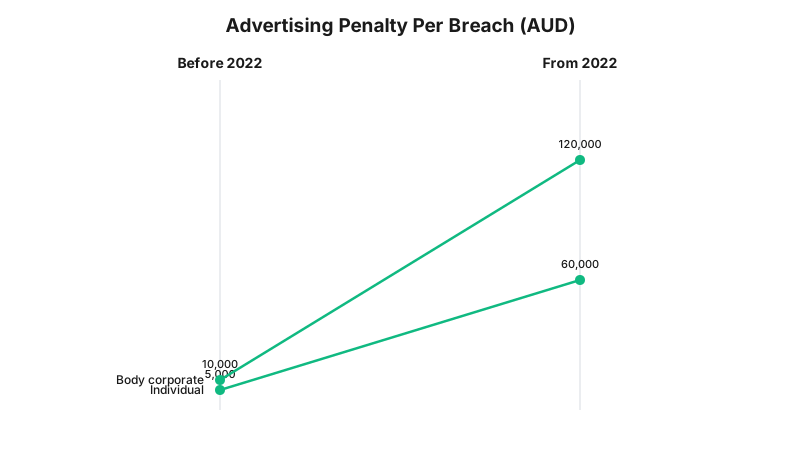
Before 2022, a single advertising breach carried a maximum penalty of $5,000 for an individual and $10,000 for a body corporate under the National Law. A 2022 amendment raised both caps twelvefold.
| Entity | Penalty before 2022 | Penalty from 2022 |
|---|---|---|
| Individual practitioner | $5,000 | $60,000 |
| Body corporate (clinic) | $10,000 | $120,000 |
Each non-compliant reply or share can be treated as a separate breach. Clinics operating in Western Australia should note one exception: the state has not adopted the higher national caps, and a different, lower penalty regime still applies there.
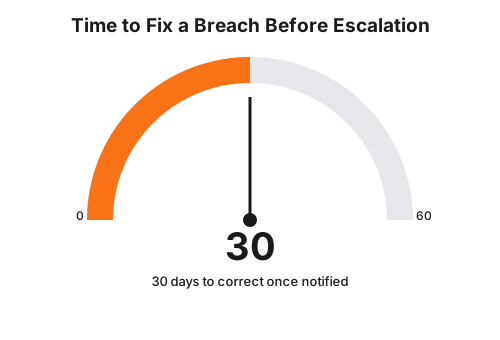
Once AHPRA identifies a breach, most cases follow the same path: a review of the advertising, a risk assessment, and a written notice giving the advertiser 30 days to correct it before the matter escalates further.
Takeaway: the financial exposure for a single non-compliant review reply is the same as for any other testimonial breach, and the correction clock only starts once AHPRA has already reviewed, assessed, and written to the advertiser.
What This Means for Your Clinic’s Website
The clinical aspect test is the same test that decides what belongs on a treatment landing page. A page built around quoted outcomes and review widgets that highlight clinical results carries the same section 133 exposure as a reply that echoes those results back. A website built for cosmetic clinics keeps review displays, credentials, and procedure education on one side of that line, and outcome-based social proof on the other.
That separation affects enquiry quality too. A page that leans on outcome claims and edited review snippets attracts enquiries based on an expectation AHPRA has already decided is unrealistic to advertise, which shows up later as consultations that do not convert. Pages built around procedure education, credentials, and genuine reviews sidestep the problem entirely.
Takeaway: the safest way to use Google reviews on a clinic website is to leave them exactly as written, and to keep clinic replies focused on service, not results.
FAQ
Does AHPRA ban all Google reviews for cosmetic clinics?
No. AHPRA’s guidance is specific to reviews that reference a clinical aspect, meaning a symptom, a diagnosis or treatment, or an outcome. A review that only covers customer service or communication style is not a testimonial under the National Law and clinics are not required to remove it.
Can I reply to a Google review on my clinic’s page?
Yes, but AHPRA warns that engaging with a review on a third-party site, by liking, sharing, or replying with outcome language, may be treated as using that review as a testimonial in your own advertising. A neutral thank-you reply carries far less risk than “so glad you loved your results”.
Am I responsible for removing reviews I did not ask for and cannot control?
No. AHPRA’s own guidance states that advertisers are not responsible for removing, or trying to remove, testimonials published on platforms they do not control, including third-party review sites and discussion forums.
What is the maximum penalty if a review reply breaches AHPRA’s rules?
Up to $120,000 per breach for a body corporate and $60,000 for an individual practitioner, under a 2022 amendment to the Health Practitioner Regulation National Law. Western Australia has not adopted these higher caps, and a different, lower penalty regime applies there.
Get Your Google Reviews and Website Checked
RockingWeb checks the reviews, widgets, and reply templates already live on your clinic’s website and Google Business Profile against AHPRA’s current testimonial test, and flags anything that crosses the clinical aspect line.
Sources and References
AHPRA - “Testimonials: Understand the requirements”: the clinical aspect test, the third-party review platform examples, and the guidance on engaging with reviews
AHPRA - Advertising compliance and enforcement strategy: the 2022 penalty increase to $60,000/$120,000 and the Western Australia exception
AHPRA - How we manage advertising complaints: the review, assess, and act process and the 30-day correction window
AHPRA - “Putting patients first: New guidelines for cosmetic procedures”: the 2 September 2025 effective date and the strengthened influencer testimonial ban
Related reading:
- AHPRA Testimonial Ban: Fines Jumped 12x to $120K in 2022: the full testimonial rule and penalty history
- AHPRA Social Media Rules for Cosmetic Clinics: platform-by-platform compliance guidance
- AHPRA Advertising Fines for Cosmetic Clinics: the full penalty structure
- Cosmetic Clinic Websites: compliant website builds for AHPRA-regulated clinics
For review widgets and reply templates that stay inside the rules from day one, see talk to us about your clinic’s marketing.
Vikas Thakur
Founder of RockingWeb. 16 years building for companies like TPG, iiNet and Monadelphous, now focused on websites and marketing that comply with AHPRA's advertising guidelines and still book patients.