2 Review Tactics Google Banned for Clinics in April 2026
Google's Maps content policy now explicitly bans directing staff to chase a set number of reviews and directing staff to solicit reviews that name a staff member, on top of the existing ban on pressuring patients to review while still on the premises. The wording reached Google's support pages in April 2026.
 Vikas Thakur Founder, RockingWeb 9 min read
On this page 9
- Key takeaways
- What Google’s Policy Actually Says
- Why April 2026, and Why No Announcement
- The Front-Desk Ask Now Breaks Two or Three Rules at Once
- This Is a Different Rule From AHPRA’s Testimonial Ban
- What to Change on Your Website and Front Desk
- FAQ
- Get Your Clinic’s Review Process Checked Against Both Rulebooks
- Sources and References
Key takeaways
- Google’s Prohibited and restricted content policy now bans two specific staff-directed tactics: chasing a set number of reviews, and asking a patient to name a staff member in one
- Both new bans sit inside the existing rule that merchants must not pressure anyone to leave a rating or write a review while on the premises, unchanged since before 2026
- The updated wording reached Google’s own support pages in April 2026 (16 and 17 April, per trade coverage), with no formal Google announcement accompanying it
- A front-desk review kiosk or tablet handed over at check-out can breach two or three separate parts of Google’s policy at once: on-premises pressure, plus either staff-count solicitation or staff-name solicitation
- Google enforces breaches through its Fake Engagement and Rating Manipulation policies, which can mean blocked or removed reviews and restricted profile features
- This is separate from AHPRA’s own testimonial ban under section 133 of the Health Practitioner Regulation National Law, which restricts using a patient’s clinical comment in advertising, not how the review was collected
- The recommended alternative in current SEO guidance is a follow-up request sent by SMS or email 2 to 24 hours after the visit, off the clinic’s premises entirely
Google’s own review policy just closed a gap every cosmetic clinic in Australia has been standing in. For years, handing a patient the front-desk iPad, or a shared tablet at check-out, was standard practice: ask before they leave, catch the good mood, get the star rating locked in. That was already against Google’s rules on pressuring anyone to review while on the premises. What changed in April 2026 is more specific. Google’s Maps content policy now names two extra tactics as violations in their own right: telling staff to chase a set number of reviews, and telling staff to ask a patient to mention them by name. Neither change came with a press release. Both are sitting in Google’s policy documentation right now, and both apply the moment a clinic’s front desk asks for a review before the patient walks out the door. Here is what the wording actually says, and what it means for the review request your practice is running this week.
What Google’s Policy Actually Says
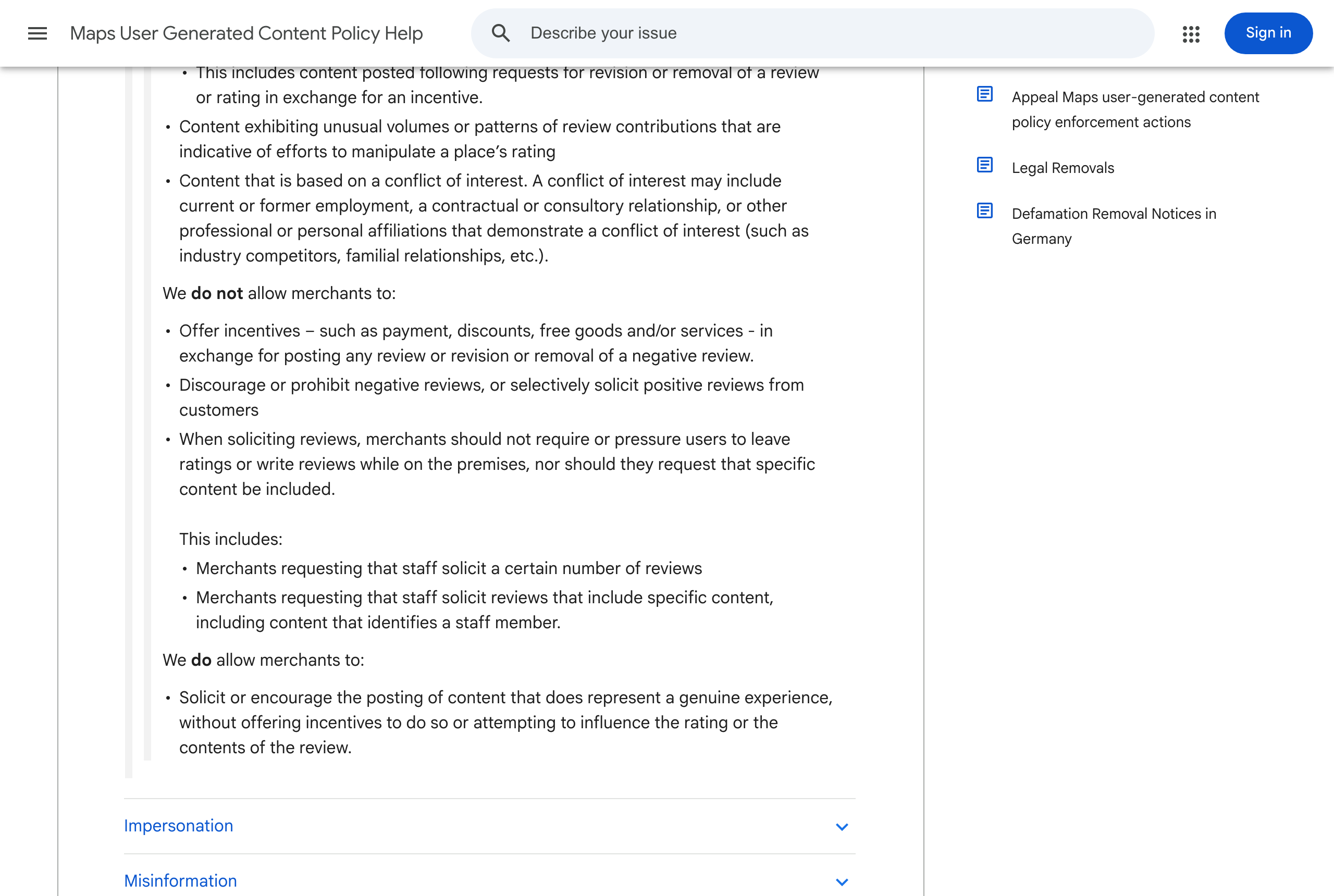
Google’s Maps User Generated Content Policy sits inside its “Prohibited and restricted content” help pages, under a section called Rating Manipulation. It is not a new document, but the Rating Manipulation section was tightened in April 2026 with wording that was not there before.
The core sentence has not changed: “When soliciting reviews, merchants should not require or pressure users to leave ratings or write reviews while on the premises, nor should they request that specific content be included.” What is new sits directly underneath it. Google now spells out that this includes “merchants requesting that staff solicit a certain number of reviews” and “merchants requesting that staff solicit reviews that include specific content, including content that identifies a staff member.”
Both practices were common. A monthly staff competition tied to review counts, or a script that has the nurse say “mention my name if you leave us a review,” used to be a growth tactic clinics could run without much thought. Under the current wording, both are named violations.
Takeaway: the ban on asking for a review at the counter is not new. What is new is that Google now separately bans the two most common ways clinics dressed that ask up: a quota, and a name.
Why April 2026, and Why No Announcement
Google did not publish a press release for this change. Reporting from search marketing trade press dates two separate updates within 48 hours of each other in mid-April 2026: defensive protections against fake and scam content on 16 April, and the tightened Rating Manipulation wording, including the staff-quota and staff-name bans, on 17 April. Coverage discussing the change was published from late April 2026 onward, after practitioners monitoring Google’s support pages noticed the wording had shifted.
That matters for how a clinic should treat this. There was no lead-in period, no compliance deadline, and no warning email to profile owners. The policy simply reads differently than it did before, and enforcement runs on Google’s existing Fake Engagement and Rating Manipulation systems, which restrict a profile’s ability to display or collect reviews once a violation is identified.
| What changed | Where it sits | When it appeared |
|---|---|---|
| Ban on staff soliciting a set number of reviews | Rating Manipulation policy | 17 April 2026 (trade press) |
| Ban on staff soliciting reviews naming a staff member | Rating Manipulation policy | 17 April 2026 (trade press) |
| Ban on pressuring a review while on the premises | Rating Manipulation policy | Pre-existing, unchanged |
| Ban on incentivised reviews | Rating Manipulation policy | Pre-existing, unchanged |
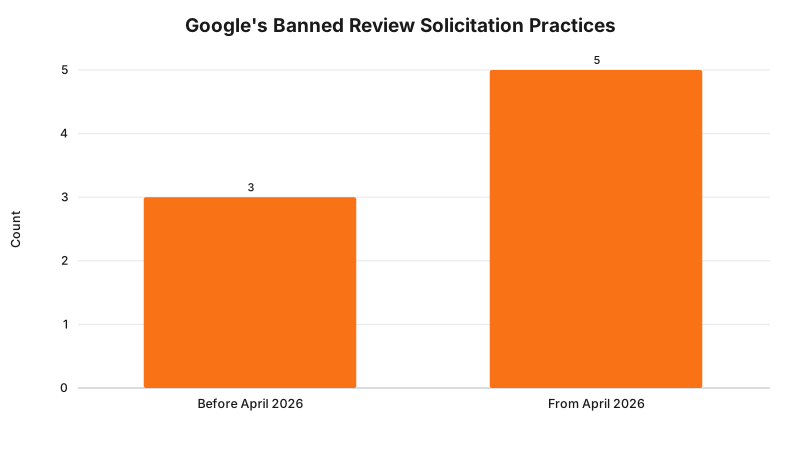
Takeaway: the underlying practice, front-desk pressure, was already off limits. What April 2026 added was Google naming the two specific ways clinics were routing around it.
The Front-Desk Ask Now Breaks Two or Three Rules at Once
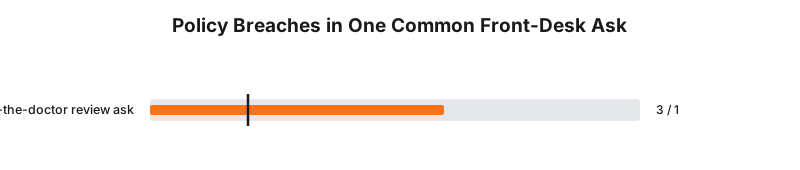
Picture the standard version of this: a patient finishes an appointment, the receptionist hands over an iPad already open to the Google review screen, and says something like “if you could mention Dr. Aria, that’d be great.” That single interaction can trip three separate parts of Google’s policy simultaneously: pressure while on the premises, staff soliciting a specific volume (if it is part of a running tally), and staff soliciting content that names an individual.
None of this needs malicious intent to trigger. A well-meaning front-desk script written before April 2026 can breach the current wording without anyone at the clinic realising the policy moved. That is exactly the kind of gap a periodic free compliance read of your site is built to catch on the advertising side, and the same discipline applies here: check what your team is actually saying at the counter against what the platform currently allows, not what it allowed a year ago.
Takeaway: a script written in good faith can still breach three separate rules at once if it was never updated against the current wording.
This Is a Different Rule From AHPRA’s Testimonial Ban
It is easy to fold this into AHPRA’s existing testimonial restrictions, but the two are not the same rule and do not solve the same problem. AHPRA’s rule, covered in full in our guide to the testimonial ban, governs whether a clinic can use a patient’s comment about their clinical outcome in its own advertising, section 133 of the National Law, regardless of where that comment came from.
Google’s policy governs something earlier in the chain: how the review was collected in the first place. A clinic could theoretically publish a testimonial that passes AHPRA’s clinical-content test and still have broken Google’s collection rules to get it. The two checks are separate, and a compliance review needs to run both, not one in place of the other.
| Rule | Governs | Who enforces it |
|---|---|---|
| Google Rating Manipulation policy | How a review is solicited and collected | Google (profile restrictions) |
| AHPRA section 133 testimonial ban | Whether a clinical comment can be used in advertising | AHPRA (National Law) |
Takeaway: passing one of these checks says nothing about the other. A clinic needs both its review-collection process and its published testimonials checked on their own terms.
What to Change on Your Website and Front Desk
Google’s own guidance under the policy’s “we do allow” section still permits clinics to solicit reviews generally. What it forbids is a number target, a named-staff request, or any pressure applied while the patient is still there. The safer version of the same ask moves off the premises and off the moment of pressure entirely: a text or email sent two to 24 hours after the appointment, with no staff name attached and no running tally behind it.
For a clinic’s website, this also touches any on-page prompt that nudges a visitor toward leaving a review with a specific phrase, and any staff-facing script published as part of onboarding material. If your clinic website includes a post-visit automation, a thank-you page, or a check-out screen that solicits reviews, that flow is now inside the same policy scope as the front-desk iPad.
Takeaway: the fix is timing and wording, not abandoning review requests altogether. Move the ask off the premises, drop the name, drop the quota.
FAQ
Did Google ban asking patients for a review at the front desk?
Google’s Rating Manipulation policy has long banned pressuring anyone to leave a rating or write a review while on the premises. What changed in April 2026 is two additional, staff-specific bans layered on top of that rule.
What exactly did Google add to its review policy in April 2026?
Google’s Prohibited and restricted content policy now explicitly bans merchants from directing staff to solicit a certain number of reviews, and from directing staff to solicit reviews that include specific content, including content naming a staff member.
Is this the same rule as AHPRA’s testimonial ban?
No. Google’s policy governs how reviews are collected on Google’s own platform and applies to every business type. AHPRA’s testimonial ban, under section 133 of the National Law, governs whether a clinic can use a patient’s comment about clinical treatment in its own advertising, wherever that comment came from.
What happens if a clinic keeps using a review kiosk or tablet at check-out?
Google enforces its Fake Engagement and Rating Manipulation policies through profile-level restrictions, which can include blocking new reviews from posting or removing reviews already collected that way, according to Google’s Business Profile restrictions page.
Get Your Clinic’s Review Process Checked Against Both Rulebooks
RockingWeb reviews cosmetic clinic websites and front-desk workflows against Google’s platform rules and AHPRA’s advertising rules in the same pass, so a fix on one side does not leave a gap open on the other.
Sources and References
Google
- “Prohibited & restricted content”, Maps User Generated Content Policy Help: the Rating Manipulation section, including the premises ban and the staff-quota and staff-name solicitation bans
Google
- “Business Profile restrictions for policy violations”: how Google enforces Fake Engagement and Rating Manipulation breaches
Launchcodex
- “Google Business Profile review policy update (April 2026): What’s now banned”, published 21 April 2026: dates the 16 and 17 April 2026 policy changes and the prior common use of staff quotas and staff-name requests
Three Chapter Media
- “Google Business Profile Review Policy 2026: What Changed”, published 22 April 2026: corroborates the staff-name and on-premises bans and cites Google’s policy page as the authoritative source
Related reading:
- 70% More Visits: Google Business Profile Statistics Australia: the visibility case for a complete, active Google Business Profile
- AHPRA Testimonial Ban: Fines Jumped 12x to $120K in 2022: the separate rule governing whether a review can be used in your own advertising
For a full review of your clinic’s review collection process against both Google’s platform rules and AHPRA’s advertising rules, see ClinicPipeline or talk to us about your clinic’s marketing.
Vikas Thakur
Founder of RockingWeb. 16 years building for companies like TPG, iiNet and Monadelphous, now focused on websites and marketing that comply with AHPRA's advertising guidelines and still book patients.