$2.9M ACCC Fine: How to Run Compliant Clinic Google Reviews
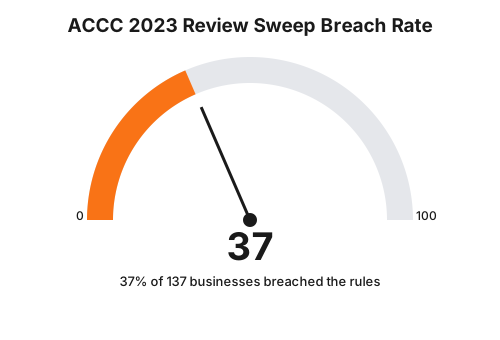
The Federal Court fined an Australian health booking platform $2.9 million in 2020 for editing and withholding patient reviews. A separate ACCC sweep found 37% of 137 businesses reviewed had broken the same rules. Here is what that means for a cosmetic clinic's review strategy.
 Vikas Thakur Founder, RockingWeb 9 min read
On this page 9
- Key takeaways
- The $2.9 Million Case That Set the Bar for Health Reviews
- The ACCC’s Rules for Any Business That Collects Reviews
- Where AHPRA’s Rules Add a Second Layer
- A Compliant Review Request Process
- What This Means for Your Clinic’s Website
- FAQ
- Get a Free Review of Your Clinic’s Review Strategy
- Sources and References
Key takeaways
- The Federal Court ordered HealthEngine to pay $2.9 million in penalties on 20 August 2020 for editing and withholding patient reviews
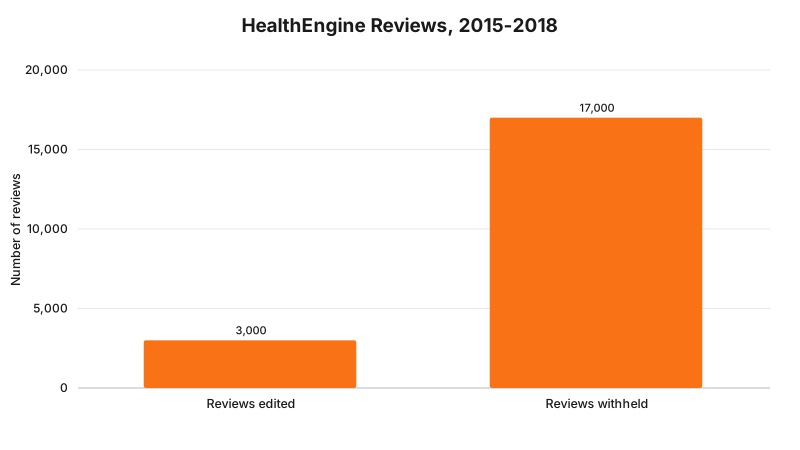
- HealthEngine edited about 3,000 reviews to remove negative content, and did not publish roughly 17,000 more, between March 2015 and March 2018
- Online marketplace Service Seeking paid $600,000 in penalties on 22 July 2020 after around 17,000 of 21,000 reviews on its platform were auto-published from business-drafted templates
- In a national sweep published 7 December 2023, the ACCC found 37% of the 137 businesses it reviewed had engaged in concerning review conduct
- Removalist Citymove paid a $6,600 infringement notice in 2011 for copying testimonials from another website and republishing them as its own
- An AHPRA advertising breach carries a maximum penalty of $120,000 per breach for a body corporate, current since a 2022 amendment to the National Law
- AHPRA’s separate testimonial ban only catches a review if it describes a clinical aspect: a symptom, a diagnosis or treatment, or an outcome
An Australian health booking platform was ordered to pay $2.9 million in Federal Court penalties in 2020. The reason: it edited around 3,000 patient reviews to strip out negative comments, and did not publish roughly 17,000 more. That case, against HealthEngine, sits inside a wider pattern: the ACCC’s most recent national review sweep, published in December 2023, found 37% of the 137 businesses it checked had broken the same rules. A cosmetic clinic collecting Google reviews sits under two separate rulebooks at once, the ACCC’s rules on genuine, unedited reviews, and AHPRA’s own ban on reviews that read like a testimonial. This guide sets out what both require, with the enforcement history behind them, and what it means for the reviews already on your clinic’s website.
The $2.9 Million Case That Set the Bar for Health Reviews
HealthEngine ran an online booking system for patients and healthcare providers. Between March 2015 and March 2018, it edited around 3,000 collected reviews to soften or remove negative content, and did not publish roughly 17,000 more at all. It also misrepresented to consumers why ratings were not showing for some practices. The Federal Court found this breached the Australian Consumer Law’s ban on misleading conduct and ordered HealthEngine to pay $2.9 million in penalties, alongside a separate finding about sharing patient contact details with insurance brokers. That is not a single bad review quietly deleted. It is a systematic pattern, run over three years, on a platform patients used specifically to choose a healthcare provider.
Takeaway: the ACCC’s biggest review-related penalty in the health sector was not about a single fake review. It was about a business deciding, thousands of times, which genuine reviews its patients were allowed to see.
The ACCC’s Rules for Any Business That Collects Reviews
HealthEngine is not an isolated case. The ACCC’s own guidance lists the conduct that breaches the Australian Consumer Law: creating fake reviews, editing or suppressing negative ones, letting staff or family post undisclosed reviews, and offering incentives without disclosing the arrangement or applying it equally to positive and negative feedback.
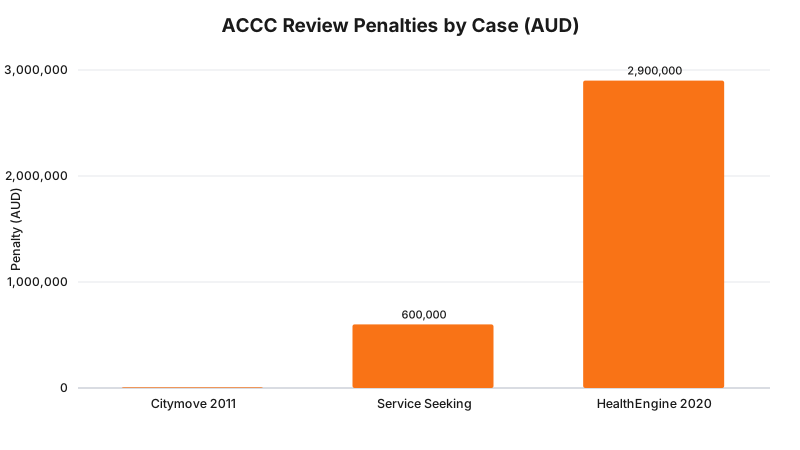
Two other cases show this applies well beyond healthcare. Online marketplace Service Seeking ran a “Fast Feedback” feature that let businesses write their own reviews and pick a star rating, auto-publishing if the actual customer did not respond within three days. Around 17,000 of roughly 21,000 reviews made this way went live without any customer involvement, and the Federal Court ordered a $600,000 penalty in July 2020. Further back, in 2011, removalist Citymove copied testimonials from an unrelated review website and republished them on its own site as genuine, and paid a $6,600 infringement notice.
The ACCC’s December 2023 sweep shows this is not a settled problem from a decade ago. Of 137 businesses reviewed that year, 37% had engaged in conduct the ACCC considered concerning, spanning fake reviews, undisclosed incentives, and selectively published feedback.
| Business | Penalty (AUD) | Year | What went wrong |
|---|---|---|---|
| Citymove | $6,600 | 2011 | Copied testimonials from another site and republished them as its own |
| Service Seeking | $600,000 | 2020 | Let businesses draft and auto-publish their own “customer” reviews |
| HealthEngine | $2.9 million | 2020 | Edited about 3,000 reviews and withheld about 17,000 more |
Takeaway: the rule across every one of these cases is the same. A business can ask for reviews and can respond to them, but it cannot write them, edit them, or decide which ones the public gets to read.
Where AHPRA’s Rules Add a Second Layer
For a cosmetic clinic, the ACCC’s rules on how a review is collected and published are only half the picture. AHPRA runs a separate testimonial ban under the Health Practitioner Regulation National Law, and it applies to how a clinic uses a review in its own advertising, not to whether the review can exist at all.
AHPRA’s guidance sets a specific test: a review only counts as a banned testimonial if it describes a clinical aspect of a regulated health service, meaning a symptom, a specific diagnosis or treatment, or an outcome, stated directly or by comparison. A review praising parking, reception, or how a consultation felt sits outside that ban and can be published or shared freely. A review praising a treatment result sits inside it, and cannot be used to advertise the clinic, no matter how genuine it is. The two rulebooks stack rather than replace each other: a review can clear the ACCC’s genuineness test and still fail AHPRA’s clinical aspect test. We cover that test in full, with AHPRA’s own worked examples, in our guide to Google Reviews and AHPRA.
Takeaway: passing the ACCC’s rules on how a review was collected says nothing about whether AHPRA will let a clinic use that review in advertising. Both tests apply, separately, every time.
A Compliant Review Request Process
In practice, that means:
- Ask every patient the same way, not only the ones staff believe are happy. Selective asking is the conduct the ACCC’s 2023 sweep flagged.
- Never draft or edit the review yourself. The wording has to come from the patient. Editing it before publication is the exact conduct that cost HealthEngine $2.9 million.
- Disclose any incentive, and apply it either way. A discount is fine if every reviewer gets it and it is disclosed. An incentive tied to a positive review is not.
- Publish what comes back, including the average. Suppressing negative reviews is the conduct the Federal Court penalised twice, in the HealthEngine and Service Seeking cases.
- Keep the request free of clinical language. “How was your visit today” invites a service-focused answer. “How happy are you with your results” invites the clinical-aspect review AHPRA then restricts from advertising.
Takeaway: the safest review process for a clinic is the most boring one: ask everyone the same neutral question, publish every answer, and never touch the wording.
What This Means for Your Clinic’s Website
The clinical aspect test decides more than which reviews are safe to display. It decides which topics can safely anchor a dedicated landing page. A page built around booking speed, price transparency, parking, or the consultation process can quote genuine reviews about exactly those things without touching AHPRA’s testimonial ban. A page built around patient outcomes cannot lean on quoted results at all, even where the review is genuine and unedited, because the clinical aspect test applies regardless of how the review was collected.
That split affects enquiry quality too. A page leaning on outcome language sets an expectation AHPRA has already decided is unsafe to advertise, and the enquiries it generates arrive expecting a result the clinic cannot legally promise. Pages built around service, process, and credentials attract enquiries based on things the clinic can deliver, which is also the review content that stays compliant under both rulebooks at once. A website built for cosmetic clinics keeps that separation deliberate, and RockingWeb can check the review widgets already live on a clinic’s site against both.
Takeaway: the review topics that are safest for a landing page and the review topics that generate the best-matched enquiries turn out to be the same ones.
FAQ
Can a cosmetic clinic ask patients to leave a Google review?
Yes. The ACCC’s guidance allows businesses to request reviews, provided every patient is asked the same way rather than only those likely to respond positively, and the clinic does not draft, edit, or select the wording that gets published.
Is it against the rules to hide or delete negative Google reviews?
Suppressing or editing negative reviews breaches the ACCC’s guidance on misleading conduct. The Federal Court found HealthEngine had done exactly this, editing around 3,000 reviews and withholding about 17,000 more, and ordered it to pay $2.9 million in penalties in 2020.
Can a clinic offer a discount in exchange for a review?
Only where the incentive is openly disclosed and applied equally regardless of whether the review turns out positive or negative, per ACCC guidance. An incentive that only appears after a good review, or is withdrawn after a bad one, breaches that guidance.
Does AHPRA’s testimonial ban apply to Google reviews the same way the ACCC’s rules do?
No, they test different things. The ACCC’s rules govern how a review is collected, edited, and published. AHPRA’s separate testimonial ban governs whether a clinic can use that review in advertising, and only applies once the review describes a clinical aspect, meaning a symptom, a diagnosis or treatment, or an outcome.
Get a Free Review of Your Clinic’s Review Strategy
RockingWeb checks the review widgets and request flows already live on your clinic’s website and Google Business Profile against both the ACCC’s rules and AHPRA’s testimonial test, and delivers findings within five business days. No cost, no obligation.
Talk to us about your clinic’s review strategySources and References
ACCC - HealthEngine to pay $2.9 million for misleading reviews and patient referrals: the 20 August 2020 Federal Court order, the 3,000 edited and 17,000 withheld reviews
ACCC - Service Seeking to pay penalty for misleading online customer reviews: the 22 July 2020 order and the “Fast Feedback” mechanism
ACCC - Online reviews for product and services: the Citymove case study, the rules on fake, edited, suppressed, and incentivised reviews
ACCC - Scrutiny of influencers and businesses for misleading advertising and online reviews continues: the December 2023 sweep of 137 businesses
AHPRA - Testimonials: Understand the requirements, including the clinical aspect test
AHPRA - Advertising compliance and enforcement strategy: the 2022 penalty increase to $60,000/$120,000
Related reading:
- Google Reviews and AHPRA: the full clinical aspect test for what counts as a banned testimonial
- AHPRA Testimonial Ban: the full testimonial rule and penalty history
- AHPRA Advertising Fines for Cosmetic Clinics: the full penalty structure
- Cosmetic Clinic Websites: compliant website builds for AHPRA-regulated clinics
For review widgets and request flows that stay inside both rulebooks from day one, see ClinicPipeline or talk to us about your clinic’s marketing.
Vikas Thakur
Founder of RockingWeb. 16 years of experience from working at TPG, iiNet and Monadelphous, now building websites, software and digital marketing for local businesses in Rockingham and Perth.