How Australian Clinics Read a Google Ads Disapproval Code
A Google Ads healthcare and medicines disapproval buries the real reason behind a generic label. Here is how Australian cosmetic clinics and dental practices read the reason code, fix the ad, and stop the same rejection landing twice.
 Vikas Thakur Founder, RockingWeb 13 min read
On this page 13
- Key takeaways
- What Google’s Healthcare and Medicines Policy Says
- What This Means for the Build
- Decision Matrix: What Typically Triggers a Healthcare Disapproval
- Worked Example: Cosmetic Clinic
- Worked Example: Cosmetic Dentistry
- What to Check on Your Own Site
- Enforcement Anchor
- Where This Gets Hard
- Status Line
- Frequently Asked Questions
- Need a hand with your website?
- Sources and References
Key takeaways
- Google Ads disapproves healthcare ads under one umbrella policy, Healthcare and medicines (support.google.com/adspolicy/answer/176031), which also covers pharmaceuticals, addiction services and health insurance
- Online pharmacies and telemedicine advertisers in Australia need either LegitScript certification or registration with a state or territory pharmacy authority before Google will approve the ad
- Botulinum toxin and other prescription-only cosmetic injectables sit under a separate Prescription Drugs policy and Restricted Drug Terms list, layered on top of the general healthcare policy
- “Offering prescription drugs without a prescription is not allowed” anywhere on Google Ads, and unauthorised pharmacy violations can trigger immediate account suspension without prior warning
- The Therapeutic Goods Administration processed over 12,000 social media advertising removal requests in one financial year, more than 2,500 of them tied to cosmetic injectable products, evidence the same claims draw scrutiny off-platform too
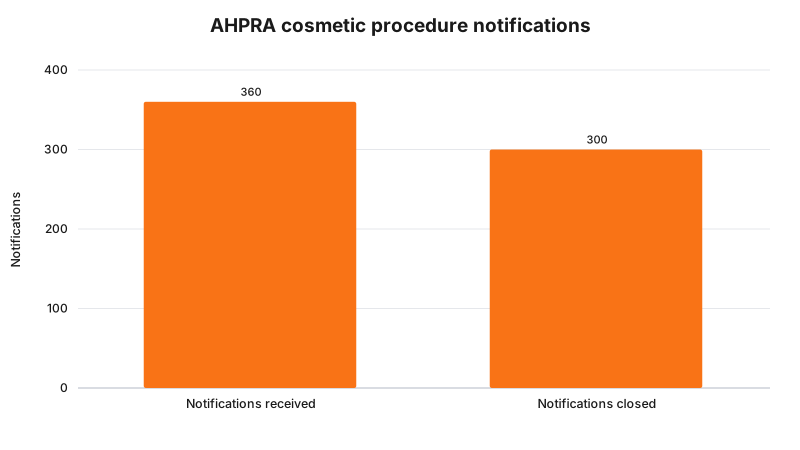
- AHPRA investigated about 360 notifications about non-surgical cosmetic procedures between September 2022 and March 2025, with about 300 closed in that window
- A disapproval label in the Google Ads interface names a policy topic, not the specific phrase that triggered it. You have to open Policy Manager to see the detail
- Resubmitting an unchanged ad after a healthcare disapproval rarely clears the flag and can count against the account’s policy record
Your cosmetic clinic’s Google Ads campaign gets disapproved under “Healthcare and medicines.” No explanation of which word did it. No line-by-line breakdown. Just a red label sitting over an ad that was running fine last week.
As at 15 August 2026, Google’s healthcare and medicines policy is the umbrella covering pharmaceuticals, telemedicine, addiction services and health insurance, and it is the policy most likely to catch a cosmetic clinic or cosmetic dentistry ad by surprise, because the same wording that reads as marketing copy to a patient reads as a restricted drug term to Google’s review system.
This guide walks through what the policy says, according to Google’s own healthcare and medicines policy page, what that means for the ad copy and landing page fields you control, and how to read a reason code well enough to fix the ad without guessing twice.
What Google’s Healthcare and Medicines Policy Says
Google groups a wide range of health-related advertising under one policy umbrella. According to the Google Ads healthcare and medicines policy, online pharmacies and telemedicine providers can advertise, but only after applying for certification and complying with location-specific restrictions. Pharmaceutical manufacturers can advertise prescription and over-the-counter medicines in select locations, again only after certification. Addiction services are allowed in certain locations with Google certification, and in Australia the policy states this promotion is restricted to government entities.
The line that matters most for a clinic running its own campaigns is a flat one: “Offering prescription drugs without a prescription is not allowed.” Google treats this as a hard rule, not a certification gate. Alongside it sit outright prohibitions on prescription opioid painkillers with limited exceptions, speculative or experimental medical treatments, unauthorised pharmacies targeting locations without a licence, unapproved pharmaceutical substances, and clinical trial recruitment that promotes a prescription drug.
For Australian advertisers specifically, the policy sets out that online pharmacies must either hold LegitScript certification or be registered with the relevant state or territory pharmacy authority, such as the Pharmacy Council of NSW or its Victorian equivalent. Advertisers are not permitted to use prescription drug terms in ad copy or on the landing page without first obtaining Google certification.
Botulinum toxin injectables, a mainstay of cosmetic clinic advertising, are prescription-only medicines in Australia. That puts them within reach of Google’s separate Prescription Drugs policy and its Restricted Drug Terms list, both of which sit alongside the general healthcare policy covered here rather than replacing it. A cosmetic clinic ad can trip either policy depending on the exact wording used, which is one reason the same offer can run cleanly in one ad group and get disapproved in the next.
The policy page names one exception worth knowing: “Google allows ads for cell or gene therapies that are exclusively educational or informational in nature.” Purely informational content about a treatment category has more room than an ad selling a specific procedure.
Takeaway: the healthcare and medicines policy is not one rule, it is a set of certification gates and hard prohibitions stacked on top of each other, and a cosmetic ad can hit any layer depending on the words in the headline.
What This Means for the Build
A disapproval is not just a copywriting problem. It touches specific fields in the ad account and the landing page markup behind it.
Ad copy fields. Headlines, descriptions and sitelinks are all scanned for restricted drug terms and prescription-drug language. A headline that says “Anti-wrinkle injections from $299” reads differently to Google’s system than “Cosmetic treatments from $299,” even though a patient understands both the same way.
Landing page content, not just the ad. Google’s review crawls the destination URL, not only the ad text. A landing page that lists a prescription-only treatment by brand name, states a dosage, or implies a prescription can be obtained through the site without a consultation step can trigger the same policy that the ad itself avoided.
The certification submission itself. Certification runs through a Google Ads support request tied to the account, not a checkbox in the campaign builder. It asks for business registration details and, for Australian pharmacy-adjacent advertisers, either a LegitScript certificate number or evidence of state or territory pharmacy registration. Submit this before the campaign goes live where certification is required, not after the first disapproval.
Where the reason code lives. The disapproval label shown against an ad in the campaign view (for example “Healthcare and medicines”) is a policy topic, not a diagnosis. Open the ad, then Policy Manager, to see the specific line item Google flagged, which page or field it was found on, and whether the fix is a copy edit or a certification requirement.
The appeal path. If the ad has been misclassified, Google Ads provides an appeal option from Policy Manager. Google’s own guidance is blunt about the ceiling here: unauthorised pharmacy violations are treated as egregious, and accounts flagged for them face suspension “without prior warning” and reinstatement only “in compelling circumstances.” That is not a policy tier worth testing.
Takeaway: fixing a disapproval usually means editing the ad, the landing page, or the certification status, in that order, and skipping straight to resubmission without checking which one caused it wastes a review cycle.
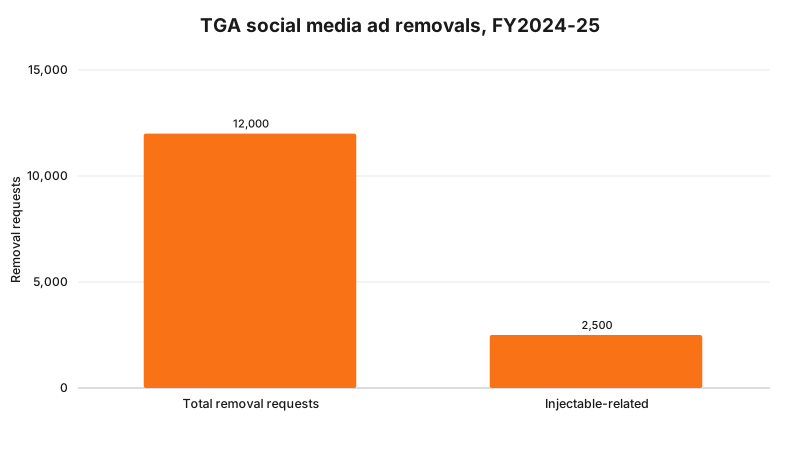
Two systems are watching the same claims. Google Ads decides whether an ad runs at all, and the Therapeutic Goods Administration separately reviews health advertising already live on social platforms. In one financial year the TGA processed over 12,000 social media advertising removal requests, and more than 2,500 of those related to cosmetic injectable products, according to the TGA’s November 2025 social media advertising guidance. A cosmetic clinic clearing Google’s review is not automatically clear of the second system.
Decision Matrix: What Typically Triggers a Healthcare Disapproval
| Ad scenario | Likely policy | Certification needed | Typical outcome |
|---|---|---|---|
| Ad names a prescription drug or dosage in the headline | Prescription Drugs / Restricted Drug Terms | Yes, before running | Disapproved until certified or term removed |
| Landing page implies a prescription can be obtained without consultation | Healthcare and medicines | Yes, pharmacy-style certification | Disapproved, landing page edit required |
| Ad promotes a cosmetic treatment category without brand or drug names | Healthcare and medicines (general) | Usually not | Approved if claims are otherwise compliant |
| Ad or landing page is purely educational about a treatment category | Healthcare and medicines (educational exception) | No | Approved as informational content |
| Account repeatedly runs unauthorised pharmacy-style offers | Egregious violations | Not applicable, prohibited outright | Immediate suspension, limited reinstatement |
| Addiction service promotion by a non-government Australian entity | Healthcare and medicines (addiction services) | Restricted to government entities in Australia | Disapproved regardless of certification |
This table reads left to right: the more specific and drug-adjacent the wording, the higher up the certification ladder the ad climbs, and unauthorised pharmacy-style offers sit outside the ladder because Google prohibits them outright.
Worked Example: Cosmetic Clinic
A Perth cosmetic clinic runs a Search ad with the headline “Botox from $12/unit, book today” and a landing page listing “botulinum toxin type A” alongside a same-day booking button with no mention of a prescriber consultation.
Reading the reason code: the disapproval shows as “Healthcare and medicines” in the campaign view. Opening Policy Manager narrows it to a prescription drug term used without certification, flagged on both the ad headline and the landing page.
The fix runs in two parts. The ad copy drops the brand and generic drug names in favour of the treatment category: “Anti-wrinkle treatments, consultation required.” The landing page adds a visible consultation step before booking, so the page itself no longer reads as a direct-to-purchase prescription drug offer. Only after both changes does the clinic resubmit, rather than editing one field and hoping.
Worked Example: Cosmetic Dentistry
A cosmetic dental practice in Melbourne advertises “Prescription-strength teeth whitening gel, take home kit” with a landing page selling the kit directly through an online store, no in-chair appointment required.
Reading the reason code: same “Healthcare and medicines” label, but Policy Manager narrows it to the phrase “prescription-strength” combined with a direct online purchase path, which reads to Google’s system as an unauthorised online pharmacy pattern rather than a dental service.
The fix: remove “prescription-strength” from the ad and product page, since the practice is not operating as a certified online pharmacy, and reframe the offer as an in-chair or dispensed-at-appointment product tied to a booked visit rather than a standalone online sale. The practice resubmits once the online store no longer functions as an unauthenticated point of sale for the whitening gel.
Both worked examples share a pattern worth naming: the specific noun did the damage, not the underlying offer. “Anti-wrinkle treatments” and “Botox” describe the same service to a patient. Only one of them sits inside Google’s restricted term list.
What to Check on Your Own Site
- Search current ad copy for brand-name drug terms (Botox, Dysport, Juvederm and similar) and swap in the treatment category where certification is not already in place
- Check whether any landing page states a dosage, a “prescription-strength” claim, or an online purchase path for a prescription-only product
- Confirm a consultation or booking step sits between the ad click and any prescription-adjacent treatment, visible on the landing page itself
- If the clinic runs telehealth prescribing or ships any prescription item, confirm LegitScript certification or state and territory pharmacy registration is on file with Google before the next campaign launch
- Open Policy Manager for any currently disapproved ad and read the specific flagged element, not just the top-level policy name
- Cross-check landing page testimonials and before-and-after content against Australia’s advertising rules for registered health practitioners. The Guidelines for advertising higher risk non-surgical cosmetic procedures took effect 2 September 2025 and sit alongside, not instead of, Google’s own policy
- Note that the separate Guidelines for registered health practitioners who perform non-surgical cosmetic procedures apply to every registered health practitioner except medical practitioners, who remain under the Medical Board’s 2023 cosmetic guidelines. Know which set applies to the practitioners named on your landing page before you rely on either
Enforcement Anchor
Google does not publish a named, case-by-case register of Australian cosmetic clinic or dental practice accounts suspended under the healthcare and medicines policy, unlike a regulator’s public enforcement log. We could not locate a specific, verifiable Australian case naming a clinic or dental practice for this article, and we are not going to invent one to fill this section.
What is verifiable is the scale of adjacent regulatory activity: the TGA’s over 12,000 social media advertising removals in one financial year, more than 2,500 tied to cosmetic injectable products, and AHPRA’s roughly 360 cosmetic procedure notifications investigated between September 2022 and March 2025. Neither figure is a Google Ads enforcement statistic, but both show that the same claims a Google reviewer flags are also the claims regulators are actively removing or investigating elsewhere.
Where This Gets Hard
Google’s policy topic labels are broad by design, and the interface rarely explains exactly which word or landing page element caused the flag beyond what Policy Manager surfaces. Two ads with near-identical wording can land on opposite sides of a disapproval, because enforcement runs partly on automated pattern matching and partly on manual review, and neither is published in enough detail to reverse-engineer reliably.
There is no fixed published timeframe for a certification review or an appeal decision. A clinic waiting on LegitScript certification or a Google appeal has to plan campaign timing around an unknown wait, not a stated service level.
The policy also does not map cleanly onto Australian AHPRA and Medical Board advertising rules. A landing page can meet AHPRA’s testimonial and misleading-claim provisions and still get flagged under Google’s prescription drug terms, or the reverse. Passing one review is not evidence of passing the other, and whether a specific ad or landing page satisfies either set of rules in your circumstances is a question for your medical defence organisation or your lawyer.
Status Line
Google’s healthcare and medicines policy is a live, currently enforced platform policy as at 15 August 2026, not a government law with a commencement date, and Google can revise it at any time without the notice period that applies to legislated obligations like the AHPRA guidelines that took effect 2 September 2025.
Frequently Asked Questions
What does a “Healthcare and medicines” disapproval mean in Google Ads?
It means Google’s policy system flagged the ad or its landing page under the Healthcare and medicines policy, which covers pharmaceuticals, addiction services, health insurance and related content. The label is a policy topic, not a word-level explanation, so you have to open Policy Manager to see which line item triggered it.
Do Australian cosmetic clinics need certification to advertise Botox or dermal fillers?
Google’s healthcare and medicines policy requires certification for prescription drug advertising in general, and botulinum toxin injectables are prescription-only in Australia. Whether a specific ad needs certification depends on the exact wording used, so check the ad against Google’s Prescription Drugs policy and Restricted Drug Terms list, not just the general healthcare policy.
How long does a Google Ads healthcare policy appeal take?
Google’s healthcare and medicines policy page does not publish a fixed turnaround time for appeals. Budget for several business days, keep unaffected campaigns running in the meantime, and do not resubmit the identical ad without changing the flagged element first.
Need a hand with your website?
If you want a second pair of eyes on how this applies to your own site, request a callback and we will talk it through.
Sources and References
- Google Ads Healthcare and Medicines Policy, support.google.com/adspolicy/answer/176031. Date checked: 15 August 2026.
- TGA social media advertising guidance, November 2025 (tga.gov.au advertising guidance). Date checked: 15 August 2026.
- AHPRA, New cosmetic procedure guidelines, 3 June 2025 (ahpra.gov.au/News/2025-06-03-New-cosmetic-procedure-guidelines.aspx). Date checked: 15 August 2026.
- AHPRA, Guidelines for advertising higher risk non-surgical cosmetic procedures (ahpra.gov.au/Resources/Cosmetic-surgery-hub/Cosmetic-procedure-advertising-guidelines.aspx), in effect 2 September 2025. Date checked: 15 August 2026.
- AHPRA, New guidelines for cosmetic procedures announcement (ahpra.gov.au/News/2025-09-02-New-guidelines-for-cosmetic-procedures.aspx). Date checked: 15 August 2026.
Last reviewed: 15 August 2026.
If a disapproved ad has already cost your clinic a week of paused bookings, our team reviews Google Ads accounts and clinic landing pages together, so the fix addresses the policy and the page in one pass. Sign up at dash.rockingweb.com.au to get started.
Vikas Thakur
Founder of RockingWeb. 16 years of experience from working at TPG, iiNet and Monadelphous, now building websites, software and digital marketing for local businesses in Rockingham and Perth.