$60,000 Fine for Misusing 'Surgeon' Title in Australia
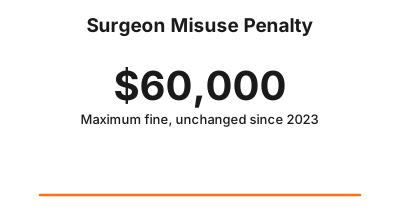
Since 20 September 2023, only medical practitioners with specialist registration in surgery, obstetrics and gynaecology, or ophthalmology can legally call themselves a "surgeon" in Australia. Misuse is a criminal offence carrying a maximum fine of $60,000 or three years' imprisonment, and it reaches every page of a clinic's website.
 Vikas Thakur Founder, RockingWeb 8 min read
On this page 9
Key Takeaways
- Only medical practitioners with specialist registration in surgery, obstetrics and gynaecology, or ophthalmology can legally call themselves a “surgeon” in Australia
- Misusing the protected title is a criminal offence with a maximum penalty of $60,000 or three years’ imprisonment, or both, for an individual practitioner
- The rule commenced nationally on 20 September 2023 under the Health Practitioner Regulation National Law (Surgeons) Amendment Act 2023
- By the Medical Board’s FAQ review date of 22 September 2023, New South Wales, South Australia and Western Australia had also confirmed the change, making it consistent across the country
- A cosmetic surgery endorsement does not let a practitioner call themselves a “cosmetic surgeon”. Only the three specialist registers above carry that right
- The restriction does not apply to dentists (“dental surgeon”) or podiatrists (“podiatric surgeon”), who keep their existing titles
- AHPRA requires every reference to “surgeon” removed from websites, social media, letterheads, business cards and clinic windows, not just clinical marketing
- A Federal Court ruling reported on 2 September 2024 upheld the restriction against a rival specialist body’s push to use “Facial Plastic Surgeon” (secondary source)
Only three groups of doctors can legally call themselves a “surgeon” in Australia: those with specialist registration in surgery, obstetrics and gynaecology, or ophthalmology. Every other medical practitioner who uses the word, alone or as “cosmetic surgeon”, is committing a criminal offence carrying a maximum $60,000 fine or three years’ imprisonment. That has been the law nationally since 20 September 2023. Before that date, any registered medical practitioner could use “surgeon” regardless of training. For a clinic, the rule does not stop at the consulting room door: AHPRA names websites, social media and even the clinic window as places the word must disappear from if it is not backed by the right registration. This guide sets out who qualifies, what changed, and where to check your own site copy before a patient, a competitor or AHPRA does it for you.
Who Can Legally Call Themselves a “Surgeon”
The Medical Board of Australia’s rule is narrow by design. A medical practitioner can only use the title “surgeon” if they hold specialist registration in one of three fields: surgery, obstetrics and gynaecology, or ophthalmology. That covers the surgical subspecialties (plastic surgery, general surgery, neurosurgery and more, all under the “surgery” specialist register), plus the two other specialties the Board treats as equivalent.
Everyone else is excluded, including practitioners who might reasonably assume a related qualification covers them. A GP performing cosmetic procedures cannot use “surgeon” or “GP surgeon”, even as the only provider of that service in a rural area. A supervised international medical graduate working in a surgical role cannot call themselves a surgeon either, even while performing the surgery itself. The title tracks a specific line on the register, not a job description.
Takeaway: if a practitioner’s entry on AHPRA’s public register does not show specialist registration in surgery, obstetrics and gynaecology, or ophthalmology, “surgeon” is off limits, no matter how much surgical work they actually do.
What Changed on 20 September 2023
Before the amendment, “surgeon” was not a protected term. Any doctor with general registration could put it on a shingle. Health ministers first agreed to fix that on 10 November 2022, and the Health Practitioner Regulation National Law (Surgeons) Amendment Bill passed the Queensland Parliament, the host jurisdiction for the National Law, on 13 September 2023. The change took effect nationally a week later, on 20 September 2023, and by the Medical Board’s FAQ review date of 22 September 2023, New South Wales, South Australia and Western Australia had also confirmed the amendment applied in their states.
The restriction was tested in court within a year. A press release reported by Surgical Times on 2 September 2024 described a Federal Court ruling against the Australian Society of Otolaryngology Head and Neck Surgeons, which had challenged whether its members could keep using “Facial Plastic Surgeon” without plastic surgery training. The reported outcome reinforced the 2023 restriction rather than carving out an exception. RockingWeb has not reviewed the judgment itself; this detail is sourced to trade press, not the court record.
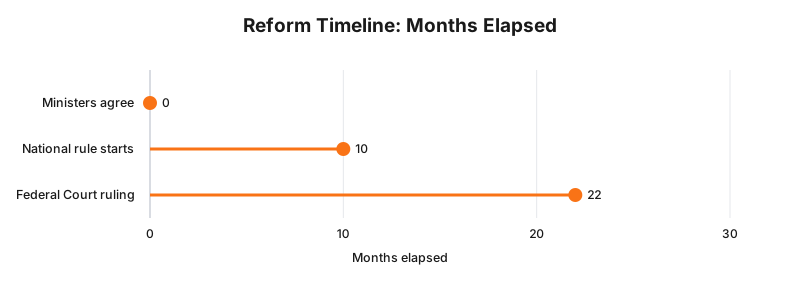
Takeaway: the rule is not a recent announcement still working through consultation. It has been enforceable law for close to three years and has already survived a court challenge.
The Exceptions Clinics Get Wrong
Two mistakes come up repeatedly in clinic copy. The first is treating a cosmetic surgery endorsement as equivalent to a surgical qualification. The Medical Board is explicit that it is not: a practitioner with the endorsement still cannot call themselves a “cosmetic surgeon” unless they also hold specialist registration in surgery, obstetrics and gynaecology, or ophthalmology. The endorsement recognises additional cosmetic procedure training; it does not confer the protected title.
The second mistake is assuming the rule touches every profession that uses “surgeon”. It does not. The Medical Board’s FAQ states plainly that dentists (“dental surgeon”) and podiatrists (“podiatric surgeon”) are unaffected. Those are separate, pre-existing registered titles under different National Boards, outside the scope of a change written for medical practitioners.
Takeaway: “endorsed for cosmetic surgery” and “registered as a specialist surgeon” are two different things, and only one of them earns the title on a website.
What Happens If a Practitioner Keeps Using It
AHPRA’s process starts with a written warning to remove every reference to “surgeon”. A practitioner who keeps using the title after that warning can face criminal prosecution, Board disciplinary action, or both. The maximum criminal penalty is a fine of $60,000 or three years’ imprisonment.
| Date or figure | What it marks |
|---|---|
| 10 November 2022 | Health ministers agree to protect “surgeon” nationally |
| 13 September 2023 | Amendment Bill passes the Queensland Parliament |
| 20 September 2023 | National commencement in most states and territories |
| 22 September 2023 | Medical Board FAQ confirms NSW, SA and WA also in force |
| Maximum penalty | $60,000 fine or three years’ imprisonment, or both |
Takeaway: the penalty applies to the individual practitioner, not just the clinic entity, and it is criminal rather than civil, a heavier consequence than most advertising breaches carry.
What This Means for Your Clinic’s Website and Ads
AHPRA’s guidance does not limit the removal to clinical marketing. It names websites, social media, letterheads, business cards and even the clinic window. That reaches the homepage headline, the practitioner bio page, meta titles and descriptions, image alt text, and any schema markup describing a team member’s job title.
For a clinic weighing whether a treatment or practitioner deserves a dedicated landing page, the register entry answers the question before the copy does. A page built around “cosmetic surgeon” for a practitioner with a cosmetic surgery endorsement but no specialist surgical registration is not a marketing choice, it is a compliance exposure on a public URL. The safer approach describes the practitioner by their actual registration and lets the procedure name, not the title, carry the page. It also protects enquiry quality: a patient who books expecting a specialist surgeon and discovers otherwise mid-consultation is a worse outcome than a shorter, accurate page that converts fewer but better-matched leads. See RockingWeb for a page-by-page check of where a protected term like this can hide in existing copy, and our cosmetic clinic website builds for how we keep practitioner pages inside both the title rules and the wider AHPRA advertising guidelines.
Takeaway: a title check belongs in the same audit as testimonials and before/after imagery. It is a compliance line item, not a copywriting preference.
FAQ
Who can legally call themselves a “surgeon” in Australia?
Only medical practitioners with specialist registration in surgery, obstetrics and gynaecology, or ophthalmology, under the Health Practitioner Regulation National Law (Surgeons) Amendment Act 2023. This applies whether “surgeon” is used alone or combined with another word, such as “cosmetic surgeon”.
What is the penalty for misusing the protected title “surgeon”?
Misuse is a criminal offence. The Medical Board of Australia states the maximum penalty is a $60,000 fine or three years’ imprisonment, or both, for an individual practitioner who keeps using the title after being warned to stop.
Does the rule affect dentists or podiatrists who already use “surgeon” in their title?
No. The Medical Board’s FAQ confirms the amendment does not affect other health practitioners, such as dentists (dental surgeon) and podiatrists (podiatric surgeon). It applies only to medical practitioners.
Can a practitioner with a cosmetic surgery endorsement call themselves a “cosmetic surgeon”?
No. The Medical Board states a cosmetic surgery endorsement does not enable a medical practitioner to call themselves a “cosmetic surgeon”. Only practitioners with specialist registration in surgery, obstetrics and gynaecology, or ophthalmology can use that title.
Get Your Clinic’s Website Checked for This Exact Risk
RockingWeb reviews cosmetic clinic websites against the current AHPRA and Medical Board rules, including protected-title risks like this one, and flags every instance against the specific provision it falls under. Results come back as a walkthrough, not a spreadsheet.
Sources and References
Ahpra - “Win for patient safety with ‘surgeon’ now a protected title”, 13 September 2023: the Bill passing Queensland Parliament and the $60,000/three-year penalty
Medical Board of Australia - FAQ: Protection of the title surgeon, reviewed 22 September 2023: the three permitted specialties, the 20 September 2023 commencement date, the dentist/podiatrist exclusion, and the endorsement clarification
Australasian Society of Aesthetic Plastic Surgeons - media release on the 10 November 2022 health ministers’ agreement to protect the title
Surgical Times - secondary source, trade press report of a 2 September 2024 Federal Court ruling upholding the restriction
Related reading:
- Injectables by Nurses vs Doctors: Australia Data: the parallel scope-of-practice question for cosmetic injectables
- $60,000-$120,000 Per Breach: AHPRA Advertising Fines for Cosmetic Clinics: the separate civil penalty structure for advertising breaches
- Cosmetic Surgery Hotline: 514 Calls in a Year Revealed: how AHPRA’s complaints line has been used since it launched
For a full review of where “surgeon” and other protected or restricted terms sit on your site right now, see ClinicPipeline or talk to us about your clinic’s marketing.
Vikas Thakur
Founder of RockingWeb. 16 years building for companies like TPG, iiNet and Monadelphous, now focused on websites and marketing that comply with AHPRA's advertising guidelines and still book patients.