AHPRA Strengthened Its Influencer Ad Ban on 2 September 2025
AHPRA's guidelines for higher risk non-surgical cosmetic procedures, in effect from 2 September 2025, explicitly strengthen the ban on testimonials from social media influencers. A separate federal rule already banned paid influencer testimonials for the treatments themselves since 1 January 2022, and the regulator reaffirmed it in a 2026 consultation.
 Vikas Thakur Founder, RockingWeb 9 min read
On this page 9
- Key Takeaways
- What AHPRA Actually Changed on 2 September 2025
- The Older Ban Most Clinics Have Never Heard Of
- What Counts as Paying an Influencer
- The TGA Just Confirmed the Ban Stays
- What This Means for Your Clinic’s Website and Influencer Deals
- FAQ
- Get Your Influencer Content Checked Against Both Regulators
- Sources and References
Key Takeaways
- AHPRA’s own announcement confirms its 2 September 2025 guidelines “strengthen the ban on the use of testimonials from social media influencers”
- A separate, older federal rule already banned paid influencer testimonials for the goods themselves, in force since 1 January 2022 under Section 24 of the TGA’s Advertising Code
- The TGA’s July 2026 consultation asked whether to relax that ban for sunscreens, and its preferred option is to keep it in place
- “Valuable consideration” under the TGA’s rule is not limited to cash. It names seven examples, from cash payments to free flights and free product samples
- Section 24(4) bans testimonials from four categories of person outright, including any corporation and anyone paid or gifted to give one
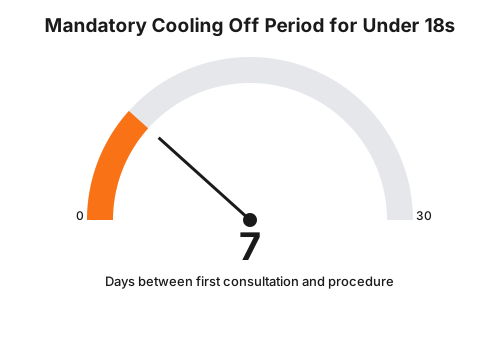
- AHPRA’s September 2025 package also introduced a mandatory seven day cooling off period for under 18s considering a cosmetic procedure
AHPRA strengthened its ban on testimonials from social media influencers on 2 September 2025. That is not a paraphrase, it is the regulator’s own wording, published the day its new guidelines for advertising higher risk non-surgical cosmetic procedures took effect. Most clinics read that as one rule. It is actually two, from two different regulators.
AHPRA’s guidelines govern how a practitioner advertises a service. A separate, older federal rule, in force since 1 January 2022, governs how the therapeutic good itself gets advertised, and it already banned paid influencer testimonials outright. In July 2026, the regulator behind that older rule was asked to relax it and said no. Here is what both rules say, and what that means for any influencer arrangement your clinic currently runs.
What AHPRA Actually Changed on 2 September 2025
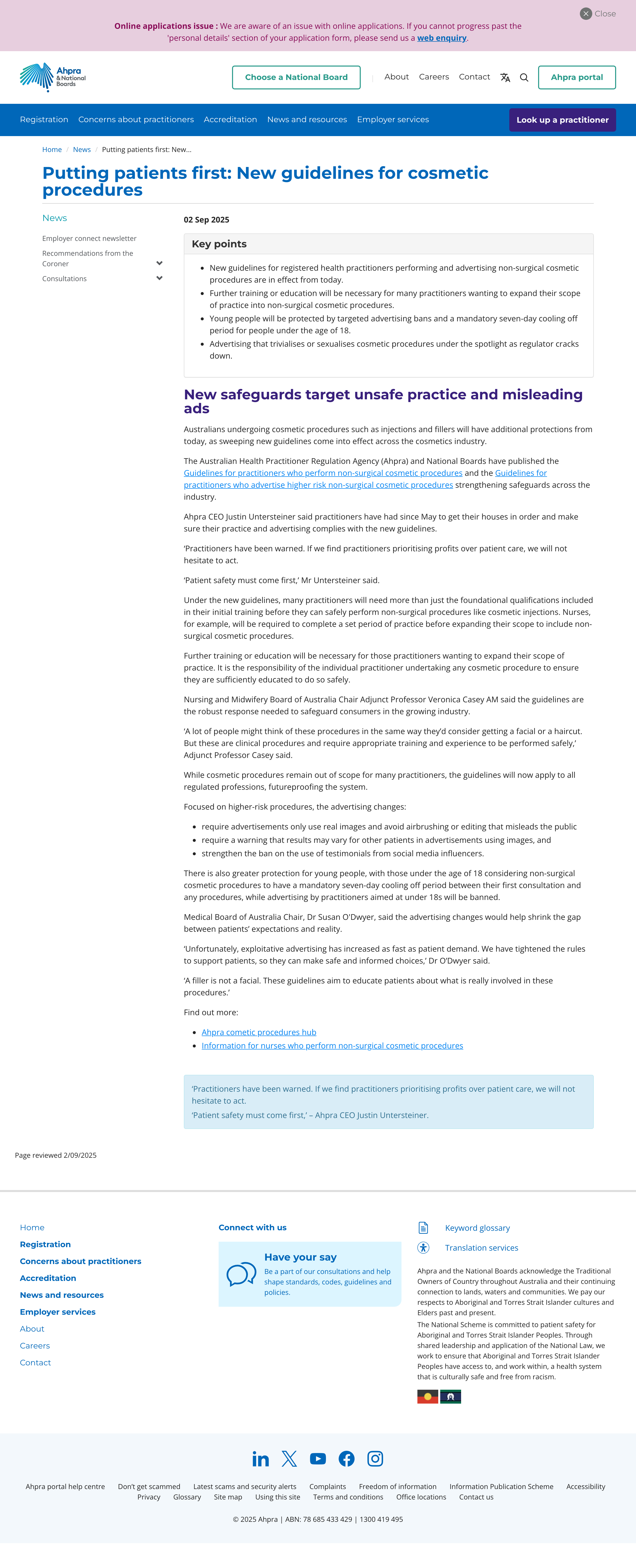
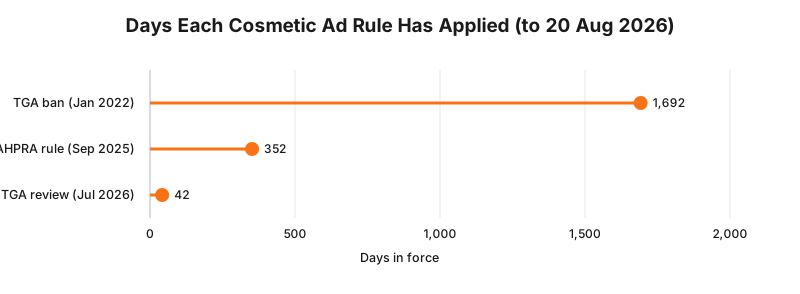
AHPRA and the National Boards published two documents that took effect on 2 September 2025: Guidelines for practitioners who perform non-surgical cosmetic procedures, and Guidelines for practitioners who advertise higher risk non-surgical cosmetic procedures. Advertisements must now use only real images, with no misleading airbrushing or editing, and must include a warning that results may vary. In AHPRA’s own words, the guidelines “strengthen the ban on the use of testimonials from social media influencers.”
The same package introduced a mandatory seven day cooling off period for under 18s considering a non-surgical cosmetic procedure, and banned advertising that targets under 18s at all. AHPRA CEO Justin Untersteiner was blunt about enforcement: practitioners have had since May to prepare, and “if we find practitioners prioritising profits over patient care, we will not hesitate to act.”
Takeaway: the word “strengthen” matters. This was an existing restriction AHPRA judged needed tightening, not a brand new prohibition.
The Older Ban Most Clinics Have Never Heard Of
AHPRA regulates the practitioner and the service. The Therapeutic Goods Administration regulates the good itself, and has run its own testimonial ban since well before AHPRA’s 2025 update. Section 24 of the Therapeutic Goods Advertising Code Instrument 2021 came into force on 1 January 2022. Paragraph 24(4)(a) prohibits any advertisement about a therapeutic good containing a testimonial from “a person who is engaged in the production, marketing or supply of the goods.” The instrument’s note spells out who that covers: “influencers, direct sellers and other persons who have, or will receive, valuable consideration for making the testimonial.”
Section 24(6) separately bans endorsements from government bodies, hospitals and healthcare facilities, and any current or former health practitioner. A breach sits behind the Therapeutic Goods Act’s own civil penalty provisions.
| Regulator | Rule | In force since | What it bans |
|---|---|---|---|
| AHPRA and National Boards | Guidelines for advertising higher risk cosmetic procedures | 2 September 2025 | Influencer testimonials, misleading or airbrushed imagery, ads targeted at under 18s |
| TGA | Section 24, Advertising Code Instrument 2021 | 1 January 2022 | Paid or gifted testimonials from influencers, plus endorsements from health practitioners and hospitals |
Takeaway: a clinic across AHPRA’s practitioner rules can still miss the separate, older ban that applies to the treatment itself.
What Counts as Paying an Influencer
Section 24 does not require cash to change hands before a testimonial counts as bought. The TGA’s guidance describes valuable consideration as covering cash payments, gifts, services, or other incentives such as free flights, accommodation, discounted products and free samples. Seven forms of consideration, none of them requiring an invoice.
Paragraph 24(4) bans testimonials from four categories of person outright: anyone engaged in producing, marketing or supplying the goods (the note confirms this includes a paid or gifted influencer), an undisclosed immediate family member, anyone caught by the endorsement bans in subsection 24(6), and any corporation. An ordinary customer, unpaid and ungifted, is still allowed.
Takeaway: a gifted procedure handed to a creator for a post is treated the same as a cash sponsorship deal. There is no off-the-books version of this arrangement that sits outside the rule.
The TGA Just Confirmed the Ban Stays
The TGA opened a public consultation on the Advertising Code on 9 July 2026, closing 3 September 2026. Issue 1C asks whether Section 24’s testimonial ban should be relaxed for therapeutic sunscreens, after stakeholders argued paid influencer testimonials could boost sun protection messaging among younger Australians. Three options were considered: allow paid testimonials about any aspect of a sunscreen, allow them only about physical attributes like texture and feel, or keep the current prohibition.
The preferred option is the third: keep the ban. The reasoning matches the rest of Section 24, a paid testimonial-giver has a financial interest that competes with giving a genuine account. The consultation does not propose loosening the rule for cosmetic injectables or any other therapeutic good, only sunscreen, and even there the regulator’s preference is to say no.
Takeaway: if you were waiting for this rule to loosen before touching your influencer arrangements, the TGA’s own 2026 review already answered that.
What This Means for Your Clinic’s Website and Influencer Deals
Neither rule bans influencer marketing outright. Both ban the specific format of a testimonial: a claimed personal experience with the treatment, from someone paid or given something for saying it. A creator explaining, in their own words and without a treatment claim, why they chose your clinic sits in a different category to a scripted “here’s my before and after” post naming a Schedule 4 substance.
What survives both rules is content your own site controls, not content depending on a creator’s account staying live and compliant. Any treatment currently promoted through an influencer relationship, gifted or paid, is a strong candidate for its own dedicated landing page, one your compliance sits inside rather than a platform’s. It also changes enquiry quality: a lead from a compliant, informational page asks about eligibility and process, while a lead chasing a creator’s testimonial arrives expecting that exact outcome, a gap that shows up later as complaints.
Reviewing your site and any active influencer content against these rules is the fastest way to see where a gifted-treatment arrangement has quietly become a breach. Get in touch if you want RockingWeb to check yours. A cosmetic clinic website built around owned, compliant content does not carry that exposure at all.
Takeaway: the safest influencer content is the kind that never becomes a testimonial. The safest booking pipeline is the one that does not depend on it.
FAQ
What did AHPRA’s 2 September 2025 guidelines change about influencer marketing?
AHPRA’s own announcement states the new guidelines for advertising higher risk non-surgical cosmetic procedures “strengthen the ban on the use of testimonials from social media influencers.” The same package requires real, unedited images, a warning that results vary between patients, and a mandatory seven day cooling off period for people under 18.
Does the ban only cover cash payments to influencers, or gifted treatments too?
Under the separate, older TGA rule, “valuable consideration” is defined broadly. Cash payments, gifts, services, free flights, accommodation, discounted products and free product samples all count, so a gifted treatment for a post is treated the same as a cash deal.
Does this apply to organic Instagram or TikTok posts, or only paid ads?
Both. AHPRA’s guidelines cover advertising by practitioners in any format, and the TGA’s Code covers advertisements about therapeutic goods regardless of platform. Neither rule is limited to a paid media placement.
Is the TGA planning to relax its influencer testimonial ban?
No, not for the general rule. The TGA’s July 2026 consultation asked specifically about paid influencer testimonials for therapeutic sunscreens, and its preferred option is to keep prohibiting them. It does not propose any change to the wider ban covering other therapeutic goods.
Get Your Influencer Content Checked Against Both Regulators
RockingWeb reviews cosmetic clinic websites and social content against current AHPRA and TGA advertising rules, flags any gifted or paid influencer arrangement that has drifted into testimonial territory, and builds booking pipelines that do not depend on one creator relationship staying compliant.
Talk to us about your clinic’s marketing
Sources and References
AHPRA - “Putting patients first: New guidelines for cosmetic procedures,” 2 September 2025: the influencer testimonial ban, real-image and results-vary requirements, and under-18 cooling off period
Federal Register of Legislation - Therapeutic Goods (Therapeutic Goods Advertising Code) Instrument 2021, Section 24: the testimonial and endorsement rules, the note naming influencers under paragraph 24(4)(a), and legislation history confirming commencement 1 January 2022
TGA - “Improvements to the Therapeutic Goods Advertising Code” consultation paper (v1.0, July 2026), Issue 1C: the sunscreen testimonial question and the preferred option to retain the ban
TGA Consultation Hub - opening date 9 July 2026, closing date 3 September 2026
Related reading:
- AHPRA Social Media Rules for Cosmetic Clinics: platform-by-platform breakdown for Instagram, Facebook and TikTok
- TGA’s Ad Code Rewrite: 24 Questions, 3 Weeks Left to Respond: the wider 2026 consultation this issue sits inside
- TikTok Bans Cosmetic Clinic Branded Content From 31 August 2026: a platform-level ban on the same paid creator format
- Cosmetic Clinic Websites: compliant website builds that do not depend on influencer content
Vikas Thakur
Founder of RockingWeb. 16 years building for companies like TPG, iiNet and Monadelphous, now focused on websites and marketing that comply with AHPRA's advertising guidelines and still book patients.