TikTok Bans Cosmetic Clinic Branded Content From 31 August 2026
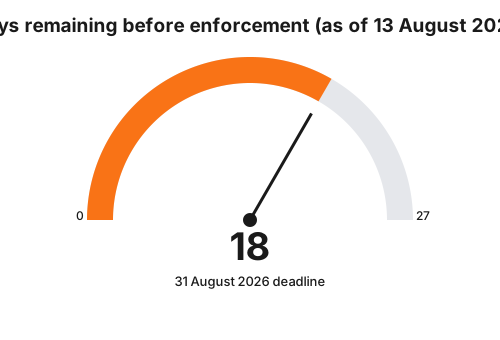
TikTok's global Branded Content Policy, published 4 August 2026, bans paid creator posts for cosmetic clinics, cosmetic surgery, dental surgeries, teeth whitening and weight loss services from 31 August 2026. Any clinic running paid TikTok creator partnerships has 18 days from this post to move that traffic somewhere it owns.
 Vikas Thakur Founder, RockingWeb 8 min read
On this page 9
- Key Takeaways
- What TikTok’s Branded Content Policy Bans
- Why This Hits Cosmetic Clinics and Cosmetic Dentistry at Once
- The Part Most Clinics Will Miss: Old Posts Don’t Just Disappear
- What This Means for Your Booking Funnel
- Audit Your Own Commercial Content Library Footprint
- FAQ
- Get Your Booking Funnel Off a Single Platform Before 31 August
- Sources and References
Key Takeaways
- TikTok’s global Branded Content Policy becomes effective on 31 August 2026, giving clinics 18 days from this post to act
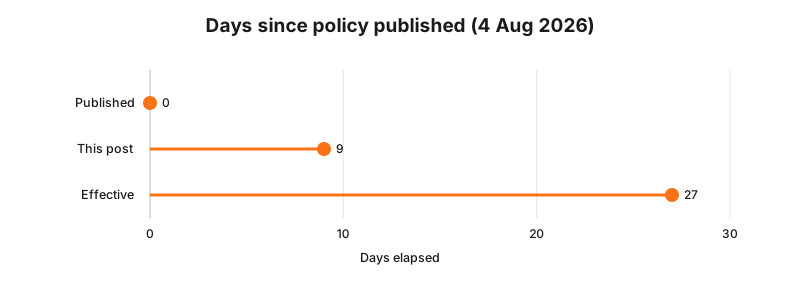
- The policy page states it was published on 4 August 2026, a 27 day total notice period
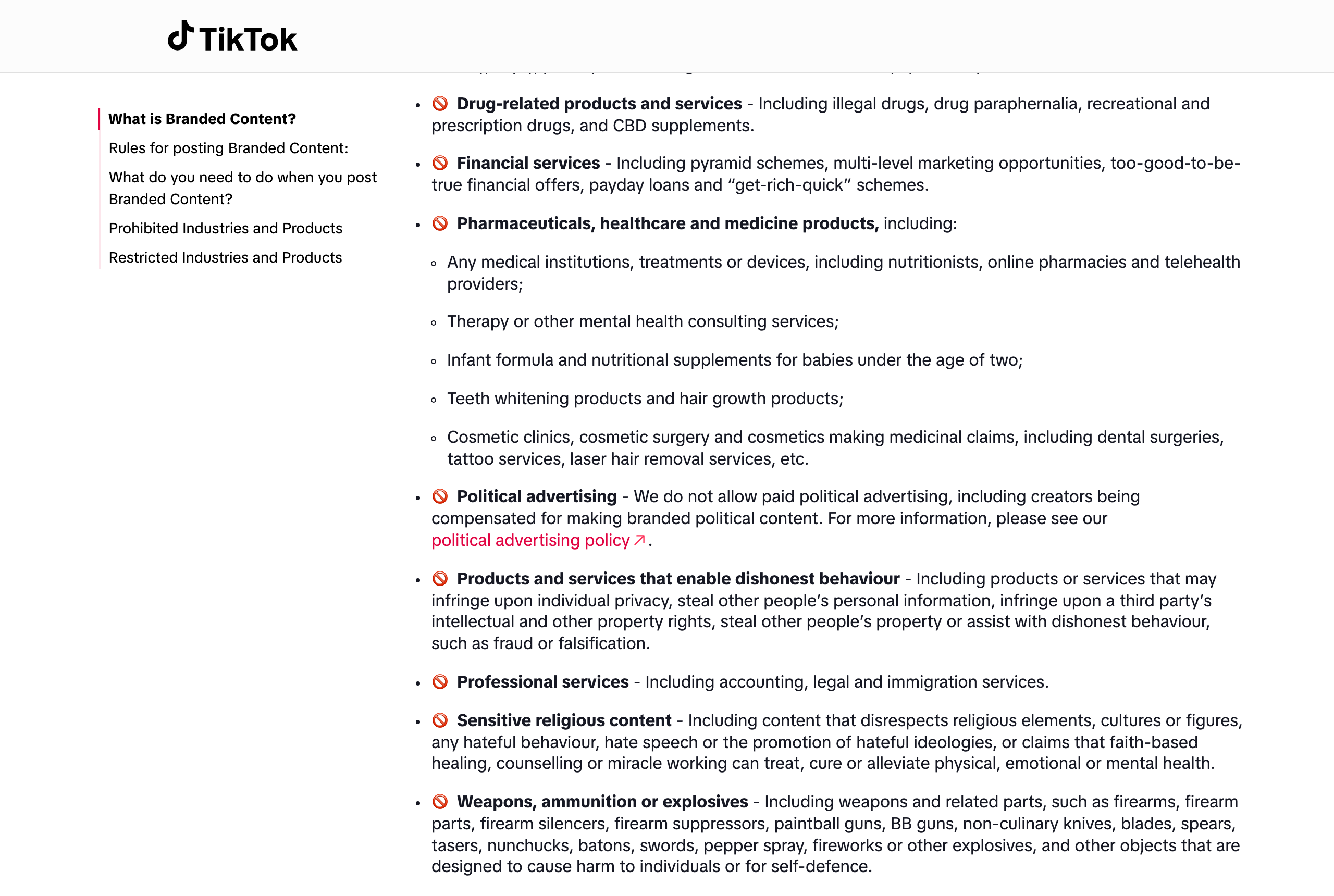
- Branded content is banned outright for “cosmetic clinics, cosmetic surgery and cosmetics making medicinal claims, including dental surgeries, tattoo services, laser hair removal services”
- Teeth whitening products and hair growth products are banned in the same section, as a separate line item
- Weight loss clinics, weight loss supplements and fasting services are banned under their own heading
- Disclosed branded content is automatically labelled and can be added to TikTok’s public Commercial Content Library, where it can stay visible even after the original post is deleted
- The policy covers paid creator partnerships specifically. TikTok’s own Ads Manager platform sits under separate advertising policies
From 31 August 2026, TikTok’s global Branded Content Policy makes it a platform breach for any creator to post paid content promoting a cosmetic clinic, cosmetic surgery, a dental surgery, a teeth whitening product or a weight loss service. TikTok’s own policy page states it was published on 4 August 2026, which puts today’s post 18 days out from enforcement. Picture the creator posts your clinic paid for last quarter, the ones sending booking-page clicks every week. On 31 August, that pipeline stops being available to book at all, no matter how well it performed. This isn’t a targeting tweak or a bid-strategy change. It’s a full category ban on the exact partnership format cosmetic clinics and cosmetic dental practices lean on to reach a TikTok audience. Here’s what the policy bans, what survives it, and what to fix on your own site before the 31st.
What TikTok’s Branded Content Policy Bans
TikTok defines Branded Content as any post that promotes or reviews a third party brand or its products in exchange for payment, a gifted product, a sales commission, or a standing relationship such as acting as a brand ambassador. That covers the paid creator posts, gifted-treatment videos and affiliate-link content most clinics use TikTok for.
The policy’s Prohibited Industries and Products list bans that format outright for several categories relevant to a clinic:
| Prohibited category | What the policy names |
|---|---|
| Cosmetic clinics and surgery | ”Cosmetic clinics, cosmetic surgery and cosmetics making medicinal claims, including dental surgeries, tattoo services, laser hair removal services, etc.” |
| Teeth and hair | ”Teeth whitening products and hair growth products” |
| Weight loss | ”Weight loss clinics, weight loss and weight management supplements… and fasting services and products” |
That table is not a summary. Those are the category names as written on TikTok’s own policy page.
Takeaway: if your clinic offers cosmetic treatment, dental surgery, teeth whitening or weight management, disclosed creator content promoting it breaches this policy from 31 August, regardless of how the post performed before.
Why This Hits Cosmetic Clinics and Cosmetic Dentistry at Once
Most platform policy changes land on one niche. This one names cosmetic clinics and dental surgeries in the same sentence, which means both niches this business works in lose the same channel on the same date. A cosmetic clinic running a creator partnership for an injectable service and a dental practice running one for teeth whitening or a smile makeover both hit the same wall.
The definition of Branded Content also matters here. It isn’t limited to a creator saying “sponsored” in a caption. TikTok counts a gifted treatment, a commission on bookings through an affiliate link, and an ongoing ambassador arrangement as Branded Content too. A lot of clinic-creator arrangements run exactly that way, informal gifted-treatment deals that never touched a paid media budget.
Takeaway: the ban is broader than “paid ads.” A free treatment given to a creator in exchange for a video counts as Branded Content under this policy, and it’s banned the same as a cash deal.
The Part Most Clinics Will Miss: Old Posts Don’t Just Disappear
Disclosed branded content doesn’t only get flagged going forward. TikTok’s policy states that once the disclosure toggle is enabled, the post is automatically labelled as Branded Content and, where required by law, added to TikTok’s Commercial Content Library. The policy goes further: in some circumstances, TikTok must keep that content publicly available in the library even if the original post is deleted or altered.
That means a clinic’s history of sponsored creator posts, the treatment named, the creator, the disclosure, can sit in a public record independent of what happens to the original TikTok post. Anyone building a case against a clinic’s advertising history now has a second place to look besides the clinic’s own account. This is a website governance question as much as a marketing one: whatever a clinic paid a creator to say about a treatment is not something a delete button undoes.
Takeaway: treat every disclosed branded content post as a permanent record, not a campaign asset you control the lifecycle of.
What This Means for Your Booking Funnel
If a UTM-tagged creator link currently feeds your booking page, that traffic source goes away on 31 August, not gradually, all at once. Any landing page built specifically around a creator campaign, any promo code tied to a creator’s audience, any retargeting pixel firing off clicks from a sponsored TikTok video stops earning new visits from that source the day the policy takes effect.
The fix has to live on the clinic’s own site, not on the platform. That means an email capture that doesn’t depend on a creator’s following, organic landing pages that rank without a paid partnership behind them, and a Google Business Profile that keeps converting local search intent regardless of what any single platform allows this month. A cosmetic clinic website built to convert organic and local search traffic doesn’t lose a channel overnight when a platform changes its rules. A booking funnel built entirely around one creator relationship does.
Takeaway: any booking funnel with a single point of failure on a platform you don’t control needs an owned-channel backup in place before 31 August, not after.
Audit Your Own Commercial Content Library Footprint
Before the 31st, pull a list of every disclosed branded content post your clinic has run with a creator, whether it was a paid deal, a gifted treatment or a commission arrangement. Check what each post claimed about the treatment, whether it named a Schedule 4 substance, whether it showed a before and after, and whether it matches what your clinic’s own website currently says. This is the same discipline RockingWeb applies when reviewing a clinic’s advertising: a claim made once by a paid creator doesn’t disappear from scrutiny just because the campaign ended, and TikTok’s Commercial Content Library is one more place that claim can resurface.
Takeaway: run this audit now, while you can still see and screenshot the posts, not after 31 August when the format is gone and only the library record remains.
FAQ
When does TikTok’s branded content ban for cosmetic clinics take effect?
TikTok’s global Branded Content Policy becomes effective on 31 August 2026. The policy page itself states it was published on 4 August 2026, giving brands and creators a 27 day notice window.
Does the ban cover my clinic’s own paid TikTok ads, or only creator posts?
It covers Branded Content specifically, which TikTok defines as a creator post promoting a third party brand in exchange for payment, a gift, a commission or an ambassador relationship. That is the paid influencer partnership product, not TikTok’s own Ads Manager platform. If your clinic runs ads directly through TikTok Ads Manager, check TikTok’s separate advertising policies rather than this one.
What exactly is banned under the cosmetic clinics category?
TikTok’s policy bans branded content for “cosmetic clinics, cosmetic surgery and cosmetics making medicinal claims, including dental surgeries, tattoo services, laser hair removal services, etc.” Teeth whitening products and hair growth products are banned separately in the same section, and weight loss clinics, weight loss supplements and fasting services are banned under their own heading.
What happens to branded content my clinic already posted with a creator?
Disclosed branded content gets automatically labelled and, where required by law, added to TikTok’s Commercial Content Library. TikTok states that in some circumstances it must keep that content publicly available in the library even after the original post is deleted or altered, so old sponsored posts can outlive the campaign.
Get Your Booking Funnel Off a Single Platform Before 31 August
RockingWeb builds cosmetic clinic and cosmetic dentistry websites that convert organic search, local search and direct traffic, so a single platform policy change never takes your booking pipeline down with it. We’ll audit where your leads currently come from and what happens to that flow after 31 August.
Talk to us about your clinic’s booking pipeline
Sources and References
- TikTok Legal - Branded Content Policy: effective date, published date, prohibited industries list, Commercial Content Library and disclosure toggle details
Related reading:
- Cosmetic Clinic Websites: booking-focused websites that don’t depend on a single ad platform
- AHPRA Advertising Rules for Cosmetic Dentistry: what dental practices can and cannot claim in any paid content
- TikTok Ads Australia: 2026 Benchmarks: how TikTok’s own advertising platform differs from branded content
Vikas Thakur
Founder of RockingWeb. 16 years building for companies like TPG, iiNet and Monadelphous, now focused on websites and marketing that comply with AHPRA's advertising guidelines and still book patients.