59.7% vs 46.9%: The Real Best Age for Veneers and Implants
Australians aged 65 to 74 see a dentist at the highest rate of any age group, 59.7% in 2024-25, while 25 to 34 year olds, the cohort chasing veneers on social media, see one least at 46.9%. Here is what the ABS, the ADA, and the actual tooth-loss data say about age and cosmetic dental work.
 Vikas Thakur Founder, RockingWeb 9 min read
On this page 9
- Key takeaways
- Answer Capsule
- Who Actually Sees a Dentist by Age in Australia
- The 25-to-34 Age Group Skips Care Most, and That’s Exactly Who’s Booking Veneers
- Why Tooth Loss (and Implants) Skew Older
- The Real Minimum Age for Implants, and Why Veneers Have None
- What the ADA’s Social Media Data Means for Under-25s
- Get the Age and the Website Right
- Sources and References
Key takeaways
- Australians aged 65 to 74 saw a dental professional at a rate of 59.7% in 2024-25, the highest of any age bracket, per the ABS’s Patient Experience Survey
- Australians aged 25 to 34, the age bracket most active on the social platforms driving cosmetic dental demand, saw a dentist least, at just 46.9%
- The same 25 to 34 bracket delayed or skipped needed dental care at the highest rate of any age group, 33.0% in 2024-25, against 9.3% among Australians 85 and over
- 25.2% of Australians delayed or avoided dental care of any kind in 2024-25, down from 28.0% the year before, per the same ABS release
- Complete tooth loss among Australian adults fell to 4.0% in 2017-18, down from 14.4% in 1987-88, per the National Study of Adult Oral Health
- 60% of respondents overall said social media, not a dentist, shaped their decision to pursue cosmetic work like veneers, per the ADA’s 2025 Consumer Survey
- The Dental Board’s cosmetic advertising rules, in force since 2 September 2025, ban before-and-after photos and testimonials for treatments including veneers and implants
Answer Capsule
Australians aged 65 to 74 see a dentist more than any other age group, 59.7% in 2024-25, per the ABS Patient Experience Survey. Those aged 25 to 34 see one least, at 46.9%. Implants generally wait until jaw growth ends, around 18 to 21.
Australians aged 65 to 74 visited a dentist at a rate of 59.7% in 2024-25, the highest of any age group the Australian Bureau of Statistics measures. The cohort chasing veneers on social media, those aged 25 to 34, saw one at just 46.9%, the lowest rate on record for that bracket. That gap matters because veneers and implants are treatments people research on a phone screen and then book at an age the data says they visit a dentist least. Implants also carry a hard biological limit most marketing pages skip over: a dentist generally will not place one until jaw growth has finished, usually not before 18 to 21. This report pulls together the real Australian data on who sees a dentist, when tooth loss actually starts to bite, and what the Dental Board’s advertising rules let a clinic claim about either. It also covers where the 25-to-34 gap turns into a real risk: booking irreversible cosmetic work with less clinical history behind the decision than an older patient typically has. Below: the ABS visit rates by age bracket, the tooth-loss data behind why implants skew older, and what the advertising rules mean for a clinic marketing to either group.
Who Actually Sees a Dentist by Age in Australia
The ABS Patient Experience Survey asks a representative sample of Australians aged 15 and over whether they saw a dental professional in the previous 12 months. In 2024-25, the national rate was 53.9%, close to the 53.2% recorded the year before. Break that number down by age and a pattern appears that cuts against the image most cosmetic dental marketing sells.
Visit rates climb steadily from the mid-20s through to the mid-70s, then fall again in the oldest bracket. The 65-74 group tops the table at 59.7%. The 25-34 group sits at the bottom of the working-age brackets, at 46.9%, lower than every other group except the very oldest Australians.
| Age group | Saw a dental professional (2024-25) |
|---|---|
| 15-24 | 54.4% |
| 25-34 | 46.9% |
| 35-44 | 50.6% |
| 45-54 | 55.3% |
| 55-64 | 59.3% |
| 65-74 | 59.7% |
| 75-84 | 56.7% |
| 85+ | 49.4% |
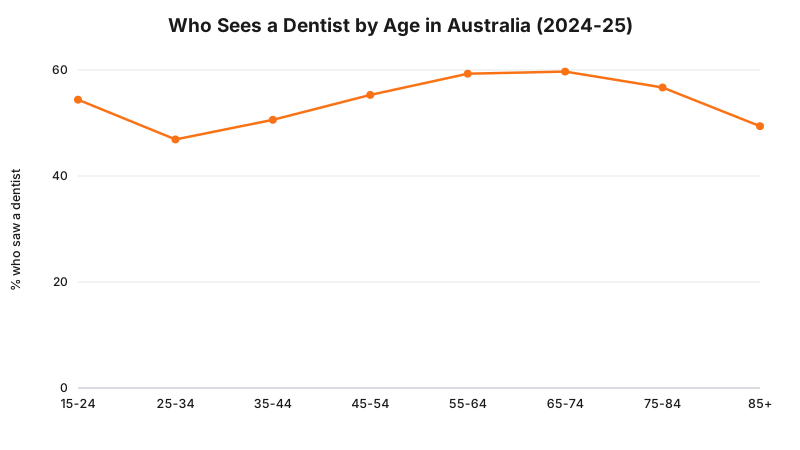
Older Australians see a dentist more, not less, and by a wide margin against the 25-34 bracket. Source: Australian Bureau of Statistics, Patient Experience Survey 2024-25.
Takeaway: the age group with the biggest social media appetite for cosmetic dental work is also the age group least likely to have seen a dentist recently for anything at all.
The 25-to-34 Age Group Skips Care Most, and That’s Exactly Who’s Booking Veneers
Visit rates only tell half the story. The ABS also tracks who delays or skips dental care they actually need. Nationally, 25.2% of Australians delayed or avoided dental care in 2024-25, an improvement on the 28.0% recorded in 2023-24. Cost was named as the barrier by 16.1% overall.
Split by age, the pattern from the visit-rate data repeats. The 25-34 bracket delayed or skipped needed dental care at 33.0%, the highest rate recorded for any age group. Australians 85 and over, by contrast, delayed care at just 9.3%.
| Group | Delayed or skipped dental care (2024-25) |
|---|---|
| 25-34 (highest) | 33.0% |
| National average | 25.2% |
| 85+ (lowest) | 9.3% |
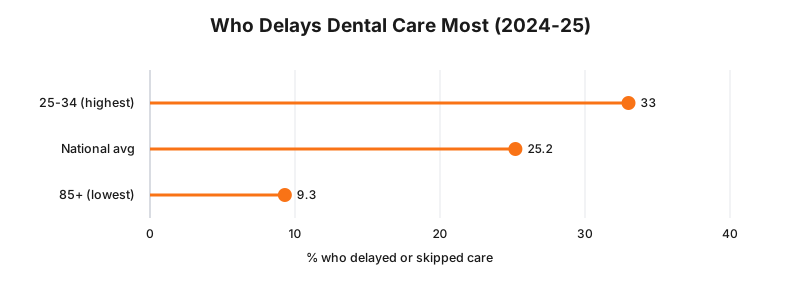
The 25-34 bracket delays care at more than three times the rate of the oldest Australians. Source: Australian Bureau of Statistics, Patient Experience Survey 2024-25.
This is the same age bracket the Australian Dental Association’s 2025 Consumer Survey found most exposed to social media influence on cosmetic decisions. That survey, covering more than 25,000 Australians, found 60% of respondents said social media shaped their choice to pursue treatments like whitening, veneers, and clear aligners. AHPRA and the Dental Board apply the same advertising rules to dentistry that apply to cosmetic clinics generally, banning testimonials and before-and-after imagery. See our full breakdown of the AHPRA advertising rules for cosmetic dentistry for what a compliant page can and cannot show.
Takeaway: the group forming cosmetic dental decisions fastest, online, is the same group with the thinnest recent dental history to base that decision on.
Why Tooth Loss (and Implants) Skew Older
Implants exist to replace teeth that are missing or failing. Australia’s tooth-loss data explains why demand for that treatment concentrates later in life, even as veneers get marketed to a much younger audience.
The National Study of Adult Oral Health tracked complete tooth loss across three national surveys: 1987-88, 2004-06, and 2017-18. The trend has moved sharply in one direction.
| Survey year | Complete tooth loss (all adults 15+) |
|---|---|
| 1987-88 | 14.4% |
| 2004-06 | 6.4% |
| 2017-18 | 4.0% |
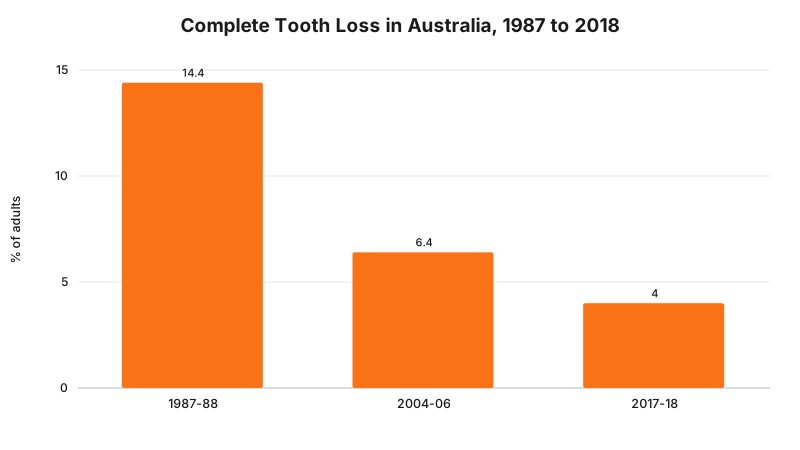
The same study put the average number of missing teeth per adult at 5.7 in 2017-18, down from 6.1 in 2004-06, and found tooth loss increases with age across every survey wave. Fewer Australians are losing all their teeth than 30 years ago, but the loss that does happen is still concentrated in older adults, which is exactly the group the ABS data shows attending dental appointments the most.
Takeaway: implants track the age curve of tooth loss, not the age curve of social media use, and those two curves point in opposite directions.
The Real Minimum Age for Implants, and Why Veneers Have None
There is no single published Australian rule setting a minimum age for dental implants. What exists instead is a clinical consensus, applied case by case: a dentist will not place an implant until the jaw has finished growing, because an implant is fixed in bone and cannot move the way a natural tooth can as the jaw develops further. That growth is typically complete somewhere between 18 and 21, sometimes later for some patients, which is why most providers treat implants as an adult-only procedure regardless of how a case presents.
Veneers work differently. There is no legal minimum age in Australia, and no growth-related barrier in the way there is for implants, since a veneer sits on the surface of an existing tooth rather than replacing its root. The limiting factor is a dentist’s own clinical judgement on enamel thickness, gum health, and whether the underlying tooth structure justifies permanently altering it. That judgement call is exactly where marketing claims can outrun the clinical reality, and it’s the reason cosmetic dental advertising sits inside the same rules as cosmetic medicine.
A practice that markets veneers or implants to a younger audience needs its website doing the same job a careful chairside consultation does: setting out process, limitations, and realistic timelines rather than an outcome photo. If you run a cosmetic dental site and aren’t sure whether its current claims about age, suitability, or results sit inside the rules, RockingWeb checks the page against the current advertising guidelines rather than against guesswork.
Takeaway: implants have a real, biological floor on age. Veneers have a judgement call instead, and that difference is what a compliant website needs to explain, not gloss over.
What the ADA’s Social Media Data Means for Under-25s
The Australian Dental Association’s 2025 Consumer Survey, published during Dental Health Week 2026, put a number on something practices already suspected: 60% of respondents said social media influenced their decision to pursue a cosmetic dental procedure. The same release found 60% of Australians aged 18-25 have experienced wisdom tooth problems, a separate issue that often needs resolving before cosmetic work is even on the table.
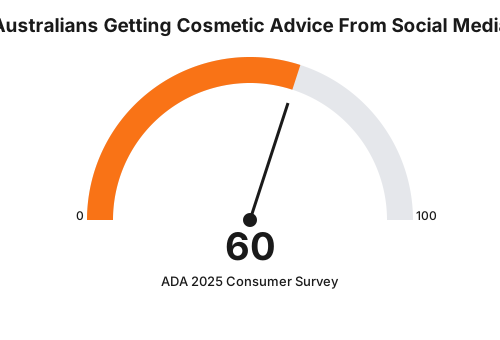
Six in ten respondents overall forming a cosmetic dental decision from a social feed rather than a consultation. Source: Australian Dental Association, 2025 Consumer Survey.
We’ve covered what that ADA survey means for a practice’s website and booking flow in more detail elsewhere. The point that matters for age specifically: a platform algorithm has no concept of jaw development, enamel thickness, or a patient’s dental history. A compliant practice website is the first place that context can actually reach a prospective patient before they book.
Takeaway: social media can start the conversation about veneers or implants, but it can’t apply the age and suitability judgement a dentist has to make before treatment.
Get the Age and the Website Right
Getting the timing wrong on cosmetic dental work isn’t just a clinical risk. The Commonwealth Bank and ADA’s 2024 Dental Insights Report found 79% of surveyed Australian dental practices had treated a patient for complications following treatment performed overseas, most commonly on crowns, bridges, and implants, often after a younger patient chased a cheaper, faster option than what was available locally. We’ve covered the wider dental tourism data for Australia in a separate report.
RockingWeb builds and audits cosmetic clinic websites for practices that treat both ends of this age curve, from a 25 year old asking about veneers to a 70 year old who actually needs an implant. That means process pages instead of outcome photos, transparent indicative pricing, and a booking flow that works as well from a phone as a desktop, all built to sit inside the Dental Board’s current advertising rules rather than test their limits.
Ready to see how your current site holds up? Get in touch about your practice.
Takeaway: the data says older patients need implants and younger patients are asking about veneers online. A compliant, honest website has to serve both, not just the one social media is currently pushing.
Sources and References
- Australian Bureau of Statistics, Patient Experience Survey 2024-25: dental professional visit rates and delayed care, by age group
- Peres MA, Lalloo R, “Tooth loss, denture wearing and implants: Findings from the National Study of Adult Oral Health 2017-18,” Australian Dental Journal, 2020
- Australian Dental Association, 2025 Consumer Survey, published 31 July 2026
- CommBank Health and Australian Dental Association, Dental Insights Report 2024 (Fifth Quadrant survey of 414 dental practices)
- AHPRA Advertising Rules for Cosmetic Dentistry, RockingWeb
Related reading:
- ADA Survey: 60% Say Social Media Drove Cosmetic Dental Choice
- Dental Tourism Statistics Australia
- Dental Implant Success Rate Australia
- Cosmetic Clinic Websites: compliant website builds for AHPRA-regulated practices
Vikas Thakur
Founder of RockingWeb. 16 years of experience from working at TPG, iiNet and Monadelphous, now building websites, software and digital marketing for local businesses in Rockingham and Perth.