13 Dental Specialties in Australia: None Are Cosmetic
The Dental Board of Australia recognises 13 approved dental specialties, and cosmetic dentistry is not one of them. Any of the country's 21,308 registered dentists can legally advertise as a "cosmetic dentist" with no extra qualification, because the title is not protected under the National Law.
 Vikas Thakur Founder, RockingWeb 9 min read
Key takeaways
- The Dental Board of Australia recognises 13 approved dental specialties, and cosmetic dentistry is not one of them
- Any of Australia’s 21,308 registered dentists (Dec 2024) can legally call themselves a “cosmetic dentist” with zero extra qualification
- “Cosmetic dentist” is not a protected title. “Specialist” is, under sections 113 to 115A of the Health Practitioner Regulation National Law
- Misusing the protected word “specialist” carries a maximum penalty of $60,000 for an individual or $120,000 for a body corporate, plus up to 3 years imprisonment
- An August 2023 AHPRA audit found two-thirds of dental practitioners advertising cosmetic work online, and almost one in five breaching an advertising rule, largely over misleading titles
- Australia’s cosmetic dentistry market is forecast to reach USD 1,119.4 million by 2030, up from USD 369.2 million in 2022, a 14.9% CAGR (Grand View Research)
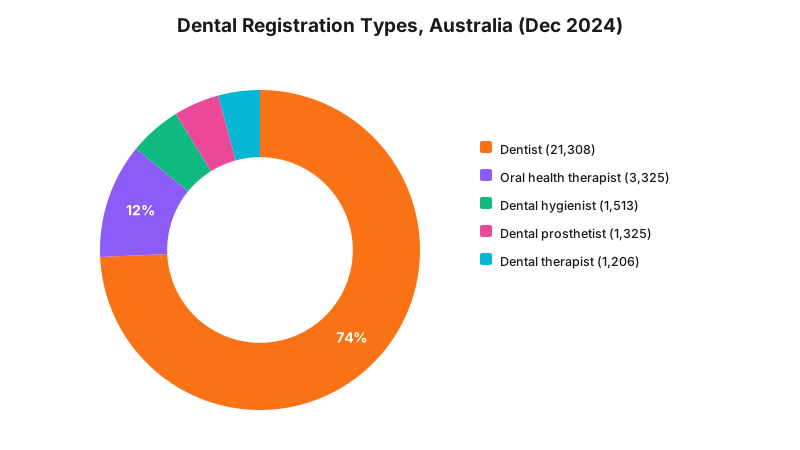
- General “Dentist” registration makes up 74.3% of Australia’s 28,677 registered dental practitioners, the pool free to use the “cosmetic dentist” label
No. The Dental Board of Australia’s list of 13 approved dental specialties, published in 2018, does not include cosmetic dentistry. Any of Australia’s 21,308 registered dentists, per the Dental Board’s December 2024 registrant data, can legally advertise as a cosmetic dentist.
Thirteen is the number of approved dental specialties in Australia, and cosmetic dentistry doesn’t make the list. That single fact means any of the country’s 21,308 registered dentists can put “cosmetic dentist” on a shopfront or a homepage without a single extra day of formal specialist training. No exam board checks it. No specialist college has to sign off. The word that is legally protected is “specialist,” a term that carries the same maximum penalty as a testimonial-laden advertising breach when misused: up to $120,000 for a body corporate. AHPRA already has evidence of the gap being exploited. Its own August 2023 audit found two-thirds of dental practitioners advertising cosmetic work online, and almost one in five breaching an advertising rule, largely over misleading titles and missing terms and conditions. This guide sets out exactly which 13 titles are protected, what “cosmetic dentist” actually means under the law (nothing, structurally), and where the real six-figure exposure sits for a practice that gets the wording wrong.
Australia’s 13 Approved Dental Specialties
The Dental Board of Australia, the body that issues every dental registration in the country under AHPRA’s National Law, maintains a fixed list of approved specialist titles. As of the Board’s most recently published specialty list, there are 13:
| # | Approved specialty |
|---|---|
| 1 | Dento-maxillofacial radiology |
| 2 | Endodontics |
| 3 | Forensic odontology |
| 4 | Oral and maxillofacial surgery |
| 5 | Oral medicine |
| 6 | Oral pathology |
| 7 | Oral surgery |
| 8 | Orthodontics |
| 9 | Paediatric dentistry |
| 10 | Periodontics |
| 11 | Prosthodontics |
| 12 | Public health dentistry |
| 13 | Special needs dentistry |
| - | Cosmetic dentistry: not on the list. 0 of 13. |
To use any of the 13 titles above, a dentist has to complete a Board-approved postgraduate specialist program and be granted specialist registration. That’s a multi-year process with an external accreditation body checking the work. “Cosmetic dentistry” sits outside that entire system. There’s no postgraduate specialist pathway for it, no accreditation body, and no register anyone can check. A dentist who does a weekend veneers course and one who completes years of aesthetic-focused continuing education are, on paper, in exactly the same regulatory position.
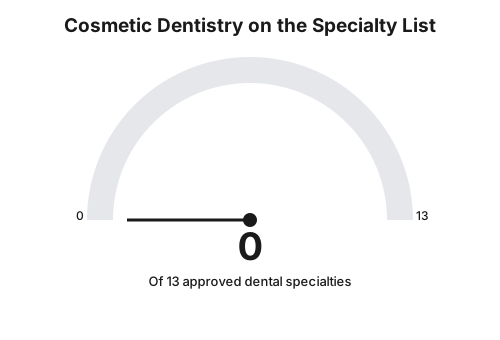
Takeaway: the Dental Board’s specialist list is short, fixed, and checkable. Cosmetic dentistry has never been on it.
Why “Cosmetic Dentist” Isn’t a Protected Title
The National Law protects two different things, and they get confused constantly. It protects the 13 specialty titles above, so nobody can call themselves an “orthodontist” or a “periodontist” without holding that specific registration. It also separately protects the word “specialist” itself, so a general dentist can’t claim to be a “specialist in cosmetic dentistry” even though no such specialty exists to register in.
What the law does not protect is a plain descriptive term like “cosmetic dentist” or “cosmetic dentistry.” AHPRA has made the same point about medicine, and the logic transfers directly: “cosmetic surgeon” is not a protected specialist title, which means any registered medical practitioner could call themselves a cosmetic surgeon regardless of surgical training. Dentistry runs on the identical structure. A general dentist advertising as a “cosmetic dentist” is describing a self-chosen focus area, not claiming a credential that anyone checks.
The line that does get enforced sits at the word “specialist.” Cross it and a dentist is exposed to a second, separate offence on top of ordinary advertising rules.
| Offence | Legal basis | Individual max | Body corporate max | Extra |
|---|---|---|---|---|
| Advertising breach (testimonial, before/after, outcome claim) | Section 133, National Law | $60,000 | $120,000 | - |
| Unlawful use of protected title (“specialist”) | Sections 113-115A, National Law | $60,000 | $120,000 | Up to 3 years imprisonment |
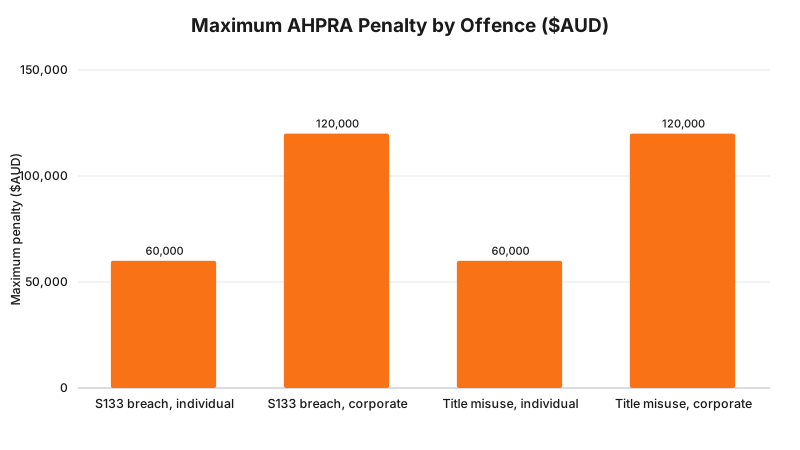
A dentist calling their own practice “cosmetic dentistry” is on safe ground. A dentist calling themselves a “cosmetic dentistry specialist,” a “specialist cosmetic dentist,” or claiming specialist status without registration is not, and the maximum exposure matches a standard advertising breach dollar for dollar, with a jail term attached for the individual. Our full breakdown of AHPRA’s advertising rules for cosmetic dentistry covers the separate testimonial ban and before/after restrictions that sit alongside this title rule, all under the same National Law.
Takeaway: the word “specialist” is the tripwire, not the word “cosmetic.” Cross the first one and the penalty stops being theoretical.
Who’s Actually Advertising as a Cosmetic Dentist
“Dentist” is one of five registration types the Dental Board oversees, and it’s the type that carries no specialty restriction at all. As of December 2024, general “Dentist” registration accounted for 21,308 of the profession’s 28,677 registered practitioners nationally, a 74.3% share. Every one of those 21,308 people is free to describe part or all of their practice as cosmetic dentistry the moment they open for business.
AHPRA’s own data shows that pool is already using the label heavily. An August 2023 audit found two-thirds of dental practitioners were advertising online, much of it cosmetic work, and that almost one in five appeared to breach at least one aspect of the existing advertising guidelines, mostly over false or misleading titles and promotions run without stated terms and conditions.
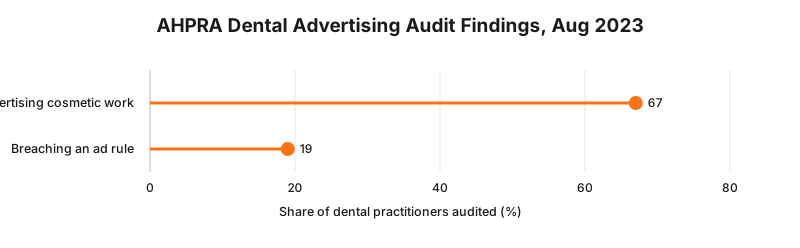
Those two figures come from the same audit but measure different things, advertising activity against rule breaches, not one as a subset of the other. Either way, the pattern is the same: a large, unrestricted pool of practitioners, a fast-growing category of advertising, and a title with no gate on who gets to use it. If your practice’s cosmetic dentistry pages, ads, or Google Business Profile haven’t been checked against these title and content rules since the current guidelines took effect, RockingWeb can flag exactly what needs to change.
Takeaway: almost three-quarters of Australia’s dental workforce can legally use the “cosmetic dentist” label today, and AHPRA’s own audit shows a meaningful share of them are already getting some part of the advertising wrong.
What This Means for a Cosmetic Dentistry Website
An unregulated title in a growing market is a crowded, undifferentiated one. Grand View Research puts Australia’s cosmetic dentistry market at USD 369.2 million in 2022, forecast to reach USD 1,119.4 million by 2030, a 14.9% compound annual growth rate. That’s real demand growth landing on a category where every competitor can legitimately claim the same “cosmetic dentist” label, whether they’ve done a weekend course or a decade of aesthetic case work.
The title alone can’t do a practice’s differentiation for it, because it’s available to every registered dentist in the country. What still works: a detailed practitioner credentials page naming actual postgraduate training and continuing education, not just the word “cosmetic.” Procedure-education content that shows real clinical understanding. Transparent pricing that doesn’t lean on outcome language. None of that requires a specialist title that doesn’t exist, and none of it trips the testimonial or before/after restrictions that already apply. Our cosmetic clinic and dental website builds are built around exactly that kind of differentiation, so a practice competes on demonstrated substance rather than an unprotected label every rival can also use.
Takeaway: in a market this crowded, the practices that win aren’t the ones with the flashiest “cosmetic dentist” claim. They’re the ones that can actually back it up on the page.
FAQ
Is cosmetic dentistry a recognised specialty in Australia?
No. The Dental Board of Australia recognises 13 approved dental specialties, and cosmetic dentistry is not one of them. Any dentist with general registration can describe their own practice as cosmetic dentistry.
Can any dentist in Australia legally call themselves a cosmetic dentist?
Yes. “Cosmetic dentist” is not a protected title under the Health Practitioner Regulation National Law. Only the 13 approved specialties, and the word “specialist” itself, carry legal protection.
What happens if a dentist calls themselves a specialist in cosmetic dentistry?
That risks a separate offence. Unlawfully using the protected word “specialist” without holding specialist registration carries a maximum penalty of $60,000 for an individual and $120,000 for a body corporate, plus up to three years imprisonment, under sections 113 to 115A of the National Law.
How many dentists are registered in Australia?
21,308 people held a “Dentist” registration as of 31 December 2024, according to the Dental Board of Australia’s registrant data. None of them need specialist status to advertise as a cosmetic dentist.
Get Your Cosmetic Dentistry Marketing Checked
RockingWeb builds AHPRA-compliant websites for Australian cosmetic dental practices and audits existing sites and ad accounts against the current title and advertising rules, before a competitor or a patient complaint does it for you.
Talk to us about your dental practice websiteSources and References
Dental Board of Australia - Specialist registration: the list of 13 approved dental specialties
Australian Institute of Health and Welfare - Oral health and dental care in Australia, dental workforce chapter: confirms “13 approved dental specialities (Dental Board of Australia 2018)”
Queensland Legislation - Health Practitioner Regulation National Law Act 2009, current text: section 133 (advertising, $60,000/$120,000 maximum penalty) and sections 113-115A (protected titles, same maximum plus imprisonment)
AHPRA - Cosmetic procedures by dental practitioners are not without risk, 28 August 2023 audit finding
Grand View Research - Australia Cosmetic Dentistry Market Size & Outlook, 2030
Dental Board of Australia, Registrant Data, reporting period 1 October to 31 December 2024, published via Ahpra: the 21,308 “Dentist” registrations and 28,677 total dental practitioners across all five registration types
Related reading:
- AHPRA Advertising Rules for Cosmetic Dentistry: the testimonial ban and before/after imagery restrictions that apply alongside the title rules above
- How Many Dentists Are in Australia: full state-by-state and registration-type breakdown
- Cosmetic Dentistry Market Australia: the full market-size and procedure-segment breakdown
- Cosmetic Clinic Websites: compliant website builds for AHPRA-regulated dental and cosmetic practices
Vikas Thakur
Founder of RockingWeb. 16 years of experience from working at TPG, iiNet and Monadelphous, now building websites, software and digital marketing for local businesses in Rockingham and Perth.