93,500 Aussies Tapped Super Early for Dental Care in FY25
93,500 Australians applied to release superannuation early for dental, IVF or weight-loss treatment in FY2024-25, and the ATO rejected 30 percent of them. Dental care alone accounted for $817.6 million in early releases. Here is what the regulatory clampdown means for a dental practice's website and booking flow.
 Vikas Thakur Founder, RockingWeb 9 min read
On this page 9
- Key takeaways
- What Compassionate Release of Super Actually Covers
- The FY2024-25 Numbers Behind the Growth
- Dental’s Dollar Share Is Growing Faster Than the Program
- Why Regulators Are Watching Dental Practices Specifically
- What This Means for a Dental Practice’s Website and Booking Flow
- FAQ
- Get Your Dental Practice’s Website Checked Against Current AHPRA Rules
- Sources and References
Key takeaways
- 93,500 applications were lodged in the ATO’s medical treatment category (dental, IVF and weight-loss combined) in FY2024-25, and the ATO rejected 30 percent of them
- Dental treatment alone accounted for $817.6 million released early from super in FY2024-25, up from $526.4 million the year before, a rise of 55.3 percent
- Total compassionate release of super across every category reached $1.4 billion in FY2024-25
- Requests for dental compassionate release more than doubled in two years, according to the ATO’s own data
- AHPRA received 95 complaints about medical and dental practitioners involved in compassionate super release between 2019 and 2025
- 2 doctors have been referred to tribunals for allegedly providing false documentation, and 1 dentist has had conditions imposed on their registration
- Regulators have named social media advertising of early super access for dental or cosmetic procedures as a red flag they are actively monitoring
93,500 Australians applied to release superannuation early for dental, IVF or weight-loss treatment in the 2024-25 financial year. The ATO rejected 30 percent of them. That is according to a joint statement the ATO and AHPRA issued on 16 October 2025, warning that dental compassionate release requests had more than doubled in two years.
Dental care is now the single biggest driver of that growth. Regulators are watching how dental practices talk about compassionate release online, and have named social media advertising as the specific mechanism that crosses the line from mentioning a payment option to promoting one. Here are the verified numbers and what they mean for a practice’s website, ad copy and booking flow.
What Compassionate Release of Super Actually Covers
Compassionate release of superannuation, known as CRS, is administered by the Australian Taxation Office. It is a safety net that lets a fund member withdraw super early in a narrow set of circumstances, including medical treatment they cannot otherwise afford. Dental treatment sits inside that medical treatment category, alongside IVF and weight-loss treatment.
To be approved, the treatment needs certification by two practitioners as necessary to alleviate acute or chronic pain, treat a life-threatening illness or injury, or alleviate acute or chronic mental illness. One report can come from the treating dentist; the second needs to come from another qualified practitioner. The ATO Deputy Commissioner has been explicit that this pathway “should only be considered as a last resort, where all other options of paying for the eligible expenses have been exhausted.”
Takeaway: CRS exists to cover urgent, medically necessary treatment as a last resort, not as a standard financing option for elective dental work.
The FY2024-25 Numbers Behind the Growth
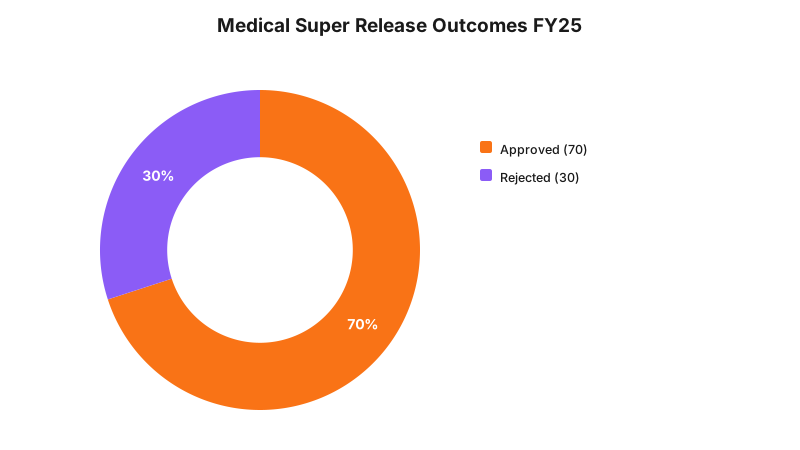
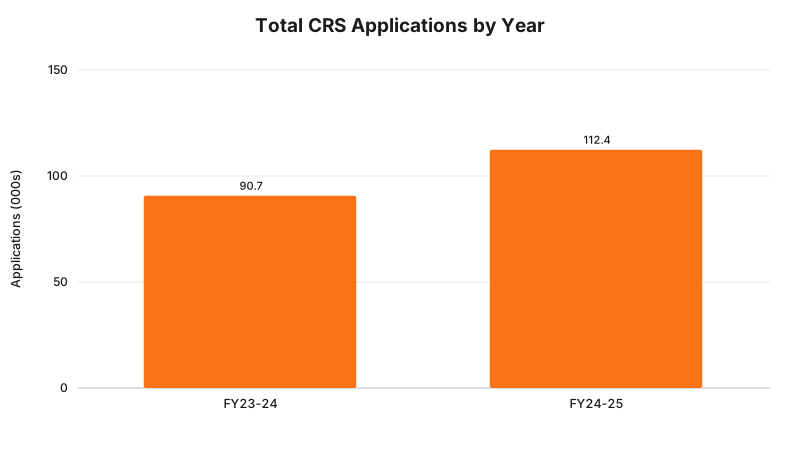
The 93,500 applications in the ATO’s medical treatment category represented over 83 percent of all compassionate release applications lodged that year, according to industry reporting on the ATO’s own figures. Total applications across every category rose from 90,700 in FY2023-24 to 112,400 in FY2024-25, up 21,700 in a single year. Not every one of the 93,500 was for dental work; IVF and weight-loss treatment sit in the same category. But AHPRA and the ATO were direct about where the growth sits: dental requests “more than doubled in two years,” and the majority of medical treatment applications relate to dental services.
| Financial year | Total compassionate release applications | Medical treatment category applications | Rejection rate (medical treatment) |
|---|---|---|---|
| 2023-24 | 90,700 | Not separately published | Not separately published |
| 2024-25 | 112,400 | 93,500 | 30 percent |
Takeaway: dental treatment is not a minor line item inside the medical treatment category. It is the majority driver behind a category that grew by tens of thousands of applications in one year.
Dental’s Dollar Share Is Growing Faster Than the Program
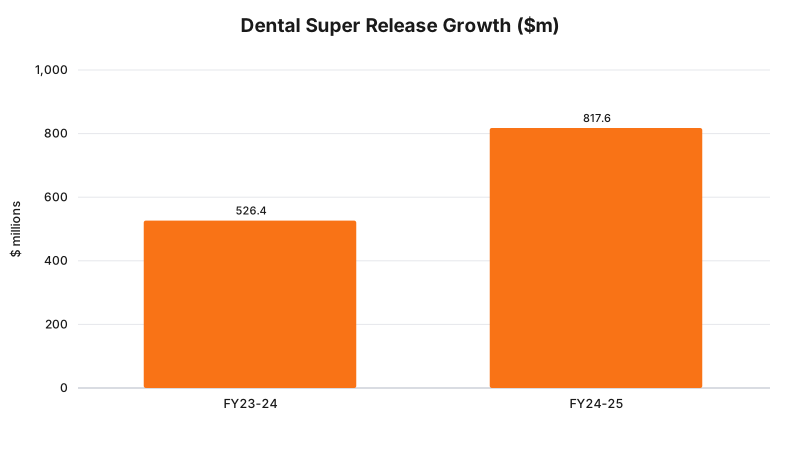
The Australian Dental Association reported that $817.6 million was released early from super for dental care in FY2024-25, up from $526.4 million the year before, a 55.3 percent increase against total compassionate release across all categories of $1.4 billion. Dental now accounts for well over half of every dollar released under the scheme, in a program that grew nearly 24 percent in application volume. Fast dollar growth plus a 30 percent rejection rate is exactly the pattern that draws regulator attention.
| Category | FY2023-24 | FY2024-25 | Change |
|---|---|---|---|
| Dental compassionate release ($) | $526.4 million | $817.6 million | +55.3 percent |
| Total compassionate release, all categories ($) | Not separately published | $1.4 billion | - |
Takeaway: the dollar figures grew faster than the application numbers, which means average payouts per dental application are rising too.
Why Regulators Are Watching Dental Practices Specifically
On 30 May 2025, AHPRA and the Dental and Medical Boards of Australia issued a joint statement flagging “reports of financial harms experienced by patients who have used significant amounts of superannuation to fund dental and medical treatments,” and warning some practitioners “may be placing profits over patient care.” The statement listed red flags for consumers: telehealth appointments where a physical examination is required, payment requested upfront, a more expensive treatment recommended when a cheaper comparable option exists, aggressive sales tactics, limited information about ongoing costs, and requests to use a patient’s myGov login.
A follow-up joint statement on 14 April 2026 added detail. Between 2019 and 2025, AHPRA received 95 complaints about medical and dental practitioners involved in compassionate release of super, most relating to treatment outcomes or payment disputes. Two doctors were referred to tribunals for allegedly providing false documentation to the ATO, and a dentist had conditions imposed on their registration. The statement flagged health practitioners or third parties who use social media to advertise early access to super for cosmetic or dental procedures as a clear warning sign.
Takeaway: the complaint and tribunal numbers are still small in absolute terms, but the regulators have named advertising as the specific mechanism they are now building tools to detect.
What This Means for a Dental Practice’s Website and Booking Flow
Read together, these two joint statements draw a fairly clear line around what a practice’s digital presence should and should not do. AHPRA’s own guidance for practitioners already covers the advertising rules for cosmetic dental marketing more broadly, including the ban on testimonials and misleading claims, and CRS advertising sits inside that same enforcement environment. RockingWeb can check a practice’s site and ad accounts against current rules before a complaint does it for you.
Three points follow from the data above. Social media advertising that promotes early super access for dental procedures is a named red flag, not untested grey area. A booking flow or pricing page that requests full upfront payment, or steers a patient toward a pricier treatment without disclosing a cheaper option, matches the red flag list AHPRA published in May 2025. And any page or form asking for a patient’s myGov sign-in sits inside the predatory practices regulators warned about in April 2026.
None of this is about whether CRS is legitimate for a patient. It clearly can be, for genuinely necessary treatment. It is about how a website presents that option, and whether the presentation itself becomes evidence a regulator points to. See how cosmetic clinic websites that stay inside AHPRA’s advertising rules are typically structured, and the rules specific to dental advertising at AHPRA advertising rules for cosmetic dentistry.
Takeaway: the safest position for a dental practice’s website is to treat compassionate release of super the same way the regulators do, as a last-resort payment mechanism to mention accurately, not a marketing angle to promote.
FAQ
What is compassionate release of superannuation and does it cover dental treatment?
Compassionate release of superannuation (CRS) is administered by the Australian Taxation Office. It lets a fund member withdraw super early for a limited set of reasons, including medical treatment. Dental treatment sits inside that medical treatment category alongside IVF and weight-loss treatment, and requires two practitioner reports certifying the treatment as necessary to treat a life-threatening illness or injury, or alleviate acute or chronic pain or mental illness.
How many people used super early for dental treatment in 2024-25, and how many were rejected?
There were 93,500 applications in the ATO’s medical treatment category in FY2024-25, the majority of them for dental services, and the ATO rejected 30 percent of those applications for not meeting compassionate release requirements, according to a joint ATO and AHPRA statement.
Can a dental practice advertise compassionate release of super as a payment option?
AHPRA and the ATO have named social media advertising of early super access for dental or cosmetic procedures as a red flag they are actively monitoring. Mentioning CRS as one of several payment options a patient can raise with their own practitioner is different territory to promoting it as a marketing hook. RockingWeb does not provide legal advice on where that line falls for a specific practice.
What happens to a dentist whose compassionate release reports are found to be inaccurate?
Between 2019 and 2025, AHPRA received 95 complaints about medical and dental practitioners involved in compassionate release of super. Outcomes ranged from cautions and registration conditions to tribunal referral. Two doctors were referred to tribunals for allegedly providing false documentation to the ATO, and a dentist had conditions imposed on their registration.
Get Your Dental Practice’s Website Checked Against Current AHPRA Rules
RockingWeb reviews dental and cosmetic practice websites and ad accounts against the advertising rules regulators are actively enforcing, including how payment options like compassionate release of super are presented.
Sources and References
AHPRA and ATO joint media release - the 93,500 applications, 30 percent rejection rate, $1.4 billion total, and dental doubling in two years
Dental Board of Australia and AHPRA joint statement - the May 2025 consumer red flags and practitioner obligations
AHPRA and ATO joint media release, April 2026 - the 95 complaints and tribunal referrals
Australian Dental Association - secondary source for the $817.6 million and $526.4 million dental dollar figures
SMS Magazine - secondary source for the 90,700 and 112,400 total application figures
Related reading:
- AHPRA Advertising Rules for Cosmetic Dentistry: the full advertising rules that apply to dental practice marketing
- Dental Advertising Compliance Australia: a broader look at what dental practices can and cannot say in ads
- Cosmetic Dentistry Market Australia: market sizing for the wider cosmetic dentistry sector
For a website and ad review against the rules regulators are actively enforcing, see ClinicPipeline or talk to us about your practice’s marketing.
Vikas Thakur
Founder of RockingWeb. 16 years of experience from working at TPG, iiNet and Monadelphous, now building websites, software and digital marketing for local businesses in Rockingham and Perth.