

Medical-Grade Skincare Clinic Marketing Australia: AHPRA Rules and Revenue Strategy 2026
Medical-grade skincare clinics (aesthetician clinics, skin clinics, cosmetic nurse clinics) in Australia operate in a specific AHPRA compliance zone: some services are regulated, some are not, and the rules differ by practitioner registration type. This guide covers compliant marketing for skincare clinics that sell prescription-adjacent products and regulated treatments alongside unregulated facials and peels.
 Vikas Thakur Founder, RockingWeb 6 min read
On this page 8
- Key Takeaways
- Who Is Subject to AHPRA Rules
- Prescription Skincare Products: The Schedule 4 Issue
- Before/After for Skin Treatments: What Is Permitted
- Compliant Skincare Clinic Marketing Channels
- Revenue Strategy for Skincare Clinics
- Compliance Checklist for Skincare Clinic Marketing
- Get a Skincare Clinic Marketing Strategy
Key Takeaways
- A skincare clinic’s AHPRA compliance obligation depends on whether it employs registered health practitioners, not on whether it calls itself a “medical” clinic
- Cosmetic nurses (registered nurses with AHPRA) bring full AHPRA advertising obligations to any clinic they work in
- Prescription skincare products (tretinoin/Retin-A, hydroquinone, compounded actives) are Schedule 4 substances: they cannot be named in advertising in a promotional context
- Non-prescription treatments (facials, enzyme peels, non-regulated LED, non-regulated microdermabrasion) are not subject to AHPRA advertising rules independently, but may be affected if the clinic employs registered practitioners
- Medical-grade skincare clinics average $1,840/year per retained patient vs $420 for spa-style beauty clinics; the higher average is driven by prescription skincare product revenue
- The highest-ROI marketing channel for skincare clinics is educational skincare content: AHPRA-compliant, drives organic search, and positions the clinic as a clinical authority
- Before/after for skin treatments is a nuanced area: acne, pigmentation, and skin texture results may be permitted with appropriate disclaimers for lower-risk treatments; this requires individual assessment
The “medical-grade” label creates a compliance paradox for Australian skincare clinics. Clinics add “medical” to their branding to justify premium pricing and differentiate from beauty salons. But the more a clinic presents as medical, the more likely AHPRA views its advertising as subject to the same rules as a cosmetic medicine clinic.
A clinic employing an aesthetician who performs facials and sells Obagi skincare products is probably not subject to AHPRA’s advertising rules. The same clinic with a registered nurse prescribing tretinoin is, for all services connected to that nurse’s practice.
This guide maps the compliance landscape.
Who Is Subject to AHPRA Rules
The AHPRA advertising guidelines apply to registered health practitioners and those advertising regulated health services. The practical application for skincare clinics:
| Practitioner Type | AHPRA Registered? | Advertising Rules Apply? |
|---|---|---|
| Aesthetician / beauty therapist | No | No (independent of AHPRA rules) |
| Dermal therapist (without AHPRA registration) | No | No |
| Cosmetic registered nurse | Yes | Yes, for all services performed by that nurse |
| Cosmetic GP or doctor | Yes | Yes, for all services performed by that doctor |
| Dermal clinician (AHPRA-registered) | Yes | Yes |
| Dermatologist | Yes | Yes |
A clinic that employs both aestheticians and registered nurses is subject to AHPRA rules for the registered nurses’ services. The safest approach: apply AHPRA’s advertising standards to all clinic marketing, regardless of which practitioner delivers each service. This is simpler to maintain and avoids the risk of AHPRA viewing the whole clinic’s advertising as connected to the registered practitioner.
Prescription Skincare Products: The Schedule 4 Issue
Many medical-grade skincare clinics prescribe or supply prescription-strength skincare products. The most common:
| Product | Substance | Schedule | Advertising Rule |
|---|---|---|---|
| Tretinoin (Retin-A, Stieva-A) | Tretinoin | Schedule 4 | Cannot name in advertising (brand or generic name in promotional context) |
| Hydroquinone (various brands) | Hydroquinone >2% | Schedule 4 | Cannot name in advertising |
| Compounded actives (prescribed) | Various | Schedule 4 | Cannot name in advertising |
| Differin (adapalene) | Adapalene | Schedule 3 (pharmacist-only) | Different regulatory regime but still restricted |
| Standard Obagi (non-prescription) | Various non-Schedule actives | Not scheduled | Advertising restrictions do not apply |
For clinics that prescribe these products, the compliance implication: you cannot advertise “Tretinoin prescriptions available” (see AHPRA Treatment Naming rules) or “Get a Retin-A prescription online”. You can describe the service as “prescription skincare consultation” or “prescription-strength active skincare”.
Before/After for Skin Treatments: What Is Permitted
This is the most nuanced area of compliance for skincare clinics. The September 2025 amendments specifically target higher-risk cosmetic procedures. Skin treatments span a wide risk range.
Before/after is banned for:
- Energy-based device treatments (laser resurfacing, RF microneedling, IPL for skin rejuvenation)
- Injectable skin treatments (skin boosters, platelet-rich plasma injection)
- Any treatment performed by a registered practitioner in an advertising context
Before/after position is less clear for:
- Non-invasive facials and peels performed by unregistered aestheticians
- Non-scheduled topical treatments
- Acne treatment programmes where results are functional (clearing a medical condition) rather than cosmetic
The conservative position: do not use before/after for any skin treatment result in advertising. The risk of being wrong is $60,000–$120,000 per image. The conservative position protects the clinic.
For clinics that want to use clinical photography to demonstrate treatment outcomes, get specific legal advice from a healthcare lawyer on the specific treatment type and practitioner context.
Compliant Skincare Clinic Marketing Channels
SEO-driven skincare education content
Skincare education content is the highest-ROI marketing channel for medical-grade skin clinics. The compliance case: educational content that explains how ingredients work, what different treatments address, and how to choose a treatment pathway does not make outcome claims. It describes science and processes.
The organic search opportunity is significant. Terms like “best treatment for melasma Australia”, “tretinoin for acne scarring”, “how long does laser resurfacing take to heal” generate thousands of monthly searches with no AHPRA compliance risk in educational content format.
Content that ranks:
- “What is medical-grade skincare? The difference from spa treatments”
- “Treating melasma in Australia: treatment options and what to expect”
- “Prescription skincare consultation: what happens, who can prescribe”
- “Laser vs IPL for skin pigmentation: a clinical comparison”
Practitioner credential positioning
For clinics with registered practitioners, credential content is the primary trust signal. Detailed practitioner pages covering qualifications in dermatology or cosmetic medicine, specialisation areas, and approach to diagnosis and treatment.
Skincare consultation funnel
The skincare consultation is a different entry point from a cosmetic procedure consultation. Patients who book a skin consultation have a specific concern (acne, pigmentation, ageing). A marketing funnel that identifies the concern, provides educational content about it, and offers a consultation is fully compliant and high-converting.
Structure:
- Educational blog content targeting the skin concern
- Internal links to a consultation landing page
- Consultation page describes the process (not the outcome)
- Follow-up sequence that continues the education
Revenue Strategy for Skincare Clinics
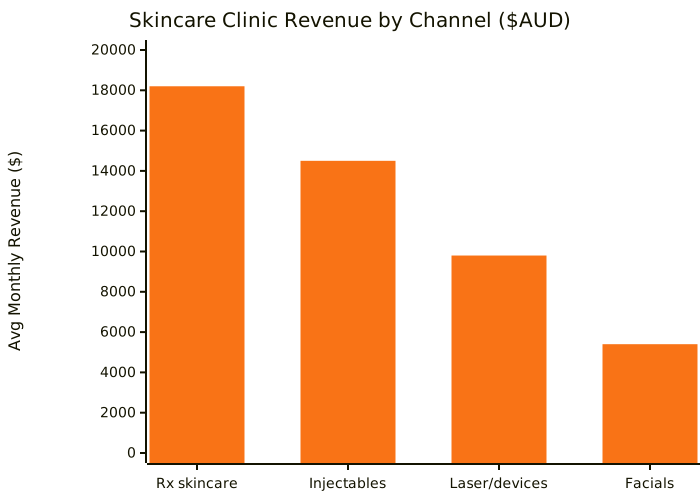
The $1,840/year average patient value for medical-grade skincare clinics is driven by product revenue, not just treatment revenue. Prescription skincare is a recurring consumable.
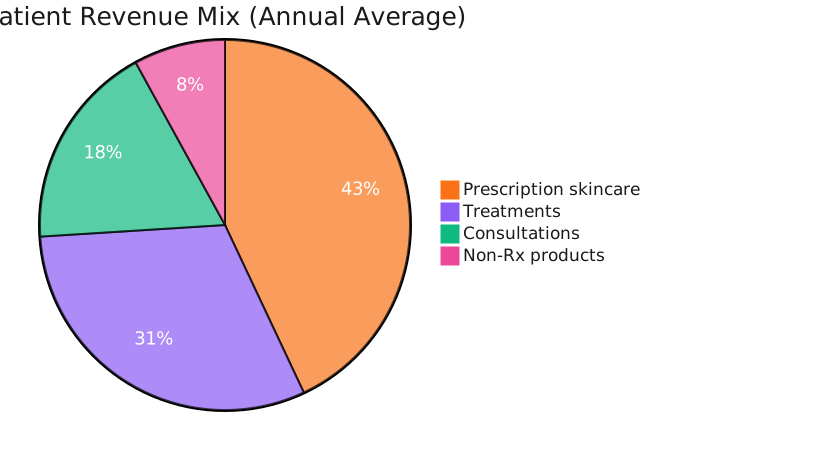
The revenue architecture that maximises patient lifetime value:
| Revenue Stream | Average Annual Value per Patient | Repeat Rate |
|---|---|---|
| Initial consultation | $150–$300 | Once (or annually for review) |
| Treatment programme | $600–$1,800 | 1–3x per year |
| Prescription skincare product | $800–$1,400 | Monthly or bi-monthly refills |
| Supplementary non-prescription skincare | $200–$400 | Quarterly |
| Total (mid-range estimate) | $1,840 |
The prescription skincare product is the retention engine. Patients who are on a prescribed skincare programme rebook consultations to maintain their prescription and review progress. This creates a recurring revenue stream from a consultation model.
Compliance Checklist for Skincare Clinic Marketing
For clinics that want to self-audit before engaging a formal compliance review:
- Website treatment pages: no before/after imagery for any procedure performed by a registered practitioner
- Website treatment pages: no testimonials from patients
- Website treatment pages: no outcome language (“clear skin”, “say goodbye to pigmentation”)
- Prescription product pages: no brand or generic Schedule 4 substance names in promotional context
- Social media: no before/after skin treatment posts
- Social media: no patient testimonial posts
- Instagram Highlights: no archived before/after Stories
- Google Business Profile: no banned substance names in services or posts
- Google Ads: no outcome language, no substance names
- Email marketing: no outcome language in subject lines or body
Get a Skincare Clinic Marketing Strategy
RockingWeb builds compliant marketing strategies for Australian medical-grade skincare clinics. Educational SEO content, AHPRA-compliant social media frameworks, practitioner credential pages, and consultation funnel design.
See ClinicPipeline: Marketing for Medical Skincare Clinics
Related reading:
- AHPRA Treatment Naming on Your Clinic Website: Schedule 4 prescription skincare naming rules
- AHPRA Social Media Rules for Cosmetic Clinics: before/after and testimonial rules on Instagram and TikTok
- AHPRA Compliance Audit Checklist: full advertising audit including skincare clinic channels
- What a Full AHPRA Compliance Audit Costs: compliance investment guide
- Cosmetic Clinic Patient Retention Australia: prescription skincare as a recurring revenue and retention tool
- The Complete AHPRA Advertising Guidelines for Cosmetic Clinics: the full compliance framework
Vikas Thakur
Founder of RockingWeb. 16 years building for companies like TPG, iiNet and Monadelphous, now focused on websites and marketing that comply with AHPRA's advertising guidelines and still book patients.
![Lip Filler Cost Australia: $596 National Median [2026]](/assets/cosmetic-clinic-patient-acquisition-cost-2025-BuwVsmfm.png)

![85% of Dental Websites Breach AHPRA Ad Rules: Study [2026]](/assets/ahpra-cosmetic-dentistry-advertising-CH-AE8rx.png)