AHPRA Binds 16 Professions: GP and Skin Clinic Ad Rules
AHPRA's advertising guidelines bind all 16 regulated health professions, not only cosmetic injectors. GPs, skin cancer clinics, cosmetic dermatologists and laser clinics carry the same testimonial ban, before/after restrictions and $60,000-$120,000 penalty exposure as any injectables clinic.
 Vikas Thakur Founder, RockingWeb 11 min read
On this page 9
- Key Takeaways
- Why This Isn’t a “Cosmetic Injector” Problem
- The Testimonial Ban Predates the 2025 Cosmetic Crackdown
- What “Higher Risk Non-Surgical Cosmetic Procedures” Covers
- What GPs and Skin Clinics Can Still Advertise
- The 2024/25 Enforcement Numbers
- Auditing Your GP or Skin Clinic’s Advertising
- Building a Compliant Marketing System
- Next Step for Your Practice
Key Takeaways
- AHPRA and its National Boards regulate 16 health professions in Australia, from medical practitioners to podiatrists. There is no profession-specific carve-out in the advertising provisions.
- AHPRA’s advertising compliance team assessed 775 complaints about advertising in 2024/25, and medical practitioners (the profession GPs are registered under) generated 12,744 of the 22,658 total AHPRA notifications that year, 56.2% of the total, more than any other profession.
- The testimonial ban under section 133 of the Health Practitioner Regulation National Law is not new and is not cosmetic-specific. AHPRA published dedicated testimonial guidance as far back as June 2019, years before the 2025 cosmetic-procedure amendments.
- AHPRA’s Guidelines for advertising higher risk non-surgical cosmetic procedures, effective 2 September 2025, explicitly name CO2 laser skin resurfacing, laser hair removal, chemical peels, dermabrasion and fat freezing as covered procedures. Most skin clinic service menus sit inside this list.
- Breaching the advertising provisions carries penalties of up to $60,000 for an individual and $120,000 for a body corporate, up from $5,000/$10,000, under the Health Practitioner Regulation National Law and Other Legislation Amendment Act 2025.
- Of the 775 advertising complaints AHPRA assessed in 2024/25, 419 (54.1%) concerned registered practitioners directly, not corporate or unregistered entities.
- 74% of practitioners contacted about non-compliant advertising corrected it voluntarily before further regulatory action was needed, according to AHPRA’s 2024/25 annual report.
Every skin clinic running a before-and-after laser resurfacing gallery on Instagram is one complaint away from a $120,000 fine. So is every GP practice reposting a Google review that mentions a patient’s treatment outcome.
AHPRA and its National Boards regulate 16 health professions in Australia. The advertising provisions in the Health Practitioner Regulation National Law do not carve out an exception for general practice, cosmetic dermatology, or laser and skin clinics.
Most GPs and skin clinic owners assume the 2025 testimonial and before/after crackdown was a cosmetic-injector problem. It was not. Medical practitioners generated more AHPRA notifications in 2024/25 than any other regulated profession: 12,744 of 22,658, or 56.2% of the total.
Here is exactly which rules bind GPs, skin cancer clinics, cosmetic dermatologists and laser clinics, and where these clinics are assuming an exemption that AHPRA’s own data says does not exist.
Why This Isn’t a “Cosmetic Injector” Problem
The National Law that AHPRA administers created a single registration and advertising framework for 16 regulated health professions: Aboriginal and Torres Strait Islander health practice, Chinese medicine, chiropractic, dental, medical, medical radiation practice, midwifery, nursing, occupational therapy, optometry, osteopathy, paramedicine, pharmacy, physiotherapy, podiatry and psychology.
GPs are registered under the Medical Board of Australia, one of AHPRA’s 15 National Boards. Dermatologists, cosmetic physicians and skin cancer doctors are also medical practitioners. Dental practitioners, including cosmetic dentists who run in-house skin and laser treatments, sit under a separate board with the same advertising provisions attached.
The advertising rules in sections 133 to 136 of the National Law apply to “a person” advertising a regulated health service. They do not reference cosmetic injectables, do not reference a client list, and do not reference clinic size. A solo GP’s website is a regulated health service advertisement under exactly the same legal test as a five-location cosmetic clinic chain.
AHPRA’s own enforcement data backs this up. Medical practitioners, the profession GPs and cosmetic doctors sit under, received more notifications in 2024/25 than any other regulated profession.
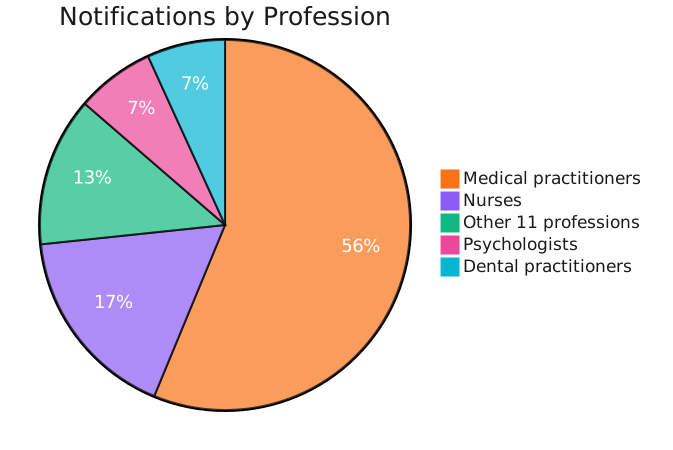
AHPRA received 22,658 notifications across all 16 regulated professions in 2024/25 (this figure covers all notifications, not only advertising complaints). Medical practitioners, the profession GPs and cosmetic doctors are registered under, accounted for 56.2% of that total, more than nurses, dental practitioners, psychologists and every other profession combined outside the “other 11” bucket. Source: Ahpra and the National Boards Annual Report 2024/25.
Takeaway: GPs sit inside the most heavily regulated profession in the National Scheme by notification volume. Assuming the advertising rules apply loosely to general practice is the opposite of what AHPRA’s own numbers show.
The Testimonial Ban Predates the 2025 Cosmetic Crackdown
A common misconception: that the September 2025 guidelines invented the testimonial ban. They did not.
Section 133 of the Health Practitioner Regulation National Law has prohibited testimonials in advertising for any regulated health service since the National Law commenced. AHPRA published a dedicated testimonials resource, “Testimonials in health advertising”, in June 2019, well before any cosmetic-specific guidance existed.
The rule catches any review or quote that references a clinical aspect of care: a symptom, a diagnosis, a treatment, or an outcome. A GP clinic that reposts a Google review reading “Dr Chen finally diagnosed what three other doctors missed” is publishing a banned testimonial under the same section that governs cosmetic injectable advertising. A skin cancer clinic quoting a patient saying “the mole removal healed perfectly” has the same problem.
What is still allowed: reviews about non-clinical experience. Friendly reception staff, easy parking, a comfortable waiting room. The line AHPRA draws is clinical content, not the word “testimonial” itself.
| Advertising element | Applies to cosmetic clinics | Applies to GPs & skin clinics |
|---|---|---|
| Testimonial ban (s.133, since National Law commenced) | Yes | Yes |
| Before/after ban for named higher-risk cosmetic procedures (from 2 Sept 2025) | Yes | Yes, if the clinic performs those procedures |
| $60,000 / $120,000 penalty exposure per breach | Yes | Yes |
| Complaints can be lodged by any person, including competitors | Yes | Yes |
Takeaway: if a GP clinic’s marketing has ever screenshotted a Google review mentioning a diagnosis or outcome, that content has been non-compliant since long before cosmetic clinics became the public face of AHPRA enforcement.
For a full breakdown of exactly what changed for cosmetic clinics in the 2025 amendments, see our guide to AHPRA’s cosmetic clinic advertising guidelines. The structure is the same one GPs and skin clinics operate under.
What “Higher Risk Non-Surgical Cosmetic Procedures” Covers
The Guidelines for advertising higher risk non-surgical cosmetic procedures took effect on 2 September 2025. The name suggests a narrow scope. The list of covered procedures is not narrow.
AHPRA defines a higher-risk procedure as one that requires an authorisation limited to certain registered practitioners, uses a prescription-only medicine, or requires anatomical, physiological or pharmacological knowledge to perform safely. The named examples include:
| Procedure category | Named example | Typically performed by |
|---|---|---|
| Injectables | Botulinum toxin, dermal filler, fat-dissolving injections | Cosmetic injectors, GPs, cosmetic physicians |
| Energy-based skin treatment | CO2 laser skin resurfacing, laser hair removal | Laser clinics, skin clinics, dermatologists |
| Chemical treatment | Chemical peels, dermabrasion | Skin clinics, cosmetic dermatologists, GPs |
| Body contouring | Cryolipolysis (fat freezing) | Skin clinics, cosmetic clinics |
| Vascular treatment | Sclerotherapy, microsclerotherapy | GPs, cosmetic physicians, vascular specialists |
| Surgical adjacent | Thread lifts, hair transplants | Cosmetic physicians, GPs |
A laser hair removal studio, a chemical peel menu at a day spa run by a registered nurse, or a GP-owned skin clinic offering fat freezing are all advertising higher-risk non-surgical cosmetic procedures under AHPRA’s own definition. None of those are cosmetic injectables businesses. All of them are bound by the same before/after ban, the same outcome-claim restrictions, and the same penalty structure.
Skin cancer treatment itself (excision, cryotherapy for lesions, biopsy) is a diagnostic and therapeutic medical service, not a cosmetic procedure, so it does not fall under the higher-risk cosmetic guidelines specifically. It remains subject to the general testimonial ban under section 133 like every other regulated health service. A skin cancer clinic that also runs a cosmetic mole-removal or pigmentation-treatment service line needs to separate that content carefully, because the second category is squarely inside the 2025 cosmetic guidelines.
Takeaway: the test is the procedure being advertised, not the name on the clinic door. A clinic calling itself a “skin clinic” rather than a “cosmetic clinic” gets no exemption if its treatment menu includes laser resurfacing or chemical peels.
What GPs and Skin Clinics Can Still Advertise
The rules restrict outcome-based marketing. They do not ban marketing altogether. Four categories remain compliant:
1. Service descriptions without outcomes. Describe the mechanism, not the result. “CO2 laser resurfacing uses controlled thermal energy to treat the skin’s surface layer, typically over 3-5 sessions” is compliant. “CO2 laser resurfacing gives you flawless, glowing skin” is not.
2. Factual treatment information. Clinical facts about how a treatment works, recovery timeframes and typical session counts are permitted, provided the copy avoids outcome or before/after framing.
3. Pricing and booking information. “Chemical peel consultations from $180” is compliant commercial information. It states a fact, not a promised result.
4. Practitioner qualifications. A GP or nurse’s registration, training and professional memberships can be advertised in full. “Dr Chen, MBBS, FRACGP, Fellow of the Australasian College of Cosmetic Medicine” is compliant. “Our award-winning skin expert” without naming the award is not.
Reviewing every page, post and ad against these four categories flags exactly which content needs to change before AHPRA’s advertising compliance team finds it first. If you would rather RockingWeb run that review for you, get in touch.
The 2024/25 Enforcement Numbers
AHPRA’s advertising compliance team assessed 775 complaints about advertising in 2024/25. The breakdown matters more than the headline figure, because it shows how AHPRA triages these matters.
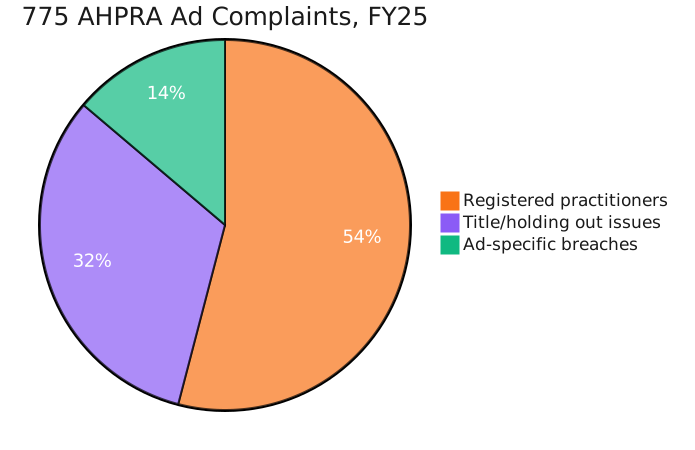
Of the 775 advertising complaints AHPRA’s compliance team assessed in 2024/25, 419 (54.1%) concerned registered practitioners directly. The remaining 356 were referred to AHPRA’s Criminal Offences Unit as complaints about corporate entities, unregistered persons, or serious-risk matters; of those, 107 specifically concerned advertising of regulated health services and 249 concerned title protection or “holding out” as a registered practitioner. Source: Ahpra and the National Boards Annual Report 2024/25.
Three further figures from the same report put the deterrence economics in context:
| Metric | 2024/25 figure | Source |
|---|---|---|
| Practitioners who corrected non-compliant advertising voluntarily after first contact | 74% | AHPRA Annual Report 2024/25 |
| Practitioners audited whose advertising remained non-compliant after a correction opportunity | 86 | AHPRA Annual Report 2024/25 |
| Of those 86, number who corrected on audit / had conditions imposed / were cautioned | 75 corrected, 8 conditions, 3 cautioned | AHPRA Annual Report 2024/25 |
| Maximum penalty, individual / body corporate, advertising breach (s.133) | $60,000 / $120,000 | Health Practitioner Regulation National Law and Other Legislation Amendment Act 2025 |
The penalty increase is recent. Before the 2025 amendment, the maximum was $5,000 for an individual and $10,000 for a body corporate. The twelvefold increase applies to every regulated profession equally, GPs and skin clinics included, not only cosmetic injectable providers.
Takeaway: AHPRA’s default response to a first complaint is educational, 74% of contacted practitioners correct voluntarily, but the financial exposure for a clinic that does not correct has grown twelvefold since 2025.
Auditing Your GP or Skin Clinic’s Advertising
Work through each channel in order:
1. Website treatment pages. Search for outcome language: “flawless”, “glowing”, “confidence”, “transform”. Remove before/after galleries for any procedure on AHPRA’s higher-risk list.
2. Google reviews and testimonials. Delete any reproduced review that mentions a symptom, diagnosis, treatment or outcome from your own website and social channels. You cannot force Google to remove the underlying review, but you cannot republish it either.
3. Instagram and Facebook. Archive, do not delete, any before/after posts for laser, peel, filler or injectable content. Audit captions on educational posts for outcome language.
4. Google Ads and Meta Ads. Review headlines and descriptions for outcome claims and brand names of Schedule 4 substances used in cosmetic contexts.
5. Google Business Profile. Check the business description and posts. This is advertising under AHPRA’s definition and is frequently overlooked.
RockingWeb runs this exact audit process for Perth clinics through ClinicPipeline. Get in touch if you want us to run it against your site.
Building a Compliant Marketing System
Clinics that built their marketing around testimonials and before/after content need a replacement conversion mechanism, not just a content removal exercise.
Education-first content. Detailed, medically accurate guides to how laser resurfacing, chemical peels or skin checks work build authority without a single outcome claim. This is the strategy behind the AHPRA-compliant website builds we run for cosmetic and skin clinics.
Credential-led practitioner pages. A GP or nurse’s training, qualifications and professional memberships are the trust signal available once testimonials and outcome photos are off the table.
Consultation-first funnels. When advertising cannot show results, the consultation becomes the conversion point. A low-friction booking flow for an initial consultation converts more reliably, and more compliantly, than an outcome-promise ad.
This is the marketing system RockingWeb builds for Perth GP-owned skin clinics, cosmetic dermatology practices and laser clinics through ClinicPipeline.
Next Step for Your Practice
If your GP clinic, skin clinic or laser studio has been advertising the way most of the industry did before 2025, before/after galleries, reposted reviews, “transform your skin” copy, it is very likely sitting on non-compliant content right now, whether or not a single injectable is on the treatment menu.
RockingWeb audits GP, dermatology and skin clinic websites and social channels for AHPRA advertising compliance across all 16 regulated professions, not only cosmetic injectables. We identify every non-compliant element across your site, social content and ad accounts and provide a prioritised, compliant replacement for each one.
Vikas Thakur
Founder of RockingWeb. 16 years building for companies like TPG, iiNet and Monadelphous, now focused on websites and marketing that comply with AHPRA's advertising guidelines and still book patients.

![Anti-Wrinkle Injection Statistics Australia [2026 Data]](/assets/cosmetic-clinic-patient-acquisition-cost-2025-BuwVsmfm.png)
![85% of Dental Websites Breach AHPRA Ad Rules: Study [2026]](/assets/ahpra-cosmetic-dentistry-advertising-CH-AE8rx.png)