2.7 Million Businesses Trade in Australia (2025 ABS Data)
2.7 million businesses were actively trading in Australia at 30 June 2025, up 2.5% on the year, according to the ABS. Here is the full breakdown by state, size and structure.
 Vikas Thakur Founder, RockingWeb 7 min read
On this page 9
- Key Takeaways
- How Many Businesses Are There in Australia?
- Business Entries and Exits: Australia’s Churn Rate
- Who Actually Owns These Businesses?
- Which State Has the Most Businesses?
- How Big Is the Average Australian Business?
- What This Means If You Run a Business (or Sell to One)
- Get Counted in the Right Slice
- Sources
Key Takeaways
- 2,729,648 businesses were actively trading in Australia at 30 June 2025, up 2.5% on the year
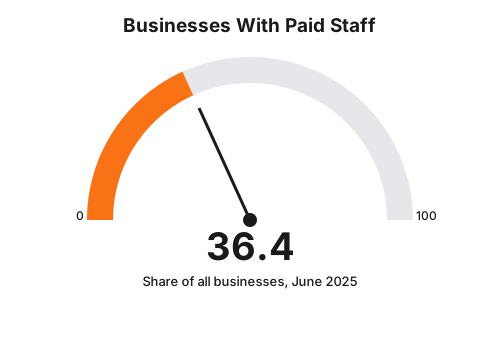
- 437,150 new businesses opened in 2024-25, while 370,500 closed, for a net gain of 66,650
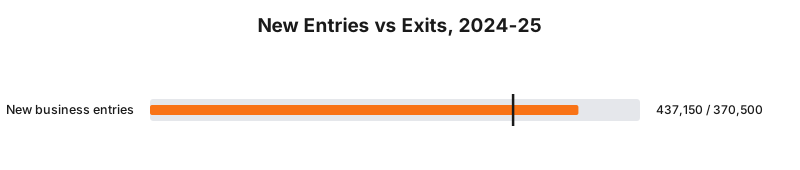
- 63.6% of Australian businesses are self-employed with no staff at all
- Western Australia was the fastest-growing state, up 4.3% to 260,730 businesses
- 44% of businesses run as a company, 30% as a sole trader, 18% as a trust and 8% as a partnership
- Construction added 76,414 new businesses in 2024-25, more than any other industry
- Only 994,178 of Australia’s 2.7 million businesses employ anyone at all
Australia had 2,729,648 actively trading businesses at 30 June 2025, according to the Australian Bureau of Statistics. That is a 2.5% rise, or 66,650 more businesses, than the year before. The figure comes from the ABS Counts of Australian Businesses release, published 26 August 2025 and covering the 2024-25 financial year.
Here is a number that surprises most business owners: for every 10 people in Australia, roughly one owns a business. 2.7 million active businesses across a population of 27 million works out to about one business per 10 residents. That is not a typo, and it is not a rounded guess. It is the ABS count of every business with an active Australian Business Number that is registered for GST, as of 30 June 2025.
Most of those businesses are tiny. Most of them have no employees at all. And most of them are competing for the exact same handful of customers you are. Here is the full picture, backed by the source data, table by table.
How Many Businesses Are There in Australia?
| Measure | Figure | Year |
|---|---|---|
| Actively trading businesses | 2,729,648 | 30 June 2025 |
| Year-on-year growth | 2.5% (+66,650) | 2024-25 |
| Employing businesses | 994,178 | 30 June 2025 |
| Non-employing businesses | 1,735,470 | 30 June 2025 |
Takeaway: 2.7 million is the headline figure, but only 994,178 of those businesses employ a single person besides the owner.
Business Entries and Exits: Australia’s Churn Rate
Business counts do not sit still. Every year, hundreds of thousands of businesses open and hundreds of thousands close.
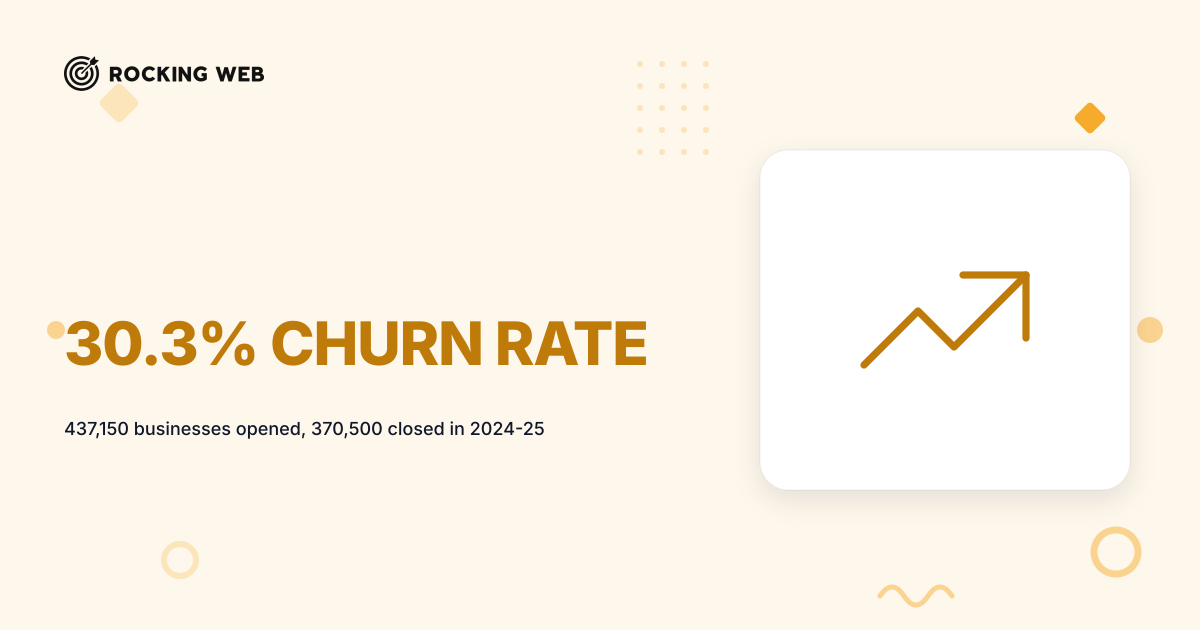
In 2024-25, Australians started 437,150 new businesses, an entry rate of 16.4%. Over the same period, 370,500 businesses shut down, an exit rate of 13.9%. Both figures were higher than the previous two years, which points to a market with more churn, not less.
Subtract exits from entries and you get the net gain: 66,650 businesses, which is exactly the growth figure the ABS reported for the year. The maths lines up because entries and exits are the two halves of the same number.
| Measure | Count | Rate |
|---|---|---|
| New business entries | 437,150 | 16.4% |
| Business exits | 370,500 | 13.9% |
| Net change | +66,650 | 2.5% |
Construction drove more of that churn than any other industry. It added 76,414 new businesses in 2024-25, the highest count across all sectors. Health Care and Social Assistance grew the fastest by percentage, up 6.6% on the year, followed by Transport, Postal and Warehousing at 5.1%.
Takeaway: roughly one in six Australian businesses is brand new this year, and one in seven that existed last year is gone.
Who Actually Owns These Businesses?
Ask most people how an Australian business is structured, and they picture a company with a logo and a bank loan. That is the minority case.
Companies do make up the largest single structure, at 44% of all businesses. But sole traders are close behind at 30%, trusts sit at 18%, and partnerships make up just 8%. Partnerships are also the only structure in decline, down 4.3% (9,226 fewer) in 2024-25, and have not recorded a single year of growth since 2002, the first year the ABS series tracked business structure.
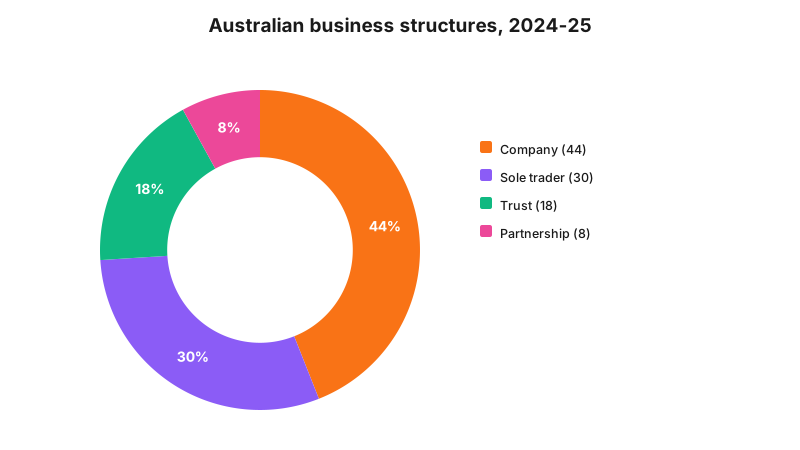
If you are picturing your competitors as slick incorporated firms, drop that picture. Three in ten Australian businesses are one person trading under their own ABN, with no company structure at all.
Takeaway: sole traders and companies together account for nearly three-quarters of every Australian business.
Which State Has the Most Businesses?
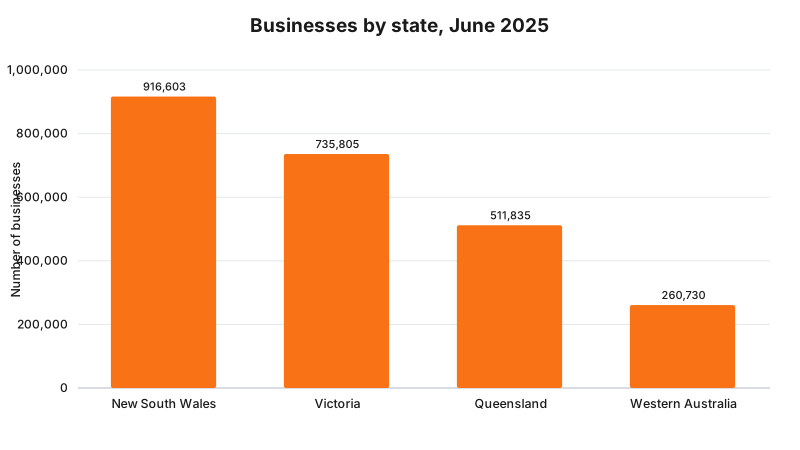
New South Wales carries the most businesses by a wide margin: 916,603 at 30 June 2025, and it added the most new businesses of any state in raw terms, up 20,040 on the year.
Victoria comes next with 735,805, followed by Queensland at 511,835 and Western Australia at 260,730. But raw totals hide the real story. Western Australia grew fastest of any state, up 4.3% (10,877 more businesses), ahead of Queensland’s 2.7% (13,579 more). Queensland also attracted more businesses relocating there than any other state or territory, with 1,250 entities shifting their operations across state lines in 2024-25.
That means if you run a business in WA, you are trading in the market that added new competitors fastest of anywhere in the country. Population growth explains part of it, since WA was also the fastest-growing state by population, but even that only ran at 2.2% for the year to September 2025. Business numbers still grew almost twice as fast.
Takeaway: NSW has the most businesses, but WA is minting new ones faster than any other state.
How Big Is the Average Australian Business?
If you assumed most Australian businesses have staff, the data says otherwise.
63.6% of all businesses are self-employed, meaning the owner works alone with nobody else on payroll. Another 25.2% employ between one and four people. Add those two bands together and 88.8% of Australian businesses run with a team of four or fewer, including the owner.
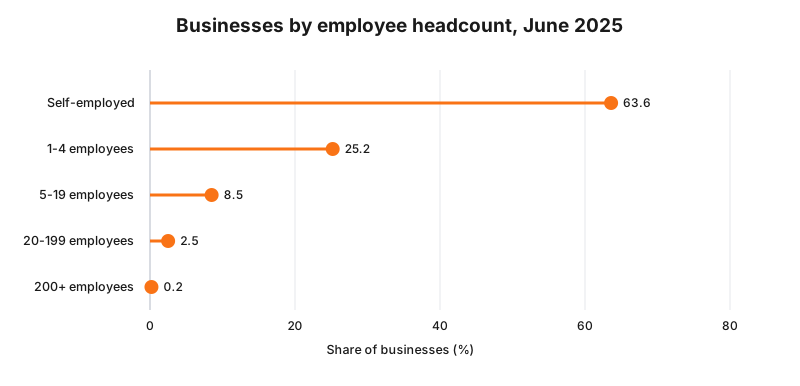
Only 5,322 businesses in the entire country employ 200 or more people. That is 0.2% of the total. Every household name you can think of, every ASX-listed retailer, every major bank, sits inside that tiny sliver.
Business size also splits along revenue lines. In 2024-25, 24.0% of businesses had turnover of less than $50,000, and 91.5% had turnover of less than $2 million, according to the ABS. That leaves 8.5% of Australian businesses turning over $2 million or more in a year.
Takeaway: almost nine in ten Australian businesses run with four people or fewer, including the owner.
What This Means If You Run a Business (or Sell to One)
Here is where the numbers stop being trivia and start mattering for your marketing budget.
If your business sells to other businesses, your addressable market is not “2.7 million companies”. It is closer to 994,178 employing businesses with a payroll, budget authority, and a reason to buy tools, services or software. The other 1.7 million are one person juggling every job themselves, including yours if you are trying to sell to them.
If you compete for local customers, the state-by-state numbers matter more than the national ones. A Perth trades business is competing inside a market of 260,730 businesses growing at 4.3% a year, faster than any other state. That means more competitors chasing the same searches, the same directory listings, and the same word-of-mouth referrals every single year.
A separate analysis found that 59% of Australian small businesses had no website, based on a GoDaddy-commissioned study from 2019. Even allowing for that figure being dated, it points to a real gap: a large share of the 1.7 million non-employing businesses in this dataset are still running on a Facebook page or nothing at all, while the businesses that do show up in local search absorb a disproportionate share of new customers.
That gap is the opportunity. A market growing by 66,650 businesses a year, most of them run by one or two people with no time for marketing, is a market where a proper website and consistent local SEO still stand out.
Takeaway: the size of Australia’s business market matters less than which slice of it you are actually competing in.
Get Counted in the Right Slice
Whichever slice of the 2.7 million you sit in, from sole trader to a 20-person employer, your website is how the rest of that market finds you before your competitors do. RockingWeb builds and maintains websites for Western Australian businesses that need to show up in that search, not just exist in the ABS count.
Book a no-obligation consultation with the RockingWeb team, or browse our full range of web design and digital services.
Sources
- Australian Bureau of Statistics. (2025). “Counts of Australian Businesses, including Entries and Exits, July 2021 to June 2025”.
- Australian Bureau of Statistics. (2025). “7 facts about Australian businesses”.
- Australian Small Business and Family Enterprise Ombudsman. (2025). “Number of small businesses in Australia”.
- GoDaddy. (2019). “Study reveals why 59% of Australian small businesses don’t have a website”.
- Australian Bureau of Statistics. (2025). “National, state and territory population, September 2025”.
Vikas Thakur
Founder of RockingWeb. 16 years building for companies like TPG, iiNet and Monadelphous, now focused on websites and marketing that comply with AHPRA's advertising guidelines and still book patients.