Domain Renewal Letter Scam: 3 Checks Before You Pay
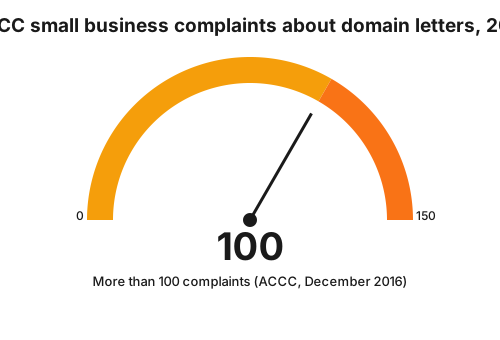
The ACCC warned in 2016 about letters that look like a domain renewal invoice but sell a new domain. It received over 100 complaints from small businesses that year. Here are the three checks Scamwatch gives, and how to confirm who holds your domain.
 Vikas Thakur Founder, RockingWeb 5 min read
Key takeaways
- The ACCC received over 100 complaints from small businesses in 2016 about domain letters that looked like invoices
- Scamwatch gives 3 checks: match the exact domain, check the sender, check your own expiry date
- The ACCC’s 2016 alert put a two-year .com.au registration at $25 to $100
- A .com.au name needs an active ABN or ACN, an ARBN, or an Australian trade mark, held for as long as you keep the name
- Your registrar account, not a letter, is the source of truth for your expiry date
The ACCC warned in December 2016 that letters made to look like domain renewal invoices were selling new domain names, and said it had received over 100 complaints from small businesses that year.
A letter lands on the counter at your shop in Rockingham. It says your domain is due. It has a price and a due date. It looks like paperwork you should pay. This post gives you the three checks before anyone in your business signs or pays.
What the letter is doing
The ACCC said such letters may be taken for a renewal notice for an existing domain. Instead, the letter is offering a new domain name and related services. Some businesses paid, believing they were renewing their current name, and risked missing the genuine renewal notice.
Scamwatch’s 2007 advice on the same problem said the notice could be genuine, could be from another company trying to sign you up, or could be from a scammer.
The three checks
| Check | What to look at |
|---|---|
| 1. Match | Does the notice match your current domain exactly? Look for small differences, such as .com.au instead of .net.au |
| 2. Sender | Is it from the company you originally registered your domain with? |
| 3. Expiry | Does your own record show the domain is really due to renew? |
Takeaway: a letter is never proof. Your registrar account is.
What a domain costs
The ACCC’s 2016 alert said a .com.au name can cost between $25 and $100 for a two-year registration, and that .com names can be cheaper. Prices change, so treat these as the ACCC’s 2016 figures, not today’s.
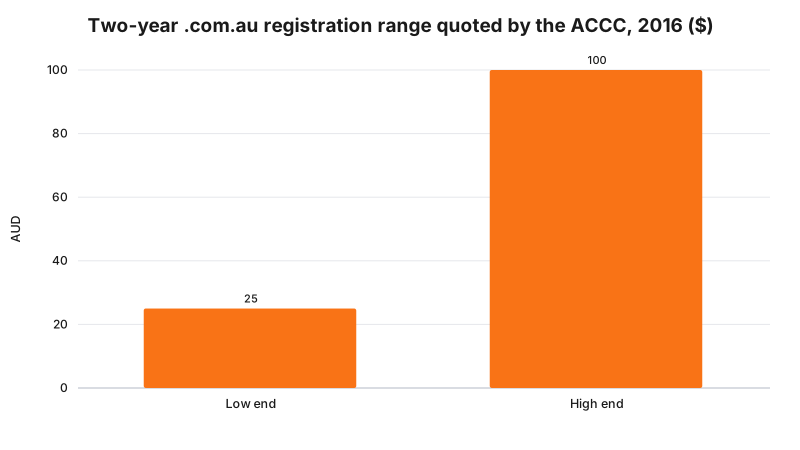
If a letter asks for far more than that range, ask why before you pay.
Know who holds your domain
For a .com.au name, auDA says you must be an Australian commercial entity, and the most common way is an active ABN or ACN. If you have neither, an ARBN or an Australian trade mark also works. The name must have a connection to your business, such as your business name, an acronym, a trade mark match, or a service or product you offer. You must meet the requirements at registration and for the whole time you hold the name.
So ask three questions today:
- Whose name is on the registration, yours or a former developer’s?
- Which registrar holds it, and who has the login?
- When does it expire, and is auto-renew on?
Our guide on recovering a .com.au domain from an uncooperative agency covers the case where someone else holds it.
Put a rule in place
The ACCC’s advice includes clear procedures for verifying, paying and managing invoices, and limiting the number of people who can place orders and pay invoices. It also suggests that anyone who opens your mail flags domain letters for review, and that you consider registering both the .com and the .com.au versions of a name that matters to you.
Frequently Asked Questions
How can I tell if a domain renewal notice is genuine?
Scamwatch says to check that the notice matches your current domain name exactly, check who sent it, and check your own records for the real expiry date. Look for small differences, for example .com.au instead of .net.au.
Is every unsolicited domain letter a scam?
Scamwatch says the notice could be genuine, could be from another company trying to sign you up, or could be from a scammer. Treat it as unverified until you have checked it against your own records.
How many complaints did the ACCC receive?
The ACCC said it received over 100 complaints in 2016 from small businesses that received similar letters and paid without realising what they were paying for. That figure is from the ACCC’s December 2016 warning.
Who can hold a com.au domain name?
auDA says you must be an Australian commercial entity. The most common way to qualify is an active ABN or ACN. An ARBN or an Australian trade mark also qualifies. You must meet the requirements when you register and for as long as you hold the name.
Need your domain sorted?
If you are not sure who holds your domain, we can help you find out and set up renewals in your name. See web design in Rockingham, or the pages for Baldivis and Mandurah, then contact us.
Sources
Scamwatch (ACCC), Beware of unsolicited domain name registration offers
, 19 December 2016. Source of the 100 complaints, the price range and the protect-yourself list. Read 3 November 2026.Scamwatch, Domain name renewals: don’t be dot conned
, 12 July 2007. Source of the three checks. Read 3 November 2026.auDA, com.au domain names
. Source of eligibility and connection rules. Read 3 November 2026.
Last reviewed: 3 November 2026.
Vikas Thakur
Founder of RockingWeb. 16 years of experience from working at TPG, iiNet and Monadelphous, now building websites, software and digital marketing for local businesses in Rockingham and Perth.