Overdue Invoices Hit an 8.5-Year High: Add a Pay-Now Link
CreditorWatch says one in 10 Australian invoices was more than 60 days overdue in September 2026. Here is what that figure means, and the website and invoice changes that make it easier for a Perth or Rockingham customer to pay you on time.
 Vikas Thakur Founder, RockingWeb 8 min read
Key takeaways
- The ABC reported on 27 October 2026, citing CreditorWatch, that one in 10 invoices was more than 60 days overdue in September
- Per the same report, CreditorWatch’s Business Risk Index showed more than 50 per cent of invoices were not paid on time
- CreditorWatch’s chief executive Patrick Coghlan called that the highest level of “serious arrears” since April 2018
- The RBA says card surcharging on eftpos, Mastercard and Visa ended on 1 October 2026, including on invoices issued earlier but paid on or after that date
- A payment link, a clear pay-now page and plain payment terms are website and invoice fixes, not collections tactics
- Every number here comes from the ABC’s report of CreditorWatch’s data. We could not open CreditorWatch’s own page for it
A customer opens your invoice on their phone, sees a bank account number and a reference, switches to their banking app, mistypes one digit, gives up, and means to do it tonight. It is a small friction, and in the ABC’s 27 October 2026 report it sits inside a much bigger number: more than half of Australian invoices were not paid on time in September, and one in 10 was more than 60 days late.
This is a web development view of what that means for a small business in Rockingham or Perth. It is not financial advice or debt-collection advice. It is about the pages, links and invoice layouts you control, and which of them make paying harder than it needs to be.
What the Numbers Say
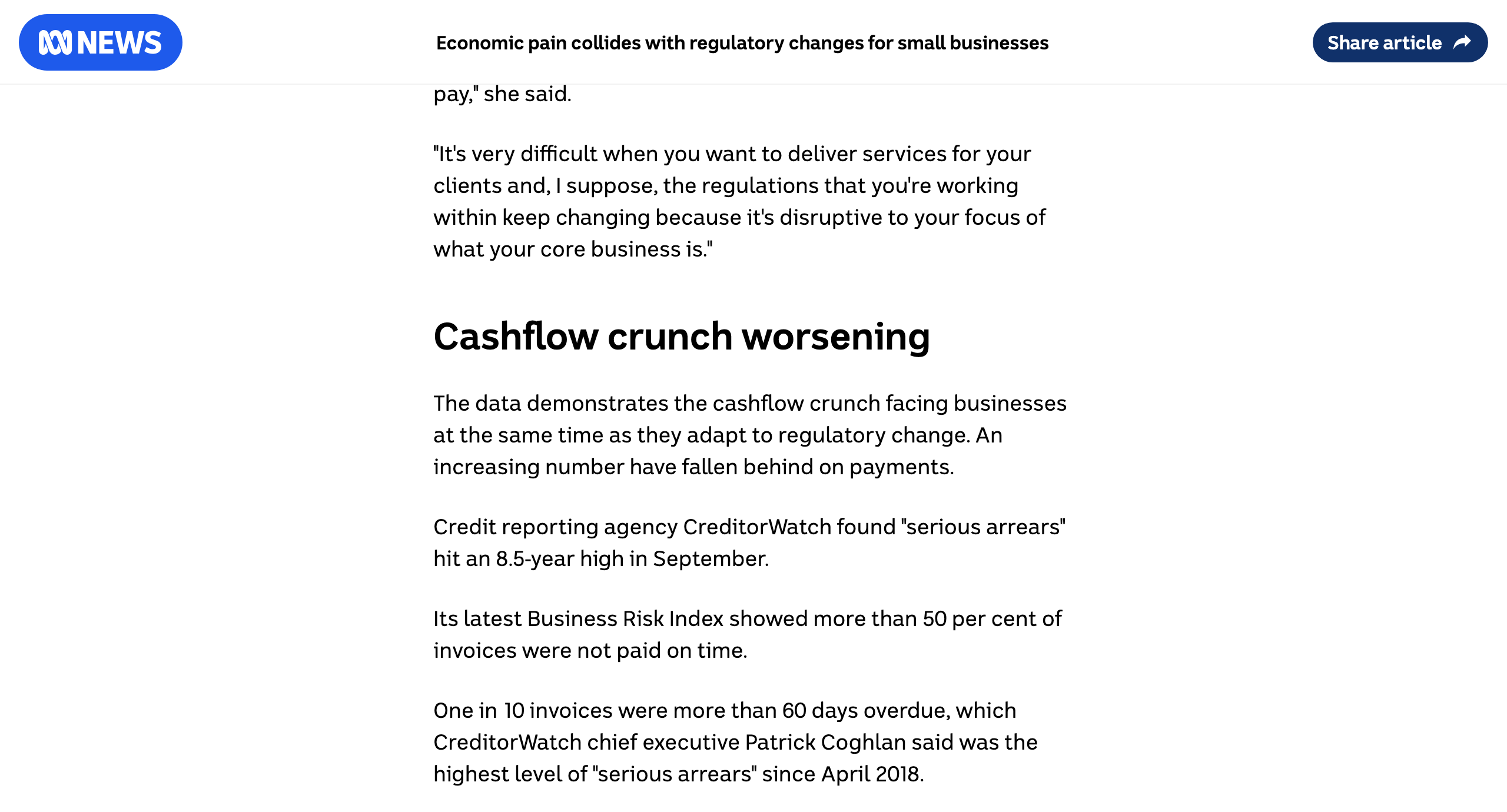
The ABC’s report, published on 27 October 2026, says credit reporting agency CreditorWatch found “serious arrears” hit an 8.5-year high in September. It reports three specific findings from CreditorWatch’s latest Business Risk Index and its chief executive, Patrick Coghlan:
- More than 50 per cent of invoices were not paid on time
- One in 10 invoices was more than 60 days overdue
- That was the highest level of “serious arrears” since April 2018
The ABC places this in a wider squeeze. It lists tough economic conditions alongside changes to payday super, the ban on debit and credit surcharges, an increase in wages and changes to trusts. It also quotes Coghlan saying it is “generally the cumulative effect of all of these changes” that puts pressure on small businesses.
Two honest limits. We could not open a CreditorWatch page carrying these figures, so we are attributing them to the ABC’s report, not to CreditorWatch directly. And the figures describe invoices across the country, not Rockingham or Perth specifically.
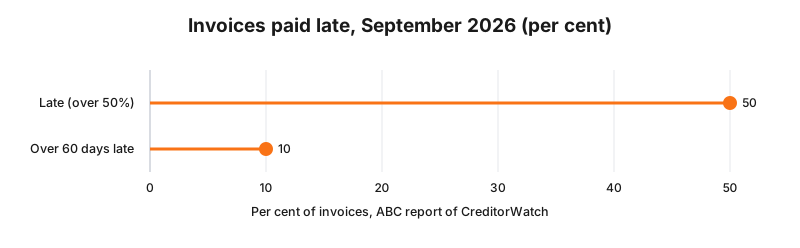
The first bar is a floor, not an exact figure. The ABC says more than 50 per cent were not paid on time, so the true value is above the line shown.
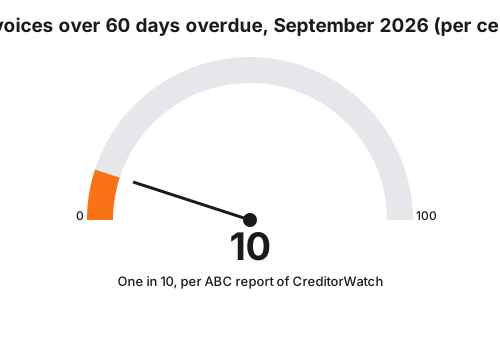
Takeaway: if your own invoices are being paid late, you are in the majority, and the friction in how customers pay is worth removing.
What Changed for Card Payments on 1 October
The same weeks brought a second change that touches invoices. The RBA’s FAQ says card surcharging on eftpos, Mastercard and Visa ended on 1 October 2026. On invoices specifically it says: “If a card payment is made on or after 1 October 2026, surcharging may no longer be available even if the invoice was issued earlier.”
It adds that businesses should check with their payment service provider, because some providers have indicated they may disable surcharging functionality from that date. Our separate post covers what your checkout must show now that the ban is in force, including which fees stay allowed.
For an invoice template, that means one specific check. If an old invoice, a saved template or an accounting tool still adds a “card fee” line to a payment link, it is out of date.
Takeaway: the invoice you sent in September and the link on it may not behave the way you remember.
Make Paying the Easiest Thing on the Page
None of these changes is a collections tactic. They are the same fixes we would make to a checkout.
- Put a pay-now link or button at the top of every invoice. Not at the bottom of page two. It should open a page the customer can complete on a phone in one sitting.
- Show the amount and due date on that page. The customer should not need to look back at the invoice to know how much to pay.
- List the payment methods you actually accept. If you accept card, bank transfer and PayID, say so. Our guide to drip pricing at checkout covers why the total shown has to match the total charged.
- Remove any leftover card fee line. Check invoice templates, accounting tool settings and any payment link you saved before 1 October.
- State payment terms in plain words on your site and on the invoice. “Due within 14 days” is clearer than “net 14”. If your terms are on a hidden page, link them from the invoice.
- Take a deposit at booking where it suits your business. A deposit step is a small addition to a booking form, and it means less of the total is left to chase.
- Confirm receipt automatically. A “payment received” email stops the customer wondering whether the payment went through, and stops you chasing someone who has already paid.
- Make the contact path obvious. A customer who cannot pay on time is more likely to tell you if the invoice shows a name, phone number and email.
None of this replaces your accountant’s advice on terms or what to do with a debtor. It removes the friction on the customer’s side.
Takeaway: if paying takes more than two taps from the invoice, that is a website problem you can fix.
Where a Website Cannot Help
A pay-now link does not fix a customer who cannot pay. It does not tell you whether to extend terms, charge interest or stop work, and it does not replace advice from an accountant or lawyer about overdue debts.
We also have not found a published figure showing how much a payment link speeds up payment in Australia, so we are not going to give you one. What we can say, from the ABC’s report, is that more than half of invoices were being paid late in September, and that reducing the steps between reading an invoice and paying it is a low-cost fix.
If you want your invoice flow checked, see our web design service in Rockingham or get in touch below.
Frequently Asked Questions
How many Australian invoices were overdue in September 2026?
According to the ABC’s 27 October 2026 report on CreditorWatch’s latest Business Risk Index, more than 50 per cent of invoices were not paid on time and one in 10 was more than 60 days overdue. CreditorWatch’s chief executive Patrick Coghlan said that was the highest level of serious arrears since April 2018.
Can I still charge a card surcharge on an invoice payment link?
Not for eftpos, Mastercard or Visa. The RBA’s FAQ says card surcharging on those networks ended on 1 October 2026 and that if a card payment is made on or after that date, surcharging may no longer be available even if the invoice was issued earlier. Check with your payment provider, because some have disabled surcharging functionality from that date.
Will a payment link get my invoices paid faster?
We cannot promise that, and we have not found a published Australian figure showing it. What a payment link does is remove steps between a customer reading your invoice and paying it, which is a reasonable thing to fix when the ABC reports that more than half of invoices are being paid late.
Is this financial or debt-collection advice?
No. This is a web development view of how your invoices, payment page and website can make paying easier. For chasing overdue debts, payment terms or your legal options, speak to your accountant or a lawyer.
Make Paying You Easier
Contact us for a quote and we will review your invoice layout, pay-now page and payment terms the way a customer sees them on a phone, then fix the friction. Contact us for a quote.
Sources and References
ABC News
, Economic pain collides with regulatory changes for small businesses, 27 October 2026. Source of the CreditorWatch figures and the quotes from Patrick Coghlan. Read 31 October 2026.Reserve Bank of Australia
, Frequently Asked Questions: Removal of Card Payment Surcharges From 1 October 2026, including the answer on invoices issued before 1 October. Read 31 October 2026.
Last reviewed: 31 October 2026.
Vikas Thakur
Founder of RockingWeb. 16 years of experience from working at TPG, iiNet and Monadelphous, now building websites, software and digital marketing for local businesses in Rockingham and Perth.