Consultation vs Treatment Booking: The AHPRA Fix
One "Book Now" button that sends a new patient straight to an injectable treatment slot skips the real-time consultation AHPRA has required since 2 September 2025. Here is how to split the flow, and what to build instead.
 Vikas Thakur Founder, RockingWeb 11 min read
Key Takeaways
- AHPRA’s Guidelines for registered health practitioners who perform non-surgical cosmetic procedures took effect on 2 September 2025 and require a real-time in-person or video consultation each time a cosmetic injectable is prescribed
- Asynchronous prescribing by text, email, or online questionnaire is not acceptable practice, and prescribing one script for multiple people at once is expressly prohibited
- The guideline covers registered health practitioners other than medical practitioners. Cosmetic doctors instead follow the Medical Board of Australia’s separate 2023 cosmetic guidelines
- Between September 2022 and March 2025, AHPRA investigated about 360 notifications about non-surgical cosmetic procedures, with about 300 closed, alongside more than 1,500 calls to its dedicated cosmetic surgery hotline
- The build fix is two separate booking flows: a self-service Consultation flow, and a Treatment flow that only opens once a consultation has been logged against the patient
- A genuine video consultation means live two-way video, not a text intake form your booking platform happens to call a “consult”
- AHPRA has cancelled a nurse’s registration and banned her from reapplying until 29 September 2027 over cosmetic injections given without a doctor consultation or prescription, a case it publicised in January 2026
- This is a professional practice guideline in force under the Health Practitioner Regulation National Law since 2 September 2025, not a separate piece of legislation
Since 2 September 2025, AHPRA has required a real-time consultation before every cosmetic injectable prescription, which means a single self-service button straight into a treatment slot does not match what the guideline expects.
That single sentence is the whole problem for most clinic websites. Walk through a typical booking widget for anti-wrinkle injections or dermal filler and you will usually find one button: “Book Now”. Click it, pick a time, pay a deposit, done. Nobody asked whether this is a new patient. Nobody logged a consultation. The treatment slot the widget just confirmed assumes a conversation that, on the site’s own evidence, never happened.
Fixing this is not a copy change. It is a booking-flow architecture problem, and it has a real deadline behind it: this guideline has already been in force for close to a year by the time you read this.
What AHPRA’s Guideline Says
The Guidelines for registered health practitioners who perform non-surgical cosmetic procedures, published by the Australian Health Practitioner Regulation Agency (AHPRA) and its National Boards, took effect on 2 September 2025. According to AHPRA’s own announcement of the guidelines, they set expectations for registered health practitioners other than medical practitioners, and bring those practitioners in line with the standard the Medical Board of Australia already set for doctors in its own 2023 cosmetic guidelines. A cosmetic doctor sits under the Medical Board’s framework, not this one. A nurse injector, dentist, or other registered practitioner performing the same anti-wrinkle or filler treatment sits under this guideline instead. Check which one applies to each practitioner at your clinic before you assume the build rule below covers everyone on your team.
On the consultation requirement itself, law firm Clayton Utz, which reviewed the guideline text in detail, summarises the core rule this way: a registered health practitioner must have an in-person or video consultation with the patient each time they prescribe a cosmetic injectable, and asynchronous prescribing by text, email, or online questionnaire is not acceptable practice. Bulk or batch prescribing, where one prescription is written for multiple people, is expressly prohibited. Practitioners must also discuss a patient’s reasons and motivations for requesting the procedure, and written information provided beforehand must not minimise the complexity of the procedure or overstate realistic outcomes.
Report what it says, not what it implies about your specific booking software: whether a particular flow satisfies the guideline in your circumstances is a question for your medical defence organisation or your lawyer, not a web development company. What follows is the build consequence, which is a separate and answerable question.
What That Means for the Build
The consultation requirement is a sequencing rule, and sequencing rules live in booking logic, not in a paragraph of terms and conditions nobody reads.
Split the service catalogue first. In your booking platform, “Anti-wrinkle injections” and “Cosmetic Consultation” should be two different appointment types, not one appointment type with an optional note field. Cliniko, Fresha, Timely, and similar platforms all support multiple service types tied to different durations and different booking rules. Use that.
Gate the treatment type for new patients. A treatment appointment type for an injectable service should not be open for self-service booking by anyone without a completed consultation record. Some platforms handle this with a “requires referral” or “requires prior appointment” flag on the service; others need it enforced through a custom booking widget or a manual release step where staff confirm the consultation happened before opening the treatment slot.
Make the video consultation option real video. If your consultation option supports telehealth, the appointment type needs to launch a live video call (Zoom, a platform’s built-in video, whatever you use), not a form. A “virtual consultation” service that is really a symptom questionnaire followed by an automatic booking confirmation is asynchronous prescribing with better branding.
Record the consultation, not just the appointment. A calendar entry that says “consult, 3pm” is not evidence a consultation happened and covered what it needed to. The practitioner’s clinical note, including the motivations discussion the guideline calls for, needs to exist as a record tied to that patient before the treatment slot becomes bookable.
Treat repeat patients as a policy decision, not a technical default. Whether a returning patient’s fourth top-up needs a fresh full consultation booking or can move straight to a treatment slot is a clinical judgement call your practitioners need to make, then encode as a rule. Do not let the software default to “always straight through” just because that is the easiest flow to build.
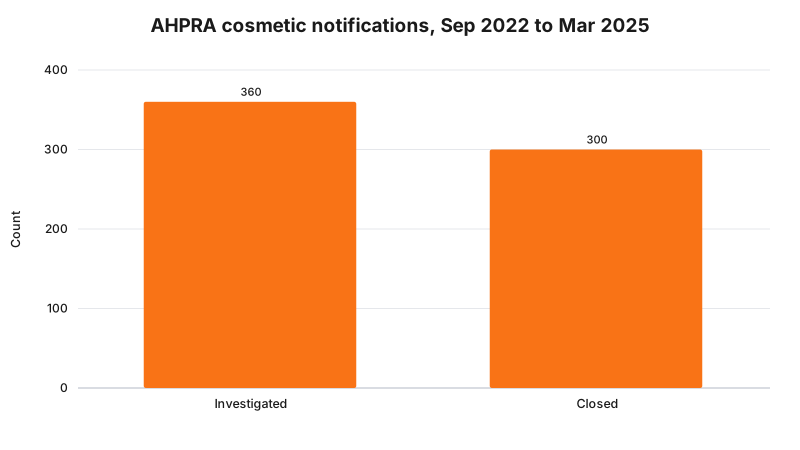
AHPRA’s own figures use the word “about” for both numbers, so treat 360 and 300 as approximate, not exact counts. Over the same period the regulator logged more than 1,500 calls to its dedicated cosmetic surgery hotline. None of those figures prove a single case involved a broken booking flow. What they show is a regulator that is actively watching this part of the industry, which is the context every clinic website sits inside now.
Two Flows, Two Builds
| Element | Consultation flow | Treatment flow |
|---|---|---|
| Who can book it | Anyone, self-service | Only after a logged consultation for that patient and procedure |
| Appointment type | Separate service, shorter duration | Separate service, tied to the specific injectable |
| Consent capture | Discussion of motivations and realistic outcomes, recorded | Confirms the earlier consultation, does not repeat it from scratch |
| Video option | Genuine live two-way video call | Not applicable, this is an in-person clinical appointment |
| Online questionnaire | Fine as a supplement before the consult | Never a substitute for the consult itself |
| Repeat patients | Required again each time a prescription is written | Encoded as an explicit clinical policy, not a default |
A Worked Example
A Perth cosmetic clinic (illustrative, not a named client) ran anti-wrinkle bookings through a single Fresha listing: pick a time, pay a deposit, done, with a note field reception occasionally used to flag first-time patients. A short audit of the last twenty new-patient bookings found no consistent record of whether a consultation happened before the appointment, because the flow never asked and never stored one.
The fix split the listing into “Cosmetic Consultation” (self-service, thirty minutes) and “Anti-Wrinkle Treatment” (staff-released only, tied to a completed consultation note in the patient’s file). New patients now land on the consultation listing by default; the treatment listing only appears as bookable once reception marks the consultation complete. Existing patients due for a routine top-up follow a separate, clinically-approved fast path the practice defined in writing, rather than one the booking software defaulted to.
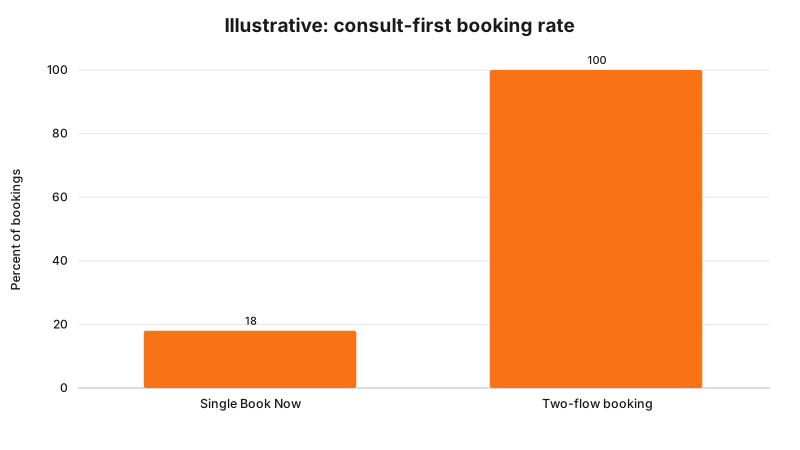
Those figures are illustrative numbers for the worked example above, not a measured industry statistic. The point they make is structural: under a single-button flow, whether a consultation happened before treatment is whatever staff remembered to do that day. Under a two-flow build, it is what the system requires before a treatment slot exists at all.
What to Check on Your Own Site
- Click through your own booking widget as a brand-new patient. Does it let you book an injectable treatment slot with zero prior appointment?
- If you offer a “video consultation”, confirm it launches a live call rather than a form or a chatbot.
- Check whether your practice software stores a completed consultation record against the patient, or only against the calendar.
- Look at your booking confirmation emails. Do they ever describe a treatment booking as provisional pending a consultation, or do they always read as final?
- If an online questionnaire runs before injectables, confirm it sits alongside a live consultation rather than replacing one.
- Ask your practitioners, in writing, what your policy is for returning patients. Then check the booking software follows that policy, not its own default.
- Confirm your cosmetic-injectable services are flagged separately from unrelated services (facials, skin needling) that this specific guideline does not touch.
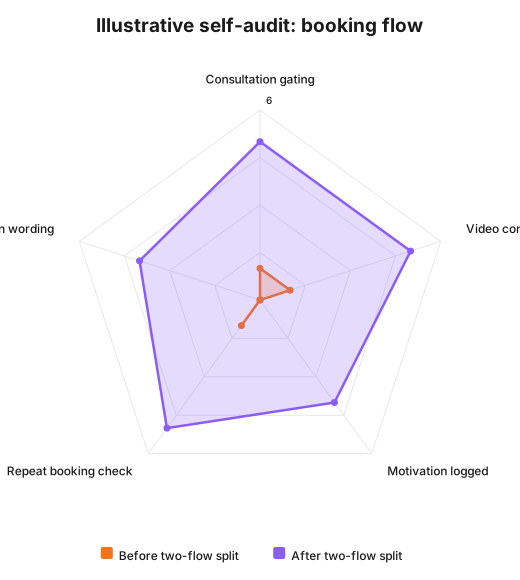
Score each of those five checks out of five against your own site using the checklist above. The illustrative scores here are a template for the exercise, not a score to chase for its own sake.
Where This Had Teeth
The clearest public case tied to the underlying principle, that cosmetic injections need a consultation and a prescription behind them, is a Queensland nurse’s registration cancellation, which AHPRA publicised on 7 January 2026. Following a Queensland Civil and Administrative Tribunal hearing, the nurse was reprimanded, had her registration cancelled, and was banned from reapplying until 29 September 2027, over cosmetic botulinum toxin injections given without consulting a doctor or holding a valid prescription, along with false records provided to AHPRA investigators. The conduct behind that case predates the September 2025 guideline, so it is not an enforcement action under the new rule specifically, but it shows the regulator treating “injected without a proper consultation and prescription behind it” as serious enough to end a career. No confirmed AHPRA sanction naming a specific breach of the new guideline’s consultation-timing rule had been publicised as at the date this post was checked. If one is published later, treat that as the more direct precedent.
Where This Gets Hard
The guideline says a consultation is required “each time” a cosmetic injectable is prescribed, and it does not spell out exactly what counts as a fresh prescribing event for a patient who returns every twelve weeks for the same top-up. Is that a new prescription each visit, or a continuation of an existing treatment plan established at the first, fuller consultation? Reasonable practitioners could land in different places on that question, and it changes how tightly your booking software needs to gate repeat bookings.
The regulator says a real-time consultation is required before each cosmetic injectable prescription; the build consequence is that self-service treatment booking cannot be the only path into an injectable service; whether a particular repeat-patient flow satisfies that requirement in your circumstances is a question for your medical defence organisation or your lawyer, not a website audit.
Where This Rule Stands Right Now
The consultation requirement described above has been in force as a professional practice guideline under the Health Practitioner Regulation National Law since 2 September 2025, for all registered health practitioners other than medical practitioners; it is not separate legislation, and medical practitioners remain governed by the Medical Board of Australia’s own 2023 cosmetic guidelines.
Frequently Asked Questions
Does every cosmetic injectable booking need a separate consultation appointment first?
For a new patient, or any time a fresh prescription is being written, yes. AHPRA’s guideline requires a real-time in-person or video consultation each time a cosmetic injectable is prescribed, so a booking flow that lets a first-time visitor click straight into a treatment slot has no consultation step to point to.
Can a video call satisfy the AHPRA consultation requirement?
Yes, provided it is a genuine real-time, two-way video consultation. An asynchronous text message, email exchange, or online questionnaire submitted without a live conversation does not meet the standard, even if your booking software labels that step “consult”.
Do these consultation rules apply to cosmetic dentists and doctors the same way?
No. The September 2025 guideline covers registered health practitioners other than medical practitioners, so a nurse injector or dentist performing non-surgical cosmetic procedures sits under it, while a medical practitioner (a cosmetic doctor) instead follows the Medical Board of Australia’s own 2023 cosmetic guidelines.
If your booking widget still sends every visitor straight to a treatment slot, that is a build problem RockingWeb fixes for clinics regularly. Get in touch and we will walk through your current flow with you.
Sources and References
- Australian Health Practitioner Regulation Agency, “Putting patients first: New guidelines for cosmetic procedures”, 2 September 2025. ahpra.gov.au. Date checked: 15 August 2026.
- Australian Health Practitioner Regulation Agency, “Booming billion-dollar cosmetic industry on notice with new cosmetic procedures guidelines”, 3 June 2025. ahpra.gov.au. Date checked: 15 August 2026.
- Clayton Utz, “Navigating the 2025 AHPRA Guidelines on Cosmetic Procedures: Here’s what you need to know”, June 2025. claytonutz.com. Date checked: 15 August 2026.
- Australian Health Practitioner Regulation Agency, “Cosmetic injecting nurse banned”, 7 January 2026. ahpra.gov.au. Date checked: 15 August 2026.
- Medical Board of Australia, guidelines for registered medical practitioners who perform cosmetic procedures, in effect since 1 July 2023. medicalboard.gov.au. Date checked: 15 August 2026.
Last reviewed: 15 August 2026.
Vikas Thakur
Founder of RockingWeb. 16 years building for companies like TPG, iiNet and Monadelphous, now focused on websites and marketing that comply with AHPRA's advertising guidelines and still book patients.