TGA Confirms Testimonial Ban, Proposes AI Disclosure Rules
The TGA's Advertising Code consultation confirms Section 24's paid testimonial ban stays, with a sunscreen influencer exception explicitly declined, while new SaMD/AI disclosure and ARTG display proposals target the exact software clinics run on their websites.
 Vikas Thakur Founder, RockingWeb 9 min read
Key Takeaways
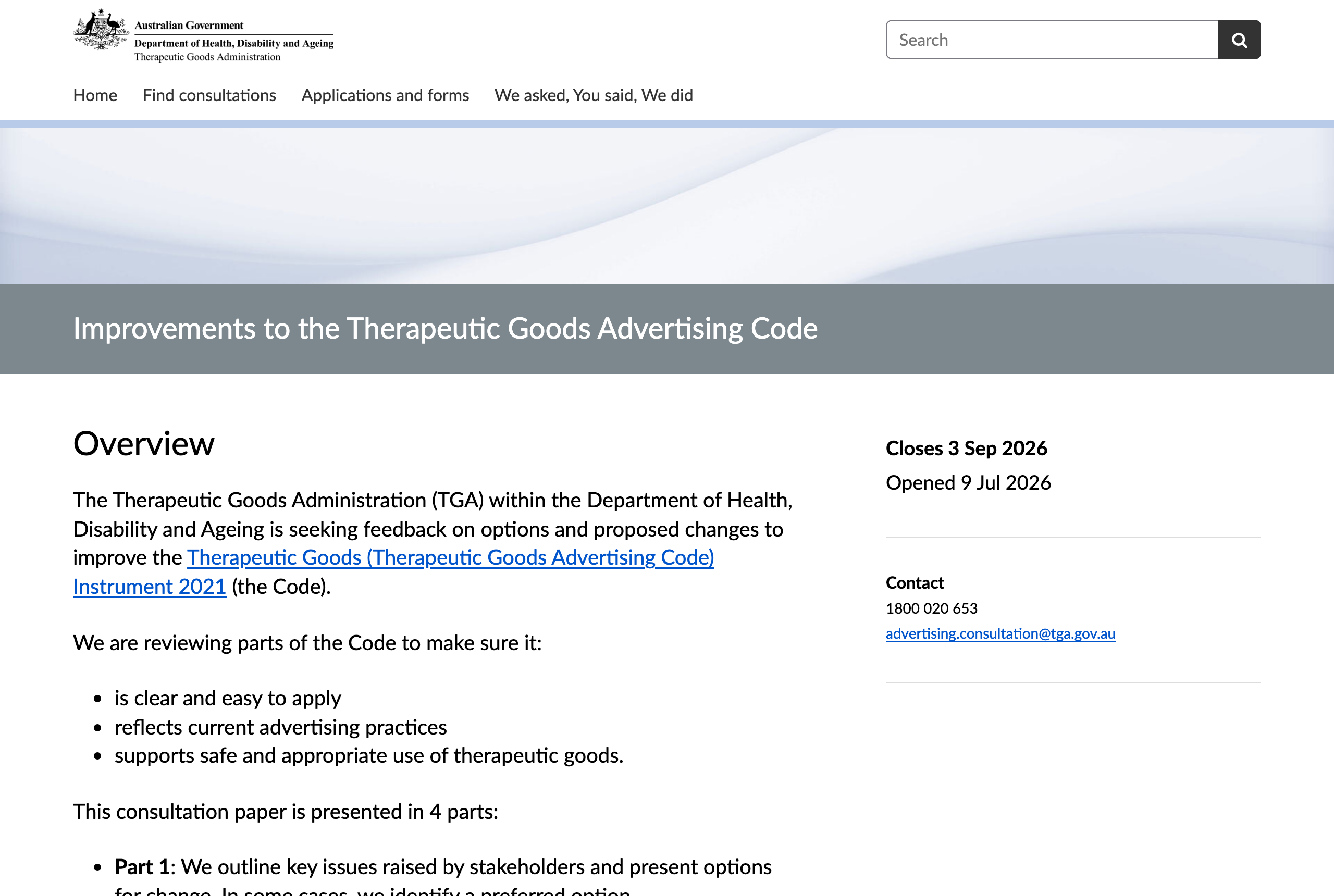
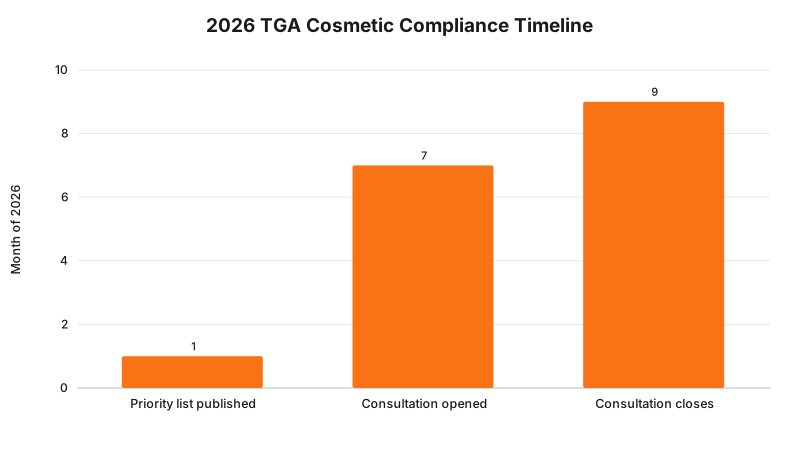
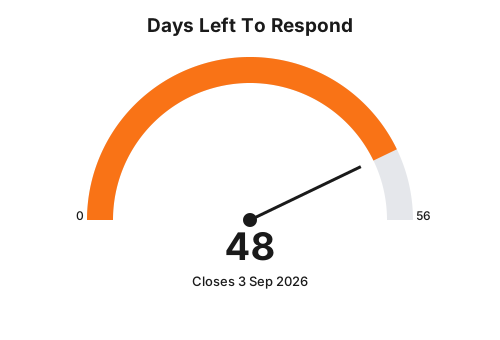
- The TGA opened its Advertising Code consultation on 9 July 2026 and closes submissions on 3 September 2026, a 56 day window
- Section 24’s ban on paid testimonials stays in place. The TGA’s stated preference is to retain it, not loosen it
- A stakeholder request for a sunscreen influencer testimonial exception was declined, per King and Wood Mallesons’ 14 July 2026 analysis
- The TGA cited “perceived conflicts of interest associated with the use of paid testimonials” as its reason for holding the line
- One proposed option would require ARTG numbers to be displayed in SaMD advertisements
- A second proposed option would require health warnings in ads that let a consumer directly purchase or supply a SaMD
- The consultation also proposes disclosure requirements for SaMD that incorporates AI
- This sits inside the TGA’s Compliance Principles 2026-2027, which name cosmetic-procedure therapeutic goods as a standing two-year enforcement priority
The TGA’s Advertising Code consultation, open since 9 July 2026 and closing 3 September 2026, confirms it is keeping the ban on paid testimonials under Section 24, including declining a specific request for a sunscreen influencer exception, while proposing new AI disclosure, ARTG display and health warning rules for software-based medical devices. For a cosmetic clinic website, that is two build jobs at once: audit every testimonial widget and review plugin on your service pages now, and start tracking what “AI disclosure” will mean if your site runs a chatbot, symptom checker or booking assistant.
Here is the story behind that one sentence, and why it is worth 20 minutes of a Monday morning before 3 September arrives.
The Question Someone Actually Asked, And Got A No
Picture the submission. A stakeholder writes to the TGA during the lead-up to this consultation and makes a genuinely reasonable-sounding case: therapeutic sunscreen is not a cosmetic injectable, it is sun protection, and a paid influencer telling teenagers to wear it every day is arguably a public health win. Let a testimonial ban bend, just this once, for a product category that is trying to get more people to use it correctly.
The TGA said no.
According to King and Wood Mallesons’ analysis of the consultation paper, published 14 July 2026, the agency’s current preference is to retain the existing Section 24 prohibition on paid testimonials rather than carve out an exception, sunscreen included. The reasoning given was blunt: “perceived conflicts of interest associated with the use of paid testimonials.” Not a product-category test. Not a “but this one is different” clause. A conflict-of-interest test that applies the same way whether the product is a dermal filler or a bottle of SPF50.
That is worth sitting with for a second. If the TGA will not bend the rule for sunscreen, a product with a genuinely sympathetic public-health argument behind it, there is no realistic scenario where a cosmetic injectable clinic, a laser clinic or a cosmetic dental practice gets a softer read. The ban was never really in doubt. What this consultation confirms is that it is not going anywhere, and the door some clinics were quietly hoping might open through a “wellness” or “lifestyle” framing has been shut from the regulator’s side, not just left ajar.
Takeaway: the TGA tested its own rule against the most sympathetic exception request it is likely to get, sunscreen, and kept the ban anyway.
What This Means For The Testimonial Widget On Your Service Page
Here is where this stops being a legal story and becomes a website audit. Most cosmetic clinic sites RockingWeb has reviewed carry at least one of three things on their treatment pages: a Google Reviews widget, a testimonial carousel with client quotes, or an embedded social feed pulling in tagged posts. None of that is automatically illegal. Section 24 targets testimonials from people involved in producing, marketing or supplying the good, and a genuine unpaid patient review sits in different territory to a paid influencer post.
But “paid” is doing a lot of work in that sentence, and it is not always obvious from the outside. A gifted treatment in exchange for a post. An affiliate code embedded in a review link. A “brand ambassador” arrangement that never appears on the invoice. Any of those can tip an on-site testimonial from a genuine patient story into exactly the paid-testimonial territory the TGA just confirmed it will not soften.
Run this check this week: open every treatment and service page on your site, list every testimonial, review widget and quote block, and ask who supplied it and whether any value changed hands. If the answer is “we’re not sure,” that uncertainty is now a website liability, not just a marketing question.
Takeaway: the TGA’s confirmed position turns “which testimonials are paid” from a marketing question into a page-by-page website audit item.
| Website element | Current TGA position (Section 24) | Build action |
|---|---|---|
| Genuine unpaid patient testimonial | Not targeted by the paid-testimonial ban | Document that no payment, gift or discount was exchanged |
| Paid influencer or ambassador content | Banned, confirmed, no sunscreen-style exception | Remove from therapeutic good pages or reclassify the arrangement |
| Third-party review widget (Google, RealSelf) | Content sourced externally, provenance still matters | Audit whether any reviewer received compensation for that specific post |
The AI Disclosure Proposal Is A Preview, Not A Rule Yet
The second thread in this consultation is a step removed from testimonials but points at the same page. The TGA’s paper proposes introducing disclosure requirements for software-based medical devices, or SaMD, that incorporate AI. Two more options sit alongside it: requiring ARTG numbers to be displayed in SaMD advertisements, and requiring health warnings in advertisements that let a consumer directly purchase or supply a SaMD.
None of that is locked in. This is a consultation, not a finished rule, and the current Therapeutic Goods Advertising Code Instrument 2021 remains in force exactly as written while submissions are open. But the direction is not subtle. If your clinic website runs an AI-powered symptom checker, a chatbot that fields treatment questions, or a booking assistant that makes any kind of triage-adjacent suggestion, this consultation is the clearest signal yet that “AI feature, no disclosure” is not going to be a durable position on a therapeutic-goods-adjacent website.
Think about what an ARTG-number-in-ads requirement would actually mean for a build. It is not a footnote. It is a piece of structured data that needs a place on the page template, next to whatever software or app the ad is promoting, displayed the same way every time so it survives a content update six months from now. A health warning requirement for direct-purchase software is the same kind of problem: a content block that has to exist before the ad goes live, not one bolted on after a complaint.
Takeaway: whether or not your current site runs an AI feature, this is the moment to start a register of what counts as a SaMD on your site and where its disclosure would need to live.
Why This Sits Inside A Bigger Enforcement Picture
This consultation did not appear from nowhere. The TGA’s Compliance Principles 2026-2027 name cosmetic-procedure therapeutic goods as a standing two-year enforcement priority. Read the testimonial ban confirmation and the SaMD disclosure proposals against that backdrop and the pattern is clear: this is a regulator that has already told the sector cosmetic advertising is on its watch list for the next two years, and is now tightening the specific rules that watch list gets measured against.
For a clinic, that changes the cost-benefit of doing nothing. A testimonial widget that has sat untouched on a service page for two years was a low-attention risk when enforcement priorities were unclear. It is a different calculation when the regulator has published a two-year priority window and is simultaneously confirming it will not carve out exceptions to the rule that widget might be breaching.
None of this is legal advice, and it should not be read as one. The TGA has stated its position on testimonials and its proposed direction on SaMD disclosure. Whether a specific testimonial, review widget or AI feature on your specific site falls inside or outside those rules is a question for your medical defence organisation or your lawyer, not a web development agency. What RockingWeb can do is make sure your site’s testimonial placements, disclaimer visibility and any AI-feature documentation are ready for that conversation, not working against it.
Takeaway: treat the consultation window as a deadline to get your own house in order, not a reason to wait for the final rule before acting.
Frequently Asked Questions
Is the TGA banning testimonials on cosmetic clinic websites?
The TGA has not changed the rule. Section 24 of the Therapeutic Goods Advertising Code Instrument 2021 already bans paid testimonials from anyone involved in producing, marketing or supplying a therapeutic good. In its 9 July 2026 consultation, the TGA confirmed its preference is to keep that ban rather than loosen it, citing perceived conflicts of interest.
Did the TGA consider an exception for sunscreen testimonials?
Yes. Stakeholders asked the TGA to allow paid influencer testimonials for therapeutic sunscreens, arguing it would encourage sun-protection habits among younger audiences. According to King and Wood Mallesons’ 14 July 2026 analysis of the consultation paper, the TGA declined the request, citing the same conflict-of-interest concern that applies to every other therapeutic good.
Does the AI disclosure proposal apply to a clinic’s website chatbot?
The consultation paper proposes disclosure requirements for software-based medical devices, or SaMD, that incorporate AI, plus ARTG number display and health warnings for direct-purchase SaMD ads. Whether a specific chatbot, symptom checker or booking assistant counts as a SaMD is a classification question for your medical defence organisation or lawyer, not something this post can answer for your build.
If your service pages carry a testimonial widget you cannot confidently explain the provenance of, or your site runs any AI-powered feature you have never documented, that is worth a proper look before 3 September. Get in touch with RockingWeb to have your site’s testimonial placements and AI-feature documentation reviewed, or explore the full range of website compliance and build services we offer cosmetic and dental clinics.
Sources and References
- TGA Consultation Hub: Improvements to the Therapeutic Goods Advertising Code, opened 9 July 2026, closes 3 September 2026. Date checked: 15 August 2026.
- King and Wood Mallesons Pulse Blog: TGA consultation, proposed improvements to the Therapeutic Goods Advertising Code, published 14 July 2026. Date checked: 15 August 2026.
Vikas Thakur
Founder of RockingWeb. 16 years building for companies like TPG, iiNet and Monadelphous, now focused on websites and marketing that comply with AHPRA's advertising guidelines and still book patients.