$60K Fine: Allied Health Advertising Rules in Australia
AHPRA's maximum fine for an advertising breach rose from $5,000 to $60,000 for an individual practitioner in a 2022 amendment, but Western Australia only started applying the higher penalty from July 2024. The same rule set covers all 16 AHPRA-regulated health professions, not only cosmetic clinics.
 Vikas Thakur Founder, RockingWeb 9 min read

On this page 9
- Key takeaways
- What Section 133 Actually Bans
- The Penalty That Grew 12x, and Why WA Took Two Years to Catch Up
- The 13 Rules Every Regulated Health Website Has to Follow
- Who Is Actually Liable: It Is Not Just the Practitioner
- What This Means for Your Clinic or Practice Website
- FAQ
- Get Your Website Checked Against the Current AHPRA Guideline
- Sources and References
Key takeaways
- AHPRA’s advertising guideline applies to all 16 regulated health professions, overseen by 15 National Boards, not just cosmetic clinics
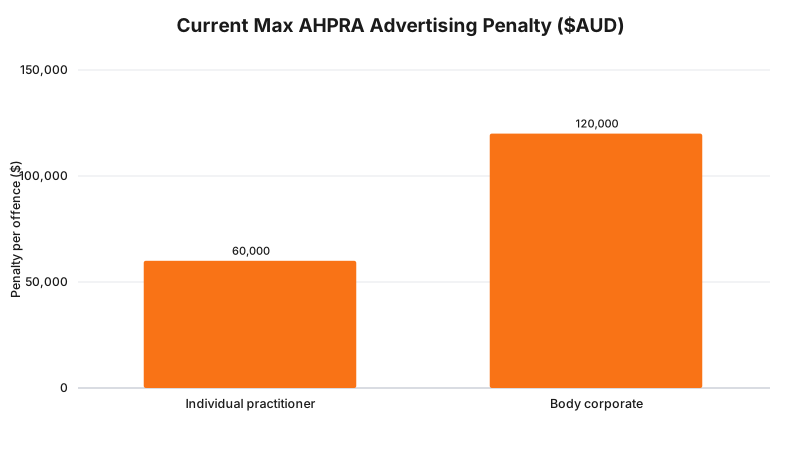
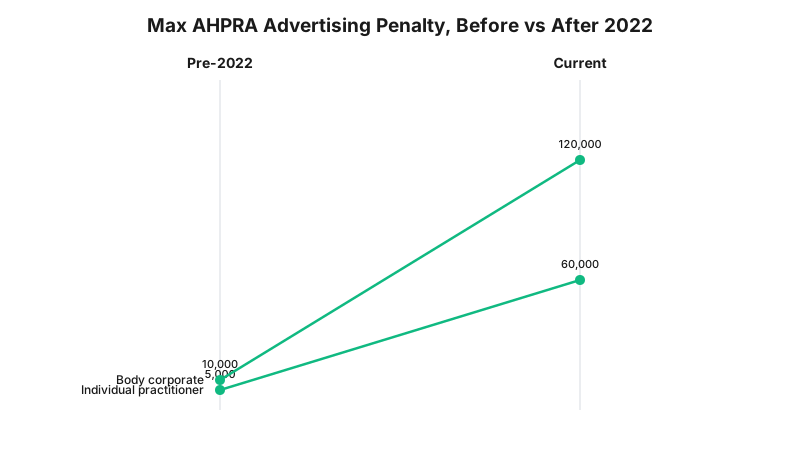
- The maximum civil penalty for an individual’s advertising breach rose from $5,000 to $60,000 per offence in a 2022 National Law amendment, a 12-fold increase
- The maximum penalty for a body corporate rose from $10,000 to $120,000 per offence, the same 12-fold jump
- The higher penalties only began applying in every jurisdiction, including Western Australia, from July 2024
- Unlawful use of a protected title is a separate offence, carrying up to $60,000 and up to 3 years’ imprisonment for an individual nationally, though Western Australia caps this specific offence lower, at $30,000
- AHPRA’s advertising guideline sets out 13 separate requirements, from banning testimonials to restricting time-limited offers
- The current version of the guideline took effect on 14 December 2020
- The rules apply to any person or business that advertises a regulated health service, including agencies acting on a practice’s behalf
AHPRA can fine an individual health practitioner $60,000 for a single non-compliant advert, and $120,000 for a body corporate. Both figures are twelve times higher than they were before 2022, when the maximums sat at $5,000 and $10,000. Western Australia did not catch up to the new maximum until July 2024, two years after the rest of the National Law changed.
None of this is specific to cosmetic clinics. It applies to every one of the 16 health professions AHPRA regulates, from physiotherapy and podiatry to psychology and dentistry. This guide sets out what the advertising guideline requires, and what it means for the website copy, landing pages and enquiry forms running under any of those professions.
What Section 133 Actually Bans
The advertising rule sits in section 133 of the Health Practitioner Regulation National Law. It applies to anyone advertising a regulated health service, not only registered practitioners. An advertisement must not be false, misleading or deceptive, or likely to be. It must not offer a gift, discount or other inducement without stating the terms. It must not use testimonials. It must not create an unreasonable expectation of beneficial treatment. And it must not directly or indirectly encourage the indiscriminate or unnecessary use of regulated health services.
AHPRA and the National Boards publish a dedicated Guidelines for advertising a regulated health service document explaining how those five prohibitions apply in practice. Two narrower guidelines sit on top of it, for cosmetic surgery and for higher risk non-surgical cosmetic procedures. Those two are specific to cosmetic work. Section 133 is not. It is the base layer every AHPRA-regulated advertisement, from a physiotherapy clinic’s Google listing to a cosmetic injectables landing page, has to clear.
Takeaway: the testimonial ban, the misleading-claims ban and the inducement rule are not cosmetic-industry rules that also happen to apply elsewhere. They are the general rule, and the cosmetic guidelines are the exception layered on top.
The Penalty That Grew 12x, and Why WA Took Two Years to Catch Up
Here is the part most practice owners have not registered. In 2022, the National Law was amended and the maximum penalty for advertising offences rose sharply: for an individual, from $5,000 to $60,000 per offence; for a body corporate, from $10,000 to $120,000. Both are a 12-fold increase.
That change did not land everywhere at once. The National Law is mirrored legislation across every state and territory, so each jurisdiction brings its own law into line before the new penalty applies locally. AHPRA’s guidance states that, as of July 2024, the increased penalties now apply in all jurisdictions, including Western Australia. For roughly two years, a WA-based advertiser was still exposed to the old, lower maximum.
There is a second, separate offence worth knowing: unlawful use of a protected title. Using a title a practitioner is not entitled to use carries penalties of up to $60,000 and up to three years’ imprisonment for an individual, and up to $120,000 for a body corporate. AHPRA’s own guidance flags one exception to those figures: in Western Australia, this specific offence is capped lower, at up to $30,000 for an individual and $60,000 for a body corporate. AHPRA has also flagged a narrower protection for the title “surgeon”, restricted to practitioners with specialist registration in surgery, obstetrics and gynaecology, or ophthalmology. As at AHPRA’s most recent review of that page, the change was still expected to take effect in NSW, SA and WA pending each state’s own legislative process, the same lag pattern as the 2022 penalty increase.
Takeaway: a National Law change is not a single national event. If your practice is in WA, assume any AHPRA rule change reaches you later than the press release does.
The 13 Rules Every Regulated Health Website Has to Follow
AHPRA’s summary of the advertising requirements breaks section 133 into 13 specific areas. It is not a substitute for the full guideline, but it is the fastest way to check a page of website copy against the rule.
| Requirement | What it means |
|---|---|
| Accurate and clear | No misleading claims |
| Supported by acceptable evidence | Effectiveness needs evidence |
| Treating health conditions | Extra scrutiny on treatment claims |
| Risk information | Cannot omit material risks |
| Comparisons | Restricted against other providers |
| Profession, title, qualifications | Accurate, not just impressive |
| Pricing | Clear, no hidden conditions |
| Gift, discount or inducement | Terms must be stated |
| Testimonials | Not permitted, any form |
| Personal experience anecdotes | Restricted, similar risk to a testimonial |
| Images, before and after | Restricted, must be genuine and not misleading |
| Prompting unnecessary check-ups | No basis-free recommendations |
| Time-limited offers | Restricted where they pressure booking |
Takeaway: most website copy fails on the softer items on this list (personal anecdotes, comparisons, time pressure) long before it fails on the obvious ones like testimonials.
Who Is Actually Liable: It Is Not Just the Practitioner
The advertising requirements apply to any person or business that advertises a regulated health service: registered practitioners, unregistered individuals, and businesses or corporate entities. AHPRA’s guidance is direct about third parties too: advertisers must check content produced on their behalf. Handing a website or ad account to an outside marketer does not hand off the compliance obligation with it.
That is why a website audit against the current guideline is worth doing on a schedule, not just once. Page copy gets updated, new landing pages get added, and a testimonial or before/after gallery can creep back in months after a build first passed review. An AHPRA compliance review checks a site’s current state against the guideline as it stands today, not as it stood when the site first went live.
Takeaway: the practitioner’s registration is on the line even when someone else wrote the copy, so the compliance check has to sit with whoever owns the practice, not whoever built the page.
What This Means for Your Clinic or Practice Website
The 13-item list above changes how a compliant site should be structured. A generic “our services” page mixing ten treatments under one block of copy makes it hard to keep every claim, risk statement and price correct for each one. A dedicated landing page per treatment is easier to audit and keep evidence-backed, since it only carries claims relevant to that one service.
The testimonial and before/after bans also change what counts as proof on a compliant page. Enquiry-driving content has to shift toward what AHPRA does permit: accurate qualifications, transparent pricing, and risk information stated plainly rather than buried. Practices that lean into that, rather than implying results without stating them, tend to get better-qualified enquiries than a page built around an ambiguous outcome claim.
For cosmetic and injectable services, this sits on top of the two cosmetic guidelines mentioned earlier. A compliant cosmetic clinic website build has to satisfy section 133 and the cosmetic-specific layer at once, on every page.
Takeaway: the safest structure is one dedicated, individually auditable page per service, built around evidence and pricing rather than implied outcomes.
FAQ
Do AHPRA’s advertising rules apply to physiotherapists, chiropractors and other allied health practitioners, not just cosmetic clinics?
Yes. The Guidelines for advertising a regulated health service apply to all 16 health professions regulated under the National Scheme, including physiotherapy, chiropractic, podiatry, optometry, osteopathy, occupational therapy and psychology. Section 133 carves out no exception for non-cosmetic professions.
What is the maximum fine for breaching AHPRA’s advertising rules?
Up to $60,000 per offence for an individual and up to $120,000 for a body corporate, under section 133. A separate offence for unlawful use of a protected title carries the same penalties plus up to three years’ imprisonment for an individual, except in Western Australia, where that specific offence is capped lower, at up to $30,000 for an individual and $60,000 for a body corporate.
When did the increased AHPRA advertising penalties start applying in Western Australia?
From July 2024. The amendment that raised the maximum penalties passed in 2022, but each state applies the National Law through its own legislation, so the higher penalties reached WA roughly two years after the amendment was made.
What can a clinic or allied health practice actually say in its advertising under AHPRA’s rules?
Advertising must be accurate, clear and supported by acceptable evidence. It can describe a practitioner’s profession, title and qualifications, and state pricing, if terms are clear. It must not use testimonials. Before and after images, personal experience anecdotes and comparisons are heavily restricted rather than outright banned, and must not create an unreasonable expectation of benefit.
Get Your Website Checked Against the Current AHPRA Guideline
RockingWeb reviews clinic and allied health practice websites against the current AHPRA advertising guideline, page by page.
Talk to us about a compliance-first website buildSources and References
- AHPRA - Guidelines for advertising a regulated health service: 2020 effective date, 2022 penalty increase, July 2024 WA date
- AHPRA - Advertising and the law: section 133 prohibitions and the protected title offence
- AHPRA - Summary of the advertising requirements: who the rules apply to, and the 13-item breakdown
- AHPRA - What we do: 15 National Boards regulating 16 health professions
- AHPRA - National Boards: full list of the 15 Boards, including the allied health professions
- AHPRA - New guidelines for cosmetic procedures: confirms the new non-surgical cosmetic procedure guidelines apply across all regulated professions, not just cosmetic specialists
Related reading:
- AHPRA Advertising Fines for Cosmetic Clinics
- AHPRA Testimonial Rules
- AHPRA Website Compliance Checklist
For a build satisfying both the general rule and any cosmetic-specific guideline, see Cosmetic Clinic Websites or talk to us about your practice’s marketing.
Vikas Thakur
Founder of RockingWeb. 16 years of experience from working at TPG, iiNet and Monadelphous, now building websites, software and digital marketing for local businesses in Rockingham and Perth.