Skin Cancer Clinic Ads Carry the Same $120K AHPRA Exposure
Section 133 of the Health Practitioner Regulation National Law sets a maximum advertising penalty of $60,000 for an individual and $120,000 for a body corporate, the same maximum that applies to unlawfully using a protected title. A skin cancer clinic's testimonial or before/after mistake carries the identical exposure as a cosmetic clinic's.
 Vikas Thakur Founder, RockingWeb 10 min read
On this page 9
- Key takeaways
- The $120,000 Penalty Applies to a Skin Cancer Clinic Too
- Does the September 2025 Cosmetic Crackdown Even Cover Skin Cancer Clinics?
- What the General Advertising Rules Still Ban
- Why the Stakes Are Real, Not Just Regulatory
- What This Means for Your Clinic’s Website
- FAQ
- Get Your Skin Clinic’s Website Checked Against Both Rulebooks
- Sources and References
Key takeaways
- A standard AHPRA advertising breach, testimonial, misleading before/after image, outcome claim, carries a maximum penalty of $60,000 for an individual and $120,000 for a body corporate under section 133 of the National Law
- Unlawfully using a protected title is a separate offence under sections 113 to 115A, but carries the same $60,000/$120,000 maximum, plus up to 3 years imprisonment for an individual
- Some marketing and compliance content circulates lower figures, including $30,000/$60,000, for the standard advertising breach. The current National Law text does not support that lower figure
- AHPRA’s cosmetic procedure advertising guidelines, in force since 2 September 2025, list injectables, fillers and thread lifts as covered, and do not name skin cancer diagnosis or treatment
- The general testimonial ban under section 133(1)(c) binds every regulated health service, skin cancer clinics included, whether or not the September 2025 cosmetic guidelines apply
- Melanoma and skin malignant neoplasms caused 1,544 deaths among Australian men in 2024, about 1.57% of all male deaths that year, per the Australian Bureau of Statistics
- A review on a third-party platform the clinic does not control is not a breach on its own; republishing it on the clinic’s own channels is
$120,000. That is the real maximum fine for a standard AHPRA advertising breach for a body corporate, the same figure that gets attached to cosmetic clinics in most compliance content, and it applies to a skin cancer clinic too. Section 133 of the National Law caps a testimonial, a misleading before/after photo or an unreasonable outcome claim at $60,000 for an individual and $120,000 for a body corporate, the maximum stated in the current Act text. A separate offence, unlawfully using a protected title such as “specialist”, carries the same $60,000/$120,000 ceiling under sections 113 to 115A, plus up to three years imprisonment for an individual. That matters for a skin cancer clinic because AHPRA’s headline-grabbing September 2025 cosmetic guidelines do not appear to cover skin cancer diagnosis or treatment at all, which means the general advertising rulebook, not the newer cosmetic-specific one, is what governs this clinic’s website: the same testimonial ban, the same before/after care, and the same six-figure exposure that binds a GP, a dermatologist or a nurse running mole checks. This guide sets out which rules bind a skin cancer clinic’s website, which do not, and what the real penalty exposure is for the pages and reviews running on it now.
The $120,000 Penalty Applies to a Skin Cancer Clinic Too
Section 133 of the Health Practitioner Regulation National Law, current as at 10 April 2026, states the maximum penalty in the section itself: “$60,000” for an individual and “$120,000” for a body corporate. That is the statutory text, not AHPRA’s own guideline document paraphrasing it, and it is worth citing directly because compliance content online is inconsistent about this figure. Some sources describe a lower standard-breach ceiling, including $30,000 or $60,000 depending on the source, but the current National Law does not support that lower figure for section 133.
A standard advertising breach under section 133, a testimonial, a misleading before/after image, or an unreasonable expectation of benefit, carries that same $60,000 individual / $120,000 body corporate maximum. A separate offence, the unlawful use of a protected title, sections 113 to 115A of the National Law, such as advertising yourself as a “specialist” without holding specialist registration, carries the identical $60,000/$120,000 ceiling, with the individual figure also carrying up to three years imprisonment. The two offences are legally distinct, but a skin cancer clinic should not read the difference as a lower price tag for an ordinary advertising mistake.
| Breach type | Individual penalty | Body corporate penalty |
|---|---|---|
| Standard advertising breach (s133) | Up to $60,000 per offence | Up to $120,000 per offence |
| Unlawful use of a protected title (ss.113-115A) | Up to $60,000 per offence, up to 3 years jail | Up to $120,000 per offence |
The gap between the two figures below is the reason to cite the legislation rather than a compliance blog. A clinic budgeting against the lower number is underestimating its maximum exposure by half.
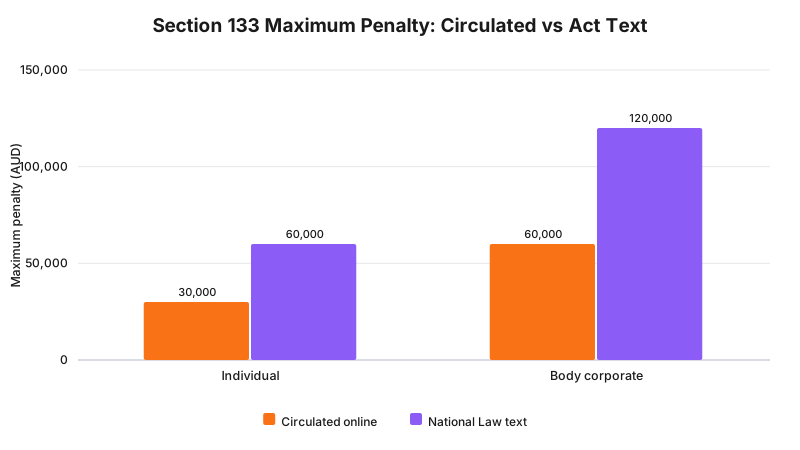
Takeaway: a skin cancer clinic’s realistic exposure for an ordinary content mistake, a republished review, an unlabelled mole photo, is the same six-figure maximum that applies to a cosmetic clinic, not a smaller, industry-specific figure.
Does the September 2025 Cosmetic Crackdown Even Cover Skin Cancer Clinics?
AHPRA’s Guidelines for advertising higher risk non-surgical cosmetic procedures took effect on 2 September 2025. They define a higher risk cosmetic procedure by its dominant purpose: changing appearance, colour, texture, structure or position to something the patient perceives as more desirable. Named examples are botulinum toxin, dermal fillers, injection lipolysis, thread lifts, sclerotherapy, platelet rich plasma, hair transplants and dental veneers.
Skin cancer diagnosis and treatment does not appear anywhere in that list. A skin check, a biopsy or a lesion excision identifies or removes disease, it does not make an appearance more desirable, so on the guidelines’ own dominant purpose test these rules do not look written to capture it. AHPRA has not published a specific statement placing skin cancer clinics inside or outside the September 2025 guidelines, a real ambiguity worth naming rather than glossing over. The practical risk sits with a mixed menu: a mole check for diagnosis is a different service, under different expectations, to a cosmetic pigmentation or scar treatment sold at the same appointment.
RockingWeb can check a clinic’s full treatment menu against both guideline sets and flag which page falls under which rulebook.
Takeaway: genuine skin cancer diagnosis and treatment sits outside the named scope of the September 2025 cosmetic guidelines, but any cosmetic service sold alongside it does not get the same benefit of the doubt.
What the General Advertising Rules Still Ban
Skin cancer clinics do not escape scrutiny just because the cosmetic-specific guidelines likely do not apply. Every clinic advertising a regulated health service, including a GP, dermatologist or nurse performing skin checks, is bound by the general guidelines and section 133.
The testimonial ban under section 133(1)(c) applies in full. AHPRA defines a testimonial as any positive statement referring to a clinical aspect: a symptom, a diagnosis, a treatment or an outcome. “The mole check picked up something my last three doctors missed” is a banned testimonial for a skin cancer clinic exactly as a filler outcome story is banned for a cosmetic one. A review a patient posts unprompted on a platform the clinic does not control, Google, a directory, a forum, is not a breach on its own. Republishing or interacting with it on the clinic’s own channels is.
Before/after imagery carries its own care requirements too: images must not be edited in a way that misleads, and it must be clear the advertised treatment caused the result shown. Words like “safe”, “painless” or “risk-free” without acknowledging risk can also breach the unreasonable expectation provision.
| Topic | Sept 2025 cosmetic guidelines | General guidelines (s133) |
|---|---|---|
| Applies to skin cancer diagnosis/treatment | Not named in scope | Yes, always |
| Testimonial ban | Yes | Yes |
| Before/after image care | Yes, procedure-specific | Yes, general |
| Under-18 cooling off period | Yes | No |
Takeaway: the testimonial ban, the before/after care rules and the $60,000/$120,000 exposure apply to a skin cancer clinic’s website whether or not the September 2025 cosmetic guidelines do.
Why the Stakes Are Real, Not Just Regulatory
Melanoma and other malignant neoplasms of the skin caused 1,544 deaths among Australian men in 2024, the 20th leading cause of death for men that year, according to the ABS’s Causes of Death, Australia, 2024 release (published 14 November 2025, marked preliminary pending revision). Against 98,467 total male deaths that year, that is about 1.57% of them. The same cause does not sit inside the ABS’s top 20 for Australian women, and no combined figure for both sexes appears in that table, so this guide reports the male figure it can verify rather than guessing at a national total.
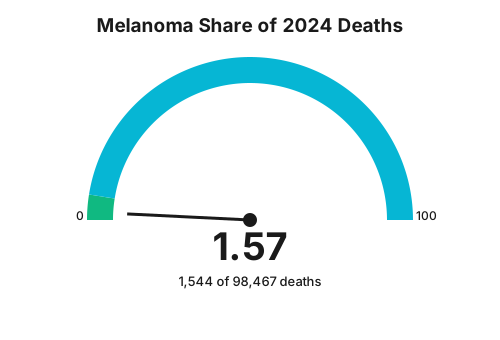
That health burden is the reason AHPRA’s advertising rules exist: patients should make healthcare decisions on accurate information, not marketing claims.
Takeaway: the medical stakes behind skin checks are the reason accurate, testimonial-free content matters more here, not less.
What This Means for Your Clinic’s Website
With testimonials and outcome claims off the table, the treatment pages that earn their place are built around information a patient cannot get anywhere else: what a full skin check involves, how a dermatoscope differs from a naked eye check, what happens if a lesion is flagged, and how often a check should repeat for a given risk profile.
This changes enquiry quality more than volume. A page built on outcome promises attracts clicks; a page built on accurate information attracts a patient who already understands what they are booking, which shows up as fewer no-shows at reception. Practitioner credentials, registration numbers and training carry the trust load testimonials used to carry, and they are fully compliant to display in full.
RockingWeb builds AHPRA-compliant clinic websites around this structure: education-first treatment pages, credential-led practitioner profiles, and a booking flow that converts on clarity, not a claim that would not survive a complaint.
Takeaway: a skin cancer clinic’s best-performing pages, under these rules, are the ones that explain the service rather than promise the outcome.
FAQ
Does AHPRA’s September 2025 cosmetic procedure advertising guidelines apply to skin cancer treatment?
The guidelines define higher risk cosmetic procedures by their dominant purpose, changing appearance to something the patient perceives as more desirable. Named examples are cosmetic injectables, dermal fillers, thread lifts and sclerotherapy. Skin cancer diagnosis and treatment identifies or removes disease rather than changing appearance, so it is not named and does not appear to meet that test. A clinic offering cosmetic mole or pigmentation treatments too should treat that service line separately.
What is the actual maximum AHPRA fine for a standard advertising breach?
Section 133 of the Health Practitioner Regulation National Law sets the maximum penalty for a standard advertising breach, a testimonial, a misleading before/after image or an unrealistic outcome claim, at $60,000 for an individual and $120,000 for a body corporate per offence. Some secondary sources circulate lower figures, including $30,000 and $60,000, but the current Act text states $60,000 and $120,000.
Is the $60,000 to $120,000 AHPRA penalty figure the same for a protected-title offence?
Yes. Unlawfully using a protected title, such as calling yourself a specialist without registration, under sections 113 to 115A, carries the same $60,000 for an individual and $120,000 for a body corporate, with the individual figure also carrying up to three years imprisonment. It is a separate offence from section 133 advertising, but the maximum dollar exposure is identical.
Can a skin cancer clinic display patient reviews or testimonials on its website?
Not if it refers to a clinical aspect, a symptom, a diagnosis, a treatment or an outcome. Section 133(1)(c) bans testimonials for every regulated health service, not only cosmetic ones. A review on a third-party platform the clinic does not control, such as Google, is not a breach on its own, but republishing or interacting with it on the clinic’s own channels is.
Get Your Skin Clinic’s Website Checked Against Both Rulebooks
RockingWeb reviews skin cancer and skin clinic websites against both AHPRA guideline sets and flags exactly which page falls under which one.
Sources and References
Queensland Legislation - Health Practitioner Regulation National Law Act 2009, current as at 10 April 2026: section 133 (advertising, $60,000/$120,000 maximum penalty) and sections 113-115A (protected titles, same maximum plus imprisonment)
AHPRA - Guidelines for advertising a regulated health service (December 2020): testimonial ban, before/after and unreasonable expectation rules
AHPRA - Guidelines for advertising higher risk non-surgical cosmetic procedures, effective 2 September 2025: the dominant purpose definition and named procedures
Australian Bureau of Statistics - Causes of Death, Australia, 2024 (released 14 November 2025): melanoma deaths among Australian men and total 2024 death counts
Related reading:
- AHPRA Binds 16 Professions: GP and Skin Clinic Ad Rules
- Before and After Photos: AHPRA Rules
- AHPRA Testimonial Rules
For a website built around what AHPRA’s rules actually allow you to say, see Cosmetic Clinic Websites or talk to us about your clinic’s marketing.
Vikas Thakur
Founder of RockingWeb. 16 years of experience from working at TPG, iiNet and Monadelphous, now building websites, software and digital marketing for local businesses in Rockingham and Perth.