AHPRA Advertising Complaint: What Happens in 48 Hours
An AHPRA advertising complaint about your clinic or dental practice website starts a 30-day correction window, not an overnight takedown. Here is the actual process, what to fix on the build, and the one prosecution that shows section 133 has teeth.
 Vikas Thakur Founder, RockingWeb 12 min read
On this page 12
- Key takeaways
- What AHPRA says happens after a complaint
- What that means for your website build
- The complaint escalation ladder
- Two worked examples
- What to check on your own site before day 30
- Does AHPRA enforce this?
- Where this gets hard
- Status
- Frequently Asked Questions
- Need a hand with your website?
- Sources and References
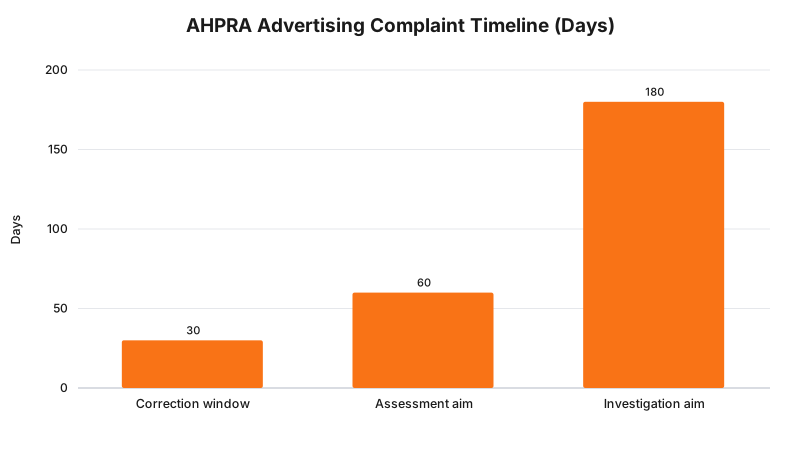
Imagine it’s a Tuesday morning and an email from AHPRA lands in the practice manager’s inbox. It names your website, quotes the specific sentence or image caption that broke the rules, and gives you 30 days to fix it. No suspension. No public notice. Just a clock. That’s how almost every AHPRA advertising complaint about a clinic or dental practice website starts, and knowing the process before it happens is the difference between a quiet CMS edit and a tribunal hearing.
An AHPRA advertising complaint about an Australian clinic website triggers a written breach letter and a 30-day window to fix it, not an instant fine. Below: what AHPRA’s own process says happens, what changes on your build, and the one section 133 prosecution that proves the maximum penalty is real.
Key takeaways
- AHPRA’s advertising complaint process typically opens with a written breach letter and a 30-day correction window, not an immediate penalty, per AHPRA’s own guidance on how it manages advertising complaints.
- Nearly 50 per cent of practitioners become compliant after that first letter alone, based on AHPRA compliance data for 2018-19.
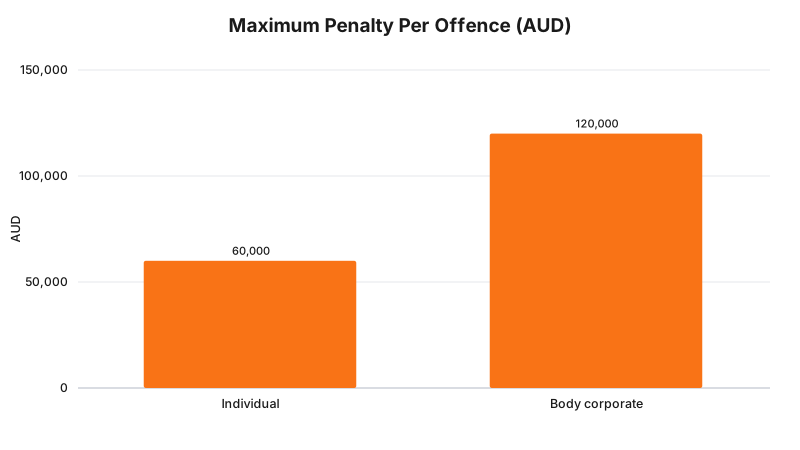
- The maximum penalty under section 133 of the Health Practitioner Regulation National Law is $60,000 per offence for an individual and $120,000 per offence for a body corporate.
- AHPRA investigated about 360 notifications concerning non-surgical cosmetic procedures between September 2022 and March 2025, closing about 300 of them.
- Since 2 September 2025, the consolidated Guidelines for registered health practitioners who perform non-surgical cosmetic procedures cover every registered practitioner type except medical practitioners, who stay under the Medical Board of Australia’s 2023 guidelines.
- AHPRA’s standard notification timeframes aim for 60 days at the Assessment stage and six months at the Investigation stage if a matter escalates.
- In the only publicly reported section 133 test case, chiropractor Hance Limboro was fined $29,500 in 2017 after 13 advertising charges.
- Deleting a flagged page does not remove it from Google’s cache or the Wayback Machine, so your fix needs to be a dated, live correction, not a takedown.
What AHPRA says happens after a complaint
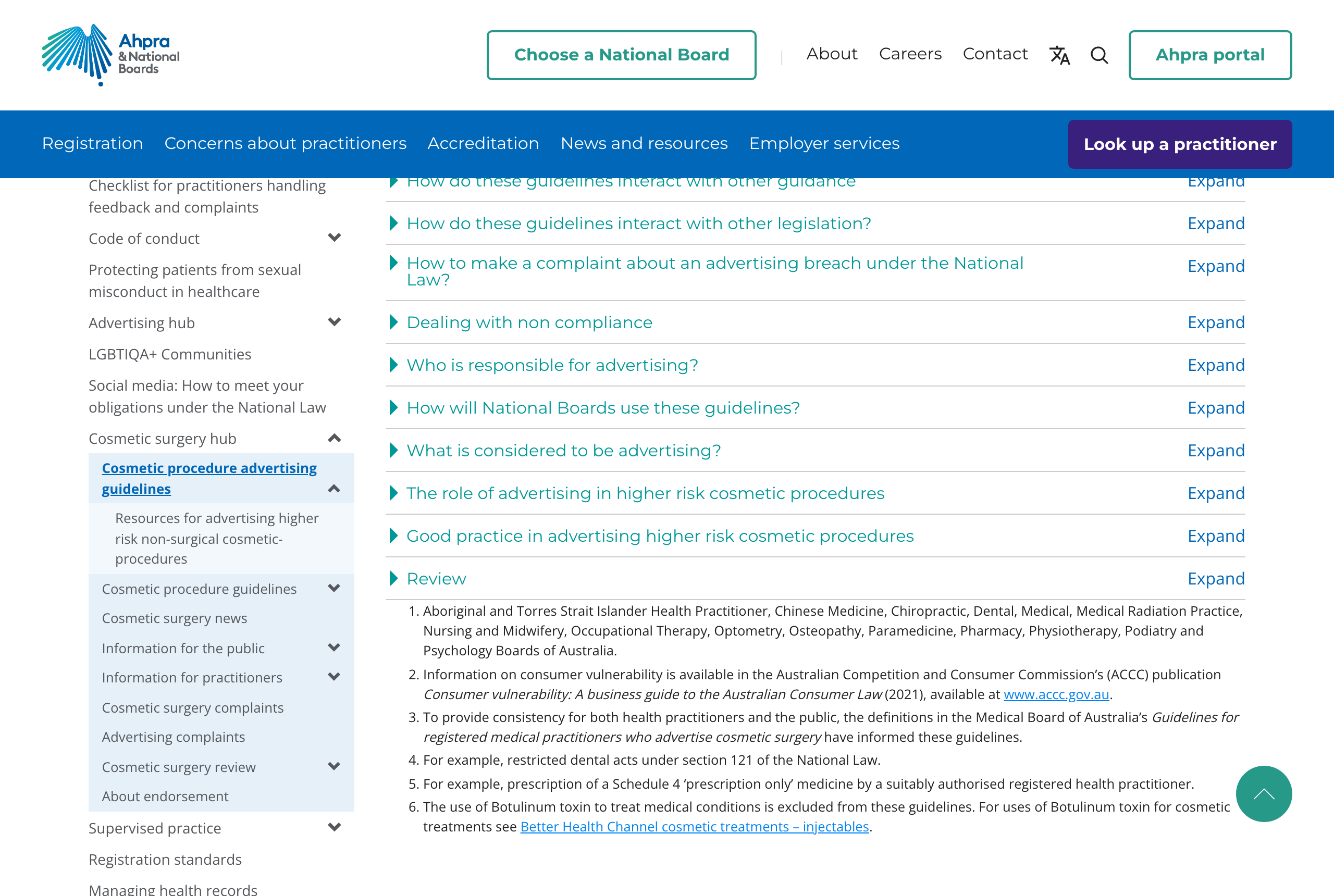
AHPRA publishes its own process on the page above, under the heading “How to make a complaint about an advertising breach under the National Law”, alongside a section titled “Dealing with non compliance”. Per AHPRA’s guidance on how it manages advertising complaints, the agency takes “a risk-based approach to advertising compliance and enforcement”: the action depends on the risk identified and what will achieve compliance fastest.
In practice, that risk assessment sorts most advertising notifications into one of three tracks:
- Lower risk, isolated wording issue. AHPRA writes to the advertiser, names the non-compliant content, and gives 30 days to correct it, along with links to compliance resources.
- Continuing non-compliance. The practitioner receives a show-cause letter proposing to impose conditions on their registration that restrict their ability to advertise, with a further stated timeframe to fix the problem.
- Serious or repeat breaches. AHPRA refers the matter to a disciplinary tribunal, or prosecutes under section 133 of the Health Practitioner Regulation National Law through the courts.
The risk assessment also checks the advertiser’s history of non-compliance, and whether the complaint interests another regulator: AHPRA can refer it sideways to the Therapeutic Goods Administration or the ACCC as well as running its own process.
Since 2 September 2025, this complaint pathway sits inside a single consolidated document: the Guidelines for registered health practitioners who perform non-surgical cosmetic procedures. It covers every registered practitioner type who performs these procedures, except medical practitioners, who stay under the Medical Board of Australia’s Guidelines for registered medical practitioners who perform cosmetic surgery and procedures, in force since 1 July 2023. The advertising guidelines page confirms the two are meant to line up, noting that “the definitions in the Medical Board of Australia’s Guidelines for registered medical practitioners who advertise cosmetic surgery have informed these guidelines.” If your practice is run by a cosmetic physician or surgeon rather than a nurse or dentist, check which document applies to the person named on your registration before you rely on either one.
Most complaints never reach the Investigation stage at all. Reported AHPRA compliance data from 2018-19 found that nearly 50 per cent of practitioners became compliant after that first letter alone, with most of the remainder fixing the issue once a show-cause notice proposing advertising restrictions arrived, according to Hall & Wilcox’s analysis of AHPRA’s compliance strategy. The 30-day window is the stage that decides most outcomes, which is exactly why it deserves more attention from a web team than it usually gets.
Takeaway: a breach letter is a deadline, not a verdict, and the deadline that matters most is the first one.
What that means for your website build
AHPRA’s letter names the page and the specific content. It won’t tell you the exact line of code or CMS block to touch, so someone on your team has to translate a plain-English breach description into a technical fix, inside a 30-day window, in a way that stays fixed after AHPRA’s follow-up spot-check.
A few build-specific things to get right:
- Don’t hard-delete the flagged page. A silent 404 loses your evidence trail. Commit the live version to version control first, then edit in place, so CMS revision history proves when the fix went live.
- Audit every third-party embed, not just your own copy. Google Reviews widgets, Elfsight or Trustpilot embeds, and auto-pulled Instagram feeds can reintroduce a testimonial the moment a new post appears. A static, moderated quote set is safer than a live feed for anything discussing outcomes.
- Check captions and alt text, not just body copy. Outcome language such as “life-changing results” in an image caption or alt attribute is still advertising content under the National Law, and it’s easy to miss on a quick visual scan.
- Use a proper status code if a page comes down. A 410 Gone, removal from
sitemap.xml, and a search-result removal request is a defensible takedown. A silently unlinked-but-live page is not. - Document your remediation with dated screenshots. Removing content from the live site does not remove it from Google’s cache or the Wayback Machine, and the original complaint may already carry its own dated screenshot of the breach.
- Check age-gating on booking widgets for any higher-risk procedure, since the same guidelines that cover testimonials also restrict advertising these procedures to anyone under 18.
Takeaway: the fix has to be live and dated, not just drafted, because AHPRA’s process includes a follow-up check, not just the original letter.
The complaint escalation ladder
| Risk tier | What AHPRA sends | Correction window | What changes in your build | If you miss it |
|---|---|---|---|---|
| Lower risk, isolated issue | Education letter naming the specific breach | 30 days | Edit the flagged claim, testimonial, or caption; check related pages for the same issue | Spot-check reassessment, second letter |
| Continuing non-compliance | Show-cause letter proposing advertising conditions | Further stated timeframe | Full-site audit across every URL, embed, and social feed linked from the site | Conditions imposed on registration restricting advertising |
| Serious or repeat breach | Referral to a disciplinary tribunal, or prosecution under section 133 | Not applicable | Legal representation and evidence preservation, not a CMS edit | Tribunal hearing or court prosecution |
Two worked examples
These are illustrative, not real clinics, built from the process above to show how it plays out on an actual build.
Cosmetic clinic. “Coastal Aesthetics” gets a complaint through AHPRA’s Cosmetic Surgery Hotline about a homepage Instagram embed auto-pulling a filler before-and-after captioned “life-changing results in one session”, both a testimonial and an outcome claim under section 133. AHPRA’s letter gives 30 days to fix it. The real fix isn’t editing that one caption: the practice removes the live auto-pull widget entirely, since any new tagged post can reintroduce the breach, and replaces it with a static, pre-approved image set.
Cosmetic dentistry. “Riverside Dental Studio” gets a patient complaint about its veneer landing page, where a Google Reviews widget surfaces a five-star review reading “best dentist, my veneers healed my confidence, highly recommend to anyone insecure about their smile.” Veneers are named as a higher-risk non-surgical cosmetic procedure in AHPRA’s resources for advertisers, so the extra scrutiny applies. The fix is a moderation layer on the widget, not a blanket removal: outcome-referencing reviews get filtered before they render, rather than trusting the raw third-party feed to police itself.
Takeaway: the actual code change is rarely the hard part. Finding every place the breaching pattern can silently reappear is.
What to check on your own site before day 30
- Every third-party review or testimonial widget, for outcome or results language
- Before-and-after gallery captions and image alt text, not just visible headings
- Any influencer or user-generated content embedded or linked, even unpaid or gifted
- Booking widget default consent and age-gate screens for higher-risk procedures
- Your site’s Google cache and Wayback Machine snapshot, since that may already be what a reviewer has screenshotted
- CMS version history or git commits enabled, so a fix has a provable date
- Sitemap and status codes for any page pulled down: a 410, not a silent 404 or an orphaned live page
- Which guideline applies to your registration: the September 2025 AHPRA guidelines, or the Medical Board’s 2023 guidelines, depending on the practitioner type
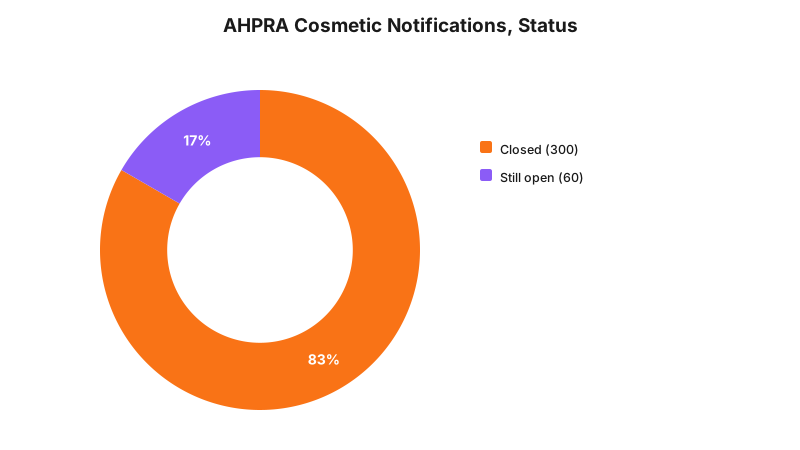
AHPRA reported about 360 notifications concerning non-surgical cosmetic procedures investigated between September 2022 and March 2025, with about 300 closed and over 1,500 calls logged to the Cosmetic Surgery Hotline in the same period, according to AHPRA’s announcement of the new cosmetic procedure guidelines. That volume is one reason the education-first, 30-day-letter approach exists: prosecuting every breach through a tribunal would swamp the system that’s meant to fix the advertising, not just punish it.
Takeaway: the numbers back up what the process implies. Most complaints are meant to end at a letter, not a courtroom.
Does AHPRA enforce this?
Section 133 of the Health Practitioner Regulation National Law makes it a criminal offence to advertise a regulated health service in a way that is false, misleading, or deceptive, offers an undisclosed inducement, uses a testimonial, creates unreasonable expectations of a beneficial outcome, or encourages indiscriminate or unnecessary use of the service. The maximum penalty is $60,000 per offence for an individual and $120,000 per offence for a body corporate, the National Law’s stated maxima. Other figures circulate in secondary commentary, including lower amounts, so treat the legislation as the authority, not a marketing blog.
The clearest public example of section 133 being used is AHPRA v Hance Limboro, a Sydney chiropractor convicted in 2017 on 13 advertising charges over a website claiming spinal adjustments could cure cancer, plus unlawful use of testimonials. He was fined $29,500 and ordered to pay AHPRA’s legal costs. It’s not a cosmetic clinic case and it predates the September 2025 guidelines, so it can’t tell you exactly how a modern cosmetic breach would be penalised. What it confirms is that section 133 is a real criminal offence AHPRA has prosecuted to a conviction, not a maximum penalty sitting unused in legislation. We could not find a publicly reported section 133 prosecution specific to cosmetic clinic or dentistry advertising since September 2025, and we’re not going to imply one exists.
Takeaway: the law has been tested once, publicly, and it held. Most practices never get near that outcome, and the 30-day letter is designed to keep it that way.
Where this gets hard
AHPRA’s breach letter tells you which page is non-compliant, not which exact sentence, image, or embed is the problem, so someone has to interpret the description correctly under time pressure. The 30-day figure is AHPRA’s stated aim for the correction-letter stage, not a guaranteed ceiling on every case, and the six-month Investigation-stage aim can run longer for anything complex. Whether a specific five-star review crosses the line from genuine customer sentiment into a banned section 133 testimonial is a judgement call AHPRA, and eventually a tribunal, makes case by case. No CMS filter or lint rule fully automates that call.
AHPRA’s own guidance says it takes this approach; the practical build consequence is a dated, verifiable fix inside the correction window. Whether your specific website content, review widget, or booking flow breaches section 133 is a question for your medical defence organisation or your lawyer, not a web development team working from a blog post.
Status
The advertising complaint process, the 30-day correction approach, and the section 133 maximum penalties described here are in force now. The consolidated cosmetic procedure guidelines have applied since 2 September 2025, and section 133 of the Health Practitioner Regulation National Law has been in force since well before that. None of this is a proposal or a passed-but-not-commenced obligation.
Frequently Asked Questions
How long does AHPRA take to investigate an advertising complaint?
AHPRA’s stated aim is 60 days for the Assessment stage, and up to six months for a full Investigation if a matter escalates, though AHPRA notes complex cases can run longer.
Do I need to take my clinic website offline after an AHPRA advertising complaint?
No. AHPRA’s process for a routine breach is a written letter naming the content and a 30-day window to fix it, not a takedown. Whether a takedown is ever the right call for your situation is a question for your lawyer or medical defence organisation.
What is the maximum fine for breaching AHPRA’s advertising rules?
Section 133 of the Health Practitioner Regulation National Law sets a maximum penalty of $60,000 per offence for an individual and $120,000 per offence for a body corporate, though most complaints resolve at the education-letter stage well before prosecution is ever considered.
Need a hand with your website?
If you want a second pair of eyes on how this applies to your own site, request a callback and we will talk it through.
Sources and References
- AHPRA, Advertising higher risk non-surgical cosmetic procedures, ahpra.gov.au. Date checked 15 August 2026.
- AHPRA, How we manage advertising complaints, ahpra.gov.au. Date checked 15 August 2026.
- AHPRA, Booming billion-dollar cosmetic industry on notice with new cosmetic procedures guidelines, ahpra.gov.au, 3 June 2025. Date checked 15 August 2026.
- Medical Board of Australia, Guidelines for registered medical practitioners who perform cosmetic surgery and procedures, medicalboard.gov.au, in effect 1 July 2023. Date checked 15 August 2026.
- Health Practitioner Regulation National Law (NSW), Section 133, Advertising, austlii.edu.au. Date checked 15 August 2026.
- Hall & Wilcox, Healthcare advertising: Understanding AHPRA’s strategy to compliance and enforcement, hallandwilcox.com.au. Date checked 15 August 2026.
- Medical Republic, Chiropractor fined over cancer cure claims, medicalrepublic.com.au. Date checked 15 August 2026.
Last reviewed: 15 August 2026.
Vikas Thakur
Founder of RockingWeb. 16 years of experience from working at TPG, iiNet and Monadelphous, now building websites, software and digital marketing for local businesses in Rockingham and Perth.