TGA Infringement Notice Cap Jumps to $21,840
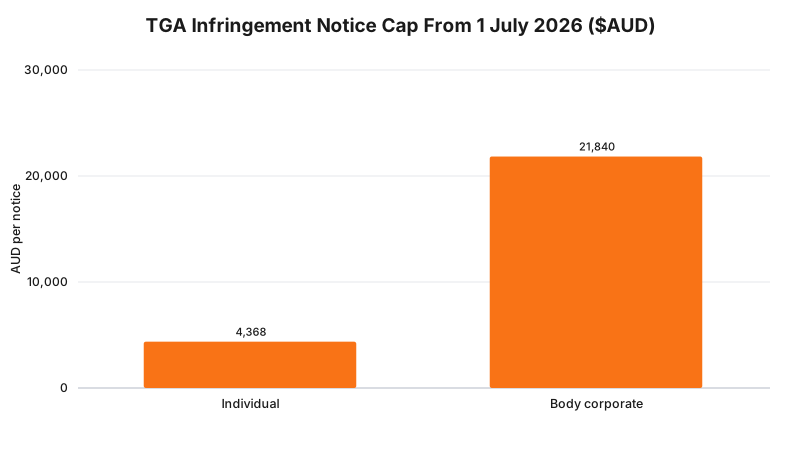
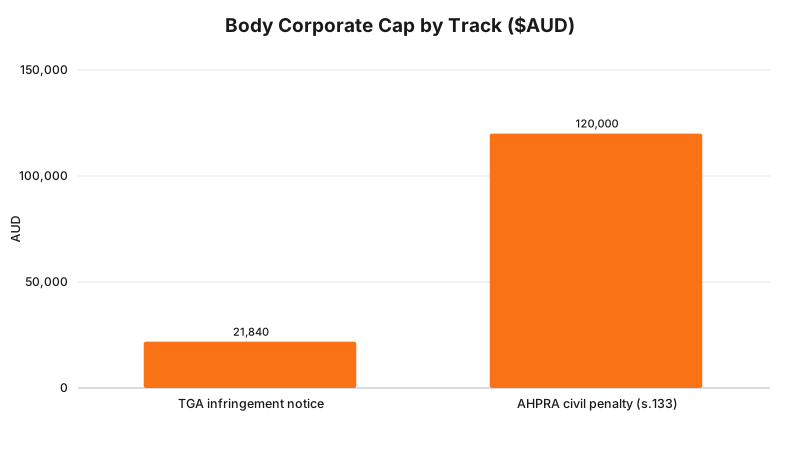
From 1 July 2026 the TGA can fine a body corporate up to $21,840 and an individual up to $4,368 per infringement notice for non-compliant advertising, a faster administrative track that sits well below AHPRA's $120,000 civil penalty ceiling but can stack per breach.
 Vikas Thakur Founder, RockingWeb 10 min read
On this page 9
- Key takeaways
- How the TGA calculates the new cap
- Two different penalty tracks, easy to confuse
- Why a website is the easiest place to trigger one
- What a stack of notices could look like
- What to check on your site before the next rebuild
- Frequently asked questions
- Get Your Advertising Checked Before It’s Tested
- Sources and References
Key takeaways
- The TGA’s infringement notice cap for non-compliant advertising rose to $21,840 for a body corporate and $4,368 for an individual, for offences committed from 1 July 2026
- The cap is calculated from a fixed penalty unit value of $364 as at 1 July 2026, multiplied by 60 penalty units for a corporation and 12 for an individual
- This is not AHPRA’s $120,000 civil penalty track under section 133 of the Health Practitioner Regulation National Law. It is a separate, faster administrative fine the TGA can issue without a tribunal hearing
- A recipient has 28 days to pay an infringement notice, and paying it is not an admission of guilt, according to the TGA’s own published guidance
- The TGA can issue a separate infringement notice for each alleged breach, and its own guidance gives an advertising example that can be counted per day the advertisement stays published
- The TGA’s own worked example for the $21,840/$4,368 figures is built on section 42DLB(1) of the Therapeutic Goods Act: advertising a prescription-only medicine to consumers, the exact provision governing most cosmetic injectable website copy
- The TGA’s public infringement notice register already lists advertising-related notices issued under section 42DLB(1) to businesses including Switch Nutrition Pty Ltd and Prime Medic Group Pty Ltd
- If an infringement notice isn’t paid, the TGA can refer the matter to the Commonwealth Director of Public Prosecutions for criminal prosecution, or start civil penalty proceedings instead
The TGA’s maximum fine for a single infringement notice over non-compliant therapeutic goods advertising rose to $21,840 for a body corporate and $4,368 for an individual, for any offence committed from 1 July 2026. Unlike the $120,000 civil penalty track most cosmetic clinics already know about from AHPRA, this is a separate, faster mechanism the TGA can issue directly, without a tribunal hearing.
$21,840. That’s the new ceiling a body corporate can be fined per notice for non-compliant therapeutic goods advertising, for any offence from 1 July 2026. An individual now faces up to $4,368 per notice. Here’s the part most clinic owners miss: this isn’t the $120,000 civil penalty everyone already knows about from AHPRA’s tribunal track. It’s a separate, faster mechanism the TGA can use without a hearing, an administrative fine calculated straight off a formula in the Act. The TGA’s own published example for that formula uses advertising a prescription-only medicine to a consumer, the exact thing a clinic’s treatment page or booking widget does every time someone lands on it. Below is what changed, how the number is calculated, and the one detail in the TGA’s own guidance that turns a single non-compliant page into a stack of separate notices.
How the TGA calculates the new cap
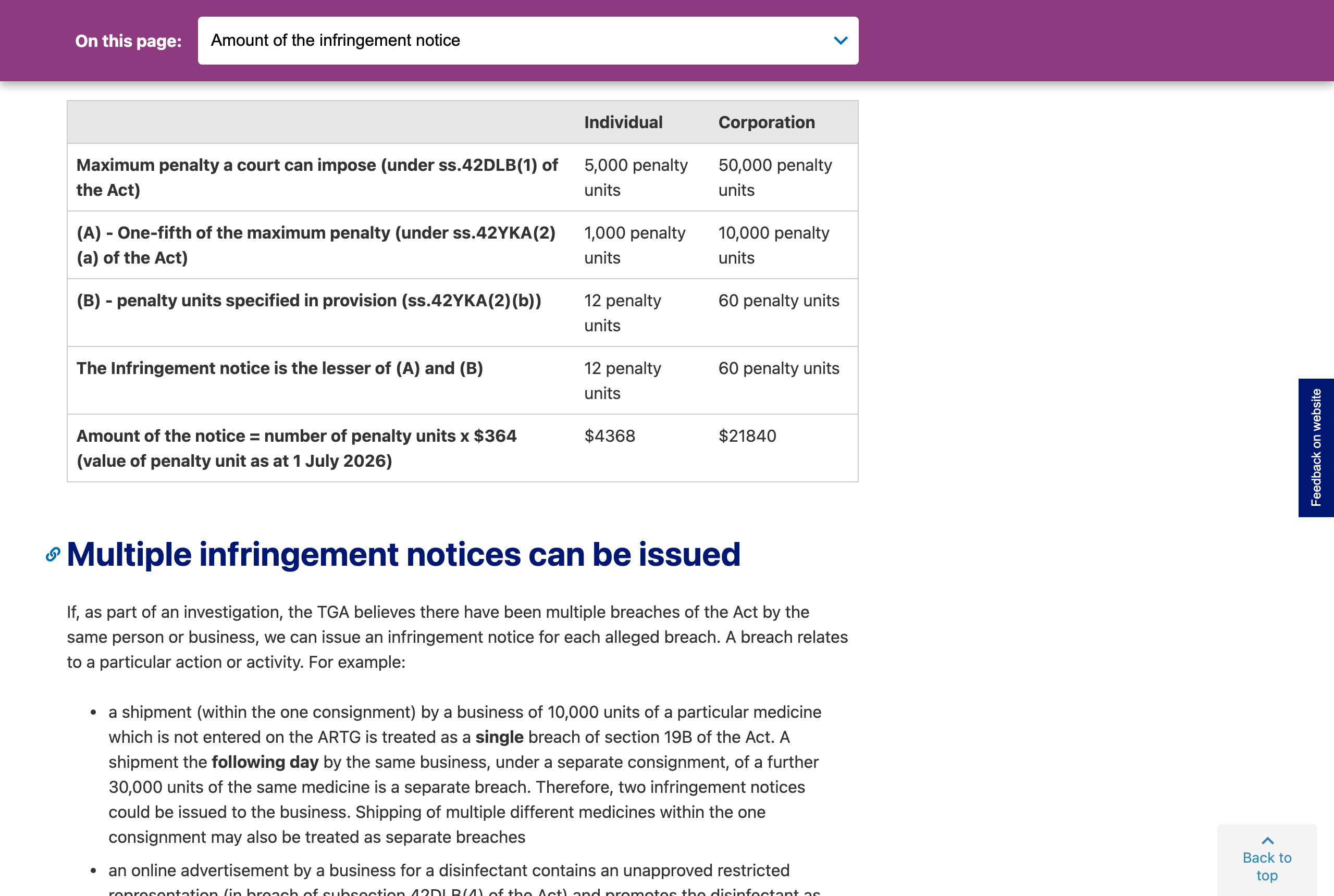
The TGA doesn’t get to pick a number. Under subsection 42YKA(3) of the Therapeutic Goods Act 1989, the amount of an infringement notice is set by a fixed formula, and the TGA has no discretion to raise or lower it, even if it thinks a specific breach deserves more. The formula runs off the value of a penalty unit under the Crimes Act 1914, which is $364 as at 1 July 2026.
For an advertising breach under section 42DLB(1), such as advertising a prescription-only medicine to consumers, the TGA’s own worked example lays out the maths in full. A court could impose up to 5,000 penalty units on an individual or 50,000 on a corporation as a maximum penalty. The infringement notice route caps that at the lesser of one-fifth of the court maximum or a fixed figure set in the Act itself, which for advertising breaches works out to 12 penalty units for an individual and 60 for a corporation. Multiply by $364 and you land on $4,368 and $21,840.
| Step | Individual | Corporation |
|---|---|---|
| Maximum penalty a court can impose (s.42DLB(1)) | 5,000 penalty units | 50,000 penalty units |
| One-fifth of the maximum (s.42YKA(2)(a)) | 1,000 penalty units | 10,000 penalty units |
| Fixed figure specified in the Act (s.42YKA(2)(b)) | 12 penalty units | 60 penalty units |
| Infringement notice amount (lesser of the two rows above) | 12 penalty units | 60 penalty units |
| Dollar value at $364 per unit (1 July 2026) | $4,368 | $21,840 |
Takeaway: the $21,840 figure isn’t a headline number pulled from a press release. It’s the direct output of a statutory formula tied to advertising a prescription-only medicine, the same category most cosmetic injectable copy sits in.
Two different penalty tracks, easy to confuse
Cosmetic clinics that have read up on advertising compliance usually land on one number: $120,000. That’s the maximum civil penalty for a body corporate under section 133 of the Health Practitioner Regulation National Law, enforced through AHPRA and a tribunal or court process. It’s real, and it’s still the bigger number on paper. But it’s a different regulator, running a different process, for a different piece of legislation.
The TGA’s infringement notice sits underneath all of that, as a faster, cheaper compliance tool built for volume, not for the worst offenders. There’s no tribunal hearing. There’s no finding of guilt. The TGA identifies an alleged breach, issues a notice, and the recipient has 28 days to pay it, request an extension, or formally contest it. Paying discharges the liability and isn’t an admission of anything, but it also doesn’t fix the underlying non-compliant advertising still sitting on the site.
| TGA infringement notice | AHPRA civil penalty (National Law s.133) | |
|---|---|---|
| Regulator | Therapeutic Goods Administration | AHPRA / relevant Board |
| Cap, body corporate | $21,840 per notice | $120,000 per contravention |
| Cap, individual | $4,368 per notice | $60,000 per contravention |
| Process | Administrative notice, no hearing | Tribunal or court proceedings |
| Payment window | 28 days | Set by the proceedings |
| Admission of guilt | No | Determined by the tribunal/court |
Takeaway: the TGA’s track is smaller per notice and faster to trigger. AHPRA’s track is bigger per contravention and slower. A clinic can realistically face either, or both, from the same piece of non-compliant copy.
Why a website is the easiest place to trigger one
The TGA’s own worked example for the $21,840/$4,368 figures isn’t about a billboard or a pamphlet. It’s built on section 42DLB(1): advertising a prescription-only medicine to consumers. Anti-wrinkle injections, most dermal fillers and a long list of cosmetic prescription-only treatments fall inside that same provision. That makes a clinic’s treatment pages, ad copy and booking widget the single most obvious place this rule gets tested, because they’re the one advertising surface that’s public, permanent and Google-indexed.
The detail that changes the maths sits in the TGA’s own guidance on multiple notices. A breach relates to a particular action or activity, and the TGA’s own examples include this one: “an advertising breach over multiple days may also be treated as individual contraventions, i.e. per day.” A single non-compliant sentence in a print pamphlet is one contravention. The same sentence live on a website for a week is a different question, and the TGA’s own methodology leaves that door open.
This is exactly the kind of gap a free compliance read of your site is built to catch before a regulator does: implied TGA approval, restricted representations without a permit, testimonials, or prescription-only treatment claims sitting on a page nobody has reviewed since launch.
Takeaway: the provision behind the new cap is specifically about advertising a prescription-only medicine to consumers, and a website is the advertising surface that stays live the longest without anyone checking it.
What a stack of notices could look like
This isn’t theoretical enforcement. The TGA’s own published infringement notice register already lists advertising-related notices issued under section 42DLB(1) to businesses including Switch Nutrition Pty Ltd and Prime Medic Group Pty Ltd, both for alleged unlawful advertising. The provision gets used, and it gets used against ordinary advertisers, not just the worst-case examples that make headlines.
Here’s the part worth sitting with. Take the TGA’s own “per day” contravention note and run it forward as pure arithmetic, not as a claim about any specific case. A single non-compliant page carrying an implied-approval claim or an unlisted prescription-only treatment reference, live for one day, sits at the $21,840 body corporate cap. Leave it up for three days and the same maths, applied per day, reaches $65,520. Five days reaches $109,200, more than half of AHPRA’s own $120,000 civil penalty ceiling, from the administrative track alone. Whether the TGA would treat a given page this way is its call to make, not something this article claims as certain. What is certain is that the TGA has told the industry, in its own published guidance, that the option exists.
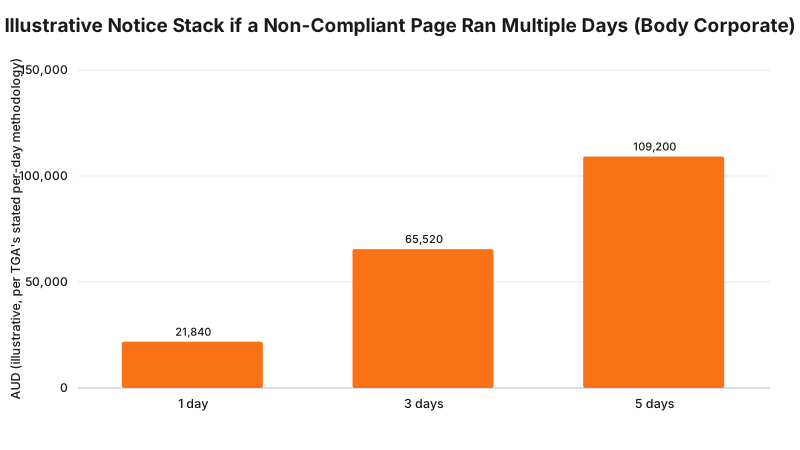
Takeaway: the TGA doesn’t need to find a new problem to increase the pressure on a non-compliant page. It just needs to keep counting the days the page stayed up.
What to check on your site before the next rebuild
A compliance audit costs far less than a single $21,840 notice, let alone a stack of them. Three checks worth running today, in order of how quickly a regulator or a competitor would spot them:
- Implied TGA approval or endorsement. Any wording that suggests a treatment or product has been approved, cleared or endorsed by the TGA specifically, rather than simply being lawfully supplied.
- Prescription-only treatments named without the right context. Anti-wrinkle injections, prescription-only dermal fillers and similar treatments sit inside the same advertising provision the TGA’s own $21,840 example is built on.
- Pages nobody has reviewed since launch. The TGA’s per-day contravention note makes an old, forgotten page a bigger liability than a new one, simply because it’s had longer to accumulate potential breach days.
RockingWeb builds and audits cosmetic clinic websites specifically against this kind of enforcement gap, not as generic web design, but as a compliance-first build process that treats every treatment page as a piece of regulated advertising, because that’s exactly what the TGA treats it as.
Takeaway: the cheapest fix here is a website review before 1 July’s new cap ever gets tested against your own pages.
Frequently asked questions
Is $21,840 the maximum a clinic could be fined overall? No. It’s the maximum for a single infringement notice. The TGA can issue a separate notice for each alleged breach, and its own guidance allows an advertising breach to be counted per day it stays live.
Does paying an infringement notice mean the clinic admitted wrongdoing? No. The TGA’s own guidance states that paying an infringement notice discharges the recipient’s liability for that notice and is not an admission of guilt. It also isn’t a fix for the underlying non-compliant advertising, which still needs to be corrected.
Is this the same as AHPRA’s $120,000 penalty? No. They’re different regulators running different processes under different legislation. See AHPRA’s $60,000 / $120,000 civil penalty track for that separate mechanism.
Get Your Advertising Checked Before It’s Tested
Ready to see what a regulator would find on your own site? Book a compliance-focused website review before the new cap gets tested against a page nobody has checked in months.
Sources and References
- Therapeutic Goods Administration, “Information about infringement notices.” Last updated 3 July 2026. tga.gov.au. Date checked: 23 August 2026. Source for the $21,840 body corporate and $4,368 individual figures, the $364 penalty unit value as at 1 July 2026, the 12/60 penalty unit calculation, the section 42DLB(1) worked example, the 28-day payment window, and the per-day multiple-notice guidance.
- Therapeutic Goods Administration, “Infringement notices” (public register). Last updated 20 August 2026. tga.gov.au. Date checked: 23 August 2026. Source for the published advertising-related infringement notices issued under section 42DLB(1) to Switch Nutrition Pty Ltd and Prime Medic Group Pty Ltd.
Vikas Thakur
Founder of RockingWeb. 16 years building for companies like TPG, iiNet and Monadelphous, now focused on websites and marketing that comply with AHPRA's advertising guidelines and still book patients.