2 Years: Australia's Cosmetic Injectable Prescribing Rules
An enrolled nurse now needs 2 years of combined clinical experience before touching a cosmetic injectable in Australia. Every prescription also needs a live in-person or video consultation, with text, email and online-only scripts banned outright under the National Boards' guideline effective 2 September 2025.
 Vikas Thakur Founder, RockingWeb 9 min read
On this page 9
- Key Takeaways
- Who Can Actually Write the Script
- The Live-Consultation Rule: No Text, No Email, No Bulk Scripts
- The Experience Floor Behind the Needle
- Consent, Age, and the Cooling-Off Gap
- What This Means for a Cosmetic Dentistry Website
- FAQ
- Get Your Booking Flow and Advertising Checked Against the Current Rules
- Sources and References
Key Takeaways
- Enrolled nurses need 2 years combined clinical experience (1 year as an EN plus 1 year in a related area) before touching a cosmetic injectable procedure in Australia
- Registered nurses need a minimum of 1 year post-registration experience before performing any non-surgical cosmetic procedure
- Every cosmetic injectable prescription needs a live consultation, in person or by video, each time it is issued; text, email and online-only scripts are banned
- “Bulk” or “batch” prescribing, one script covering more than one patient, is banned outright
- Midwives are excluded entirely: non-surgical cosmetic procedures are not part of contemporary midwifery practice
- Patients under 18 get a mandatory 7-day cooling-off period between consent and procedure; adult injectable patients get no equivalent mandatory cooling-off period
- The rules took effect 2 September 2025 and cover every registered health profession except medical practitioners, who follow a separate, near-identical Medical Board guideline
- Dental veneers are named alongside cosmetic injectables as an example “higher risk” procedure under the same national advertising guideline
An enrolled nurse in Australia now needs 2 years of combined clinical experience before she is allowed anywhere near a needle loaded with a Schedule 4 cosmetic injectable. That threshold, along with a 1-year minimum for registered nurses, came from the National Boards’ Guidelines for registered health practitioners who perform non-surgical cosmetic procedures, effective 2 September 2025. The same guideline bans writing a script by text, email or online form for any practitioner, in any profession. This piece breaks down who can legally prescribe a cosmetic injectable in Australia, who can only administer one, and what both rules mean for a clinic or dental practice website.
Who Can Actually Write the Script
Most people assume the practitioner holding the needle is also the one who decided to use it. Under Australian law, those are two separate acts. A “cosmetic injectable” is defined as a medicine only obtainable with a valid prescription from a practitioner authorised to prescribe it under the drugs and poisons legislation of the state where they practise.
That authority does not extend to every nurse in a clinic. A registered or enrolled nurse can administer a cosmetic injectable once someone else has prescribed it. Writing the prescription is a separate act, sitting with medical practitioners and with nurse practitioners who hold prescribing endorsement. A related gap: a nurse practitioner cannot gain that endorsement by practising solely in cosmetic procedures, because the Nursing and Midwifery Board does not treat cosmetics-only work as advanced practice.
Midwives sit outside this entirely. The guideline states plainly that non-surgical cosmetic procedures are not part of contemporary midwifery practice.
Takeaway: if a clinic’s website or booking flow implies the nurse performing the injection is also the one who decided the patient needed it, check whether that nurse actually holds prescribing authority, or whether a doctor’s prescription sits behind every appointment.
The Live-Consultation Rule: No Text, No Email, No Bulk Scripts
The guideline’s prescribing section leaves little room to argue. Every practitioner authorised to provide a prescription-only cosmetic injectable must have either an in-person or a video consultation with the patient, each time they prescribe one. Asynchronous prescribing, a script based on a text, email or online questionnaire the practitioner never spoke through in real time, is stated outright as not acceptable practice.
The same section closes a second loophole: one prescription cannot cover multiple people. So-called “bulk” or “batch” prescribing is banned. Every patient needs their own individual prescription, tied to their own consultation.
Neither rule is new in spirit. The Medical Board of Australia set the identical consultation requirement for doctors back in July 2023. What changed on 2 September 2025 is scope: the same standard now binds every other registered health profession that touches cosmetic injectables.
Takeaway: any booking flow, telehealth widget, or repeat-order form that lets a returning patient get a fresh cosmetic injectable script without a new live consultation is not compliant, regardless of how convenient it is.
The Experience Floor Behind the Needle
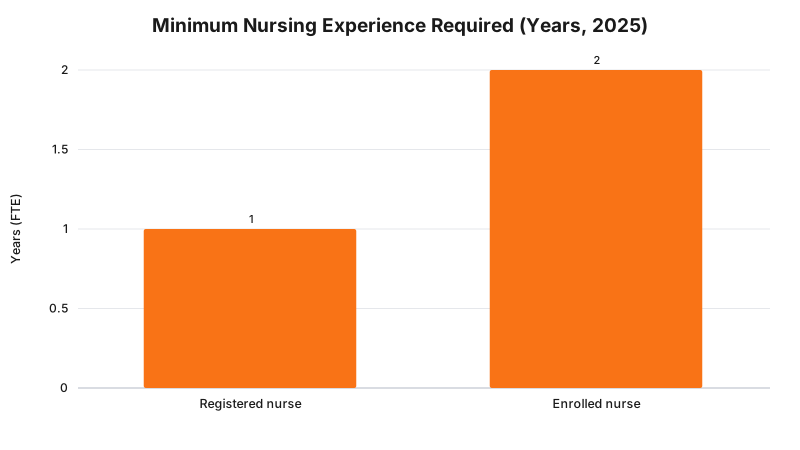
The 2025 guideline also sets a minimum runway before a nurse can perform the procedure at all, prescription in hand or not. A registered nurse needs at least 1 year full-time-equivalent experience post initial registration before moving into non-surgical cosmetic procedures. An enrolled nurse needs more: 1 year as an EN plus a further year in a related clinical area such as dermatology or general surgery, 2 years combined, before starting in this space.
Enrolled nurses face an extra layer once they clear that threshold. They cannot administer dermal filler to “very high-risk” areas, the glabella, nose and forehead. They can only work the next tier down, temples, nasolabial folds, peri-orbital and medial cheek, and only with immediate on-site access to the prescriber or a registered nurse.
Takeaway: a clinic advertising an enrolled nurse as its injector should be able to show, on request, that she has cleared the full 2-year combined threshold and is working within the permitted injection sites.
Consent, Age, and the Cooling-Off Gap
Patients under 18 get specific protection: a mandatory minimum 7-day cooling-off period between informed consent and the procedure, and no fee beyond the initial consultation until that period passes. The National Boards also state that botulinum toxin and dermal fillers should not be prescribed to under-18 patients for cosmetic purposes at all.
Adult patients sit under a different standard. The 2025 non-surgical guideline sets out an assessment, consent and consultation process, but no general mandatory cooling-off period for adults. That is a genuine gap against cosmetic surgery, where the separate Medical Board guideline requires at least two pre-operative consultations and a minimum 7-day cooling-off period for every patient, regardless of age, before a deposit can be taken or the surgery booked.
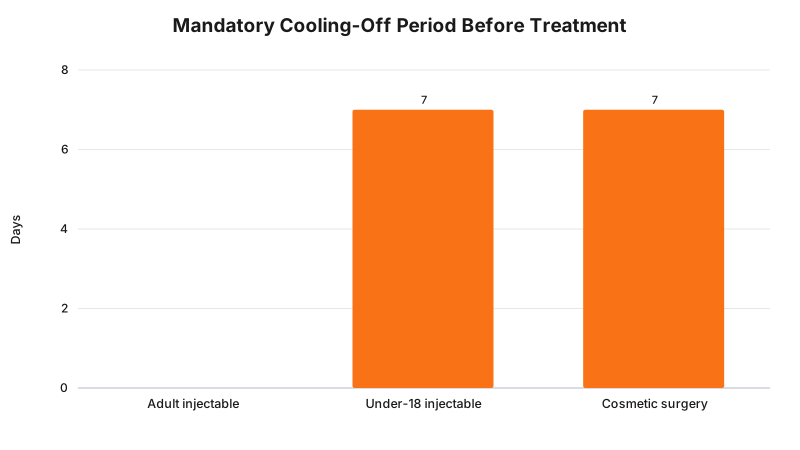
Takeaway: report what the rule actually says rather than what feels safest to assume; an adult injectable patient has no guideline-mandated cooling-off day, while an under-18 patient and any surgical patient both do.
What This Means for a Cosmetic Dentistry Website
Cosmetic dentistry sits closer to this framework than most practices realise. The National Boards’ advertising guideline for higher-risk non-surgical cosmetic procedures names dental veneers alongside cosmetic injectables, thread lifts and platelet-rich plasma. A practice offering both veneers and facial injectables as an add-on answers to the same advertising rules on both fronts, not a lighter, dental-only version of them.
Two requirements affect how a practice presents itself online. A website or ad naming a specific practitioner must disclose their registration number and type: dentist, registered nurse, nurse practitioner or medical practitioner. Any price list involving a prescription-only medicine must also comply with TGA advertising requirements, on top of the National Boards’ own rules. A visitor who can see exactly who is treating them, and what that practitioner is authorised to do, tends to book with fewer follow-up questions and fewer no-shows.
A booking flow built around this framework puts the prescribing pathway before checkout, not buried in a consent form on the day: who conducts the live consultation, confirmation it happens in person or by video, and the treating practitioner’s registration details up front. RockingWeb checks a site’s booking flow, pricing pages and practitioner disclosures against the current rules, including those in our cosmetic dentistry advertising guide.
Takeaway: a cosmetic dentistry site offering injectables inherits the full non-surgical cosmetic procedures framework, not a lighter, dental-only version of it.
FAQ
Can a registered nurse in Australia prescribe cosmetic injectables?
No. A cosmetic injectable is defined as a medicine only obtainable with a valid prescription from a practitioner authorised to prescribe under their state or territory’s drugs and poisons legislation. Nurses can administer one once it is prescribed, but writing the script sits with medical practitioners and nurse practitioners.
How much nursing experience is required before performing cosmetic injectables in Australia?
A registered nurse needs a minimum of 1 year full-time-equivalent experience post initial registration. An enrolled nurse needs a further year in a related clinical area on top of that, 2 years combined, before practising in non-surgical cosmetic procedures. Both thresholds took effect 2 September 2025.
Can a cosmetic injectable prescription be issued by text, email or an online form?
No. The National Boards’ guideline states that asynchronous prescribing by text, email or online is not acceptable practice. Every prescription requires a live consultation, in person or by video, each time it is issued, and one prescription cannot cover multiple patients.
Is there a mandatory cooling-off period before cosmetic injectables in Australia?
Only for patients under 18, who get a minimum 7-day cooling-off period between consent and the procedure. No equivalent mandatory cooling-off period is set for adult injectable patients, unlike cosmetic surgery, where 7 days applies to patients of any age.
Get Your Booking Flow and Advertising Checked Against the Current Rules
A clinic or dental practice offering cosmetic injectables carries two compliance surfaces: the prescribing and consultation rules above, and the advertising rules governing how practitioners, pricing and imagery appear on the website. RockingWeb builds and audits cosmetic clinic websites against both.
Talk to us about your clinic or practice website
Sources and References
AHPRA - Guidelines for registered health practitioners who perform non-surgical cosmetic procedures (effective 2 September 2025): the live-consultation rule, the ban on bulk prescribing, the RN and EN experience thresholds, the midwife exclusion and the under-18 cooling-off period
AHPRA - Guidelines for advertising higher risk non-surgical cosmetic procedures: dental veneers as an example higher-risk procedure, the registration-number disclosure requirement, and the TGA price-list compliance requirement
Medical Board of Australia - Guidelines for registered medical practitioners who perform cosmetic surgery and procedures (July 2023): the doctor-specific consultation rule and the cosmetic surgery cooling-off comparison
AHPRA - “Putting patients first: New guidelines for cosmetic procedures”, news release, 2 September 2025: confirms the effective date and the extension across every regulated profession
Related reading:
- Injectables by Nurses vs Doctors: Australia Data: state-by-state practitioner-type rules for holding and injecting Schedule 4 stock
- AHPRA Advertising Rules for Cosmetic Dentistry: the full dental-specific advertising framework
- Cosmetic 7-Day Cooling Off Period Advertising Rules: what the under-18 cooling-off period means for booking and payment flows
Vikas Thakur
Founder of RockingWeb. 16 years building for companies like TPG, iiNet and Monadelphous, now focused on websites and marketing that comply with AHPRA's advertising guidelines and still book patients.