Building a Booking Flow for the 7-Day Under-18 Cooling-Off
AHPRA's guidelines, in effect from 2 September 2025, introduced a mandatory seven-day cooling off period for people under 18 having non-surgical cosmetic procedures. Most booking systems cannot express that rule at all. Here is what the flow has to do.
 Vikas Thakur Founder, RockingWeb 8 min read
Key Takeaways
- AHPRA’s guidelines, in effect 2 September 2025, include a mandatory seven-day cooling off period for people under 18, plus targeted advertising bans aimed at young people
- The performance guidelines apply to registered health practitioners except medical practitioners, who follow the Medical Board’s own guidelines. A mixed clinic runs under two documents
- Most booking widgets have no concept of a consultation-to-treatment interval, which is the thing the rule actually regulates
- The flow must separate a consultation booking from a treatment booking. One appointment type cannot express the rule
- An age check placed after confirmation has already failed. Date of birth has to gate the flow, not annotate it
- This is in force now, not pending. It has applied since September 2025
Most clinic booking systems can answer one question: is this time slot free? The seven-day cooling off rule asks a different question entirely: how long ago did this specific person have the consultation that led to this specific treatment, and are they under 18? Almost no off-the-shelf booking widget can answer that, which is why so many clinic sites are quietly non-compliant while looking perfectly tidy.
What the Guideline Says
AHPRA’s guidelines for registered health practitioners who perform non-surgical cosmetic procedures took effect on 2 September 2025. In announcing them, AHPRA stated that young people would be protected by targeted advertising bans and a mandatory seven-day cooling off period for people under the age of 18.
The scope point matters and is widely reported incorrectly. The performance guidelines state that they apply to any health practitioners registered under the National Law who perform non-surgical cosmetic procedures, except medical practitioners. Medical practitioners are directed to the Medical Board’s guidelines for registered medical practitioners who perform cosmetic surgery and procedures, because they also perform cosmetic surgery.
So a clinic with a nurse injector and a visiting doctor is operating under two guideline documents simultaneously, and a booking system that applies one rule to all practitioners is wrong for one of them.
| Practitioner | Governing document | Applies from |
|---|---|---|
| Registered nurse | Guidelines for registered health practitioners performing non-surgical cosmetic procedures | 2 September 2025 |
| Dental practitioner | Same guidelines | 2 September 2025 |
| Medical practitioner | Medical Board guidelines for medical practitioners performing cosmetic surgery and procedures | Separate document |
Why Booking Software Cannot Express It
A cooling off period is an interval between two clinical events. A booking system models a calendar. Those are not the same shape.
To enforce the rule, the system needs four things: the patient’s date of birth, a record of which appointment was the consultation, a link from this treatment booking to that consultation, and a rule preventing confirmation until seven days have elapsed. Most widgets hold the first, sometimes, and none of the rest.
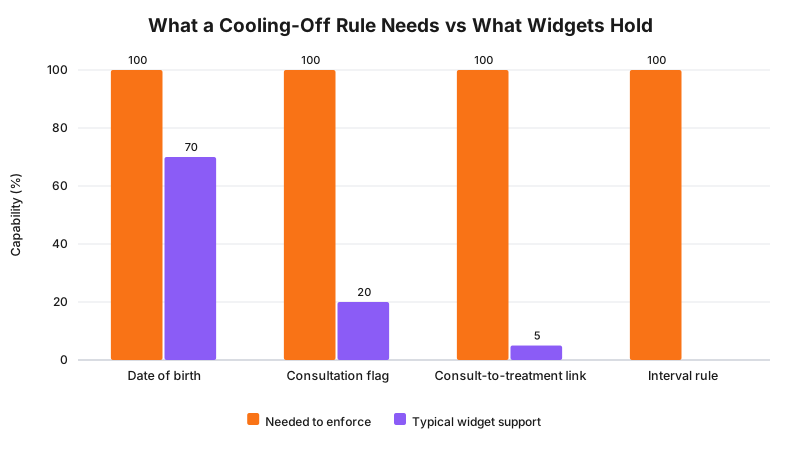
The needed row is definitional. The widget support row is a build-experience estimate across the platforms clinics commonly run, not a vendor survey. Treat the shape as the finding, not the exact numbers.
What That Means for the Build
Separate the two booking types. A consultation booking and a treatment booking are different objects with different rules. If your site offers one “Book Now” button that leads to a treatment slot, the rule cannot be expressed no matter what you add downstream.
Gate on date of birth before slot selection. The age question must sit at the top of the flow, before a time is chosen, so that an under-18 path can diverge. Collecting it on the confirmation screen means the booking exists before the rule is evaluated.
Model the interval server-side. The seven days is a clinical fact about a person, not a UI behaviour. Enforce it in your booking logic, not with a disabled button, because a disabled button is a suggestion.
Give the under-18 path somewhere to go. Blocking with an error is poor practice and poor conversion. The correct destination is a consultation booking, with clear text explaining that treatment cannot be booked at the same time and why.
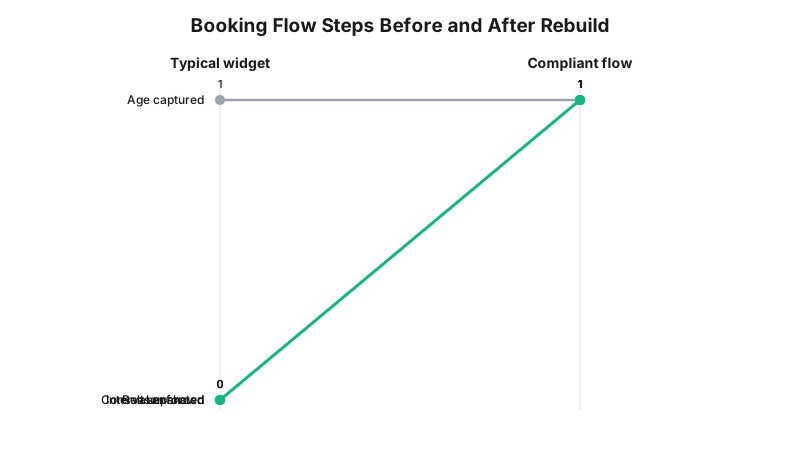
| Flow step | Compliant pattern | Common failure |
|---|---|---|
| 1. Entry | Choose consultation or existing-patient treatment | Single “Book Now” to a treatment slot |
| 2. Age | Date of birth before slot selection | Age asked on confirmation page |
| 3. Under-18 branch | Route to consultation only | Same flow, no branch |
| 4. Treatment booking | Server checks consult date plus 7 days | Front-end validation only |
| 5. Confirmation | States the cooling off applied | Silent |
A Worked Example
A nurse-led clinic ran a single embedded booking widget offering anti-wrinkle treatment slots directly, with date of birth collected on the final confirmation screen. A 17-year-old could book and attend a treatment appointment within 48 hours, and nothing in the software prevented it.
The rebuild split the entry into “Book a consultation” and “Book a treatment (existing patients)“. The treatment path checks the patient record server-side for a linked consultation date and refuses confirmation where the patient is under 18 and fewer than seven days have passed. The under-18 path routes to consultation booking with a short explanation.
Conversion effect: consultation bookings rose, because the entry point stopped forcing a decision the visitor was not ready to make. Treatment bookings from new visitors fell, which is the rule working as intended rather than a problem to solve.
What to Check on Your Own Site
- Click your own Book Now button. Does it lead to a treatment slot or a consultation?
- Find where date of birth is collected. Is it before or after a time slot is chosen?
- Try to book as a 17-year-old. Does anything stop you?
- Ask your booking vendor, in writing, whether the system can enforce a minimum interval between two appointment types for the same patient.
- Check whether your practitioners include medical practitioners, and whether your flow assumes one guideline document for all of them.
The Enforcement Anchor
AHPRA’s September 2025 announcement carried an explicit warning from Ahpra CEO Justin Untersteiner that practitioners had been given time to get their houses in order, and that if practitioners were found prioritising profits over patient care the regulator would not hesitate to act.
That is a stated enforcement posture rather than a published outcome against a specific clinic’s booking flow. No such determination has been published at the time of writing, and it would be wrong to imply one exists. The warning is on the record; the case law is not there yet.
Where This Gets Hard
The genuinely hard part is that most clinics do not control their booking software and cannot make it model a clinical interval. The realistic options are a custom front end over the platform’s API, a manual verification step that a human performs before confirming under-18 treatment appointments, or declining under-18 cosmetic bookings entirely. All three are legitimate; none is free.
The regulator says a mandatory seven-day cooling off period applies to people under 18; the build consequence is that your booking flow must be able to separate a consultation from a treatment and enforce an interval between them; whether your particular arrangement satisfies the obligation in your circumstances is a question for your medical defence organisation or your lawyer.
Status
In force since 2 September 2025. These are the current guidelines, not a proposal and not a pending commencement. The separate advertising guidelines for higher risk non-surgical cosmetic procedures carry the same date of issue.
Frequently Asked Questions
What is the seven-day cooling off period for under-18s?
AHPRA’s guidelines for registered health practitioners performing non-surgical cosmetic procedures, in effect from 2 September 2025, include a mandatory seven-day cooling off period for people under the age of 18, alongside targeted advertising bans aimed at young people. It is a professional obligation on the practitioner, which means the booking system a clinic uses has to be able to express it rather than quietly allow a same-week appointment.
Do the cooling off rules apply to a doctor performing the same procedure?
The performance guidelines apply to health practitioners registered under the National Law who perform non-surgical cosmetic procedures, except medical practitioners. Medical practitioners are directed to the Medical Board’s own guidelines for registered medical practitioners who perform cosmetic surgery and procedures. So the answer depends on the practitioner’s registration, and a clinic with both nurses and doctors is operating under two documents at once.
Can a booking system just block all under-18 bookings instead?
Many clinics take that approach and it is a legitimate commercial decision, but it is a business rule rather than a compliance solution, and it only works if the age check happens before the appointment is confirmed. A flow that collects date of birth after booking has already allowed the booking it was supposed to prevent.
Does the seven days run from the consultation or from the booking?
The cooling off period is tied to the clinical consultation and decision, not to the moment someone clicks a button on a website. That is why the booking flow has to separate a consultation booking from a treatment booking. A system that only knows about appointments, with no concept of which appointment was the consultation, cannot calculate the interval correctly.
Get Your Booking Flow Checked
Get in touch with RockingWeb and we will walk your actual booking flow the way a patient would and report exactly where the age gate and the consultation split sit.
Sources
- AHPRA - Putting patients first: New guidelines for cosmetic procedures, 2 September 2025. Checked 10 August 2026.
- AHPRA - Guidelines for registered health practitioners who perform non-surgical cosmetic procedures, date of issue 2 September 2025. Checked 10 August 2026.
- AHPRA - Guidelines for advertising higher risk non-surgical cosmetic procedures. Checked 10 August 2026.
Last reviewed: 10 August 2026.
Vikas Thakur
Founder of RockingWeb. 16 years building for companies like TPG, iiNet and Monadelphous, now focused on websites and marketing that comply with AHPRA's advertising guidelines and still book patients.