Google's 17 Aug 2026 Bid Change Exposes Bad Conversion Data
From 17 August 2026, Google Ads tightens how budget-limited Target CPA and Target ROAS campaigns hit their set target. Google's own example shows a $10 target CPA currently landing at $5 shifting back toward the full $10, which only helps a clinic if the conversions feeding that number are real bookings.
 Vikas Thakur Founder, RockingWeb 9 min read
On this page 9
- Key Takeaways
- What Actually Changes in Google Ads on 17 August 2026
- Which Campaign Types Are Affected
- Why This Turns Into a Conversion Tracking Problem, Not a Bidding Problem
- The Conversion Audit Worth Running Before 17 August
- What Happens If a Clinic Does Nothing
- FAQ
- Get Your Clinic’s Conversion Tracking Checked Before 17 August
- Sources and References
Key Takeaways
- From 17 August 2026, Google Ads changes how budget-limited campaigns using Target CPA and Target ROAS hit the target you set
- Google’s own example: a campaign with a $10 Target CPA currently landing at a $5 actual CPA will shift back toward the full $10 once the update lands
- Campaigns that have historically overachieved their stated target may see performance volatility if left unreviewed before 17 August
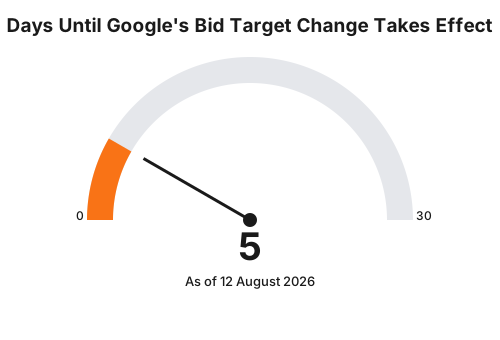
- The Bid Target Adjustment Tool has been live in Google Ads since 6 July 2026, giving advertisers a 42 day window to review targets before enforcement
- The change lands for Search, Shopping, Performance Max, Demand Gen and Travel campaigns; Display and Hotel campaigns already use this bidding behaviour, so nothing changes for them on 17 August
- App campaigns, Video reach campaigns and Video view campaigns keep their current bidding behaviour and are not affected
- Google confirms it will not automatically adjust daily budgets or bid targets, so the review has to happen manually before 17 August
Google will change how it hits bid targets from 17 August 2026, and it says exactly how in its own help documentation: a campaign with a $10 Target CPA that has actually been landing at $5 will get pushed back toward the full $10 once the update rolls out. That is the whole announcement, in one example, from Google itself.
Here is the part the announcement does not mention. That $10 target is only as good as the conversions feeding it. Most clinic websites count a phone number click, a half filled contact form and someone merely loading the booking widget as the same “conversion” as an actual booked appointment. Tighten Google’s bidding around that mess and the algorithm starts chasing noise instead of patients.
This post covers exactly what Google confirms is changing on 17 August, which campaign types it touches, and the conversion tracking checks worth running on a clinic’s website before that date lands.
What Actually Changes in Google Ads on 17 August 2026
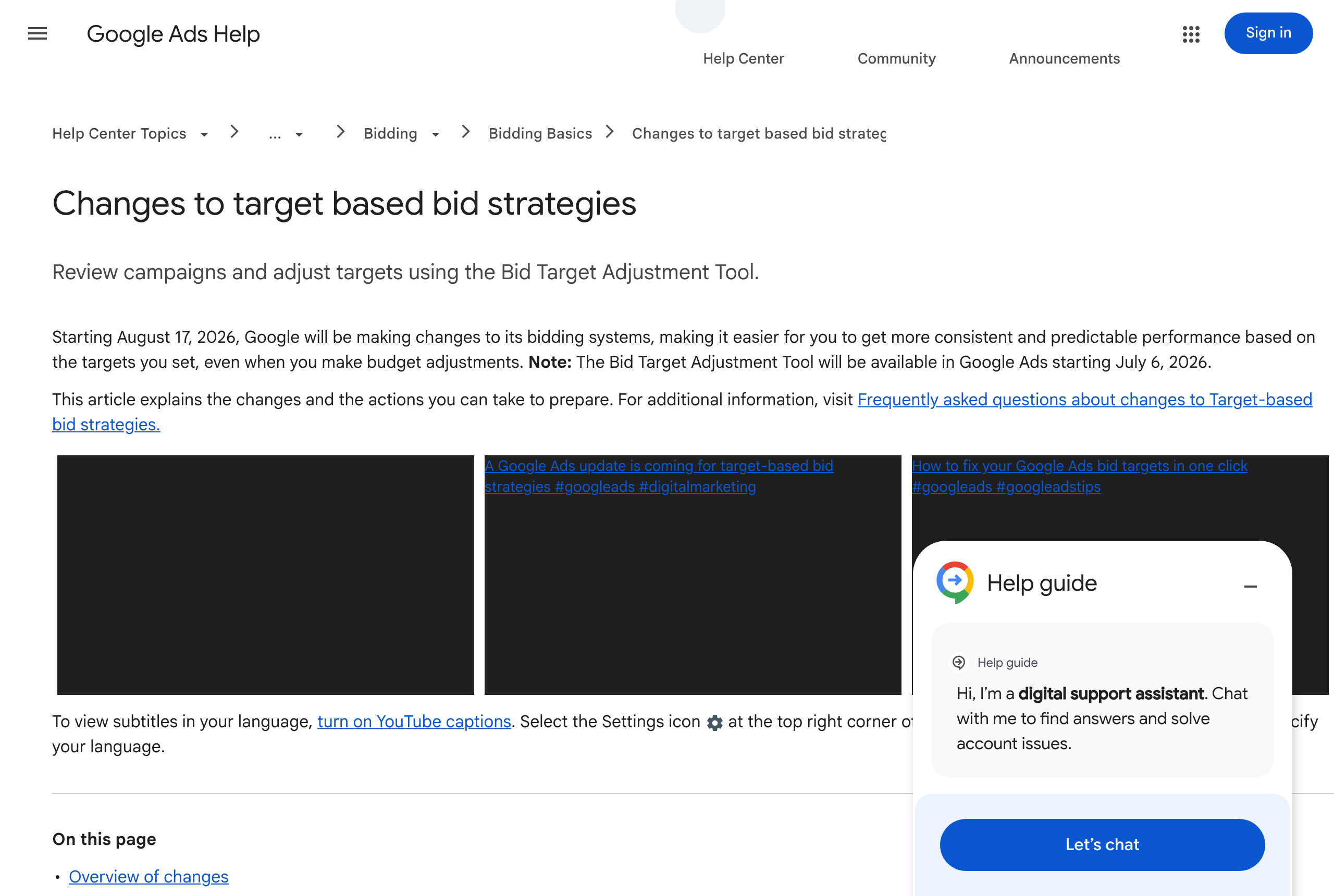
Google’s help centre is specific about this one. From 17 August 2026, campaigns that are limited by budget and use a target based bid strategy will “more consistently perform toward your bid target, including when you make budget adjustments.” The strategies affected are Target CPA and Target ROAS across most campaign types, plus Target CPC for Demand Gen campaigns.
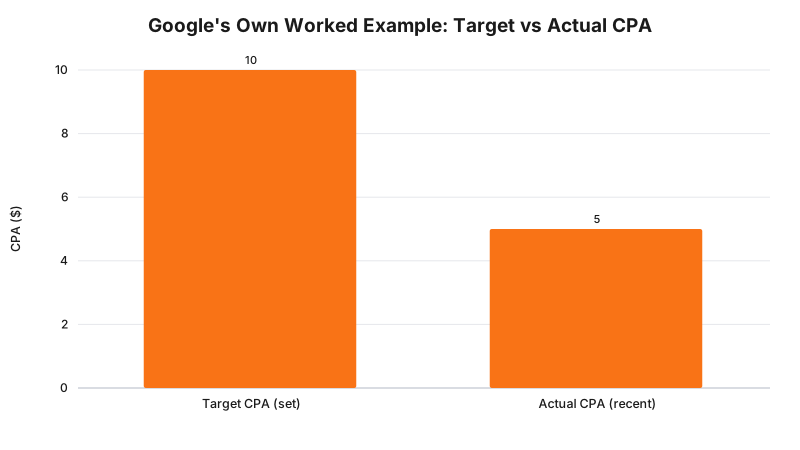
Google gives a plain worked example: if a campaign’s Target CPA is $10 but its recent actual CPA has been $5, the campaign will deliver more closely to a $10 actual CPA once the change lands. In other words, a campaign that has been quietly beating its own target stops beating it and starts hitting it.
Google also flags a warning worth reading twice: “If you have a campaign that’s limited by budget that has historically overachieved its stated target, you may experience performance volatility if you don’t make any changes to the campaign before August 17.” Google is not offering to fix this for you. It is telling you to check first.
Takeaway: if a clinic’s campaign has been landing well under its Target CPA, that comfortable number is about to move, and Google has already told you why.
Which Campaign Types Are Affected
Not every campaign type in a clinic’s account is touched by this change. Google’s documentation lists the campaign types the 17 August update applies to, the ones that already behave this way, and the ones that keep their current bidding behaviour unchanged.
| Update lands 17 August | Already behaves this way | Unchanged |
|---|---|---|
| Search | Display | App campaigns |
| Shopping | Hotel | Video reach campaigns |
| Performance Max | Video view campaigns | |
| Demand Gen | ||
| Travel |
For a typical cosmetic clinic account, that means Search and Performance Max, usually the two biggest spend drivers for booking related keywords, are directly in scope for the 17 August change.
Takeaway: check Search and Performance Max first. Those are the campaign types most clinics rely on for booking volume, and both are directly affected.
Why This Turns Into a Conversion Tracking Problem, Not a Bidding Problem
A Target CPA campaign does one job: it tries to buy conversions at, or under, the number you set. It cannot tell whether those conversions are good ones. If a clinic’s site fires a “conversion” the moment someone clicks a phone number, again when a contact form is half completed, and again when the booking widget merely loads on screen, Google Ads treats all three the same as a confirmed appointment.
Once bidding tightens toward that inflated count, the algorithm optimises harder toward the wrong signal. A campaign that looked efficient because it was quietly landing under target could have been running on enquiries that never became a booked patient. Tightening the target does not fix that. It just spends more consistently toward a number built on bad data. The fix lives on the website, not in the Google Ads interface: a booking flow, a scheduler iframe and a consent banner all sit upstream of every conversion Google Ads ever sees.
Takeaway: Google’s bid target change assumes the conversion data feeding it is trustworthy. For most clinic sites, that assumption needs checking before 17 August, not after.
The Conversion Audit Worth Running Before 17 August
Four checks, in order, before touching a single bid target:
- Separate booking completions from enquiries. A confirmed appointment and a phone click are not the same event. Split them if they share one conversion action.
- Confirm the booking widget actually fires a conversion. Many third party scheduler embeds and iframes only load a page, and do not push a conversion event back to Google Ads unless that integration was explicitly wired up.
- Check consent mode defaults. If a cookie banner denies analytics and ad storage by default and a visitor never actively accepts, consent mode can model or silently drop the conversion, and that gap is easy to miss without testing it directly.
- Test the whole path yourself. Submit a real enquiry, book a real slot in a test environment, and watch Google Ads to confirm the conversion that fires matches what actually happened.
Only after those four checks come back clean is a clinic’s Target CPA number worth trusting through 17 August.
A website built with clean conversion firing from the start avoids most of this scramble. That is the standard behind every cosmetic clinic website RockingWeb builds: booking completions tracked as their own event, separate from a phone click or a form load, so the number Google Ads optimises toward actually means what it says.
Takeaway: run the audit before 17 August, not after. Once the bid target starts enforcing itself more consistently, a bad number gets more expensive to leave uncorrected.
What Happens If a Clinic Does Nothing
Google is explicit that it will not step in on your behalf: “Google won’t automatically adjust your daily budgets or your campaign bid targets.” Nothing about the account changes unless the update itself changes it, and the update only changes how consistently the existing target gets hit.
For a campaign genuinely converting well under its Target CPA on good data, this is a low risk change. For a campaign landing under target because of inflated or duplicated conversions, 17 August is the day that comfortable number stops being comfortable. Spend rises to match the target, against conversions that were never as strong as the account made them look.
If a clinic has not had its ad account and website reviewed against how conversions are actually counted, RockingWeb can cover the tracking and compliance review together, since both sit on the same website infrastructure.
Takeaway: Google will not fix a clinic’s conversion tracking. The Bid Target Adjustment Tool has been available since 6 July 2026 for exactly this reason: to give advertisers a window to check before the change enforces itself.
FAQ
What changed in Google Ads on 17 August 2026?
Budget-limited campaigns running Target CPA, Target ROAS or Target CPC for Demand Gen now perform more consistently toward the set target, even when budgets change. Google’s own example shows a campaign with a $10 Target CPA that has actually been landing at $5 shifting back toward the full $10 after the update.
Does this change affect Target ROAS and Demand Gen campaigns too?
Yes. Google confirms the update covers Target CPA and Target ROAS across most campaign types, plus Target CPC for Demand Gen, and applies to Search, Shopping, Performance Max, Demand Gen and Travel campaigns. Display and Hotel campaigns already use this bidding behaviour, so nothing changes for them on 17 August. App campaigns, Video reach campaigns and Video view campaigns are unaffected.
How do I check if my clinic’s conversion tracking is accurate before 17 August?
Separate booking completions from enquiries so a phone click and a confirmed appointment are not counted as the same conversion, confirm the booking widget actually fires a conversion event rather than just loading a page, and check that consent mode and cookie banner settings are not silently dropping conversions before they reach Google Ads.
What happens if I do nothing before the change takes effect?
Google states it will not automatically adjust daily budgets or bid targets on your behalf. If a campaign has historically overachieved its stated target, Google warns you may see performance volatility once the update lands, unless you review the campaign first using the Bid Target Adjustment Tool.
Get Your Clinic’s Conversion Tracking Checked Before 17 August
RockingWeb reviews a clinic’s booking flow, scheduler integration and conversion tags against what Google Ads is actually counting, then fixes the gaps before a bid target change makes them expensive.
Talk to us about your clinic’s tracking and website
Sources and References
Google Ads Help - Changes to target based bid strategies: the 17 August 2026 effective date, the $10 Target CPA vs $5 actual CPA example, the overachieving campaign volatility warning, and the 6 July 2026 Bid Target Adjustment Tool availability date
Google Ads Help - Changes to target based bid strategies FAQ: confirmation that the 17 August update applies to Search, Shopping, Performance Max, Demand Gen and Travel campaigns (Display and Hotel already use this bidding behaviour), and the statement that Google will not automatically adjust budgets or bid targets
Related reading:
- AHPRA Compliant Google Ads for Cosmetic Clinics: what a clinic can and cannot say in a Google Ads account under current advertising rules
- Cosmetic Clinic Google Ads Benchmarks Australia 2026: current CPC, CTR and conversion benchmarks by treatment category
- Cosmetic Clinic Website Booking Conversion Australia: how booking flow design affects the conversion rate feeding campaigns like these
Vikas Thakur
Founder of RockingWeb. 16 years building for companies like TPG, iiNet and Monadelphous, now focused on websites and marketing that comply with AHPRA's advertising guidelines and still book patients.