Seasonal Campaign Pages and the Inducement Line
A Black Friday countdown, a Christmas gift voucher, and a Valentine's Day couples package are three separate rule problems wearing the same banner. Building one reusable seasonal campaign template beats fixing the same mistake five times a year.
 Vikas Thakur Founder, RockingWeb 12 min read

Key takeaways
- Section 133 of the National Law requires any ad offering a gift, discount or inducement to state its terms and conditions. Maximum penalty $60,000 for an individual, $120,000 for a body corporate, per offence
- A seasonal campaign page stacks two separate rules at once: the disclosure test and the guideline’s ban on advertising that exploits vulnerabilities or insecurities to increase demand
- A gift voucher for a cosmetic procedure adds a third issue: the person who redeems it has not had a consultation at the point of purchase
- Five or more seasonal occasions a year (EOFY, Christmas, Valentine’s Day, Black Friday, Mother’s and Father’s Day) means one missed field repeats five times unless the page is a reusable template
- Ahpra’s guidelines for advertising higher risk non-surgical cosmetic procedures have applied since 2 September 2025
- Section 133’s disclosure requirement itself predates the 2025 guidelines and is not new
A clinic’s Black Friday page, Christmas gift voucher page, and Valentine’s Day couples package page usually get built by three different people in three different months, none of whom looked at the others. Each one carries the same section 133 obligation to state terms and conditions, and each one is a fresh opportunity to skip the field under deadline pressure.
That repetition is the actual problem with seasonal campaigns. The rule itself is not seasonal. What changes at Christmas, Valentine’s Day, and EOFY is that a clinic builds five or six of these pages a year instead of one, and every rebuild is a chance to reintroduce a mistake that was already fixed once.
What the Rule Actually Says
Two provisions govern a seasonal campaign page, and a build team needs both.
Ahpra’s guidelines for advertising higher risk non-surgical cosmetic procedures, in effect from 2 September 2025, state that higher risk cosmetic procedures must not be advertised in a way that exploits the vulnerabilities or insecurities of individuals to increase demand, and that a practitioner’s duty of care to their patient is the paramount consideration in all practitioner-patient interactions, including through advertising. The guidelines also require practitioners to recognise the potential for conflict between financial gain and duty of care.
Section 133 of the Health Practitioner Regulation National Law, which the guidelines describe as the provision they help practitioners meet, makes it an offence to advertise a regulated health service in a way that offers a gift, discount or other inducement to attract a person to use the service or the business, unless the advertisement also states the terms and conditions of the offer. That obligation is not new and applies to every advertiser of a regulated health service, seasonal or not.
Read together, a seasonal campaign page has to clear both tests at once: the offer’s terms and conditions have to be stated in the advertisement itself, and nothing on the page can be built to pressure a decision by exploiting urgency around a calendar date.
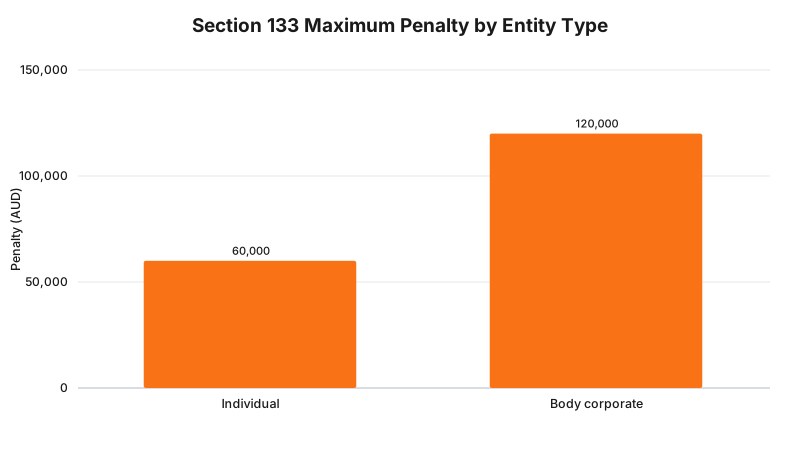
These are the current National Law maxima per offence for a breach of the disclosure requirement, cited from the legislation rather than a secondary summary, since figures circulating elsewhere sometimes understate them.
What That Means for the Build
Build one campaign content type, not five one-off pages. A single CMS content type for “seasonal offer” with mandatory fields, terms text, eligible treatment list, start date, end date, and a required voucher-or-discount toggle, means the terms field cannot be skipped no matter which occasion or which person is publishing it.
Separate the calendar deadline from the offer framing. A page can state that a promotion runs from 1 to 25 December without describing the deadline as scarce, urgent, or about to disappear. A plain end date meets section 133’s disclosure requirement. A countdown timer next to it is the urgency element the guidelines target.
Give gift vouchers their own redemption flow, not a generic checkout. A voucher purchase should route the redeemer to a consultation booking step before any procedure is confirmed, separate from the payment step the purchaser completed. The person who pays and the person who is treated are not always the same person, and only the second one has had a clinical assessment.
Reuse the terms field across the whole campaign calendar. Once a terms and conditions block passes review for one seasonal page, the same field structure, not the same wording, should populate every other seasonal page for the year. A structural fix should not need re-litigating every quarter.
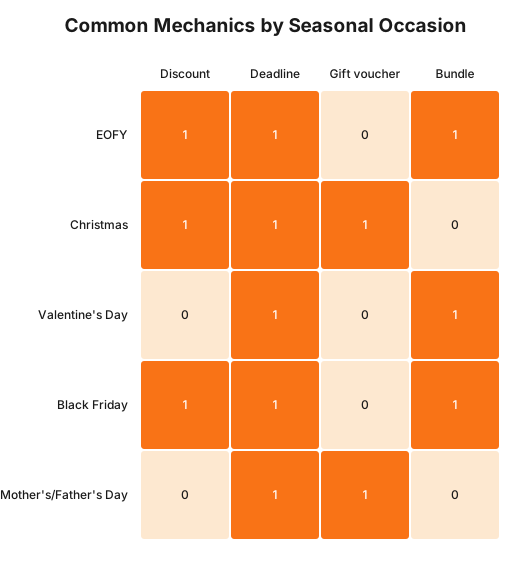
This grid is a build-experience pattern, not audited data: which mechanic typically shows up on which occasion. EOFY and Black Friday lean on discounts against a hard deadline. Christmas and Mother’s and Father’s Day lean on gift vouchers. Valentine’s Day tends to bundle a couples or partner package. Every column still needs the same terms field regardless of which row it sits in.
Decision Matrix
| Occasion | Typical mechanic | Rule that applies | Build fix |
|---|---|---|---|
| EOFY | Package price, fixed end date | Section 133 disclosure | State scope, price and end date in the ad itself |
| Christmas | Gift voucher for a procedure | Section 133 disclosure, plus consultation-before-treatment | Voucher checkout routes to a consultation booking step |
| Valentine’s Day | Couples or partner bundle | Section 133 disclosure | State what is included and the price for each person |
| Black Friday | Percentage-off, countdown timer | Section 133 disclosure, plus vulnerability-exploitation test | Keep the end date, remove the countdown and scarcity copy |
| Mother’s/Father’s Day | Gift voucher, “treat someone” framing | Section 133 disclosure, plus consultation-before-treatment | Same voucher flow as Christmas, plus no framing that targets the buyer’s guilt or obligation |
The middle column is where most seasonal pages fall short. A terms and conditions field fixes the section 133 problem on its own, but it does not touch a countdown timer or a voucher flow that skips a consultation step, both of which need a separate build change.
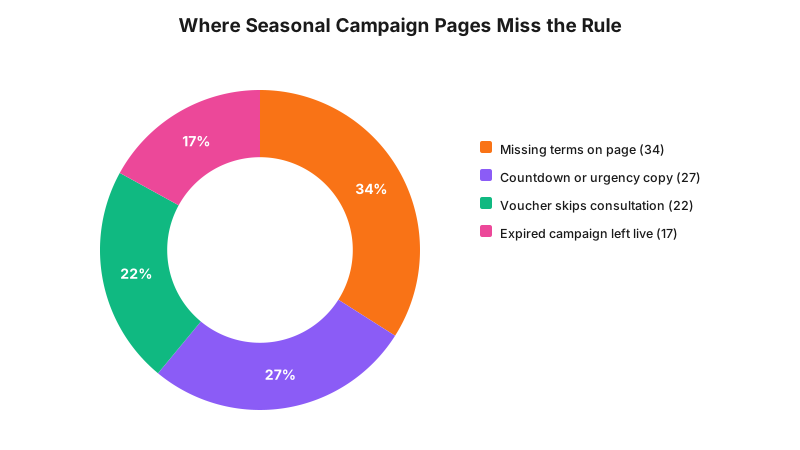
Another build-experience estimate, not a survey result. Missing terms is the most common gap because it is the easiest field to skip under a launch deadline. Voucher flows skipping a consultation step sit lower only because fewer clinics sell vouchers at all, not because the ones that do get it right more often.
A Worked Example
Cosmetic clinic. A nurse-led injectables clinic ran a “Give the Gift of Confidence” Christmas campaign selling anti-wrinkle treatment vouchers directly through an online store, with the voucher redeemable for a set number of units at any participating location. The purchase flow ended at payment. Nothing in the flow asked whether the recipient had ever been assessed for the treatment, and the landing page carried a rotating banner reading “12 days left” with no stated terms beyond a small linked policy page.
The rebuild added a visible terms summary on the campaign page itself, listing eligible treatments, participating locations, and the redemption window. It replaced the countdown banner with a plain end date. It changed the voucher flow so redemption first books a consultation, with the treatment itself confirmed only after that appointment, matching the same sequencing already used for the clinic’s ordinary deposit pages.
Dental practice. A cosmetic dentistry page ran a “New Year, New Smile” veneers offer, a procedure named in AHPRA’s visual examples material, bundling a consultation and four veneers at a fixed package price valid until 31 January. The page stated the price and the treatment count but not the expiry date anywhere visible, only inside a linked terms page.
The rebuild moved the expiry date and the treatment scope onto the campaign page itself, next to the price, satisfying section 133’s requirement that the advertisement state its own terms. No consultation-sequencing change was needed here, since the package already required a consultation before any veneer was fitted.
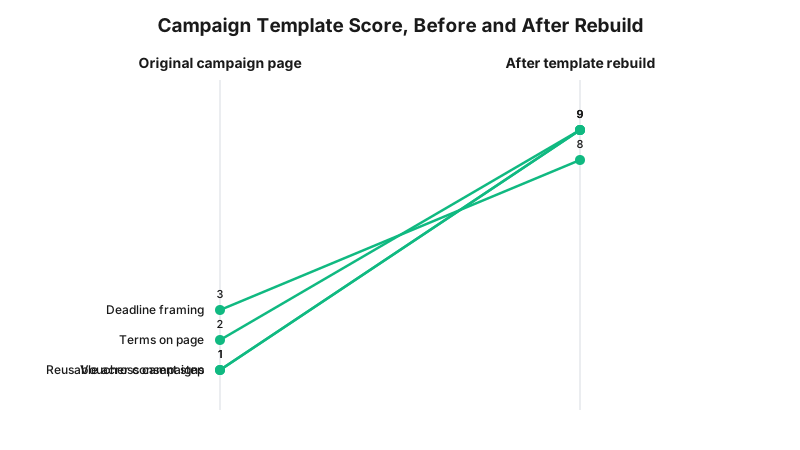
The score is a build-judgement scale against the two rules described above, not a regulator’s measure. Voucher consent and reusability move the furthest because both were structural gaps rather than copy edits, the same pattern seen in the companion post on discount mechanics.
What to Check on Your Own Site
- Pull up every seasonal or campaign landing page still live or archived on the site and check each one for a visible terms and conditions statement on the page itself.
- Check whether any campaign page uses a countdown timer, a “spots remaining” counter, or urgency language such as “last chance” or “ends tonight”.
- If the site sells gift vouchers or gift cards for a treatment, trace the checkout flow and confirm whether it requires a consultation booking before the treatment is confirmed, not only before payment.
- Compare the terms field structure across two or three different seasonal pages built by different people. If the fields differ, there is no shared template and the gap will repeat next quarter.
- Check whether last year’s seasonal pages are still live and unedited. An old campaign page with an expired date still displayed is a stale-content problem layered on top of the disclosure one.
- Check paid social and Google Ads creative for the same campaign separately from the landing page, since section 133 applies to the ad copy first.
The Enforcement Anchor
Ahpra’s purpose-built Cosmetic Surgery Enforcement Unit closed its 200th notification within 18 months of starting, with 315 notifications still open against 127 practitioners as of March 2024, and roughly 9% of completed notifications led to regulatory action such as conditions, a caution, or an enforceable undertaking. That is section 133 enforcement activity in general, not a case specific to seasonal campaign pages.
There is no published Australian determination we can point to that turns on a Christmas gift voucher page or a Black Friday countdown on a clinic website specifically. The obligation and the enforcement volume are both on the record; a decision naming a seasonal campaign page is not.
Where This Gets Hard
The gift voucher problem does not have a clean answer. A voucher purchased by a parent for an adult child, or by one partner for another, is a normal retail gesture everywhere else in the economy, and refusing to sell one at all would be commercially self-defeating for a clinic that competes with day spas offering the same gesture with none of these obligations. The honest middle position is a redemption flow that treats the voucher as a credit toward a consultation, not as a pre-paid procedure, so the clinical decision still sits with the person being treated.
The regulator says advertising must not exploit vulnerabilities to increase demand and any advertised gift, discount or inducement must state its terms; the build consequence is a reusable campaign template with mandatory terms fields, no countdown framing, and a consultation step ahead of any voucher redemption; whether a specific seasonal mechanic on your site crosses the line is a question for your medical defence organisation or your lawyer.
Status
In force, not a proposal. As at 12 September 2026, section 133’s disclosure requirement has applied for years, and Ahpra’s guidelines for advertising higher risk non-surgical cosmetic procedures have applied since 2 September 2025.
Frequently Asked Questions
Can a cosmetic clinic run a Black Friday or Christmas sale at all?
Yes. Section 133 of the National Law does not ban seasonal discounts. It requires that any advertisement offering a gift, discount or other inducement also states the terms and conditions of that offer. The problem is not that the sale exists, it is that a seasonal page gets rebuilt from scratch each time and the terms field, the eligibility list, or the urgency framing gets handled differently on every rebuild.
Is a gift voucher for a cosmetic procedure different from a discount code?
Functionally it carries the same section 133 disclosure obligation, plus a separate wrinkle. A discount applies to a purchase the buyer is making for themselves. A gift voucher is bought by one person for someone else to redeem, which means the person who will actually have the procedure has not been through any consultation at the point the purchase happens. AHPRA’s guidelines treat duty of care as paramount in every practitioner-patient interaction, including through advertising, so a voucher redemption flow needs a consultation step before the procedure, not just before payment for a top-up.
Why does a countdown deadline matter more on a seasonal page than on an everyday discount page?
It does not matter more under the rule itself, section 133 and the vulnerability-exploitation wording apply identically all year. What changes is exposure. A seasonal page runs for a fixed, calendar-driven window, so a compliance gap is live on every visit during that window rather than sitting quietly on a page nobody clicks. Five seasonal campaigns a year multiplies one mistake into five.
Does this apply to cosmetic dentistry seasonal offers too?
Section 133 applies to advertising any regulated health service, and dentistry is regulated under the same National Law as medicine and nursing. A New Year veneers offer or an EOFY teeth whitening package faces the identical disclosure test as a filler discount page. Where the treatment is named in AHPRA’s visual examples material, such as veneers, the higher risk cosmetic procedure guidelines apply on top of section 133.
What is the single biggest fix for seasonal campaign pages?
Building one reusable campaign content type with mandatory terms, eligibility, and expiry fields, used for every seasonal event across the calendar. Most clinic sites instead brief a new landing page for each occasion, which means the terms field that got added after last Christmas’s near miss quietly disappears from the Valentine’s Day page built by a different person three months later.
Get Your Campaign Pages Reviewed
Get in touch with RockingWeb to check every live and archived campaign page against the section 133 disclosure test and flag any urgency or scarcity framing sitting on a treatment or booking path.
Sources
- AHPRA - Guidelines for advertising higher risk non-surgical cosmetic procedures, date of issue 2 September 2025, practitioner responsibility obligations and section 133 disclosure requirement. Checked 12 September 2026.
- AHPRA - Visual examples information sheet naming procedures in scope, including veneers. Checked 12 September 2026.
- AHPRA - Cosmetic surgery crackdown closes 200th notification, 11 April 2024: notification and enforcement action volume cited in the Enforcement Anchor section.
- Queensland Legislation - Health Practitioner Regulation National Law Act 2009, current as at 12 September 2026: section 133, $60,000 (individual) / $120,000 (body corporate) maximum penalty.
Last reviewed: 12 September 2026.
Vikas Thakur
Founder of RockingWeb. 16 years of experience from working at TPG, iiNet and Monadelphous, now building websites, software and digital marketing for local businesses in Rockingham and Perth.