26 Months Apart: Australia's Two Cosmetic Ad Rulebooks
The Medical Board of Australia's cosmetic surgery advertising guideline took effect on 1 July 2023. AHPRA and 15 National Boards did not publish an equivalent rulebook for cosmetic injectables until 2 September 2025, a 26-month gap. A clinic advertising both procedure types has to satisfy two separate documents at once.
 Vikas Thakur Founder, RockingWeb 8 min read
Key takeaways
- The Medical Board of Australia’s cosmetic surgery advertising guideline took effect 1 July 2023
- AHPRA and 15 National Boards jointly issued the equivalent guideline for non-surgical procedures on 2 September 2025, a gap of 26 months
- The surgery guideline applies to registered medical practitioners only; the non-surgical guideline applies across all 15 registered health professions, including nurses and dentists
- By this post’s publish date, the surgery advertising guideline had been in force 37 months, against 11 months for the injectable advertising guideline
- Cosmetic surgery requires a minimum 7-day cooling-off period for adults and 3 months for patients under 18
- Non-surgical procedures carry a 7-day cooling-off period for under-18 patients only; National Boards state botulinum toxin and dermal fillers should not be prescribed for cosmetic purposes to anyone under 18
- Both guidelines ban testimonials, unrealistic-outcome claims and undisclosed practitioner registration details, enforced under section 133 of the National Law
Australia has two separate rulebooks for cosmetic advertising, and they took effect 26 months apart. The Medical Board of Australia’s guideline for cosmetic surgery ads started on 1 July 2023. The equivalent guideline for cosmetic injectables, covering the procedures most clinics sell, did not exist until AHPRA and 15 National Boards published it on 2 September 2025.
That gap matters because most cosmetic clinic revenue comes from injectables, not surgery. A clinic that built its website copy around the 2023 rules alone was working from half the rulebook for over two years. This guide sets out exactly what each document covers, who wrote it, and what it means for the pages, forms and practitioner bios on your clinic’s website.
Medical Board and AHPRA Are Not the Same Thing
AHPRA, the Australian Health Practitioner Regulation Agency, runs the National Registration and Accreditation Scheme in partnership with 15 National Boards, one for each registered health profession. AHPRA states it “works in partnership with 15 National Boards to implement the National Registration and Accreditation Scheme,” which “regulates 16 health professions.”
The Medical Board of Australia is one of those 15 boards, and it covers doctors only. Under section 39 of the National Law, a board can issue its own guideline for just its profession, or several boards can issue one jointly across all of them. Cosmetic advertising has examples of both.
Takeaway: when a clinic reads “AHPRA guidelines,” it is often reading a document written by one profession-specific board, not by AHPRA acting alone or by every board at once.
The Two Advertising Rulebooks, Compared
| Rule area | Cosmetic surgery (Medical Board) | Non-surgical procedures (AHPRA + National Boards) |
|---|---|---|
| Written by | Medical Board of Australia only | AHPRA and all 15 National Boards jointly |
| Applies to | Registered medical practitioners only | All 15 registered health professions |
| Guideline issued | 1 July 2023 | 2 September 2025 |
| Gap between the two | 26 months | - |
| In force by 27 Aug 2026 | 37 months | 11 months |
| Cooling-off, adults | At least 7 days | Not specifically mandated |
| Cooling-off, under 18 | At least 3 months | At least 7 days |
Both documents share the same enforcement backbone. Section 41 of the National Law makes an approved guideline admissible as evidence of professional conduct, and section 133 sets the advertising offences that apply to every regulated health service. Neither replaces the other, so a clinic advertising both surgery and injectables must satisfy both.
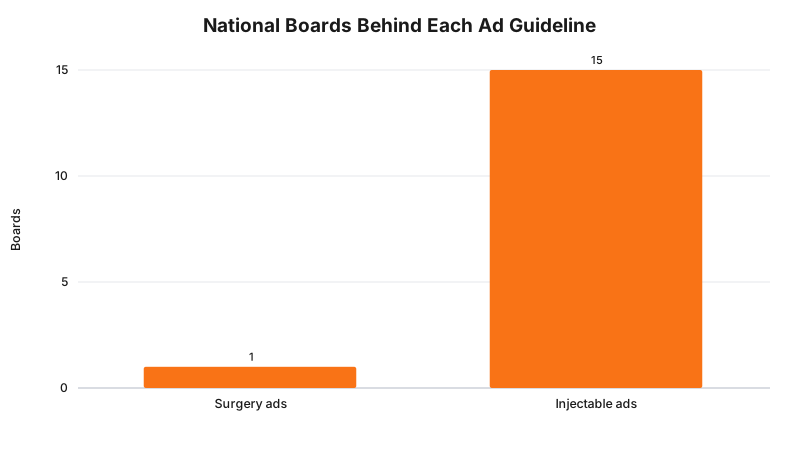
Takeaway: the surgery guideline is a single board’s document. The injectable guideline is a 15-board joint position, which is why it took longer to land.
Why the Gap Took 26 Months
The Medical Board’s surgery-specific guideline explicitly limits its own scope. It states the guidelines “are focused solely on cosmetic surgery, as this was the focus of consultation and recommendations arising from the Independent review of the regulation of medical practitioners who perform cosmetic surgery,” and adds that non-surgical advertising should meet only the general standard of not glamorising a procedure, “until such time as more detailed consideration and consultation occurs.”
That consultation took until 2025. AHPRA CEO Justin Untersteiner said practitioners had been warned since May 2025 to bring their advertising into line before the September start date. Medical Board Chair Dr Susan O’Dwyer said the changes were meant to “shrink the gap between patients’ expectations and reality.”
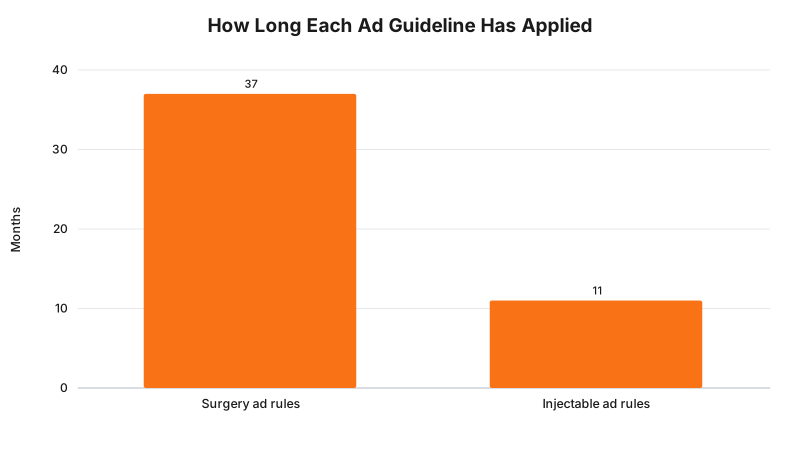
The rules governing injectable advertising, the biggest revenue line for most cosmetic clinics, are still under a year old. Website copy and practitioner bios written before September 2025 predate the current standard by definition.
Takeaway: if your clinic’s injectable-focused pages have not been reviewed since before September 2025, they were written before the rule that governs them existed.
What Each Guideline Bans in Practice
Both documents share a similar spine: no testimonials, no unrealistic outcome claims, no targeting under-18s, and registration details must be disclosed. The Medical Board’s surgery guideline names “boob job,” “mummy makeover” and “bikini body” as trivialising language. The injectable guideline carries a parallel list, including “barbie,” “doll-maker” and phrases implying a procedure will “restore self-esteem.”
Both require any named practitioner to disclose their registration type and number. The injectable guideline’s examples span several professions, not just doctors: a registered nurse (NMW prefix), a registered dentist (DEN prefix) and a registered medical practitioner (MED prefix).
Age rules differ. Cosmetic surgery requires a minimum seven-day cooling-off period for every adult, extended to at least three months for patients under 18. Non-surgical procedures carry no stated cooling-off period for adults, but National Boards state that botulinum toxin and dermal fillers “should not be prescribed for cosmetic purposes for persons under the age of 18” at all.
Takeaway: the specific banned phrases differ by procedure type, but the underlying test, honest and realistic advertising, is consistent across both documents.
What This Means for Your Clinic’s Website
Treatment pages need to match the rulebook that governs them. A surgery landing page should be checked against the Medical Board’s surgery guideline. An injectables page, where most enquiry volume sits for a typical clinic, needs the newer AHPRA and National Boards guideline instead, not the older surgery document by analogy.
This affects enquiry quality directly. Copy that overstates outcomes or omits registration details attracts the wrong kind of enquiry, people expecting results a treatment cannot deliver, and raises the chance of a section 133 complaint. Copy that states registration numbers clearly and avoids the banned trivialising language tends to filter for patients who already understand what the procedure involves.
Given the injectable guideline is barely a year old, a website review is due, not optional. RockingWeb checks clinic websites against whichever rulebook applies, procedure by procedure. For clinics rebuilding around current rules rather than patching an old site, see compliant cosmetic clinic website builds.
Takeaway: which rulebook applies depends on the procedure being advertised, not on which document a clinic happened to read first.
FAQ
What is the difference between the Medical Board of Australia and AHPRA?
AHPRA runs the National Registration and Accreditation Scheme in partnership with 15 National Boards, one per health profession. The Medical Board of Australia is one of those 15 boards and covers doctors only. Guidelines come from National Boards under section 39 of the National Law, either from one board alone or all 15 jointly, and AHPRA administers registration, complaints and advertising compliance across every profession.
Do the Medical Board’s cosmetic surgery advertising rules cover injectables like anti-wrinkle treatments and dermal fillers?
No. The Medical Board’s Guidelines for registered medical practitioners who advertise cosmetic surgery, issued 1 July 2023, apply solely to cosmetic surgery. Injectable advertising is covered instead by the Guidelines for advertising higher risk non-surgical cosmetic procedures, issued jointly by AHPRA and all 15 National Boards on 2 September 2025.
When did AHPRA’s advertising rules for non-surgical cosmetic procedures take effect?
2 September 2025. The Guidelines for advertising higher risk non-surgical cosmetic procedures and the companion practice guideline both took effect that day, after a lead-in period AHPRA said ran from May 2025 for practitioners to bring their advertising into line.
Does my clinic website need to follow both the Medical Board’s rules and AHPRA’s rules?
If your clinic advertises both surgery and non-surgical procedures such as injectables, yes. Surgery advertising must satisfy the Medical Board’s surgery guideline, and injectable advertising must satisfy the newer AHPRA and National Boards guideline, alongside the broader advertising guidelines and section 133 of the National Law, which apply regardless of procedure type.
Get Your Clinic Website Checked Against the Right Rulebook
RockingWeb reviews cosmetic clinic websites procedure by procedure, checking surgery pages against the Medical Board’s guideline and injectable pages against the newer AHPRA guideline, flagging every gap against the specific provision it falls under.
Talk to us about your clinic’s website and advertising
Sources and References
Medical Board of Australia - cosmetic surgery advertising guideline, issued 1 July 2023
Medical Board of Australia - cosmetic surgery practice guideline, cooling-off periods
AHPRA - non-surgical cosmetic procedure advertising guideline, issued 2 September 2025 by 15 National Boards
AHPRA - non-surgical cosmetic procedure practice guideline, under-18 rules
AHPRA - 2 September 2025 news release with CEO and board chair statements
AHPRA - confirms 15 National Boards regulating 16 health professions
Related reading:
- AHPRA Advertising Fines for Cosmetic Clinics: the penalty structure under section 133
- Cosmetic 7-Day Cooling-Off Period Advertising: how cooling-off rules affect booking and payment pages
- Who Can Inject Botox in Australia: which registered professions can now advertise injectables
For a website and ad account review that checks each treatment page against the rulebook that governs it, see ClinicPipeline or talk to us about your clinic’s marketing.
Vikas Thakur
Founder of RockingWeb. 16 years of experience from working at TPG, iiNet and Monadelphous, now building websites, software and digital marketing for local businesses in Rockingham and Perth.