$138,600: Hismile Fined for Staff Posing as Shoppers
The ACCC confirmed on 12 June 2026 that Hismile paid $138,600 across seven infringement notices, partly because the "random shoppers" reacting to its products in social videos were its own employees. The same pattern shows up in autoplay reels and review widgets on dental and cosmetic clinic websites every day.
 Vikas Thakur Founder, RockingWeb 9 min read
On this page 9
Key Takeaways
- The ACCC confirmed on 12 June 2026 that Hismile paid $138,600 in penalties across seven infringement notices for false and misleading social media videos
- The “random shoppers” filmed reacting to Hismile products on camera were Hismile employees, not members of the public
- Its Glostik Tooth Gloss videos implied the product removed stains, when it only temporarily concealed them
- Hismile admitted its conduct was, or was likely, misleading under the Australian Consumer Law
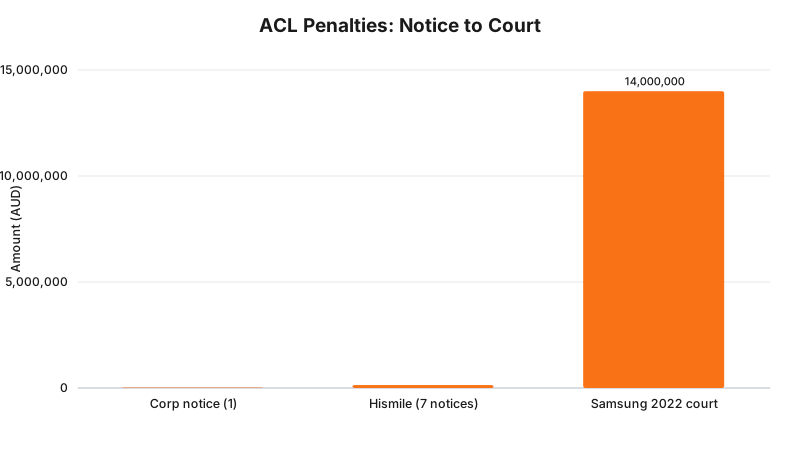
- A standard ACCC infringement notice for a corporation runs to $21,840; a Federal Court can impose the greater of $100 million, three times the benefit gained, or 30% of turnover
- Samsung paid $14 million in Federal Court penalties in 2022 for a comparable misleading-claims case over Galaxy phone water resistance
- Hismile’s seven notices average $19,800 each, a fraction of what a contested court case can cost
- Hismile must now run a compliance program and publish a public notice about the ACCC action under a court-enforceable undertaking
On 12 June 2026, the ACCC confirmed Hismile paid $138,600 across seven infringement notices for false and misleading social media videos. The “random shoppers” filmed reacting to Hismile products were Hismile’s own staff, and its Glostik Tooth Gloss videos implied a stain-removal result the product never delivered. Hismile admitted the conduct was, or was likely, misleading under the Australian Consumer Law.
Picture the reel autoplaying on your clinic’s homepage right now: a delighted stranger holding up a smile, a five-star badge, a caption that reads “real patient”. Do you actually know who that person is?
The ACCC just fined a well-funded consumer brand for not being able to answer that question honestly. This piece breaks down what the ACCC found, what an infringement notice actually costs against a full court case, and the specific social-proof elements on a dental or cosmetic clinic website that carry the same exposure. None of it requires a law degree, just an afternoon with your own site.
What the ACCC Found at Hismile
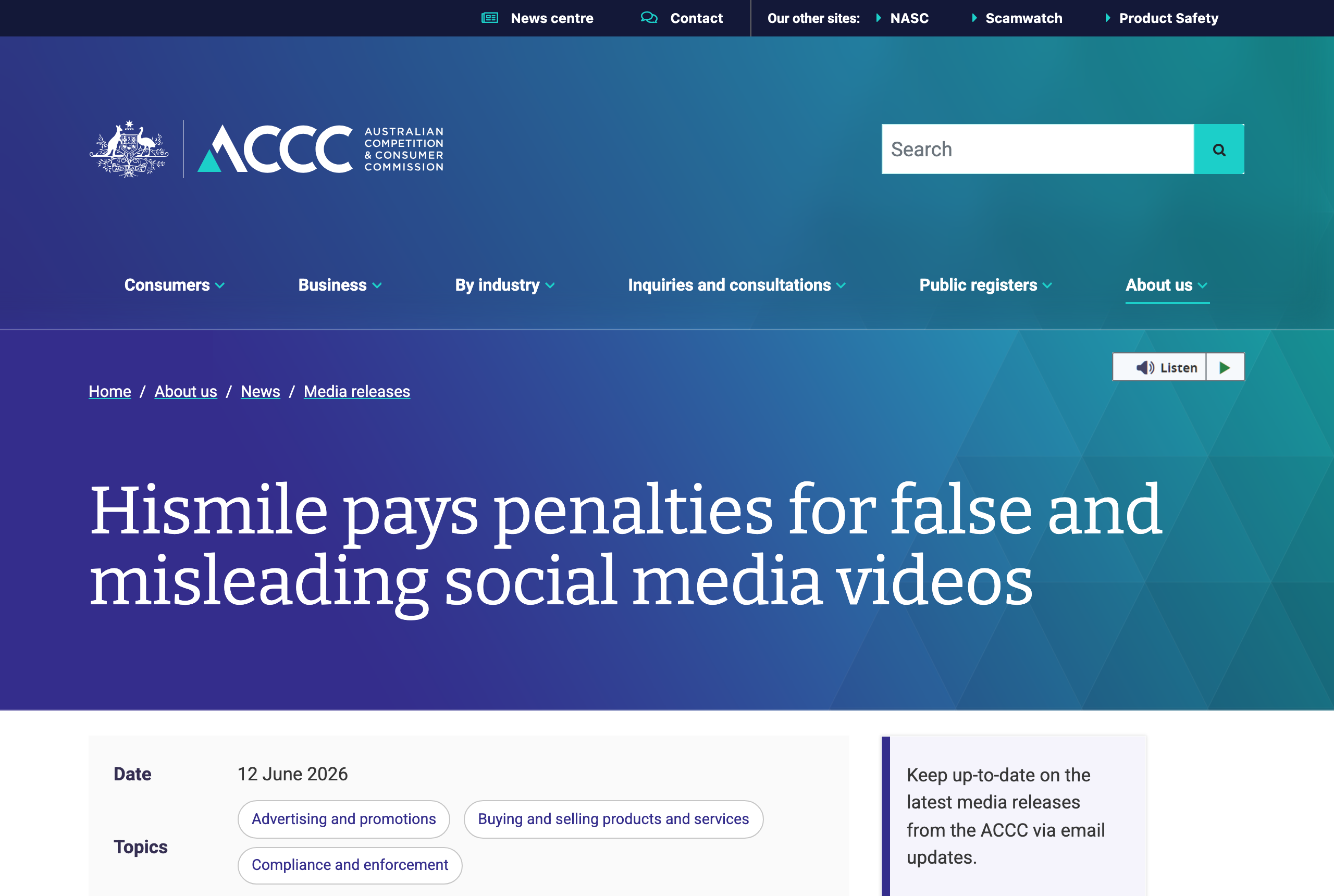
The ACCC’s media release, published 12 June 2026, describes two problems with Hismile’s social media videos. First, the “random shoppers” shown reacting to Hismile products were Hismile employees, not the unpaid public the videos implied. Second, videos for its Glostik Tooth Gloss product implied the product removed stains, when it only temporarily concealed them.
ACCC Commissioner Luke Woodward put it plainly: “Misleading social media advertisements can reach millions of consumers and may impact their purchasing decisions. All businesses must ensure they are not making misleading or deceptive claims on social media platforms.” Hismile did not contest the finding. The release states Hismile “has admitted that its conduct in posting these videos to social media was, or was likely, misleading, in breach of the Australian Consumer Law.”
The outcome was seven infringement notices totalling $138,600, plus a court-enforceable undertaking. Hismile has committed to running a compliance program and publishing a notice on its website and social platforms telling consumers about the ACCC’s action.
Takeaway: two specific, checkable claims, staff posing as the public and a product’s actual effect overstated, turned into a $138,600 bill and a public compliance undertaking.
An Infringement Notice Is the Floor, Not the Ceiling
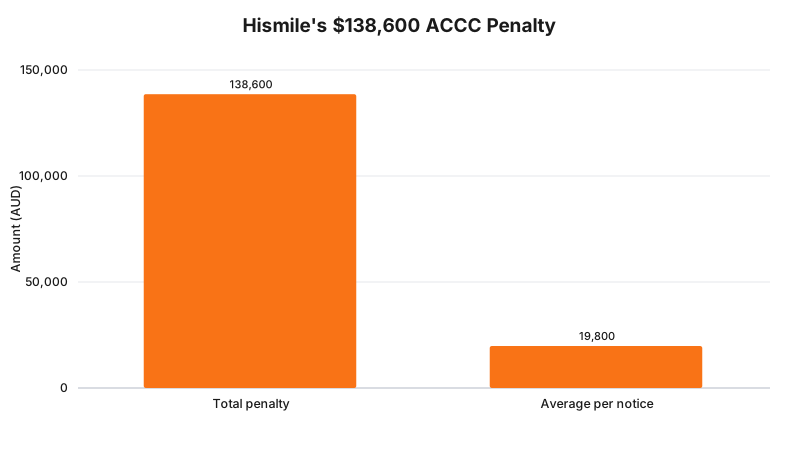
An infringement notice is the ACCC’s fast lane, letting the regulator issue a penalty without going to court. Per the ACCC’s own penalties page, a standard infringement notice for a corporation runs to $21,840; Hismile’s seven notices averaged $19,800 each, in the same range.
Court action is a different order of exposure. The same page sets the maximum court-imposed penalty for a corporation at the greater of $100 million, three times the benefit attributable to the conduct, or 30% of the company’s adjusted turnover during the breach period. For an individual, the maximum is $2.5 million. Samsung found out what that looks like in practice: in June 2022, the Federal Court ordered it to pay $14 million for ads showing Galaxy phones used in pools and seawater, implying water resistance the phones did not have.
Hismile settled fast and paid a five-figure sum. A contested case over the same conduct runs into eight figures. That gap is the entire point: an infringement notice shows the floor of Australian Consumer Law enforcement, not the ceiling.
Takeaway: $138,600 is what fast, admitted, cooperative non-compliance costs. Contested non-compliance costs a different order of magnitude entirely.
The Social-Proof Audit Every Clinic Website Needs
Every pattern the ACCC penalised at Hismile has a direct equivalent sitting somewhere on a dental or cosmetic clinic website.
| What the ACCC penalised at Hismile | The equivalent on a clinic website |
|---|---|
| Staff filmed pretending to be random members of the public | Autoplay reels or reaction videos where the “patient” is unlabelled and unverifiable |
| A product’s actual effect (temporary) overstated as its implied effect (permanent) | Treatment-page copy that describes an outcome the treatment does not mechanically produce |
Run this checklist against your own site this week:
- Every embedded video, reel, and UGC block. Label who the person actually is. If it is staff, a model, or a paid participant, say so.
- Review widgets and testimonial carousels. Confirm they pull from a verifiable, independent source, not an internal spreadsheet, and are not staff or incentivised submissions.
- Any homepage autoplay reel. Check it does not imply an unpaid stranger’s spontaneous reaction if that is not what it is.
- Outcome copy on treatment pages. Match the wording to what the treatment mechanically does, not to what an image or edit appears to show.
Takeaway: the ACCC did not invent a new rule for Hismile. It applied the existing ban on misleading conduct to a format, staged reaction videos, that clinic websites use constantly.
Where Cosmetic Dentistry Sits on Top of This
The Australian Consumer Law is the floor for every business in Australia, Hismile included. AHPRA-registered practices carry an extra layer on top of it. AHPRA’s advertising rules for regulated health services go further than a claims-based test like the one applied to Hismile: testimonials are restricted outright for cosmetic procedure advertising, regardless of whether the testimonial happens to be accurate. A dental or cosmetic practice weighing up a review carousel or a patient-reaction reel is not just asking “is this misleading under the ACL?” It is clearing a second, stricter bar on top. Our breakdown of the specific advertising rules for cosmetic dentistry covers what that second bar requires.
Takeaway: the ACL floor Hismile just got fined for standing on is the minimum bar for an AHPRA-registered practice, not the ceiling.
What to Fix on Your Website This Week
Start with the four-point checklist above and treat every “yes, but” as a fail. If you cannot say with confidence who is in a video, drop the video until you can. If a review widget cannot show its source, replace it with one that can.
This is exactly the standard RockingWeb builds into every clinic website we build or take over: a locked-down social-proof standard from day one, not a retrofit after a complaint lands. The fastest way to know where your own site stands is to have RockingWeb review your website and ad accounts.
Takeaway: an unverifiable review widget or an unlabelled reaction reel is not a design choice. It is unmanaged Australian Consumer Law exposure sitting on your homepage.
FAQ
What exactly did the ACCC find Hismile did wrong?
The ACCC found Hismile posted social media videos showing “random shoppers” reacting to its products, when those people were Hismile employees. It also found Hismile’s Glostik Tooth Gloss videos implied the product removed stains when it only temporarily concealed them. Hismile admitted the conduct was, or was likely, misleading under the Australian Consumer Law and paid $138,600 across seven infringement notices on 12 June 2026.
Does the Australian Consumer Law apply to a dental or cosmetic clinic website the same way it applied to Hismile?
Yes. The Australian Consumer Law’s ban on misleading or deceptive conduct applies to every business in Australia, including AHPRA-registered dental and cosmetic practices, regardless of what health-specific rules also apply on top. It covers a clinic’s website copy, review widgets, and social videos the same way it covered Hismile’s.
Is a five-star review widget or testimonial carousel on a clinic website the same kind of risk as Hismile’s videos?
The underlying law is the same one. Any social proof presented as coming from an independent member of the public must actually be from one. A widget pulling unverified reviews, or a carousel featuring staff or incentivised patients without disclosure, sits in the same category of Australian Consumer Law risk the ACCC penalised Hismile for.
How do I check whether my clinic’s website carries this exposure?
Hire RockingWeb to review your clinic’s website. RockingWeb reviews every embedded video, testimonial, and outcome claim against current advertising rules and flags anything that carries this kind of exposure.
Get Your Clinic Website’s Social Proof Reviewed
RockingWeb reviews cosmetic dentistry and cosmetic clinic websites against current advertising rules and flags every unverifiable video, widget, or outcome claim.
For a clinic website built to this standard from day one, see compliant cosmetic clinic websites or talk to us about your clinic’s marketing.
Sources and References
ACCC - Hismile pays penalties for false and misleading social media videos, 12 June 2026: the $138,600 penalty, employees posing as shoppers, the Glostik Tooth Gloss finding, and Commissioner Luke Woodward’s quote
ACCC - fines and penalties under the Australian Consumer Law: standard infringement notice amounts and maximum court-imposed penalties for corporations and individuals
ACCC - false or misleading claims guidance, including the June 2022 Samsung Federal Court penalty of $14 million for misleading water resistance advertising
Related reading:
- AHPRA Advertising Rules for Cosmetic Dentistry: the dental-specific advertising rules that sit on top of the Australian Consumer Law
- AHPRA Social Media Rules for Cosmetic Clinics: what AHPRA’s rules mean for a clinic’s own social channels
- Cosmetic Clinic Websites: compliant website builds for AHPRA-regulated practices
Vikas Thakur
Founder of RockingWeb. 16 years building for companies like TPG, iiNet and Monadelphous, now focused on websites and marketing that comply with AHPRA's advertising guidelines and still book patients.