TGA Fined a Nurse $11,880 Over a Booking Loophole
The TGA closed the loophole that let clinics advertise prescription-only treatments using generic terms like "wrinkle-reducing injections." New guidance names booking systems specifically. Three 2026 infringement cases show what non-compliance costs.
 Vikas Thakur Founder, RockingWeb 6 min read
Key Takeaways
- The TGA released new guidance closing the loophole that let clinics advertise prescription medicines using generic substitute terms instead of naming them
- The guidance explicitly names public-facing booking systems as a covered advertising channel, alongside websites, social media, and business names
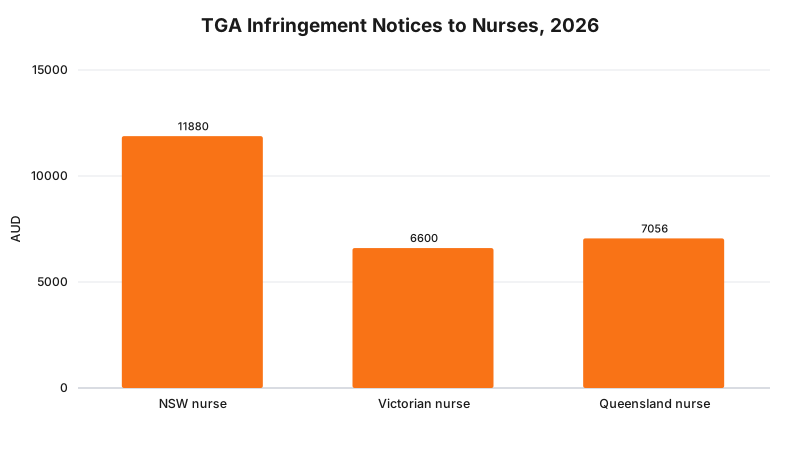
- Three 2026 infringement cases show real enforcement: a NSW nurse fined $11,880, a Victorian nurse fined $6,600, and a Queensland nurse fined $7,056, all for allegedly importing unapproved cosmetic injectables
- Infringement notices are the lower tier of TGA enforcement; full prosecution under the Therapeutic Goods Act carries higher penalties again
- AHPRA’s separate advertising penalties still apply on top, at up to $120,000 per breach for a corporation
- None of the products involved in the 2026 cases were listed on the Australian Register of Therapeutic Goods (ARTG)
The TGA has closed a loophole that a lot of clinic websites are still using without realising it. If your booking widget says “Book your wrinkle-reducing consultation” instead of naming the treatment, or your online booking system lets a visitor reserve a prescription-only injectable without any prescriber check, new TGA guidance treats that as regulated advertising, not a workaround.
Three 2026 cases show the TGA is not just publishing guidance and moving on. Nurses in NSW, Victoria, and Queensland have all been issued infringement notices this year for unapproved cosmetic injectables, with penalties ranging from $6,600 to $11,880. This guide covers exactly what changed, what the recent cases show, and what to check on your own site.
The Loophole the TGA Just Closed
Advertising restrictions on prescription medicines under the Therapeutic Goods Act 1989 have existed for years. What changed is the TGA’s guidance on how those restrictions apply to indirect language. Clinics have historically sidestepped naming a specific prescription drug by using a generic substitute term instead, “wrinkle-reducing injections” rather than the brand name, for example.
The TGA’s updated guidance closes that gap directly: businesses cannot use indirect language, substitute terms, or public-facing booking systems to promote access to prescription medicines where doing so would breach the Act. That last category, booking systems, is the one most clinic websites have never audited, because it was never explicitly named before.
Takeaway: a substitute term doesn’t change what’s being advertised. The TGA’s guidance treats the booking flow the same as the ad copy.
What the 2026 Cases Actually Involved
Three separate cases this year give a concrete picture of what triggers enforcement. A NSW nurse received three infringement notices totalling $11,880 for allegedly importing unapproved vials of botulinum toxin and pre-filled syringes containing lidocaine. A Victorian-based registered nurse was issued two infringement notices totalling $6,600 for allegedly importing unapproved botulinum toxin type A along with pre-filled syringes containing hyaluronic acid and lidocaine. A Queensland-based registered nurse received two infringement notices totalling $7,056, for allegedly importing unapproved botulinum toxin type A and advertising prescription-only medicines on social media.
In every case, the products involved were not listed on the Australian Register of Therapeutic Goods, meaning the TGA had never assessed them for quality, safety, or efficacy. The TGA has flagged this as an ongoing focus area under its Compliance Principles for 2026 and 2027.
Takeaway: these are not edge cases from years ago. All three happened in 2026, across three different states, under the current enforcement focus.
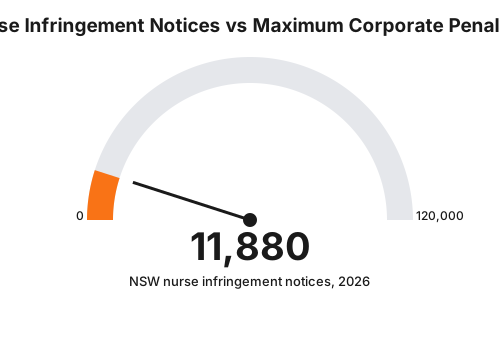
Takeaway: infringement notices are the TGA’s lower-tier response. The $11,880 total in the NSW case sits well below the $120,000 maximum penalty AHPRA can separately apply to a corporation for an advertising breach, which is the range a more serious or repeated case can escalate into.
What to Check on Your Own Booking System Today
- Does your booking widget name the actual treatment, or a substitute term like “wrinkle-reducing injections” instead of the product name? Both are now treated the same way.
- Can a visitor book a prescription-only treatment directly, without any clinical assessment step, from a public-facing page?
- Do your treatment pages or ad copy reference a specific supplier or product without confirming it’s ARTG-listed?
- Does your site or social media use before/after imagery or testimonials alongside this content? Those sit under AHPRA’s separate, and equally active, advertising restrictions.
Takeaway: the booking widget is now an explicit compliance checkpoint, not a grey area. Most clinic sites have never had it reviewed as one.
FAQ
What did the TGA’s new advertising guidance actually change?
It closed a loophole where clinics used generic substitute terms, such as “wrinkle-reducing injections” or “weight loss injections,” to advertise access to prescription-only medicines without naming them directly. The new guidance makes clear that indirect language, substitute terms, and public-facing booking systems are all covered by the same restriction.
Does a “Book Now” button on my clinic website count as prescription-medicine advertising?
It can. If the booking flow promotes access to a specific prescription-only treatment, using either the drug name or a substitute term, the TGA’s guidance treats that as advertising subject to the Therapeutic Goods Act 1989 restrictions.
How much can the TGA fine a clinic for this?
Infringement notices in 2026 cases have ranged from $6,600 to $11,880 for individual practitioners. These are lower-tier penalties; a full prosecution under the Therapeutic Goods Act can carry substantially higher penalties, separate from AHPRA’s own advertising fines of up to $120,000 per breach for a corporation.
How do I check if my booking system and website copy are compliant?
Get in touch with RockingWeb. We review booking flows, treatment page copy, and ad accounts against current advertising restrictions and flag exactly what needs to change.
Get Your AHPRA and TGA Compliance Checked
RockingWeb reviews cosmetic clinic websites, booking flows, and ad accounts against current AHPRA and TGA advertising rules, and flags every issue against the specific provision it falls under.
Sources and References
TGA - New guidance on advertising restrictions for prescription medicines: the booking-system and substitute-term guidance
TGA - Two nurses fined for allegedly importing unapproved cosmetic injectables: the Victorian and Queensland infringement cases
Aesthetic Medical Practitioner - TGA fines nurse over cosmetic injectables: the NSW case detail
Related reading:
- Meta’s New Ad Rules Won’t Save You From a $120K AHPRA Fine: the parallel gap between platform policy and regulator rules
- AHPRA Advertising Fines for Cosmetic Clinics: the full AHPRA penalty structure
- AHPRA Compliance Audit Checklist: a step-by-step self-audit guide
For booking systems and websites built compliant from the first draft, see ClinicPipeline or talk to us about your clinic’s marketing.
Vikas Thakur
Founder of RockingWeb. 16 years building for companies like TPG, iiNet and Monadelphous, now focused on websites and marketing that comply with AHPRA's advertising guidelines and still book patients.