Google's AI Mode Ads Can't Carry Your AHPRA Disclaimer
Google confirmed in May 2026 it is testing ads inside AI Mode and AI Overviews for the healthcare vertical for the first time since blocking the category in October 2024. Phase one bans pinned assets and text disclaimers, the exact ad elements AHPRA's cosmetic guidelines expect a clinic to carry.
 Vikas Thakur Founder, RockingWeb 7 min read
Key Takeaways
- Google confirmed on 20 May 2026, around Google Marketing Live, that it is testing ads inside AI Mode and AI Overviews for the healthcare vertical for the first time
- Confirmation came from Ginny Marvin, Google’s Ads Product Liaison, in a public LinkedIn exchange
- The test covers 4 campaign types: Performance Max, AI Max with search term matching, Shopping, and broad match
- Phase one excludes creatives using pinned assets or text disclaimers, in Marvin’s own words
- Healthcare has been shut out of Google’s AI-generated search ad surfaces since the company first launched them in October 2024, and stayed excluded when the format expanded to 11 more countries in December 2025
- The test is limited to the United States, English-language queries only; no Australian eligibility has been announced
- AHPRA’s guidelines for advertising higher-risk non-surgical cosmetic procedures, in effect since 2 September 2025, require ads to carry information about the practitioner performing the procedure
Google spent almost two years keeping healthcare out of its AI-generated search results. Then, in May 2026, that wall cracked. Google Ads Product Liaison Ginny Marvin confirmed the company is testing ads inside AI Mode and AI Overviews for healthcare advertisers, the first time the category has been allowed anywhere near an AI-written answer since Google started monetising them in October 2024.
Here’s the detail that matters for a cosmetic clinic more than the headline does: phase one of that test explicitly bans pinned assets and text disclaimers. Those are the exact ad elements a clinic leans on to carry the practitioner information and risk context AHPRA’s own guidelines expect. This piece walks through what Google actually confirmed, what’s still excluded, and the build decision a clinic needs to make before this test ever reaches Australia.
What Google Actually Confirmed
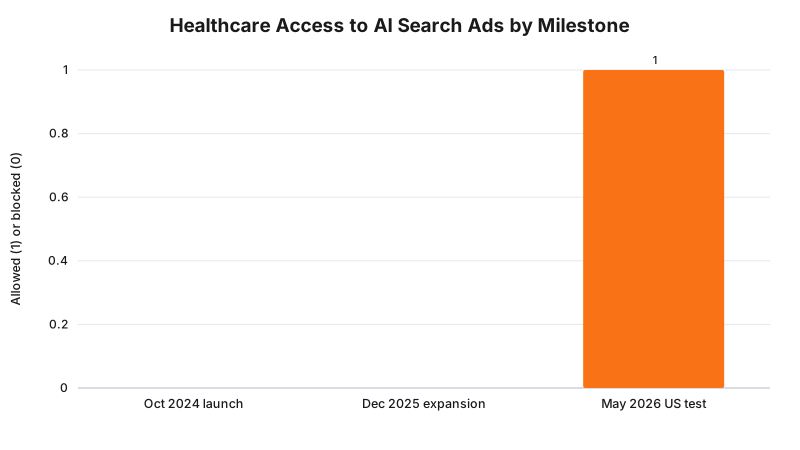
Google first started running ads inside AI Overviews in October 2024. Healthcare was explicitly carved out from day one, alongside finance, alcohol, gambling, adult content and politics. When Google expanded AI Overview ads to 11 more countries in December 2025, the same exclusion list applied. Healthcare stayed locked out.
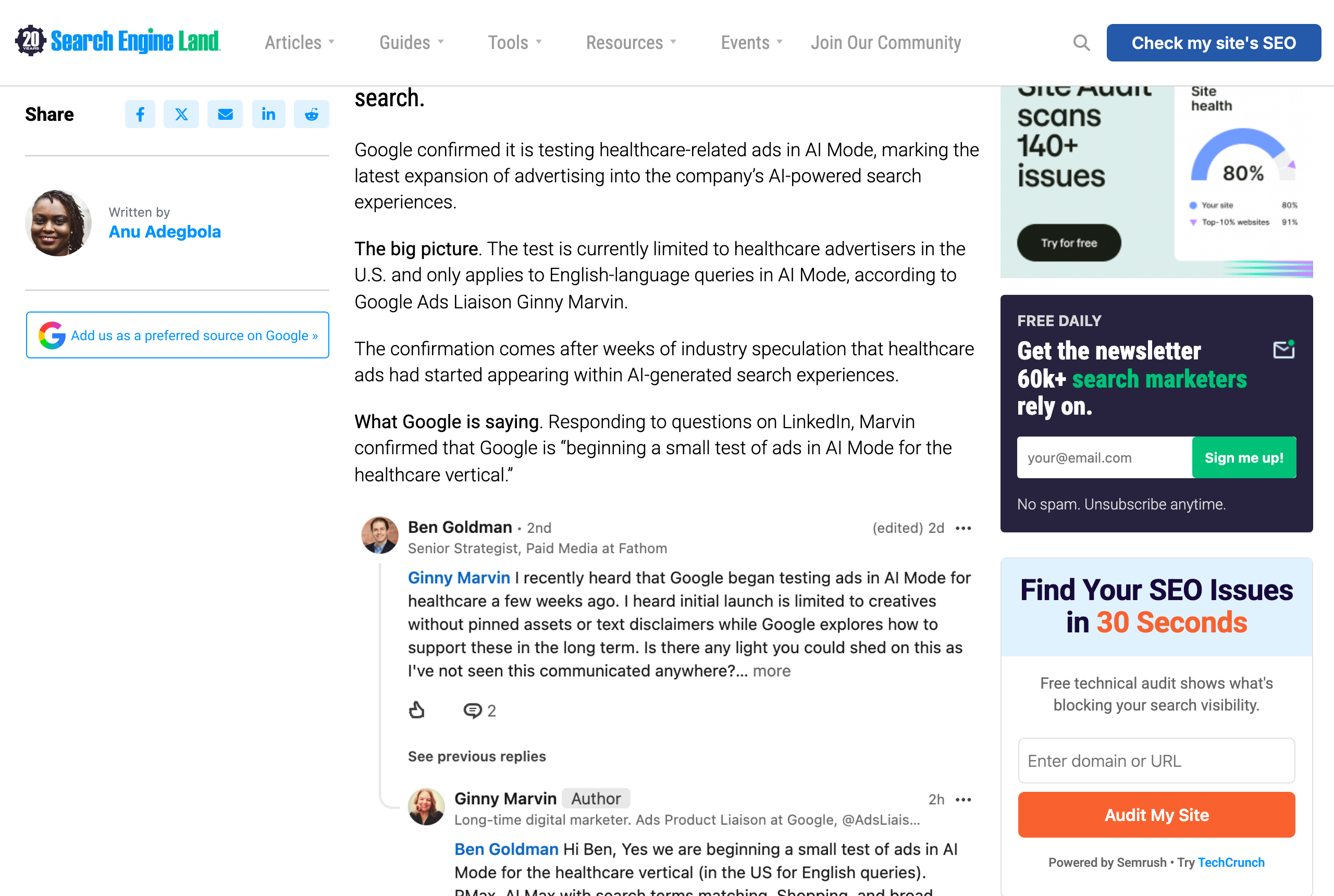
That changed in May 2026. Responding to questions on LinkedIn around Google Marketing Live, Marvin confirmed Google is “beginning a small test of ads in AI Mode for the healthcare vertical (in the US for English queries).” Four campaign types are eligible: Performance Max, AI Max with search term matching, Shopping, and broad match. Nothing has been said about when, or whether, this reaches Australia.
Takeaway: the healthcare exclusion from AI-generated search ads has held for a year and a half. It has now cracked once, in one country, in one language, for four campaign types.
The Detail Every Clinic Marketer Will Skim Past
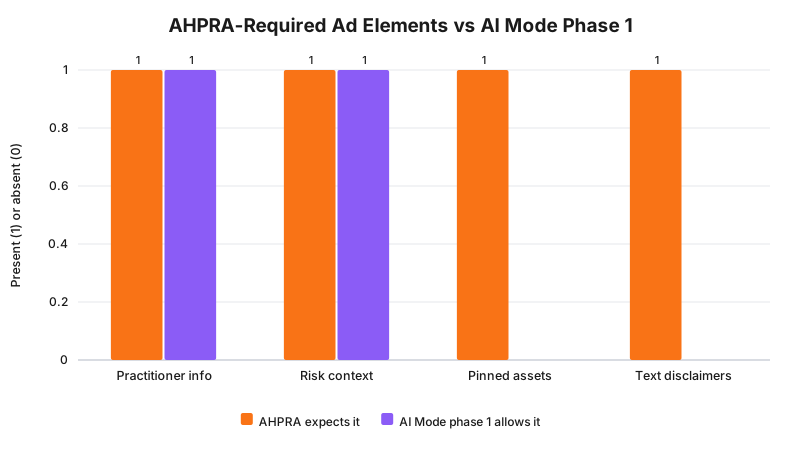
A test opening up a new ad surface is the kind of news that gets forwarded around a clinic’s marketing group chat with a single word: opportunity. Read Marvin’s own qualifier again before anyone gets excited: “the first iteration of the test is limited to creatives that don’t use pinning or text disclaimers.”
Pinned assets and text disclaimers are not decoration. They are the mechanism a Performance Max or Shopping campaign uses to guarantee a specific piece of text, like a risk statement or a practitioner credential line, actually shows up on the ad rather than getting swapped out by Google’s automated asset combination. AHPRA’s guidelines for advertising higher-risk non-surgical cosmetic procedures, effective 2 September 2025, require exactly that kind of fixed context: ads have to include information about the practitioner performing the procedure, and they must not create unrealistic expectations of the outcome. A format that structurally cannot pin that text is a format with nowhere compliant to put it.
Takeaway: the compliance problem here isn’t a new rule. It’s an ad format that, in its first phase, has no slot for the information a cosmetic ad is already required to carry.
Why This Still Matters to an Australian Clinic That Can’t Buy the Placement Yet
No Australian clinic is eligible for this test today. It’s US-only, English-language-only, and Google has given no timeline for when, or whether, it extends further. So why does a Perth or Rockingham clinic need to read this now instead of when it actually launches here?
Because Google’s own pattern, according to industry reporting on the rollout, is to open a limited test, gather performance data, then widen eligibility, and it has already done exactly that once with AI Overview ads themselves, expanding from the US to 11 more countries within about 14 months of the original October 2024 launch. If AI Mode healthcare ads follow the same curve, an Australian clinic could have working weeks, not months, of notice before the placement is live and a media buyer is asking whether the account can run it.
The build decision worth making now, ahead of that call, is simple: does your clinic’s current ad creative library depend on a pinned disclaimer or pinned practitioner-credential asset to stay compliant? If it does, that creative set is not portable to a format that doesn’t support pinning. It needs a version where the required context lives inside the standard headline and description fields instead, so the compliance information can’t be silently dropped by whichever automated combination Google’s system serves.
Takeaway: the fix here is a creative-library audit, not a wait-and-see. Build the disclaimer-independent version of your compliant ad copy before a new placement forces the question.
Frequently Asked Questions
Can an Australian cosmetic clinic buy Google AI Mode healthcare ads right now?
No. Google’s test is limited to healthcare advertisers in the United States running English-language queries, confirmed by Google Ads Product Liaison Ginny Marvin around Google Marketing Live in May 2026. No rollout date for Australia has been announced.
Does AHPRA’s advertising guidelines still apply if my ad appears inside a Google AI Mode answer instead of a normal search result?
AHPRA’s rules are written around what an ad says and where it reaches a consumer, not which surface serves it, the same principle already established when Meta and TikTok changed their own ad review rules. Whether a specific AI Mode ad execution meets the guidelines is a question to confirm with your compliance advisor or legal counsel before you opt in to any new placement type.
What happens if the AI Mode ad format has no field for the disclaimer text AHPRA expects?
Google’s own documentation says phase one excludes creatives using pinned assets or text disclaimers. If a required piece of context cannot be pinned, the practical build fix is to put that information inside the standard headline or description fields the format does support, and to hold off on the placement entirely if there is nowhere compliant to put it.
Get Your Ad Creative Ready Before the Next Platform Change
RockingWeb builds and audits cosmetic clinic ad accounts against current AHPRA rules, including checking whether your compliance text survives a platform’s own format restrictions before you spend a dollar on a new placement.
Sources and References
Search Engine Land
- Google begins testing healthcare ads in AI Mode, confirming Ginny Marvin’s statement and the eligible campaign types
PPC Land
- Google breaks healthcare ad ban in AI Mode with a small US test, including the October 2024 launch exclusion and the December 2025 11-country expansion that kept healthcare excluded
AHPRA
- Guidelines for practitioners who advertise higher risk non-surgical cosmetic procedures, effective 2 September 2025, requiring practitioner information in advertising
Related reading:
- Meta’s New Ad Rules Won’t Save You From a $120K AHPRA Fine: the same platform-versus-regulator gap on Meta
- AHPRA-Compliant Google Ads for Cosmetic Clinics: compliant ad copy that already works today
- Google Ads Healthcare Disapprovals: what gets rejected and why
For ad accounts built to survive the next platform change, see ClinicPipeline or talk to us about your clinic’s marketing.
Vikas Thakur
Founder of RockingWeb. 16 years building for companies like TPG, iiNet and Monadelphous, now focused on websites and marketing that comply with AHPRA's advertising guidelines and still book patients.