TGA Sues Over 40+ Alleged Website Ad Breaches (2026)
On 4 August 2026 the TGA took Better Leaf, Better Life Aussie and their sole director to the Federal Court over advertising allegedly published on a website, social media pages and pamphlets. These are allegations only, but the case shows a regulator treating a website as the exhibit itself.
 Vikas Thakur Founder, RockingWeb 9 min read
On this page 9
- Key Takeaways
- What the TGA Alleges Happened
- Why a Director Can Be Named Personally
- The Website as the Advertising Surface, Not Just the Shopfront
- A Site Governance Checklist Worth Running Today
- Why This Matters Beyond One Cannabis Dispensary
- Get Your Website and Socials Checked Before a Regulator Does
- FAQ
- Sources and References
Key Takeaways
- The TGA announced on 4 August 2026 that it had commenced Federal Court proceedings against Better Leaf Pty Ltd, Better Life Aussie Pty Ltd and their sole director, Jack Weisberg
- These are allegations only. Nothing has been proven, admitted or decided by a court
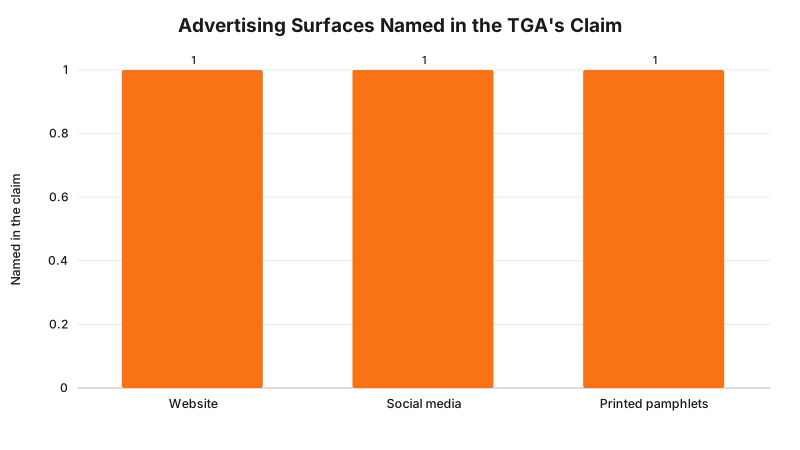
- The TGA names 3 advertising surfaces in its claim: the company website, social media pages, and physical pamphlets at the dispensary
- More than 40 alleged advertising breaches, according to trade publication Cannabiz’s coverage of the filing
- The TGA alleges the ads promoted cannabis for serious diseases and conditions, implied TGA approval, and carried practitioner endorsements
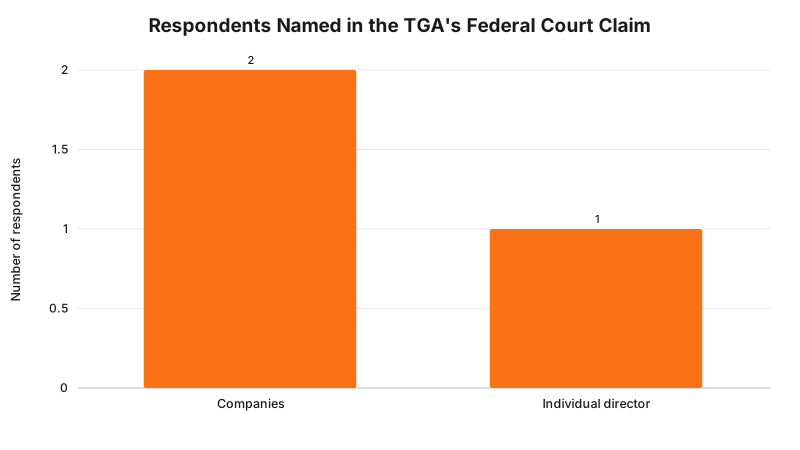
- 2 companies and 1 individual director are named as respondents, with Mr Weisberg alleged to be personally liable alongside the businesses
- The TGA is seeking declarations and pecuniary penalties. No dollar figure or maximum penalty has been stated in any source
- The advertising provisions being enforced are the same ones that apply to any Australian business advertising a prescription-only treatment, cosmetic clinics included
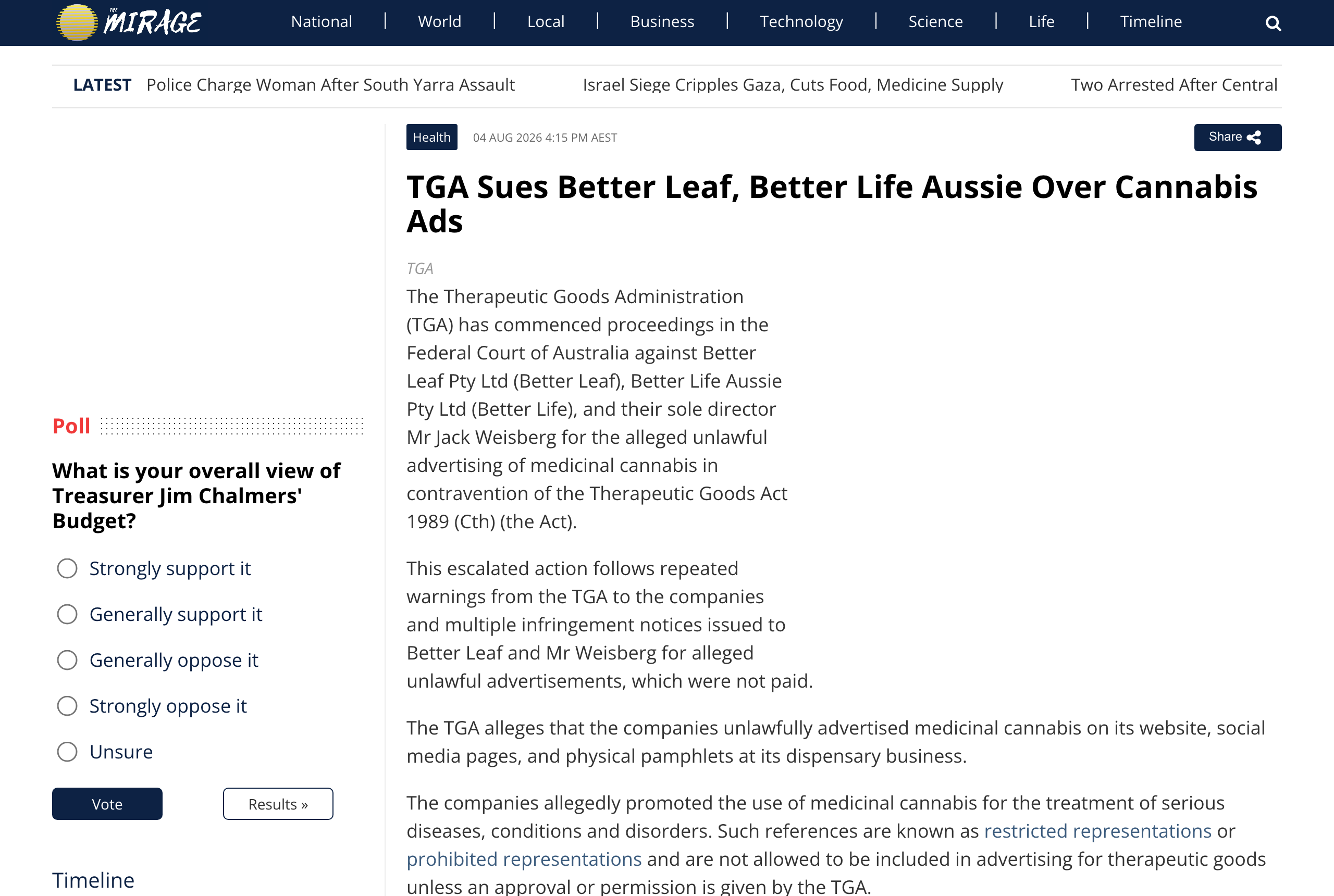
The Therapeutic Goods Administration announced on 4 August 2026 that it had filed Federal Court proceedings against a Melbourne cannabis dispensary business, and named its sole director personally in the claim. The TGA alleges Better Leaf Pty Ltd and Better Life Aussie Pty Ltd unlawfully advertised medicinal cannabis “on its website, social media pages, and physical pamphlets,” and that director Jack Weisberg is personally liable for the alleged conduct. None of this has been proven. It is an allegation before the court, not a finding.
Here’s why a web development company is writing about a cannabis case: the TGA isn’t describing a billboard or a print ad. It’s describing a website and social accounts, the exact kind of asset most clinics hand to a marketing contractor and never look at again. This case is a live example of a regulator building a legal claim around what a business published online, and naming the person who runs the business alongside the company. Below is what’s alleged, what it doesn’t mean, and what it should prompt any clinic to check on its own site.
What the TGA Alleges Happened
The TGA’s release states the companies advertised medicinal cannabis across three channels: the business website, social media pages, and physical pamphlets handed out at the dispensary. The alleged content promoted cannabis “for the treatment of serious diseases, conditions and disorders,” representations the TGA classifies as restricted or prohibited under the Therapeutic Goods Act 1989 (Cth).
The TGA also alleges the advertising implied medicinal cannabis had been approved or recommended by the TGA itself, and that it included endorsements from current or former health practitioners. Independent trade coverage from Cannabiz corroborates the website and social media angle, reporting the businesses “unlawfully advertised medicinal cannabis on websites and social media platforms,” and puts the alleged breach count at more than 40.
None of these are proven facts. They are the allegations the TGA has put before the Federal Court, and Better Leaf, Better Life Aussie and Mr Weisberg have not had the matter determined.
Takeaway: the claim isn’t about one bad advertisement. It’s about a pattern allegedly spread across a website, a social presence and printed material, all treated as one advertising record.
Why a Director Can Be Named Personally
The part of this case that should get a clinic owner’s attention isn’t the cannabis angle. It’s the personal liability angle. The TGA alleges Mr Weisberg is personally liable “in his capacity as the business manager or sole director of both companies,” separate from whatever liability attaches to the companies themselves.
A director doesn’t need to have personally written the copy or uploaded the image. Being the person responsible for the business appears to be enough to be named in a claim like this one.
For a clinic, that reframes a question that usually only comes up once something’s gone wrong: who actually has publishing access to the website and social accounts, and does anyone check what goes live against current advertising rules before it does?
Takeaway: a website isn’t just a company asset in a regulator’s eyes. It can be evidence tied to the individual who runs the business, not only the entity that owns the domain.
The Website as the Advertising Surface, Not Just the Shopfront
For decades, “advertising” meant a print ad, a radio spot, a sign out front. Regulators built enforcement processes around those formats. This case is a reminder that a website and a social media feed are now treated the same way: as the advertising surface itself, reviewable, screenshottable and citable in a Federal Court filing.
That has a practical consequence most clinics haven’t thought through. A landing page built for a campaign that ended eight months ago doesn’t disappear. It stays live, indexed, still carrying whatever claims were approved at the time. So does an old testimonial post a former patient made that nobody took down. None of that requires anyone to republish anything. It just has to still be reachable.
Most clinics have no single person checking whether every live page, old and new, still matches current advertising rules, which is exactly the gap RockingWeb helps clinics close.
Takeaway: if a page is still online, it’s still an advertising surface a regulator can point to, regardless of when it was published or whether anyone remembers it exists.
A Site Governance Checklist Worth Running Today
None of this requires legal advice to act on. It requires knowing what’s actually live on a clinic’s own site and accounts. Worth checking:
- Publishing access. Who can push a change to the website or post to the clinic’s social accounts?
- Pre-publish review. Does anyone check new copy against current advertising rules before it goes live?
- Old campaign pages. Are last year’s landing pages and seasonal offers still live and indexed, carrying claims nobody has reviewed since?
- Endorsements and approval language. Does anything on the site or social feeds read as a practitioner endorsement or an implied regulator approval?
- A record of what the site said, and when. If a complaint ever arrived, could the clinic show what a page said on a given date?
None of these checks are about medicinal cannabis, and none are legal advice. They’re the site governance questions this case raises for Better Leaf, applied to any clinic advertising a prescription-only treatment.
Takeaway: the fix here isn’t a legal opinion. It’s an audit trail: who can publish, who checks before it goes live, and what’s still live from campaigns nobody’s looked at in months.
Why This Matters Beyond One Cannabis Dispensary
Better Leaf isn’t a cosmetic clinic, and this article isn’t about medicinal cannabis as a treatment. But the Therapeutic Goods Act advertising provisions the TGA relies on here are the same ones that apply to any Australian business advertising a prescription-only or Schedule 4 substance, cosmetic clinics offering anti-wrinkle injections included.
That’s the relevance for a clinic reading this: filing in the Federal Court and naming both the companies and the director who runs them, over content the business’s own website and social channels allegedly carried, is the same enforcement architecture that reaches cosmetic clinic advertising. We build compliant cosmetic clinic websites because the platform a clinic publishes on is now part of its regulatory exposure, not separate from it.
Takeaway: the respondent in this case runs a dispensary, not a clinic. The rules being enforced don’t care what the business sells. They care what the business published and where.
Get Your Website and Socials Checked Before a Regulator Does
If this case makes you want to check what’s actually live on your clinic’s website and social accounts, that’s the right instinct. RockingWeb reviews clinic sites and ad accounts against current advertising rules, flags what’s out of date or non-compliant, and helps set up a review process so nothing goes live unchecked again.
Talk to us about your clinic’s website and marketing
FAQ
Has the TGA proven its case against Better Leaf and Jack Weisberg?
No. As of August 2026 the TGA has only commenced Federal Court proceedings. It alleges unlawful advertising of medicinal cannabis on a website, social media pages and pamphlets, but nothing has been proven or admitted, and no court has made a finding. This article reports what has been alleged, not what has been established.
What advertising surfaces does the TGA say were used?
The TGA’s own release states the companies allegedly advertised medicinal cannabis “on its website, social media pages, and physical pamphlets at its dispensary business.” All three surfaces are named directly in the claim.
Can a company director be personally liable for what’s on the business website?
The TGA alleges Jack Weisberg is personally liable in his capacity as business manager or sole director of both companies, separate from the corporate liability of Better Leaf and Better Life Aussie. This is an allegation specific to this case under the Therapeutic Goods Act, not general legal advice, but it illustrates that a director’s name can sit next to the company’s in a regulator’s court filing.
Does this case affect cosmetic clinics that don’t sell cannabis products?
Better Leaf is a dispensary business, not a cosmetic clinic. But the Therapeutic Goods Act advertising provisions the TGA is relying on are the same provisions that cover any Australian business advertising a prescription-only or Schedule 4 treatment, including cosmetic clinics offering anti-wrinkle injections or other prescription-only procedures.
Sources and References
Mirage News - wire republication of the TGA’s press release dated 4 August 2026, source of the direct quotes on advertising surfaces, alleged conduct and personal liability
Cannabiz - independent trade press coverage corroborating the website and social media advertising angle and reporting more than 40 alleged breaches
For clinic-side advertising compliance built into the website itself, talk to RockingWeb or see our compliant clinic website builds.
Vikas Thakur
Founder of RockingWeb. 16 years building for companies like TPG, iiNet and Monadelphous, now focused on websites and marketing that comply with AHPRA's advertising guidelines and still book patients.