88 Days to NSW's New Injectable Law: Audit Your Booking Flow
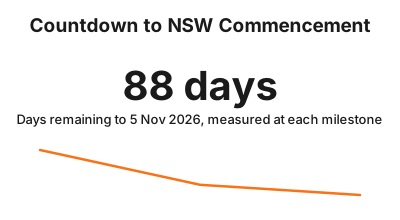
NSW Health confirmed on 3 July 2026 that the Medicines, Poisons and Therapeutic Goods Act 2022 and its new Regulation commence on 5 November 2026, 88 days from today. Every NSW cosmetic clinic website now has a dated deadline to pass a booking-flow audit against.
 Vikas Thakur Founder, RockingWeb 8 min read
Key Takeaways
- NSW Health confirmed on 3 July 2026 that the Medicines, Poisons and Therapeutic Goods Act 2022 and its Regulation commence on 5 November 2026
- That commencement date is 88 days from this article’s publish date of 9 August 2026
- The consultation on proposed controls for cosmetic-use substances closed on 27 February 2026; NSW Health thanked submitters but its page does not say how that feedback shaped the final Regulation
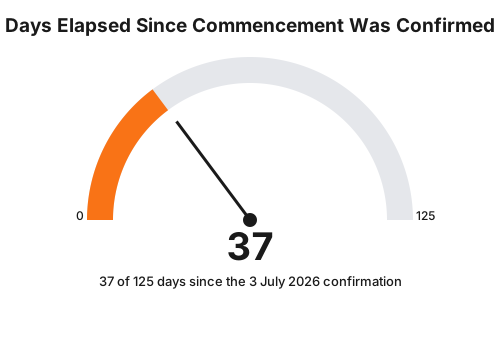
- 37 days have passed since the confirmation, out of a 125-day run from confirmation to commencement
- Industry reporting describes a dedicated cosmetic medicine section, referred to as Part 9, spanning four pages of the new Regulation
- Every NSW cosmetic clinic website now has a fixed, government-confirmed deadline to audit its booking, consent and practitioner-attribution flows against
NSW Health confirmed the date on 3 July 2026: the Medicines, Poisons and Therapeutic Goods Act 2022 and its new Regulation commence on 5 November 2026. That’s 88 days from today. For a NSW cosmetic clinic, that date is not abstract policy news. It’s a fixed point on the calendar your website now has to be ready for.
Picture your booking form as it sits right now. A visitor picks an injectable treatment, fills in a name and phone number, and hits submit. No prescriber step. No structured record. Just a lead landing in an inbox. That flow was built for a marketing funnel, not for the record-keeping a cosmetic-use substances regime is built around.
This piece covers exactly what NSW Health confirmed, what changes on the regulatory side, and what to check on your own site before the countdown runs out.
What NSW Health Actually Confirmed
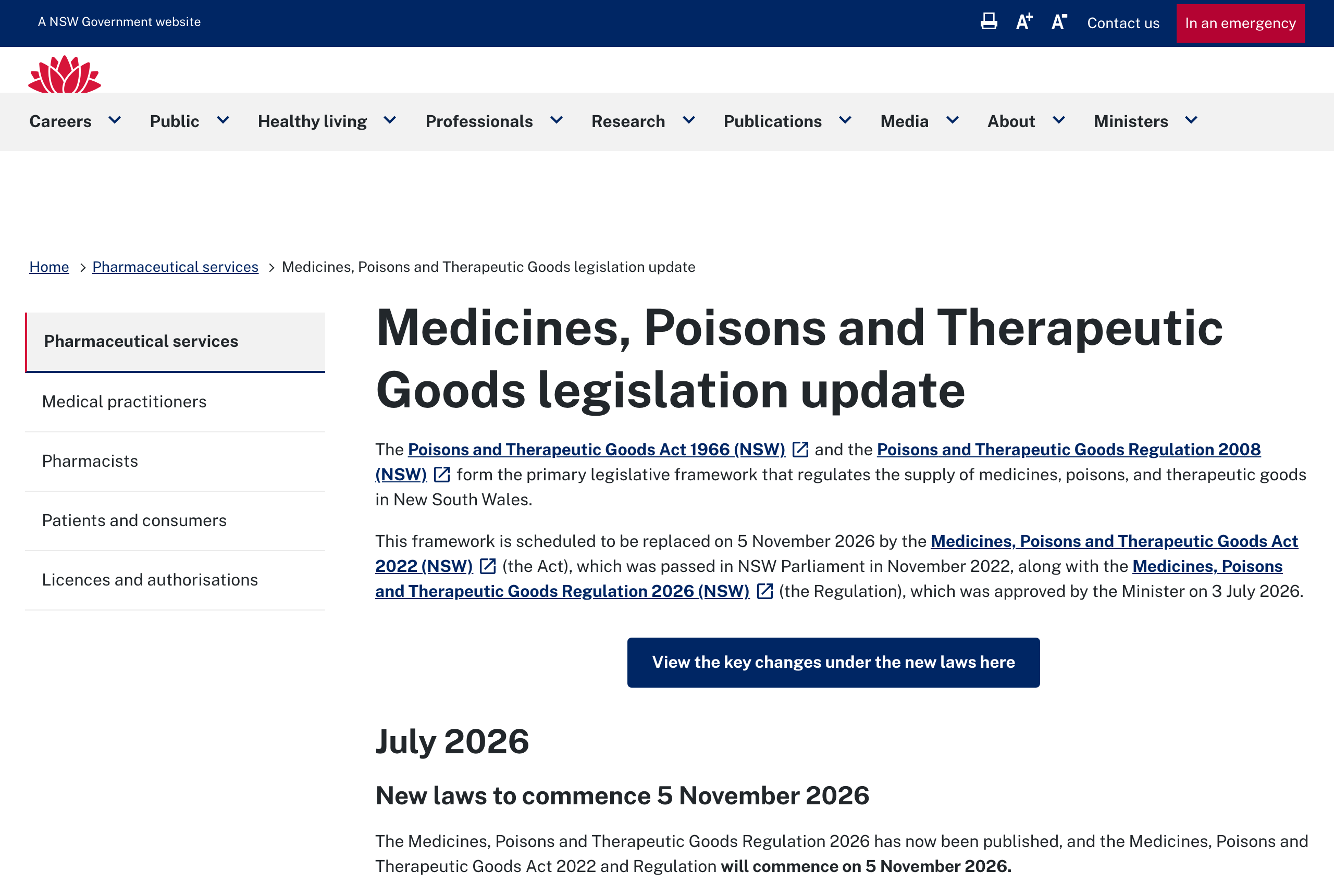
The NSW Health Pharmaceutical Services page is unambiguous: “the Medicines, Poisons and Therapeutic Goods Act 2022 and Regulation will commence on 5 November 2026.” The page is marked current as at Friday 3 July 2026, which is the date NSW Health locked in the deadline.
That confirmation didn’t happen in isolation. The same page records that a consultation on proposed regulatory changes to strengthen controls on cosmetic-use substances closed on 27 February 2026, thanking everyone who made submissions. NSW Health’s page does not spell out how, or whether, that feedback shaped the final Regulation, only that the consultation happened first. Three dates, one thread: a consultation closes, a commencement date gets confirmed five months later, and the new regime takes effect four months after that.
| Milestone | Date |
|---|---|
| Cosmetic-use substances consultation closed | 27 February 2026 |
| NSW Health confirmed final commencement date | 3 July 2026 |
| Medicines, Poisons and Therapeutic Goods Act 2022 and Regulation commence | 5 November 2026 |
Takeaway: the 5 November 2026 date isn’t a rumour or a leaked draft. It’s a government-confirmed commencement date sitting on a NSW Health page today.
What Changes: A Dedicated Section for Cosmetic Medicine
NSW Health’s own page confirms the commencement date but doesn’t itemise every clause of the new Regulation. For that detail, the clearest secondary reporting comes from clinic software vendor Juvae, which describes a section of the Regulation, referred to as Part 9, dedicated specifically to cosmetic medicine for the first time in NSW legislation. According to that reporting, the section spans four pages and covers administration, prescribing directions, record keeping, storage and governance.
The same reporting states that prescribing practitioners need visibility of patient records to support informed clinical decisions and ongoing care, and that record-keeping requirements include current prescribing directions, batch number documentation and complete clinical notes. RockingWeb has not independently verified this against the Regulation’s own text, since the NSW legislation register blocked automated access during research. Treat it as a strong signal of direction, not a substitute for your own compliance adviser reading the final clauses.
Takeaway: whatever the exact clause numbers turn out to be, the direction is clear: cosmetic-use substances are getting their own dedicated, more structured record-keeping regime, not a footnote inside a general poisons framework.
The Booking-Flow Angle: What to Audit Before 5 November
None of this is advice on how to prescribe, store or administer anything, and it isn’t legal advice on what’s lawful for your specific clinic. It’s a map of where a new, structured record-keeping regime is most likely to collide with how a typical clinic website is built today. Run through these four checks.
- Instant-book funnels with no prescriber step. If your online booking system lets a visitor reserve an injectable appointment straight through to a calendar slot, with no prescriber consult gate in the flow, that’s the first thing to review against a regime built around prescribing directions.
- Remote or telehealth script marketing copy. Landing pages that market a remote consult leading straight to a script deserve a second look, given the emphasis on prescribers having visibility of patient records for ongoing care.
- Unstructured consent and intake forms. A generic contact form that dumps a lead into an inbox is not the same as a structured, per-patient record. If cosmetic-use substances are heading toward dedicated record-keeping requirements, the web form that starts that record matters.
- Practitioner attribution. Check that the practitioners named or pictured on your site match who is actually on site treating patients. A governance-focused regulation puts more weight on that kind of accuracy, not less.
RockingWeb can review exactly this kind of gap between what your booking flow does and what a regulator now expects a cosmetic clinic’s digital front door to look like.
Takeaway: the countdown clock is on the calendar. The audit is on your booking form, your intake page and your practitioner bios, not on anything clinical.
What Stays the Same
This NSW commencement date sits inside a state-based poisons framework. It doesn’t touch AHPRA’s national advertising rules, which already ban before/after imagery and testimonials for cosmetic procedures regardless of which state a clinic operates in. It’s also worth knowing this Act itself isn’t new; RockingWeb’s own state-by-state guide to cosmetic injectable laws across Australia noted back in July that NSW had already passed the Medicines, Poisons and Therapeutic Goods Act 2022 but had not yet proclaimed it into force. The 3 July 2026 confirmation is that proclamation date landing.
For clinics building a website from scratch around this kind of compliance pressure, purpose-built cosmetic clinic websites are the more direct fix than retrofitting a generic booking widget after the fact.
Takeaway: a new state commencement date doesn’t replace your national AHPRA obligations. It adds a second, state-specific layer on top.
FAQ
When exactly does the NSW Medicines, Poisons and Therapeutic Goods Act 2022 commence?
NSW Health confirmed on 3 July 2026 that the Act and its new Regulation commence on 5 November 2026. That is 88 days out from the date this article was published.
What led to the 5 November 2026 commencement date?
NSW Health ran a consultation on proposed regulatory changes to strengthen controls on cosmetic-use substances, which closed on 27 February 2026. NSW Health thanked everyone who made submissions, but its page does not state how, or whether, that feedback changed the final Regulation.
Does the new Act specifically cover cosmetic-use substances like injectables?
NSW Health’s own confirmation covers the commencement date. Industry reporting on the Regulation describes a dedicated cosmetic medicine section, referred to as Part 9, covering prescribing directions, record keeping and governance. RockingWeb has not independently verified the Part 9 text against the Regulation itself, since the legislation register blocked automated access, so treat that detail as secondary-sourced and confirm the exact clauses with your own compliance adviser.
What should a NSW cosmetic clinic check on its website before 5 November 2026?
Four things, at minimum. Whether your online booking flow lets a visitor reserve an injectable appointment with no prescriber consult step. Whether your landing pages market a remote or telehealth script model. Whether your intake and consent forms capture structured, per-patient prescriber records rather than dumping into a generic contact-form inbox. And whether the practitioners named or pictured on your site match who is actually on site treating patients.
Get Your Booking Flow Reviewed Before 5 November
RockingWeb reviews cosmetic clinic websites and booking systems against current AHPRA advertising rules and the digital-side pressure points of new regimes like this one, and flags every issue against the specific gap it falls into.
Sources and References
NSW Health - Medicines, Poisons and Therapeutic Goods legislation update: the confirmed 5 November 2026 commencement date and 27 February 2026 consultation close date
Juvae - secondary source: description of the Regulation’s dedicated cosmetic medicine section (Part 9), prescribing directions and record-keeping detail
Spa+Clinic - secondary source: background on the consultation process for tightening cosmetic injectable controls
Related reading:
- Cosmetic Injectable Laws by State Australia: Full Guide: the state-by-state penalty and authorisation comparison, including NSW’s pre-commencement position
- TGA Fined a Nurse $11,880 Over a Booking Loophole: a separate federal booking-system compliance gap
- AHPRA Compliance Audit Checklist: a step-by-step self-audit guide
For booking systems and websites built to stay ahead of regimes like this one, see ClinicPipeline or talk to us about your clinic’s marketing.
Vikas Thakur
Founder of RockingWeb. 16 years building for companies like TPG, iiNet and Monadelphous, now focused on websites and marketing that comply with AHPRA's advertising guidelines and still book patients.