$393 a Tooth: The Real Cost of Dental Bonding in Australia
Direct composite bonding, billed under item 526 as a "Composite Veneer, Direct, Per Tooth," averaged $393 nationally in 2023-24, with patients paying $227 out of pocket, per Private Healthcare Australia's claims data. Simpler front-tooth composite fillings cost less, from $170 to $203.
 Vikas Thakur Founder, RockingWeb 9 min read
Key Takeaways
- Direct composite bonding, billed as item 526, “Composite Veneer, Direct, Per Tooth,” averaged $393 per tooth in Australia in 2023-24, per Private Healthcare Australia’s (PHA) analysis of GT-Dental claims data
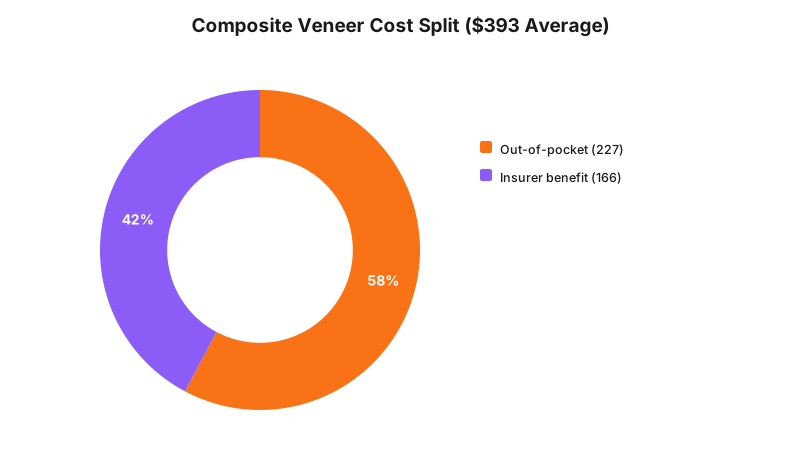
- Patients paid $227 out of pocket on average for that item, after private health insurance covered 42% of the treatment cost
- Private health insurers funded 43,503 direct composite bonding services nationally in 2023-24, worth $17.1 million in total dental charges
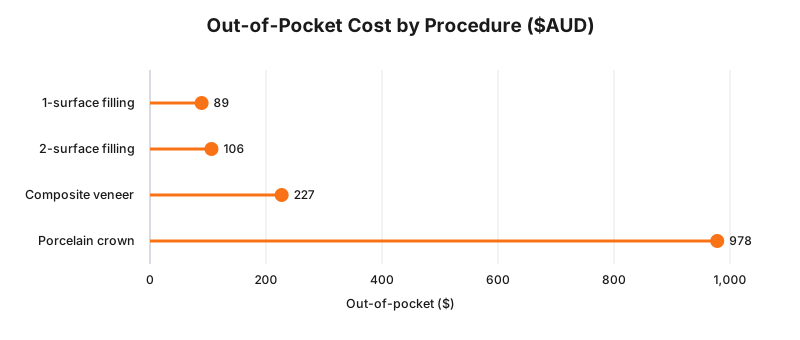
- A single-surface composite filling on a front tooth, item 521, averaged $170, with $89 out of pocket
- A two-surface front-tooth composite filling, item 522, averaged $203, with $106 out of pocket
- A full porcelain or ceramic crown, item 613, the next step up in restorative work, averaged $1,703, more than four times the cost of direct bonding
- No item in the Australian Schedule of Dental Services is literally named “dental bonding”. The closest official match is item 526
- Insurance covers a smaller share of bonding (42%) than it does routine items like a scale and clean (68%), which widens the out-of-pocket gap
Direct composite bonding averaged $393 per tooth in Australia in 2023-24, with patients paying $227 of that out of pocket, according to Private Healthcare Australia’s analysis of private health insurance claims data. That figure sits under the billing code for a “Composite Veneer, Direct, Per Tooth,” the closest official match to what clinics market as dental bonding. A smaller chip or gap repair on a front tooth costs less again, averaging $170 to $203.
Most patients never see these numbers. Clinic websites quote a price range, not an item-code average, and there is no single government price list a patient can check against. This guide breaks down the real claims data behind bonding, filling, and crown pricing, then looks at what that pricing gap means for how a dental practice presents cost on its own website.
What “Dental Bonding” Actually Bills As
“Dental bonding” is a marketing term, not a billing code. Search for it and every clinic uses the phrase slightly differently, sometimes for a single chipped tooth, sometimes for reshaping several front teeth at once. The Australian Schedule of Dental Services, the standardised item-number system every dentist bills against, has no item literally called “bonding.”
The closest match is item 526, described in Private Healthcare Australia’s factsheet as “Composite Veneer, Direct, Per Tooth.” This covers the same technique most patients mean by bonding: a tooth-coloured composite resin applied and shaped directly onto the tooth in one visit, no lab-made restoration involved. A smaller repair, closing a gap or fixing a chip on a front tooth without reshaping the whole surface, usually falls under item 521 (one surface) or 522 (two or more surfaces), both billed as composite fillings rather than veneers.
The distinction matters for pricing because these are three different item codes with three different average costs, and a website that quotes one flat “bonding price” is compressing all three into a single number.
Takeaway: if a patient asks what bonding costs, the honest answer depends on which of three item codes their specific repair falls under, not one flat figure.
The Real Cost Breakdown by Item Code
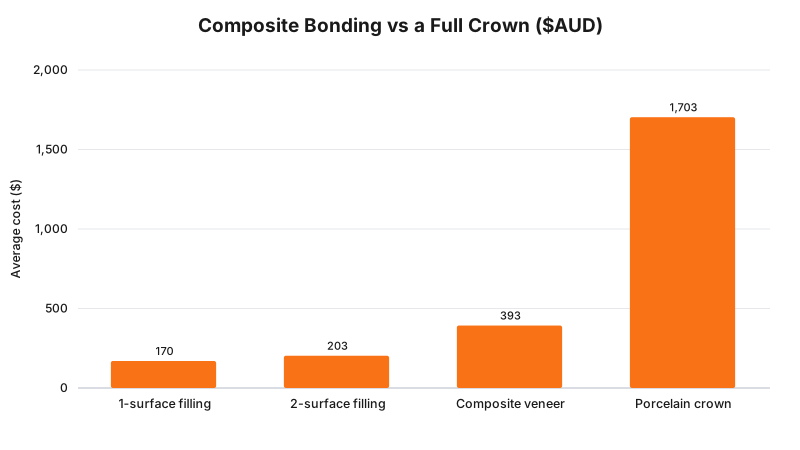
Private Healthcare Australia’s “Typical Prices of Dental Care” factsheet, built from its analysis of the GT-Dental data collection of private health insurance claims, is the clearest public source for what each of these items actually costs. The 2023-24 figures below cover services funded by private health insurance nationally.
| Item number | Service | Services funded 2023-24 | Average treatment cost | Insurer covers | Average out-of-pocket |
|---|---|---|---|---|---|
| 521 | White filling, front tooth, 1 surface | 444,665 | $170 | 48% | $89 |
| 522 | White filling, front tooth, 2 surfaces | 333,564 | $203 | 48% | $106 |
| 526 | Composite Veneer, Direct, Per Tooth | 43,503 | $393 | 42% | $227 |
| 613 | Full Porcelain or Ceramic Crown | 353,457 | $1,703 | 43% | $978 |
Source: Private Healthcare Australia, “Typical Prices of Dental Care” consumer factsheet, PHA’s analysis of GT-Dental data collection, 2023-24 figures.
Item 526 is billed far less often than the two filling items, just 43,503 times nationally against 444,665 for a simple front-tooth filling. That volume gap makes sense: most front-tooth composite work is a decay or chip repair billed as a filling, while a full direct veneer covering the visible surface of a tooth for cosmetic reshaping is a less common, more deliberate treatment choice.
Takeaway: the $393 average for item 526 sits roughly double the cost of a two-surface filling and less than a quarter of a porcelain crown, the middle tier of a three-step cost ladder.
Why Bonding Costs Less Than a Crown
The gap between $393 for direct bonding and $1,703 for a porcelain crown comes down to fabrication. Bonding is applied and shaped chairside in a single visit. A crown involves an impression, a dental laboratory, and typically two appointments, plus a milled or cast restoration that has to fit precisely over a prepared tooth. That extra step is most of the price difference.
Insurance coverage narrows a little as procedures get more involved. Front-tooth fillings see insurers cover 48% of the average cost. Direct bonding drops to 42%. Full crowns sit at 43%. None of these approach the 68% coverage rate PHA’s data shows for a routine scale and clean, which is funded far more heavily because it is classified as preventive rather than restorative or cosmetic work.
Private Healthcare Australia’s factsheet does not separately report a national average for lab-made porcelain veneers, the option often compared against direct bonding for a longer-lasting cosmetic result. No verified Australian figure for that specific item exists in this dataset, so this guide does not print one.
Takeaway: every dollar step up this ladder buys either lab fabrication or a lower insurance coverage rate, or both, and a patient comparing bonding to a crown is really comparing a one-visit repair to a lab-built restoration.
What This Means for a Practice Website
A pricing page that quotes one number for “bonding” is either rounding up from the filling items or rounding down from a full direct veneer, and either way it sets an expectation the actual claim data does not support. Publishing the item-code breakdown, or at minimum a “from” price tied to the smallest procedure with a clear note that reshaping a tooth costs more, produces a better-qualified enquiry than a single flat figure.
That pricing transparency question sits inside a wider compliance question. AHPRA-registered dental practitioners are bound by the same advertising restrictions that apply across cosmetic dentistry, covering how outcomes, testimonials, and before-and-after content can be presented alongside price. Our breakdown of AHPRA’s advertising rules for cosmetic dentistry covers what a pricing or treatment page can and cannot say next to a dollar figure.
Booking flow matters just as much as the number on the page. A patient who books a “bonding” appointment expecting a $170 filling and is quoted $393 chairside for a full direct veneer has had a bad experience before treatment starts, and that gap shows up as cancelled bookings and one-star reviews rather than a pricing complaint. A booking form that asks what the patient wants fixed, chip, gap, or full reshape, before confirming a slot routes them to the right price bracket and the right appointment length from the start.
Takeaway: the fix is not hiding pricing. it is matching the price shown to the specific item code being quoted, so the number a patient sees online is the number they pay in the chair.
Getting Your Pricing Pages Reviewed
RockingWeb builds cosmetic clinic and dental websites where pricing pages map to real procedures instead of one blended figure, and booking flows capture enough detail up front to quote accurately. If your current site advertises a single bonding price across three different item codes, that is worth checking before a patient does the maths for you in a review.
RockingWeb reviews pricing pages, booking forms, and advertised claims against the current advertising rules and flags anything that would not survive a regulator review today.
FAQ
What does dental bonding cost in Australia?
Private Healthcare Australia’s analysis of 2023-24 private health insurance claims shows direct composite bonding, billed as item 526, “Composite Veneer, Direct, Per Tooth,” averaged $393 per tooth nationally. Patients paid $227 out of pocket on average after insurance covered the rest.
Is “dental bonding” an official billing item in Australia?
No. The Australian Schedule of Dental Services does not contain an item literally called “dental bonding.” The closest match for cosmetic composite bonding on a single tooth is item 526. Simpler chip or gap repairs on a front tooth are usually billed as items 521 or 522, composite fillings, which average $170 and $203.
How much of the cost of dental bonding does private health insurance cover?
Insurance covered 42% of the average treatment cost for item 526 in 2023-24, according to Private Healthcare Australia. That is a lower coverage rate than routine items like a scale and clean, where insurers cover 68% on average.
How does dental bonding compare in cost to a porcelain crown?
Direct composite bonding is markedly cheaper than lab-made restorative work. PHA’s data puts a full porcelain or ceramic crown, item 613, at an average $1,703, more than four times the average cost of composite bonding under item 526. PHA’s factsheet does not separately report a national average for lab-made porcelain veneers, so no verified figure exists for that specific procedure.
Talk to Us About Your Pricing Pages
RockingWeb builds AHPRA-aware websites and booking flows for Australian dental practices and cosmetic clinics, with pricing that matches the item code a patient actually receives. Get in touch to review your pricing pages and booking flow.
Sources and References
- Private Healthcare Australia - “Typical Prices of Dental Care” consumer factsheet: item-code average costs, insurer benefit, and out-of-pocket figures for items 521, 522, 526, and 613, 2023-24 claims data
- Australian Dental Association - Australian Schedule of Dental Services and Glossary: confirms the item-number billing system referenced throughout this post
Related reading:
- AHPRA Advertising Rules for Cosmetic Dentistry: what a treatment or pricing page can say about outcomes and cost
- Dental Checkup Cost Australia: item-code pricing for routine exams, scale and clean, and fluoride treatment
- Cosmetic Clinic Websites: compliant website builds for AHPRA-regulated clinics and dental practices
Vikas Thakur
Founder of RockingWeb. 16 years building for companies like TPG, iiNet and Monadelphous, now focused on websites and marketing that comply with AHPRA's advertising guidelines and still book patients.