

Cosmetic Dentistry Market Australia: $369M to $1.1B
Australia's cosmetic dentistry market was worth USD 369.2 million in 2022 and is forecast to hit USD 1,119.4 million by 2030, a 14.9% CAGR, according to Grand View Research. Full segment and procedure breakdown.
 Vikas Thakur 8 min read
On this page 7
- Australia’s Cosmetic Dentistry Market Hits USD 1.1 Billion by 2030
- Dental Systems and Equipment Lead, Orthodontic Braces Grow Fastest
- Procedure by Procedure: Where the Growth Is Concentrated
- Why Growth and Affordability Are Moving in Opposite Directions
- More Growth Means More Advertising Scrutiny
- Getting Website Compliance Right Before Chasing This Growth
- How RockingWeb Builds Websites for Australia’s Growing Dental Market
Key Takeaways
- Australia’s cosmetic dentistry market was worth USD 369.2 million in 2022, according to Grand View Research
- It’s forecast to reach USD 1,119.4 million by 2030, a 14.9% CAGR from 2023
- Dental systems and equipment held the largest 2022 segment share, at 32.18% of the market
- Orthodontic braces is the fastest-growing segment through the forecast period
- Dental crowns and bridges: USD 171.7 million (2024) to a forecast USD 324.7 million by 2030, an 11.6% CAGR
- Dental implants: USD 86.0 million (2024) to a forecast USD 146.9 million by 2030
- Dental veneers: USD 63.9 million (2023) to a forecast USD 112.1 million by 2030, an 8.4% CAGR
- 61% of Australians delayed dental treatment in the past 12 months, and 63% of those cited affordability, per the Australian Dental Association’s Dental Health Week survey
Australia’s cosmetic dentistry market is set to triple in eight years. Grand View Research puts the 2022 figure at USD 369.2 million and forecasts USD 1,119.4 million by 2030, a 14.9% compound annual growth rate that outpaces most other segments of Australian healthcare. Those figures are in US dollars, the currency the report itself uses, not Australian dollars. That’s not a rounding error or a marketing exaggeration: it’s the same growth curve reshaping veneers, teeth whitening, and dental implants across the country. Here’s the catch: while the market grows, six out of ten Australians say they delayed dental treatment in the past year, and most blamed cost. This post breaks down exactly where the USD 750 million in new growth is coming from, procedure by procedure, and what it means for a practice trying to capture a share of it.
Australia’s Cosmetic Dentistry Market Hits USD 1.1 Billion by 2030
| Year | Market Size (USD) |
|---|---|
| 2022 (actual) | $369.2 million |
| 2024 (CAGR-modelled) | $487.4 million |
| 2026 (CAGR-modelled) | $643.5 million |
| 2028 (CAGR-modelled) | $849.5 million |
| 2030 (forecast) | $1,119.4 million |
CAGR 2023–2030: 14.9%. Only the 2022 and 2030 figures are directly reported by Grand View Research; the 2024, 2026 and 2028 figures are calculated by applying that 14.9% CAGR year on year, not independently sourced data points.
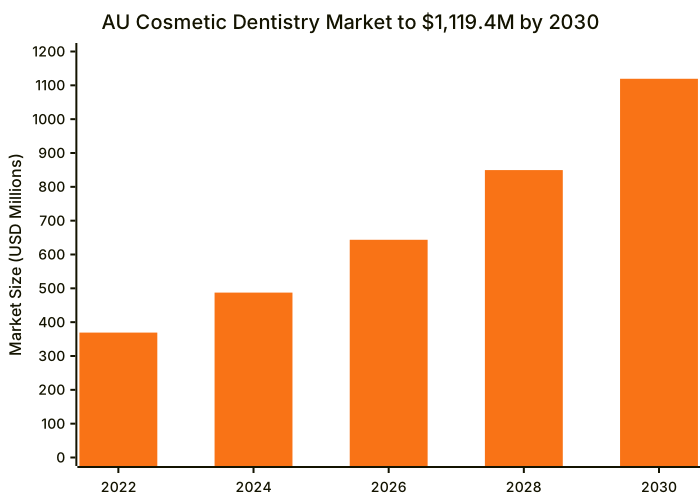
Grand View Research segments the Australian cosmetic dentistry market across eight product categories: dental implants, dental crowns and bridges, dental veneers, orthodontic braces, bonding agents, inlays and onlays, whitening, and dental systems and equipment. A 14.9% CAGR sustained over eight years means the market nearly triples, well ahead of general healthcare spending growth in Australia over the same period.
Takeaway: the reported endpoints, USD 369.2 million in 2022 and USD 1,119.4 million by 2030, are the two hard numbers here. Everything in between is a modelled trajectory, not a separately published figure.
Dental Systems and Equipment Lead, Orthodontic Braces Grow Fastest
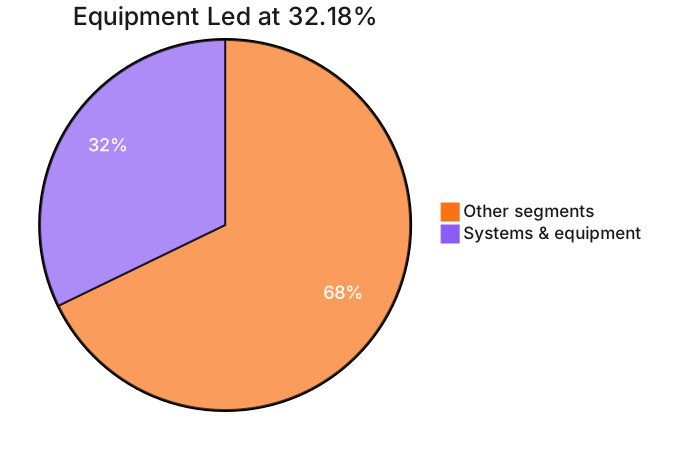
Dental systems and equipment, the chairs, imaging systems and clinical hardware behind every procedure, was the single largest segment in 2022, holding 32.18% of total market revenue. That’s the equipment layer underneath the whole category, not a patient-facing treatment, which says more about how much clinics are reinvesting in hardware than about any one cosmetic trend.
Looking ahead, Grand View Research names orthodontic braces as the fastest-growing product segment through 2030, even though it doesn’t carry the largest current market share. Growth and current size aren’t the same thing here, and a practice chasing this market needs to know which number it’s actually competing on.
Takeaway: the segment leading today (equipment) and the segment growing fastest (orthodontic braces) are two different lines on the chart, and conflating them is a common mistake in how this market gets reported.
Procedure by Procedure: Where the Growth Is Concentrated
| Procedure | Baseline | 2030 Forecast |
|---|---|---|
| Dental crowns & bridges | $171.7M (2024) | $324.7 million |
| Dental implants | $86.0M (2024) | $146.9 million |
| Dental veneers | $63.9M (2023) | $112.1 million |
| Teeth whitening | $71.2M (2023) | $104.5 million |
Dental crowns & bridges: 11.6% CAGR, 2025–2030. Dental veneers: 8.4% CAGR, 2024–2030. Implants and whitening CAGR were not separately published in the sources checked for this post.
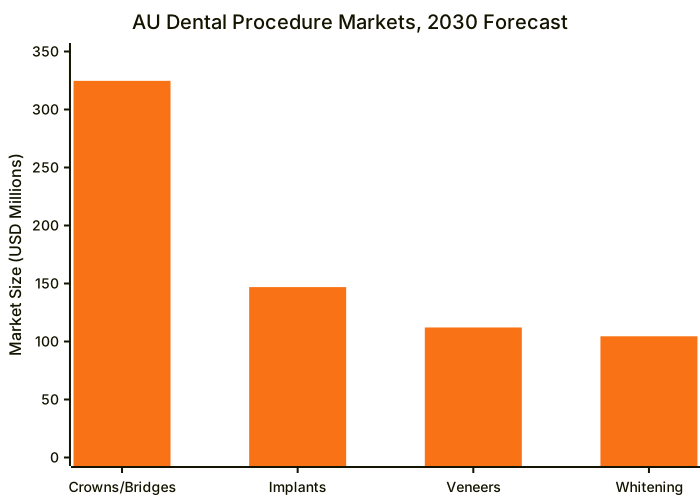
Dental crowns and bridges is the largest individual procedure market by forecast value, on track for USD 324.7 million by 2030, up from USD 171.7 million in 2024. Australia already accounted for 5.2% of the entire global crowns and bridges market in 2024, which is a large regional share for a country with roughly a third of one per cent of the world’s population. Dental implants sit second at a forecast USD 146.9 million, veneers third at USD 112.1 million, and teeth whitening fourth at USD 104.5 million, each pulled from Grand View Research’s individual Australia market reports for that procedure.
Takeaway: crowns and bridges alone account for more forecast growth than veneers and whitening combined, which doesn’t match the “smile makeover” imagery most cosmetic dentistry marketing leans on.
Why Growth and Affordability Are Moving in Opposite Directions
The market is growing while ordinary patients are pulling back. The Australian Dental Association’s Dental Health Week research found 61% of Australians delayed dental treatment in the past 12 months, and 63% of that group cited affordability as the reason. That’s happening at the same time forecast spend on cosmetic procedures is set to triple.
Teeth whitening shows the same tension from a different angle. The ADA found 22% of Australians have whitened their teeth, up 8 percentage points since 2017, but only around a third of that group did it under professional supervision. The rest used take-home kits, over-the-counter products, or non-professional services, options that sit outside a dentist’s chair entirely and outside a practice’s revenue.
Takeaway: market growth and patient affordability are running in opposite directions, and the gap between them is exactly where DIY alternatives and non-professional providers pick up volume a compliant practice should be converting instead.
More Growth Means More Advertising Scrutiny
A market this size, growing this fast, draws more marketing spend, and more marketing spend under AHPRA’s rules carries more compliance exposure. Dentists are regulated by the Dental Board of Australia under the same AHPRA National Law as cosmetic medicine clinics, so the same advertising guidelines, complaint process and penalty structure apply to a veneer gallery as to a Botox before-and-after post. Our full breakdown of AHPRA’s advertising rules for cosmetic dentistry covers exactly what changed under the September 2025 amendments, including the outright testimonial ban and the narrower before-and-after imagery exemptions.
That matters more, not less, as the market grows. A practice scaling into a bigger piece of a USD 1.1 billion category is also scaling its advertising footprint, and every additional asset, a new landing page, a new social post, a new before-and-after gallery, is another point of AHPRA exposure if the copy hasn’t been checked against the current rules.
Takeaway: growth without a compliance check isn’t free growth. It’s compounding risk across every new page and post a practice publishes.
Getting Website Compliance Right Before Chasing This Growth
Most practices don’t know which parts of their current website would fail an AHPRA review until someone checks it line by line. If your site hasn’t been reviewed since the September 2025 amendments landed, RockingWeb’s free AHPRA website compliance audit flags exactly what needs to change before a patient complaint does it for you.
That’s the more useful starting point than a rebrand or a bigger ad budget. A compliant foundation means every dollar spent chasing this market’s growth is spent on assets that can’t be pulled down by a regulator’s letter.
Takeaway: the audit is the cheapest insurance a growing practice can buy against the compliance side of this growth curve.
How RockingWeb Builds Websites for Australia’s Growing Dental Market
RockingWeb is an AHPRA-compliance specialist for Australian cosmetic clinics and dental practices, not a generalist agency treating compliance as an afterthought. Every cosmetic clinic and dental website we build starts from the current advertising guidelines, so a growing practice never has to choose between a site that converts and one that survives an AHPRA review.
For practices that want the audit, the compliant rebuild, and ongoing compliant ad management handled as one service while this market keeps expanding, ClinicPipeline is our audit-and-ads offering built specifically for regulated dental and cosmetic clinics.
Data sources: Grand View Research, Australia Cosmetic Dentistry Market Size & Outlook, 2030; Grand View Research, Australia Dental Crowns & Bridges, Dental Veneers, Dental Implants and Teeth Whitening Market reports; Australian Dental Association, Dental Health Week research; AHPRA, Guidelines for advertising a regulated health service (September 2025 amendments).
RockingWeb builds AHPRA-compliant websites for Australian cosmetic clinics and dental practices. Get a free compliance audit or contact us to discuss a compliant rebuild.
Vikas Thakur
Founder of RockingWeb. 16 years building for companies like TPG, iiNet and Monadelphous, now focused on websites and marketing that comply with AHPRA's advertising guidelines and still book patients.
![Invisalign vs Braces Cost Australia: Price Data [2026 Guide]](/assets/ahpra-treatment-naming-website-B-vXh4ba.png)
![Dental Implant Cost Australia: Full Price Breakdown [2026]](/assets/ahpra-compliant-meta-ads-L0i9yo7-.png)
![Smile Makeover Cost Australia: Full Price Range [2026]](/assets/ahpra-compliant-google-ads-BM47uRK-.png)
![Porcelain vs Composite Veneers: Cost & Lifespan Data [2026]](/assets/ahpra-advertising-fines-australia-CEjJnmEl.png)