

Porcelain vs Composite Veneers: Cost & Lifespan Data [2026]
Porcelain veneers typically last 10 to 15 years in clinical studies, composite veneers typically last 4 to 8 years. We checked the actual survival-rate research behind that gap, not just the marketing claims, and found the real numbers vary far more than either material's sales pitch admits.
 Vikas Thakur 11 min read
On this page 8
- The Real Lifespan Numbers: Porcelain vs Composite
- Why the Same Material Gets Wildly Different Survival Rates
- Staining and Discolouration: Which One Actually Holds Its Colour
- Can You Repair a Chip, or Do You Start Over?
- Maintenance: What Actually Extends (or Shortens) Either Material’s Lifespan
- So Which One Should You Actually Choose?
- AHPRA’s Advertising Rules Apply to Lifespan Claims Too
- How RockingWeb Builds Compliant Cosmetic Dentistry Websites
Key Takeaways
- Porcelain veneers last 10 to 15 years in the clinical literature, with some long-running cohorts followed past 20 years
- Composite veneers last 4 to 8 years on average before needing repair, refinishing or replacement
- A 2021 systematic review of 30 studies and 11,465 veneers found 10-year porcelain survival ranging from 53% to 94.4% depending on the study population
- The lowest figure, 53% survival at 10 years, comes from a large real-world dataset of 2,562 veneers in 1,177 patients, not a marketing claim
- A 2023 meta-analysis of direct composite veneer trials found an 88% pooled survival rate (95% CI 81 to 94%) over 2 to 8 years of follow-up
- Composite chips can be repaired chairside in one visit; a chipped porcelain veneer usually cannot be patched and needs full replacement
- Porcelain’s glazed ceramic surface resists coffee, wine and tobacco staining far better than composite’s more porous resin surface
- We could not verify a widely repeated claim that a “2019 Burke study of 2,000 veneers over 20 years” found a mean survival of 15.2 years. The real Burke dataset is a different study with different numbers, detailed below
Porcelain veneers typically last 10 to 15 years in clinical studies. Composite veneers typically last 4 to 8 years. Those two ranges hold up against the peer-reviewed research, but the full picture is messier than either number suggests. One of the largest studies ever done on porcelain veneers, a real-world dataset covering 2,562 veneers, found only 53% still standing without any rework after 10 years, while tightly controlled academic studies on the same material report survival above 90%. That’s not a rounding difference. It’s the gap between a best-case sales pitch and what actually happens once thousands of real patients, real habits and real dentists are in the mix. This post lays out what the clinical research actually says about how long each material lasts, why the numbers diverge so sharply, and how staining resistance, repairability and maintenance should factor into which one you pick. For exact per-tooth pricing in Australia, see our veneers cost breakdown, this post is about the decision, not the dollar figure.
The Real Lifespan Numbers: Porcelain vs Composite
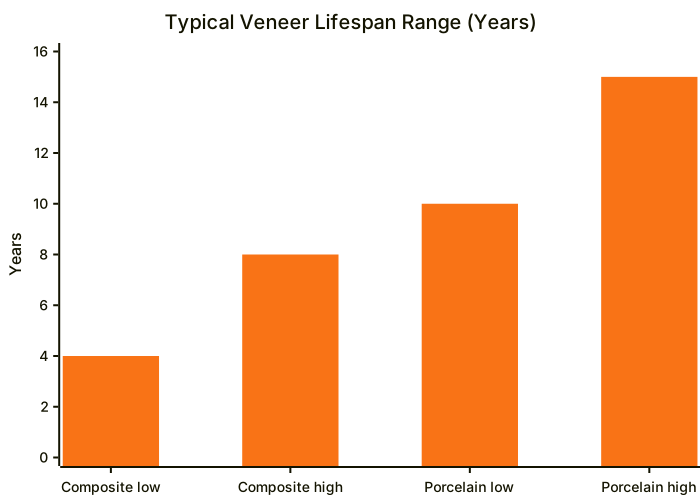
Composite veneers are resin, built up and shaped on the tooth by the dentist in a single visit. That resin wears, picks up surface stains and needs refinishing sooner, which is why most dental sources put its working lifespan at 4 to 8 years before a patient needs a touch-up, a repair or a full swap.
Porcelain veneers are lab-fabricated ceramic shells bonded on over two appointments. The material itself is harder and less porous, and the clinical research backs up the longer lifespan claim: a 2021 systematic review covering 30 studies and 11,465 veneers found 5-year survival rates between 80.1% and 100%, and a subset of long-term cohorts followed patients for more than 20 years. The typical range that shows up across the best-designed studies sits at 10 to 15 years before a veneer needs replacing.
Takeaway: the 10 to 15 year figure for porcelain and 4 to 8 year figure for composite both hold up against peer-reviewed data, not just clinic marketing pages, but “typical” and “guaranteed” are two very different words, as the next section shows.
Why the Same Material Gets Wildly Different Survival Rates
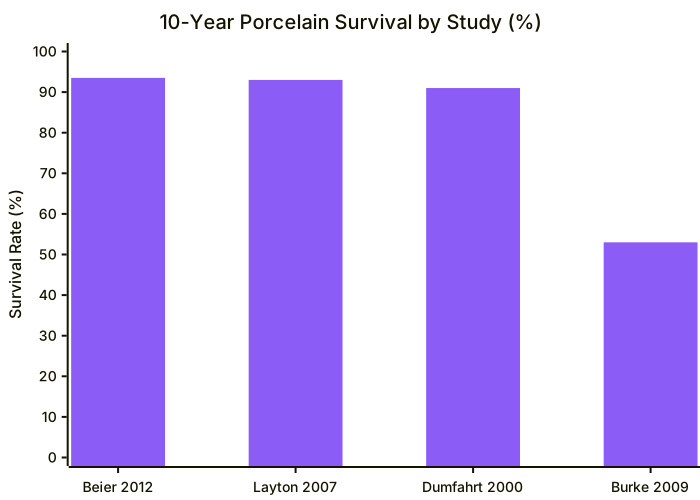
Here’s the part most “how long do veneers last” articles skip. The same 2021 systematic review that reports strong porcelain survival also names the studies behind those numbers, and they don’t agree with each other. Beier and colleagues (2012) reported 93.5% survival at 10 years. Layton and Walton (2007) reported 93%. Dumfahrt and Schäffer (2000) reported 91%. All three are small, closely monitored academic cohorts.
Then there’s Burke and Lucarotti, a dataset of 2,562 porcelain veneers placed in 1,177 adult patients over an 11-year window, tracked through UK NHS-style practice records rather than a university research clinic. Their finding: only 53% of veneers survived without any reintervention at 10 years. The same review notes that fracture and debonding are the most common failure modes, and that both happen more often in the first few years after the veneer is fitted, not gradually over a decade.
We also went looking for a specific claim that circulates widely online: that a “Burke study” from 2019 followed 2,000 veneers for 20 years and found a mean survival time of 15.2 years. We could not locate that paper. The actual Burke and Lucarotti dataset we found, published in the Journal of Evidence-Based Dental Practice in 2010 summarising their earlier work, uses different numbers entirely (2,562 veneers, 53% at 10 years) and doesn’t report a 15.2-year mean survival figure anywhere. Treat the “15.2 years” claim as unverified until a primary source turns up.
Takeaway: which survival figure applies to you depends more on the practice doing the work and how strictly “reintervention” is counted than on the material itself, which is exactly why a lifespan quote from any single clinic should be treated as one data point, not a guarantee.
Staining and Discolouration: Which One Actually Holds Its Colour
Porcelain’s surface is a dense, glazed ceramic with very little porosity. That’s a physical property, not a marketing claim: pigments from coffee, red wine and tobacco have far less surface to grip onto. Composite resin, by contrast, has a more porous polymer structure that absorbs staining compounds over time, and multiple clinical sources describe a visible colour shift within 2 to 5 years for patients who drink a lot of coffee, tea or red wine, or who smoke.
The systematic review of porcelain veneers also found that marginal discolouration, staining at the thin line where the ceramic meets the natural tooth, showed up significantly more often in smokers than non-smokers. So porcelain isn’t immune to staining either, it’s just far more resistant at the surface, and its main vulnerability is the bonding margin rather than the material itself.
Takeaway: if you drink a lot of coffee, tea or red wine, or smoke, that habit alone should weigh toward porcelain, since composite’s earlier and more visible staining is one of the more consistent findings across the research, not just a talking point dentists use to upsell.
Can You Repair a Chip, or Do You Start Over?
This is where the two materials diverge in a way that matters day to day, not just over a decade. A small chip in a composite veneer can usually be repaired chairside: the dentist adds a bit of matching resin, shapes it and polishes it, often in the same appointment. It’s not always a perfect colour match years later, but the repair itself is straightforward and cheap relative to replacement.
A chipped porcelain veneer is a different problem. Once the ceramic fractures, dentists generally cannot bond a durable, matching repair onto it, particularly on the biting edge, where the forces involved make a lasting bond between old porcelain and any patch material unreliable. In most cases a fractured porcelain veneer means a full replacement: a new impression, a new lab fabrication, and a second bonding appointment.
Takeaway: composite’s easy repairability is a genuine advantage for anyone worried about day-to-day durability, especially in front teeth that take a knock, while porcelain’s strength comes at the cost of an all-or-nothing repair outcome if it does fail.
Maintenance: What Actually Extends (or Shortens) Either Material’s Lifespan
A few factors show up repeatedly in the clinical research for both materials, and they matter more than which one you choose in the first place.
| Factor | Effect on Composite | Effect on Porcelain |
|---|---|---|
| Bruxism (teeth grinding) | Accelerates wear and chipping | Increases fracture risk, especially without a nightguard |
| Smoking / heavy coffee, wine | Visible colour shift within 2–5 years | Marginal (edge) discolouration more likely |
| Tooth vitality (root canal vs live tooth) | Annual failure rate roughly 4.9% (vital) vs 9.8% (non-vital) in direct-veneer research | Lower survival reported for veneers on non-vital teeth in several cohorts |
| Regular dental check-ups | Repairs minor chips before they spread | Catches marginal staining and early debonding early |
| Changing dentist mid-treatment | Not separately studied | Linked to shorter survival times in the Burke and Lucarotti dataset |
That tooth-vitality finding is worth sitting with: research on direct composite veneers found an annual failure rate around 4.9% on teeth that still have a live nerve, roughly double that, 9.8%, on teeth that have had root canal treatment. If you’re getting a veneer on a tooth that’s already been root-treated, that’s a conversation worth having with your dentist regardless of which material you choose.
Takeaway: a nightguard if you grind your teeth, cutting back on staining habits, and sticking with the same dentist for follow-up care will do more for either material’s lifespan than the porcelain-versus-composite decision itself.
So Which One Should You Actually Choose?
Cost is the other half of this decision, and we’ve already broken down exact per-tooth pricing in our Australian veneers cost guide, so we won’t repeat those figures here. What we will say: porcelain’s higher upfront price buys roughly double to triple the lifespan of composite in the typical case, which narrows the annualised cost gap considerably compared to what the sticker price alone suggests. Whether that trade favours porcelain or composite in your specific case depends on the exact quotes you’re comparing, which is why the cost breakdown and this lifespan breakdown are two separate reads.
As a rule of thumb from the research above: composite suits a smaller budget, a want-it-now timeline, or a patient who’d rather have an easily repairable option on front teeth prone to knocks. Porcelain suits anyone prioritising stain resistance and longevity over a decade or more, who’s comfortable that a chip means a full replacement rather than a quick chairside fix, and who doesn’t mind two appointments instead of one.
Takeaway: neither material is objectively “better”, they’re built for different trade-offs between upfront cost, repair flexibility and how long you want to go before revisiting the decision.
AHPRA’s Advertising Rules Apply to Lifespan Claims Too
Every “lasts 20 years” or “permanent smile” claim you see on a cosmetic dental clinic’s website or Instagram page sits under the same advertising rules as pricing claims. Dentists are regulated by the Dental Board of Australia under the same AHPRA National Law as cosmetic medicine clinics, and our breakdown of AHPRA’s advertising rules for cosmetic dentistry covers what the September 2025 amendments banned: patient testimonials, most before-and-after imagery, and absolute outcome language.
A lifespan claim that overstates what the research actually shows, “veneers that last forever” or “guaranteed 20 years”, is exactly the kind of unqualified outcome claim that draws AHPRA scrutiny. If your practice’s website or social content hasn’t been reviewed against the current rules, RockingWeb’s free AHPRA website compliance audit flags exactly what needs to change before a patient complaint does it for you.
Takeaway: the research shows real ranges with real variation, not guarantees, and a compliant website should reflect that rather than rounding up to whatever sounds best in an ad.
How RockingWeb Builds Compliant Cosmetic Dentistry Websites
RockingWeb is an AHPRA-compliance specialist for Australian cosmetic clinics and dental practices, built to handle the advertising rules from the first line of copy rather than bolting compliance on afterward. Every cosmetic clinic and dental website we build lets a practice make specific, evidence-based claims, including honest lifespan and durability comparisons, without drifting into the outcome language the current guidelines prohibit.
For practices that want the audit, the compliant rebuild and ongoing compliant ad management as one service, ClinicPipeline is our audit-and-ads offering built specifically for regulated dental and cosmetic clinics.
Data sources: “Long-Term Survival and Complication Rates of Porcelain Laminate Veneers in Clinical Studies: A Systematic Review”, Journal of Clinical Medicine, 2021 (30 studies, 11,465 veneers); Della Bona & Kelly, summary of the Burke and Lucarotti porcelain veneer dataset, Journal of Evidence-Based Dental Practice, 2010 (2,562 veneers, 1,177 patients); Lim, Tan, Li & Burrow, “Survival and Complication Rates of Resin Composite Laminate Veneers: A Systematic Review and Meta-Analysis”, Journal of Evidence-Based Dental Practice, 2023; AHPRA, Guidelines for advertising a regulated health service (September 2025 amendments).
RockingWeb builds AHPRA-compliant websites for Australian cosmetic clinics and dental practices. Get a free compliance audit or contact us to discuss a compliant rebuild.
Vikas Thakur
Founder of RockingWeb. 16 years building for companies like TPG, iiNet and Monadelphous, now focused on websites and marketing that comply with AHPRA's advertising guidelines and still book patients.

![Invisalign vs Braces Cost Australia: Price Data [2026 Guide]](/assets/ahpra-treatment-naming-website-B-vXh4ba.png)
![Dental Implant Cost Australia: Full Price Breakdown [2026]](/assets/ahpra-compliant-meta-ads-L0i9yo7-.png)
![Smile Makeover Cost Australia: Full Price Range [2026]](/assets/ahpra-compliant-google-ads-BM47uRK-.png)