

Teeth Whitening Cost Australia: Price Statistics [2026 Guide]
In-chair professional teeth whitening costs $500-$1,500 in Australia, take-home dentist trays run $250-$600, and OTC strips sit at $20-$100. Full 2026 price breakdown by method.
 Vikas Thakur Founder, RockingWeb 10 min read
On this page 9
- What Teeth Whitening Costs in Australia by Method
- In-Chair Professional Whitening: $500 to $1,500
- Take-Home Dentist Trays: $250 to $600
- Over-the-Counter Strips and Kits: $20 to $100
- Why the Price Gap Is So Wide: Concentration, Not Just Convenience
- Professional vs DIY: What You’re Actually Trading Off
- Why This Market Keeps Growing
- Advertising Whitening Prices Without an AHPRA Problem
- How RockingWeb Builds Compliant Dental Pricing Pages
Key Takeaways
- In-chair professional whitening costs $500 to $1,500 per session in Australia, commonly $600 to $1,200 in metro clinics
- Perth clinics list in-chair whitening from $400 to $800, with named examples like Nedlands Dental at $599 and Winthrop Village Dental at $800
- Dentist-supplied take-home trays cost $250 to $600, most commonly $300 to $400
- Over-the-counter strips and kits cost $20 to $100, with retail products at Chemist Warehouse and Woolworths priced around $30 to $35
- Australia’s Poisons Standard caps public-sale whitening products at 6% hydrogen peroxide (or 18% carbamide peroxide); anything stronger is dentist-only under Schedule 10
- 22% of Australians have whitened their teeth, up 8 percentage points since 2017, but only around a third did it under professional supervision, per the Australian Dental Association’s Dental Health Week survey
- Australia’s teeth whitening market alone was worth USD 71.2 million in 2023, forecast to reach USD 104.5 million by 2030, according to Grand View Research
In-chair professional teeth whitening costs $500 to $1,500 in Australia in 2026, take-home dentist trays run $250 to $600, and over-the-counter strips cost $20 to $100. Those figures come from current pricing pages published by dental clinics across Perth, Sydney and Melbourne, cross-checked in June 2026.
Here’s the gap almost nobody explains properly: a $35 box of strips from Chemist Warehouse and a $900 in-chair session at your dentist are not different tiers of the same product. They’re regulated differently, under different concentration limits, with different people legally allowed to apply them. That gap is exactly why the price difference is so large, and why the cheaper option often does less than the packaging implies.
This guide breaks down what teeth whitening actually costs in Australia by method, what drives the price difference, and where the safety and efficacy trade-offs really sit. If you’re deciding between a chairside appointment and a strip from the supermarket, the numbers below are the ones that matter.
What Teeth Whitening Costs in Australia by Method
| Method | Typical Price (AUD) | Results Last | Who Can Supply It |
|---|---|---|---|
| In-chair professional | $500-$1,500 | 6-12 months | Registered dentist only |
| Take-home dentist trays | $250-$600 | 6-12 months | Registered dentist only |
| Over-the-counter strips/kits | $20-$100 | 1-3 months | Anyone (retail sale) |
Duration figures are clinic-reported estimates from pricing guides, not from a controlled clinical trial. Individual results vary by staining cause, diet, and smoking status.
Professional treatments cost more and last longer. That’s the headline. But the real driver isn’t marketing, it’s the concentration of active ingredient each method is legally allowed to use.
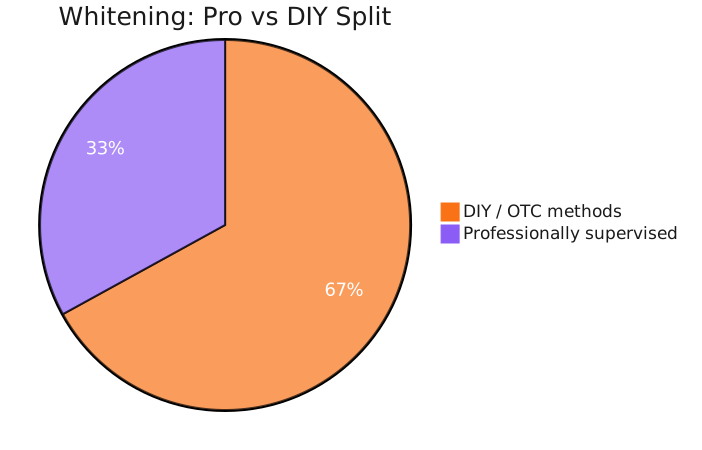
Of the 22% of Australians who have whitened their teeth, roughly a third did it under a dentist’s supervision. The rest used take-home kits, strips, or non-professional services, per the Australian Dental Association’s Dental Health Week survey (figures approximate, “roughly one in three” as reported).
Takeaway: two-thirds of Australians who whiten their teeth never sit in a dentist’s chair to do it, which says a lot about how price shapes the method people actually choose.
In-Chair Professional Whitening: $500 to $1,500
In-chair whitening (sometimes marketed under brand names like Zoom or Pola) is a single 60 to 90 minute appointment where a dentist applies a high-concentration peroxide gel, often activated with a light or laser, directly onto teeth.
National pricing guides put the range at $500 to $1,500 per session, with $600 to $1,200 the range most commonly cited for metro clinics in Sydney and Melbourne. Perth sits lower: local clinic pages list in-chair whitening from roughly $400 to $800. Real examples published by Perth dentists as of June 2026:
- Nedlands Dental: Philips Zoom in-chair whitening at $599
- Radiant Smiles Dental Care: in-chair whitening at $499
- Winthrop Village Dental: in-clinic whitening from $800
Most practices also charge a separate $50 to $100 consultation fee before the whitening appointment itself, to check for decay, gum disease, or existing restorations that whitening gel won’t affect evenly.
Takeaway: in-chair whitening is the most expensive option and the only one that delivers same-day results, which is exactly what the price is buying.
Take-Home Dentist Trays: $250 to $600
A dentist takes an impression, makes custom-fitted trays, and prescribes a professional-strength gel for you to apply at home over 10 to 14 nights. This sits in the middle of the price range: most clinics quote $300 to $400, with some as low as $250 and others up to $600 depending on the gel strength and number of refills included.
Perth examples: Winthrop Village Dental lists take-home kits from $250, and Mount Lawley Dental Clinic’s home whitening treatment costs $400. The trays themselves are reusable, so a patient buying refill gel later pays considerably less than the first purchase.
Because the trays are custom-moulded to your teeth, the gel sits evenly against enamel rather than pooling unevenly the way a generic strip does. That’s the main functional advantage over an off-the-shelf kit at a similar or lower price point.
Takeaway: take-home trays are the middle ground, professional-strength gel and a custom fit, without the same-day cost of an in-chair session.
Over-the-Counter Strips and Kits: $20 to $100
Supermarket and pharmacy whitening products, strips, paint-on gels, and LED-light kits, sit at the bottom of the price range. Specific retail prices as of June 2026: Chemist Warehouse and Woolworths both stock strip products in the $30 to $35 range, and pharmacy own-brand kits start around $20.
These products are legally capped at 6% hydrogen peroxide (or 18% carbamide peroxide) under Australia’s Poisons Standard, the same regulation covered in our AHPRA advertising rules for cosmetic dentistry breakdown. Anything stronger than that concentration is restricted to registered dental practitioners under Schedule 10, which is why no amount of shopping around gets you dentist-strength gel off a shelf.
Takeaway: OTC whitening is real, but it is capped by law at a lower concentration than anything a dentist can use, and the results reflect that cap.
Why the Price Gap Is So Wide: Concentration, Not Just Convenience
The core reason in-chair whitening costs 10 to 20 times more than a box of strips isn’t overhead or branding. It’s concentration. Australia’s Poisons Standard sets the public-sale limit at 6% hydrogen peroxide or 18% carbamide peroxide. Products above that threshold are Schedule 10 and can only be supplied and used by a registered dental practitioner as part of dental practice, according to the Dental Board of Australia and multiple industry compliance guides.
That single rule explains the entire market structure: OTC products are legally weaker, take-home trays sit at the regulatory edge with professional-strength gel dispensed under a dentist’s prescription, and in-chair treatments use the strongest formulations available, applied under direct clinical supervision. A dentist isn’t just charging for convenience. They’re the only one legally allowed to apply the strongest version of the product.
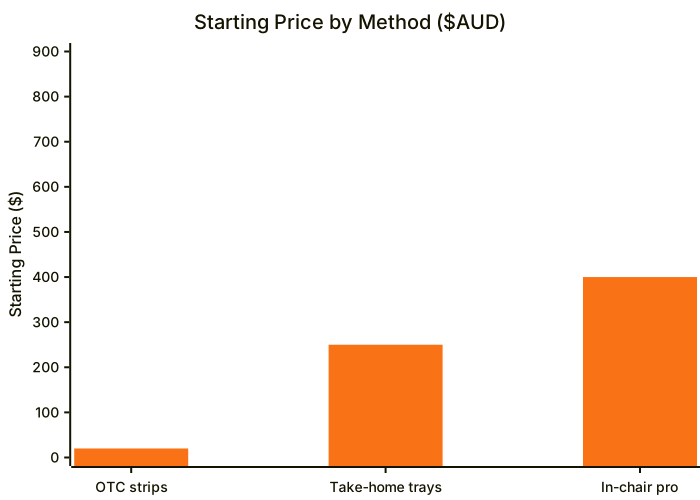
Starting prices are the low end of the ranges cited above, drawn from current Perth and national clinic pricing pages (Chemist Warehouse, Winthrop Village Dental, and Perth-area in-chair listings). Upper-end prices for in-chair whitening reach $1,500 nationally.
Takeaway: the starting price triples between OTC and take-home, then roughly doubles again into in-chair, and each step up buys a legally stronger product, not just a nicer waiting room.
Professional vs DIY: What You’re Actually Trading Off
Clinic-reported figures converge on a fairly consistent pattern: in-chair and take-home results last 6 to 12 months, while OTC strips and kits last 1 to 3 months before staining returns. Neither figure comes from a controlled clinical trial in the sources checked for this guide, so treat them as clinic-reported estimates rather than peer-reviewed data.
The trade-offs beyond price and duration:
- Sensitivity risk. Higher-concentration gels used in-chair carry a higher short-term sensitivity risk, managed by the dentist adjusting exposure time. Lower-concentration OTC products cause less sensitivity but also whiten less.
- Even application. Custom trays and in-chair application cover the whole tooth surface evenly. Generic strips can miss gaps between teeth or along the gumline, leading to patchy results.
- Existing dental work. Whitening gel doesn’t change the colour of crowns, veneers, or fillings. A dentist checks for this before treatment; an OTC kit does not, which is how people end up with obviously mismatched front teeth after a DIY job.
- Underlying issues. A dentist can also flag decay or gum problems before whitening. There’s no equivalent check with a strip bought off a shelf.
Takeaway: the price gap buys a legally stronger product, a professional check for underlying issues, and even application, not just faster results.
Why This Market Keeps Growing
Consumer demand for whitening isn’t slowing down. Our companion analysis, Australia’s cosmetic dentistry market data, puts the whitening segment specifically at USD 71.2 million in 2023, forecast to reach USD 104.5 million by 2030, according to Grand View Research’s Australia teeth whitening market report. That’s inside a broader cosmetic dentistry category tracking toward USD 1.1 billion by the same year.
The same Dental Health Week research behind this guide’s professional-vs-DIY split also found 61% of Australians delayed dental treatment in the past 12 months, and 63% of that group cited affordability. Whitening sits at the exact pressure point between those two trends: a growing market, and a price-sensitive patient base choosing the DIY end of the range more often than the professional end.
Takeaway: the whitening market is growing, but a shrinking share of that growth is happening in a dentist’s chair, and that’s a gap a compliant, well-priced offer can close.
Advertising Whitening Prices Without an AHPRA Problem
Publishing a price list is legal. What trips practices up is the language around it. AHPRA’s advertising guidelines, covered in full in our AHPRA advertising rules for cosmetic dentistry post, ban before-and-after whitening photos, testimonials, and outcome language like “whiter teeth in 60 minutes” or “brighter smile guaranteed”, regardless of whether the underlying claim is true.
A practice can say “in-chair whitening from $599” all day. It cannot say a patient “loved their new smile” next to a photo of their teeth. If your current whitening page hasn’t been checked against the guidelines since the September 2025 amendments, talk to RockingWeb and we will flag exactly what needs to change.
Takeaway: you can compete on price in this market without ever touching the content that gets practices in front of a AHPRA complaint.
How RockingWeb Builds Compliant Dental Pricing Pages
RockingWeb is an AHPRA-compliance specialist for Australian cosmetic clinics and dental practices. Every cosmetic clinic and dental website we build includes a pricing page that states real numbers clearly, without straying into the outcome claims and imagery that AHPRA now bans.
For practices that want the compliance audit, the compliant rebuild, and ongoing ad management as one service, ClinicPipeline is built specifically for regulated dental and cosmetic clinics competing in a market this price-sensitive.
Ready to publish a whitening price list that converts and survives an AHPRA review? Talk to us about your practice’s pricing page.
Data sources: pricing pages from Nedlands Dental, Radiant Smiles Dental Care, Winthrop Village Dental, Mount Lawley Dental Clinic, Chemist Warehouse and Woolworths (checked June 2026); Poisons Standard Schedule 10 and Dental Board of Australia guidance on teeth whitening concentration limits; Australian Dental Association Dental Health Week research; Grand View Research, Australia Teeth Whitening Market report.
Vikas Thakur
Founder of RockingWeb. 16 years building for companies like TPG, iiNet and Monadelphous, now focused on websites and marketing that comply with AHPRA's advertising guidelines and still book patients.
![Porcelain vs Composite Veneers: Cost & Lifespan Data [2026]](/assets/ahpra-advertising-fines-australia-CEjJnmEl.png)

![Dental Implant Cost Australia: Full Price Breakdown [2026]](/assets/ahpra-compliant-meta-ads-L0i9yo7-.png)
![Smile Makeover Cost Australia: Full Price Range [2026]](/assets/ahpra-compliant-google-ads-BM47uRK-.png)