2.5M Appointments a Month: Clinic Booking Software Stats
HotDoc, one of Australia's largest medical booking platforms, processes 2.5 million appointments a month and claims nearly one in three Australians use it. Here is what the wider data on booking friction and digital adoption means for a cosmetic clinic's own booking system.
 Vikas Thakur Founder, RockingWeb 8 min read
On this page 9
- Key takeaways
- Why There’s No Cosmetic-Clinic-Specific Number
- How Big Booking Platforms Have Gotten
- The Access Friction Behind the Booking Click
- Where AI Is Actually Showing Up in Clinic Operations
- What This Means for a Clinic’s Own Booking System
- FAQ
- Get Your Clinic’s Booking Flow Reviewed
- Sources and References
Key takeaways
- HotDoc, one of Australia’s largest medical booking platforms, processes 2.5 million appointments a month across its practitioner network
- The company reports 13 million active patients and over 23,000 listed doctors, and claims nearly 1 in 3 Australians use it to connect with a preferred doctor
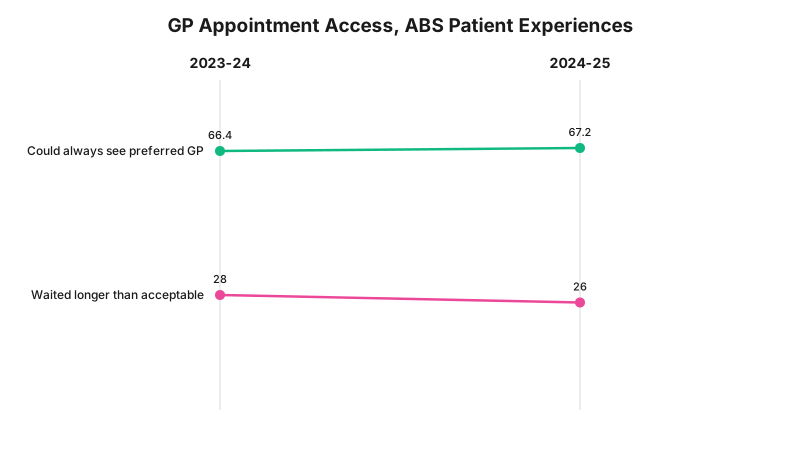
- 26.0% of Australians reported waiting longer than they felt acceptable for a GP appointment in 2024-25, down from 28.0% in 2023-24, per the ABS Patient Experiences survey
- 67.2% of Australians could always see their preferred GP when needed in 2024-25, up from 66.4% the year before
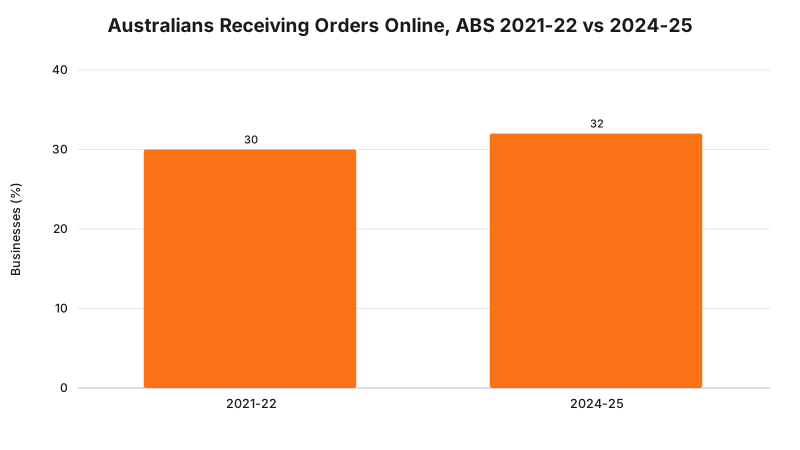
- 32% of Australian businesses received orders online in 2024-25, up from 30% in 2021-22, per the ABS Characteristics of Australian Business survey (economy-wide, not health-specific)
- 17% of health care and social assistance businesses reported using AI in 2024-25, the fifth-highest adoption rate of any industry the ABS measured
- No Australian regulator or statistics agency publishes booking-software adoption figures specific to cosmetic clinics. The closest verified figures come from general-practice platforms and economy-wide ABS data
HotDoc processes 2.5 million medical appointments a month across Australia. The company says nearly one in three Australians now use it to connect with a preferred doctor, drawing on 13 million active patients and more than 23,000 listed doctors. That is one platform’s self-reported reach, built mostly around general practice rather than cosmetic clinics.
No government body publishes an equivalent number for cosmetic clinics specifically. What exists is a set of adjacent, verified figures: booking friction Australians report, how fast businesses are moving order-taking online, and how far AI has spread into health care operations. This post covers each figure and what it means for a clinic’s own booking flow.
Why There’s No Cosmetic-Clinic-Specific Number
Search for booking-software adoption data broken out by cosmetic clinic, medical spa, or aesthetic practice and you will come up empty. AHPRA’s registrant and complaint data tracks practitioners and advertising breaches, not booking technology. IBISWorld’s cosmetic and skin clinic reports cover market size and revenue, not the software behind the front desk. The ABS tracks digital adoption at the whole-economy or whole-industry level, and “health care and social assistance” folds hospitals, allied health, aged care, and cosmetic clinics into one line.
The closest genuine data points come from two directions: general-practice booking platforms publishing their own scale, and economy-wide ABS surveys showing where health care sits against other industries. Neither is a clean substitute for a cosmetic-clinic-specific figure, and this post treats them as exactly that.
Takeaway: treat every figure below as the best available proxy for a cosmetic clinic’s booking system, not as data measured on cosmetic clinics themselves.
How Big Booking Platforms Have Gotten
HotDoc publishes its own scale on its practice-facing website: 2.5 million appointments booked per month, 13 million active patients, and over 23,000 listed doctors, with the company describing usage as “nearly 1 in 3 Australians.” These are self-reported figures, not an independently audited count, and they describe HotDoc’s own network rather than the booking-software market as a whole. HotDoc is built primarily around general practice, so its numbers are a proxy for how far digital booking has spread through Australian primary care, not a cosmetic-clinic figure.
The scale is still worth sitting with. A platform moving 2.5 million appointments a month through general practice alone means most Australians who see a GP have already used some form of online booking. That sets the baseline expectation a first-time visitor to a clinic site brings with them: a “Call to book” instruction reads as a step backward from what they already do elsewhere.
Takeaway: the appointment-booking habit is already set for most patients before they ever land on a clinic’s site. The question isn’t whether patients expect online booking, it’s whether a clinic’s site delivers it.
The Access Friction Behind the Booking Click
The ABS Patient Experiences survey tracks how easily Australians actually get seen. In 2024-25, 26.0% of people reported waiting longer than they felt acceptable for a GP appointment, an improvement on 28.0% the year before. Access to a preferred provider improved too: 67.2% could always see their preferred GP when needed, up from 66.4%. The same release put overall GP usage at 83.4% of the population and dental usage at 53.9%.
Both figures moved the right way, but a quarter of the country is still hitting friction booking a GP appointment they consider acceptable, in general practice, the most established, highest-volume corner of Australian health care booking. A cosmetic clinic asking a first-time visitor to phone during business hours, wait on hold, or fill out a five-field enquiry form is adding friction on top of a system patients already find slow a quarter of the time.
Takeaway: the baseline for “acceptable” booking friction across Australian health care is already tight. A clinic’s booking flow is competing against that baseline, whether it means to or not.
Where AI Is Actually Showing Up in Clinic Operations
The ABS Characteristics of Australian Business survey found 17% of health care and social assistance businesses reported using AI in 2024-25, the fifth-highest rate of any industry measured, behind information, media and telecommunications (38%), professional, scientific and technical services (24%), financial and insurance services (24%), and mining (18%). Overall, 12% of Australian businesses reported using AI.
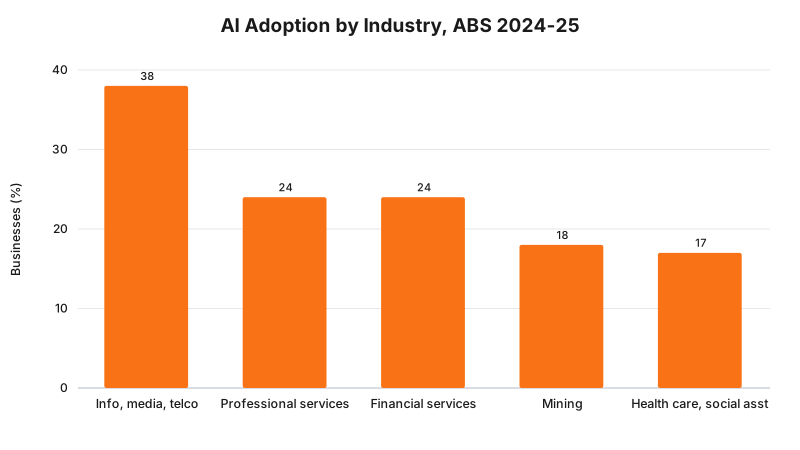
The survey doesn’t break out how many of that 17% are using AI for booking specifically, versus clinical documentation or admin. What it shows is that health care sits mid-table on AI adoption, ahead of retail and construction, well behind the digital-native industries. AI-assisted booking and chat-based enquiry triage sit inside that broader adoption curve, not ahead of it.
Takeaway: AI in clinic booking systems is an emerging layer on top of standard online booking, not yet the default. A clinic doesn’t need an AI booking assistant to be competitive in 2026; it needs a booking flow that actually removes friction.
What This Means for a Clinic’s Own Booking System
None of the figures above are cosmetic-clinic-specific, and that gap is itself useful: a clinic that publishes its own booking data, even something as simple as average time from enquiry to confirmed booking, is offering something no national dataset currently covers. Until then, the safest read is that patients already expect frictionless online booking from general practice, and a clinic that makes them work harder than that loses enquiries before a receptionist ever picks up the phone.
Where a booking widget touches a prescription-only cosmetic treatment, the friction question sits on top of a compliance one. AHPRA and the TGA both regulate what a booking flow can say and offer, and a clinic reviewing its booking system is a natural point to check both at once. RockingWeb can review the booking flow alongside the rest of the site, and clinics rebuilding their booking flow should see how a compliant build looks on a cosmetic clinic website designed around the current rules, not retrofitted to them.
Takeaway: a clinic doesn’t need to match HotDoc’s scale to compete on booking experience. It needs a booking flow that clears the friction bar patients already expect, built inside the advertising rules that apply specifically to cosmetic treatments.
FAQ
How many Australians use online booking software to see a doctor?
HotDoc, one of Australia’s largest medical booking platforms, says nearly one in three Australians use it to connect with a preferred doctor, with 13 million active patients and over 23,000 listed doctors. That is a single company’s self-reported figure, not an independent census of every booking platform, so treat it as the scale of one major player rather than a national adoption rate.
Is there Australian-specific data on cosmetic clinic booking software?
No. No government body or statistics agency publishes booking-software adoption figures broken out for cosmetic clinics specifically. The closest verified figures come from general-practice booking platforms like HotDoc and from the ABS Characteristics of Australian Business survey, which tracks online order-taking across the whole economy rather than by health subsector.
Has appointment access in Australia gotten easier or harder recently?
Slightly easier, per the ABS Patient Experiences survey. In 2024-25, 26.0% of people reported waiting longer than they felt acceptable for a GP appointment, down from 28.0% the year before, and 67.2% could always see their preferred GP, up from 66.4%. Both figures moved in the right direction but a quarter of patients are still hitting friction getting seen.
Are AI booking tools common in Australian clinics yet?
Adoption is still early. The ABS found 17% of health care and social assistance businesses reported using AI in 2024-25, the fifth-highest rate of any industry measured, behind information and media, professional services, financial services, and mining. The survey does not break out how many of those businesses are using AI specifically for booking or scheduling.
Get Your Clinic’s Booking Flow Reviewed
RockingWeb builds and audits cosmetic clinic booking systems against current AHPRA and TGA rules, and against the friction patients already expect from general-practice booking. No cost, no obligation.
Talk to us about your clinic’s booking system
Sources and References
Australian Bureau of Statistics - Characteristics of Australian Business, 2024-25: businesses receiving orders online (32%, up from 30% in 2021-22) and AI adoption by industry, including health care and social assistance (17%)
Australian Bureau of Statistics - Patient Experiences, 2024-25: GP appointment wait-time acceptability, preferred GP access, and overall GP and dental usage rates
HotDoc - secondary/vendor source: self-published platform statistics (2.5 million appointments a month, 13 million active patients, 23,000+ listed doctors, “nearly 1 in 3 Australians”)
Related reading:
- Cosmetic Clinic Website Booking Conversion Australia: the booking-flow conversion benchmark for cosmetic clinic sites
- Simple Copy Converts 56% Higher on Clinic Landing Pages: what actually moves booking-page conversion once a visitor lands
- TGA Fined a Nurse $11,880 Over a Booking Loophole: how booking widgets themselves fall under TGA advertising rules
- Cosmetic Clinic Websites: compliant website builds for AHPRA-regulated clinics
Vikas Thakur
Founder of RockingWeb. 16 years of experience from working at TPG, iiNet and Monadelphous, now building websites, software and digital marketing for local businesses in Rockingham and Perth.