

$721.5M by 2030: Australia's Clear Aligner Market Growth
Australia's clear aligner market is forecast to grow by USD 721.5 million between 2026 and 2030, a 31.6% CAGR, according to Technavio. We checked that figure against two other named market reports, and against the TGA's own adverse event data for the low-risk device category clear aligners sit in.
 Vikas Thakur Founder, RockingWeb 9 min read
On this page 9
- Key Takeaways
- Australia’s Clear Aligner Market Is Forecast to Add $721.5M by 2030
- Why Three Market Reports Give Three Different Numbers
- The TGA Classifies Clear Aligners as Low Risk, Along With 28,000 Other Devices
- One Aligner Brand’s Adverse Event Count Shows What Low Risk Can Mean
- What This Means for a Dental Practice’s Website and Booking Flow
- FAQ
- Get Your Dental Practice’s Website and Ads Checked
- Sources and References
Key Takeaways
- Australia’s clear aligner market is forecast to grow by USD 721.5 million between 2026 and 2030, a 31.6% CAGR, according to Technavio (May 2026)
- Year-over-year growth for 2025 to 2026 alone was 28.1%, per the same report
- The offline, in-clinic segment was worth USD 141.3 million in 2024
- Two other named reports give very different numbers: USD 285.4 million (MarkWide Research) and USD 155 million (Ken Research)
- The TGA classifies clear aligners among more than 28,000 medical devices it treats as Class I, its lowest risk tier, per a Nine newspapers investigation (29 July 2026)
- Class I devices have been linked to 5,424 adverse event reports since 2012, including 714 injuries and 24 deaths
- One brand, Byte, drew 169 adverse event reports since September 2024 alone, then shut down globally in 2026
Australia’s clear aligner market is forecast to grow by USD 721.5 million between 2026 and 2030, a 31.6% compound annual growth rate, according to a Technavio report published in May 2026. That is the headline number. It sits next to a less flattering one. A Nine newspapers investigation published 29 July 2026 found clear aligners fall into the TGA’s lowest risk device category, alongside more than 28,000 other products, and that Class I devices in that category have been linked to 5,424 adverse event reports since 2012, including 714 injuries and 24 deaths. One brand alone, Byte, drew 169 of those reports in under two years before shutting down. This guide checks the growth numbers against two other named reports, walks through the TGA’s own data, and closes on what it means for a practice’s website and booking flow.
Australia’s Clear Aligner Market Is Forecast to Add $721.5M by 2030
Technavio’s “Australia Clear Aligners Market Growth Analysis, Size and Forecast 2026-2030” report, published May 2026, forecasts the market will grow by USD 721.5 million during the 2026 to 2030 window, a 31.6% CAGR from a 2025 base year. Year-over-year growth for 2025 to 2026 alone was 28.1%. The report also breaks out the offline, in-clinic segment specifically: USD 141.3 million in 2024, ahead of online and direct-to-consumer channels.
| Metric | Figure | Period | Source |
|---|---|---|---|
| Market growth | USD 721.5 million | 2026 to 2030 | Technavio |
| CAGR | 31.6% | 2025 to 2030 | Technavio |
| Year-over-year growth | 28.1% | 2025 to 2026 | Technavio |
| Offline distribution segment | USD 141.3 million | 2024 | Technavio |
The figures are in US dollars, the currency Technavio’s report uses, not Australian dollars. We cross-checked them against Research and Markets, a separate marketplace that republishes the same report, and the growth and CAGR figures matched exactly.
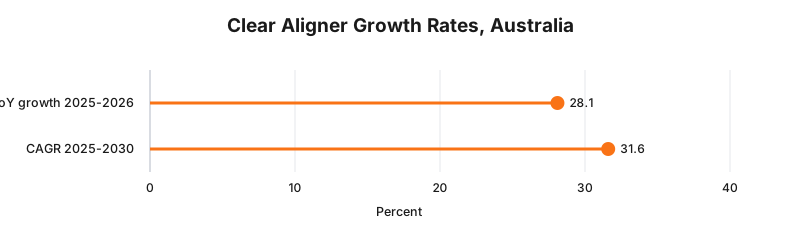
Takeaway: the market is growing fast by any of the three published estimates. The exact dollar figure depends on which vendor’s report you read, and none of them are Australian government data.
Why Three Market Reports Give Three Different Numbers
MarkWide Research (May 2026) values the 2026 market at USD 285.4 million, growing to USD 1,227.78 million by 2035 at a 17.60% CAGR. Ken Research (March 2026) values the 2024 market at USD 155 million, with no CAGR in the material we could access.
| Publisher | Base figure | Forecast | CAGR | Published |
|---|---|---|---|---|
| Technavio | Not stated (2025 base) | +USD 721.5M by 2030 | 31.6% (2025 to 2030) | May 2026 |
| MarkWide Research | USD 285.4M (2026) | USD 1,227.78M by 2035 | 17.60% (2026 to 2036) | May 2026 |
| Ken Research | USD 155M (2024) | Not published | Not published | March 2026 |
None of these three figures agree. A fourth report, from Grand View Research, turned up in the same search, but we could not access its numbers, so we left it out rather than repeat a figure we haven’t read. No government body publishes an Australia-specific clear aligner market figure. Every dollar figure here comes from a private vendor selling the full report behind the headline number.
Takeaway: treat any single “$X billion market” claim about Australian clear aligners as one vendor’s model, not a settled fact. The direction, strong growth, is consistent across all three. The size is not.
The TGA Classifies Clear Aligners as Low Risk, Along With 28,000 Other Devices
The regulatory side of this story is more consistent than the market-size side. A Nine newspapers investigation published 29 July 2026, “Broken teeth, locked jaws: Clear aligner company made money while nobody was watching”, reported that clear aligners are one of more than 28,000 medical devices the TGA classifies as Class I, its lowest risk tier, meaning comparatively little pre-market scrutiny.
The same investigation found Class I devices have been linked to 5,424 adverse event reports since 2012, including 714 injuries and 24 deaths, based on an AI-assisted analysis of the TGA’s own injury database. The TGA’s position, quoted in the piece, is that a report alone doesn’t establish that a device caused the event or is unsafe, and can be filed by anyone, not only a patient or clinician.
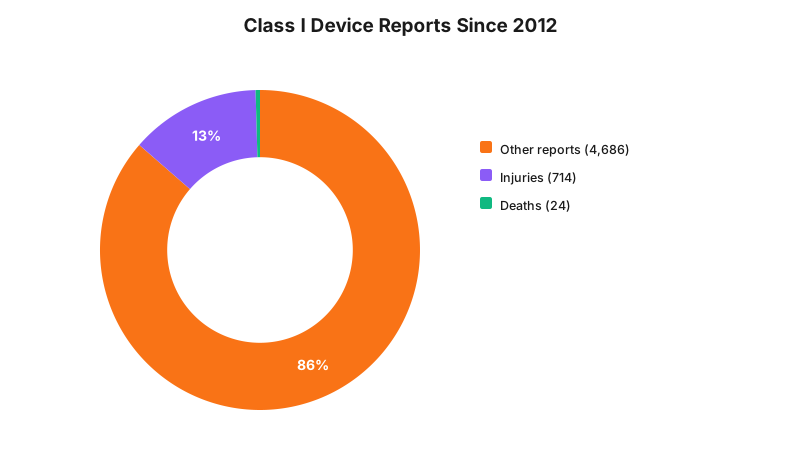
Takeaway: “TGA-cleared” and “low risk under TGA classification” are not the same claim. A clear aligner clearing the TGA’s Class I bar tells a patient less about safety than the marketing usually implies.
One Aligner Brand’s Adverse Event Count Shows What Low Risk Can Mean
Byte, a direct-to-consumer aligner brand owned by dental equipment manufacturer Dentsply Sirona, was the subject of 169 adverse event reports since September 2024, according to the same investigation, one of the most-complained-about Class I devices in that dataset. Dentsply Sirona said the additional complaints “followed a review of historical complaints as part of Byte’s reporting processes”. The TGA declined to say whether Byte had breached its legal requirement to report within 30 days, or whether it had taken action against the company. Byte shut down globally in 2026.
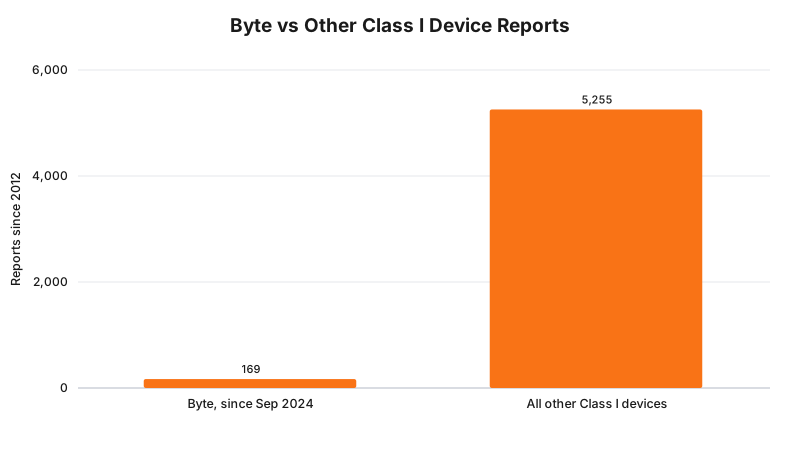
Read the chart as scale, not a like-for-like rate: Byte’s count runs from September 2024, the wider total from 2012. Byte had no dentist involved in fitting; the model relied on a remote scan and mail-order trays.
Takeaway: a fast-growing market with a low regulatory bar to entry is exactly the market where one brand’s problems can pile up before anyone outside the company is watching the count.
What This Means for a Dental Practice’s Website and Booking Flow
None of the numbers above are a reason to avoid clear aligners as a treatment category. They are a reason to think about what a practice’s website says, and doesn’t say, about the gap between supervised treatment and a mail-order kit. A patient comparing options is comparing a page that shows price, process, and a named practitioner against a page that shows neither, and the growth data above says more patients are shopping right now than ever.
Pricing and process detail, what a consultation involves, how many reviews are included, what treatment costs, isn’t the same content category as a testimonial or a before/after photo, and publishing it gives a patient something to compare a DTC brand’s marketing against. The booking flow should make an in-person consultation the obvious next step, not an afterthought under a “buy now” button. See our Invisalign vs braces cost breakdown and wider cosmetic dentistry market data for context.
None of that replaces getting the advertising itself checked. Our AHPRA advertising rules for cosmetic dentistry breakdown covers what a practice can and can’t publish, and every cosmetic clinic and dental website we build starts from those rules. If your site hasn’t been checked recently, get in touch with RockingWeb to find out what needs to change.
Takeaway: the practices that win the growing share of this market are the ones whose websites answer the questions a DTC brand’s marketing is built to avoid: who is supervising this, what does it cost, and what happens if something goes wrong.
FAQ
How big is Australia’s clear aligner market in 2026?
No government-published figure exists. Technavio’s May 2026 report forecasts USD 721.5 million growth between 2026 and 2030, a 31.6% CAGR. MarkWide Research and Ken Research give different figures again, USD 285.4 million for 2026 and USD 155 million for 2024. All three are private vendors, not government data.
Are direct-to-consumer clear aligners regulated the same way as ones fitted by a dentist?
Yes. The TGA treats clear aligners as Class I, its lowest risk tier, alongside more than 28,000 other products, per a Nine newspapers investigation (29 July 2026). That applies whether a dentist supervises the fitting or a patient orders trays online after a remote scan.
How many adverse events have been reported for Class I devices in Australia?
Since 2012, Class I devices have been linked to 5,424 adverse event reports, including 714 injuries and 24 deaths, per an AI-assisted analysis of the TGA’s injury database. One brand, Byte, accounted for 169 of those reports since September 2024 alone, before shutting down globally in 2026.
What does this market data mean for a dental practice’s website?
A growing, more scrutinised market rewards a website that shows real information before a patient books, what supervised treatment involves, how it differs from a mail-order kit, and what it costs. That is a content and booking-flow decision, alongside getting the practice’s advertising checked against current AHPRA rules.
Get Your Dental Practice’s Website and Ads Checked
RockingWeb builds AHPRA-compliant websites for Australian dental practices and audits existing sites and ad accounts against current advertising rules. If you want to know where your clear aligner marketing stands before a patient or a competitor finds the gap, talk to us.
Talk to us about your practice’s marketing
Sources and References
Technavio - Australia Clear Aligners Market report (May 2026): growth, CAGR, YoY and offline segment figures
Research and Markets - republished cross-check of the Technavio figures
MarkWide Research - Australia Clear Aligner Market report (May 2026): the USD 285.4 million and USD 1,227.78 million figures
Ken Research - Australia Clear Aligners Market report (March 2026): the USD 155 million figure
The Age - Broken teeth, locked jaws (29 July 2026): the TGA device count, adverse event figures, and Byte/Dentsply Sirona detail above
Related reading:
- Invisalign vs Braces Cost Australia: full price comparison for clear aligners against every brace type
- Cosmetic Dentistry Market Australia: the wider USD 369.2 million to USD 1,119.4 million cosmetic dentistry category this sits inside
- AHPRA Advertising Rules for Cosmetic Dentistry: what a dental practice can and can’t publish about a treatment
For a compliant website and ad accounts built for the AHPRA rules that actually apply to your practice, see ClinicPipeline or talk to us about your clinic’s marketing.
Vikas Thakur
Founder of RockingWeb. 16 years building for companies like TPG, iiNet and Monadelphous, now focused on websites and marketing that comply with AHPRA's advertising guidelines and still book patients.



![Invisalign vs Braces Cost Australia: Price Data [2026 Guide]](/assets/ahpra-treatment-naming-website-B-vXh4ba.png)