AHPRA Under-18 Rules: 7-Day vs 3-Month Cooling Off
In Australia, a patient under 18 must wait at least three months before cosmetic surgery and at least seven days before a non-surgical cosmetic procedure such as injectables. The rules sit in two separate regulator guidelines, in force since 2023 and 2 September 2025, and both reach into a clinic's website and ads.
 Vikas Thakur Founder, RockingWeb 9 min read
On this page 9
- Key takeaways
- The Two Cooling-Off Periods, Compared
- Why Surgery for Under-18 Patients Gets Extra Steps
- What Practitioners Must Do Before Treating a Patient Under 18
- The Advertising Rules That Reach Your Website
- What This Means for a Clinic’s Booking Flow and Website
- FAQ
- Get Your Website and Ads Checked for AHPRA Compliance
- Sources and References
Key takeaways
- Cosmetic surgery for a patient under 18 needs a minimum three-month cooling-off period between informed consent and the operation, under Medical Board of Australia guidelines
- Cosmetic injectables and other non-surgical procedures for a patient under 18 need only a minimum seven-day cooling-off period, roughly 13 times shorter
- Every patient under 18 must be referred to, and evaluated by, an independent psychologist, psychiatrist or GP before cosmetic surgery, a step that is optional for adult patients unless screening flags a concern
- Every cosmetic surgery patient, at any age, needs at least two pre-operative consultations and a validated body dysmorphic disorder screening before consenting
- National Boards say botulinum toxin and dermal fillers should not be prescribed for cosmetic purposes to anyone under 18 at all
- No payment for the procedure or surgery can be taken from an under-18 patient until the cooling-off period ends, other than the initial consultation fee
- Advertising of higher-risk non-surgical cosmetic procedures cannot use images of anyone under 18 or target under-18 audiences, effective 2 September 2025
- A clinic’s own website and social media accounts count as advertising under these rules, not only paid campaigns
In Australia, a patient under 18 must wait at least three months before cosmetic surgery, and at least seven days before a non-surgical cosmetic procedure such as injectables, under national guidelines in force since 2023 and 2 September 2025.
Those two numbers sit in different documents that most clinics have never compared side by side. The Medical Board of Australia sets the three-month rule, plus a mandatory independent psychologist referral, for surgery. AHPRA and the other National Boards set the seven-day rule for injectables, thread lifts and other non-surgical work. Both apply right now, and both reach past the consulting room into a clinic’s website, booking form and ads.
This guide sets out what each rule requires, where the two diverge, and what the gap means for how a clinic’s digital presence handles a browsing under-18 visitor.
The Two Cooling-Off Periods, Compared
Australia does not have one under-18 cosmetic procedure rule. It has two, written by two different regulators, for two different categories of procedure.
For non-surgical cosmetic procedures, the rule sits in the National Boards’ Guidelines for registered health practitioners who perform non-surgical cosmetic procedures, which took effect on 2 September 2025. It requires “a cooling-off period of at least seven days between obtaining informed consent and the non-surgical cosmetic procedure being performed” for anyone under 18.
For cosmetic surgery, the rule sits in the Medical Board of Australia’s Guidelines for registered medical practitioners who perform cosmetic surgery and procedures. It requires “a cooling-off period of at least three months between the provision of informed consent and the surgery being performed” for anyone under 18, roughly 13 times longer than the injectables rule.
| Procedure type | Patient age | Minimum cooling-off | Source guideline |
|---|---|---|---|
| Non-surgical (injectables, thread lifts, etc) | Under 18 | At least 7 days | AHPRA/National Boards, effective 2 Sept 2025 |
| Non-surgical (injectables, thread lifts, etc) | 18 and over | No mandated minimum | AHPRA/National Boards guidelines |
| Cosmetic surgery | Under 18 | At least 3 months | Medical Board of Australia |
| Cosmetic surgery | 18 and over | At least 7 days, after 2 consultations | Medical Board of Australia |
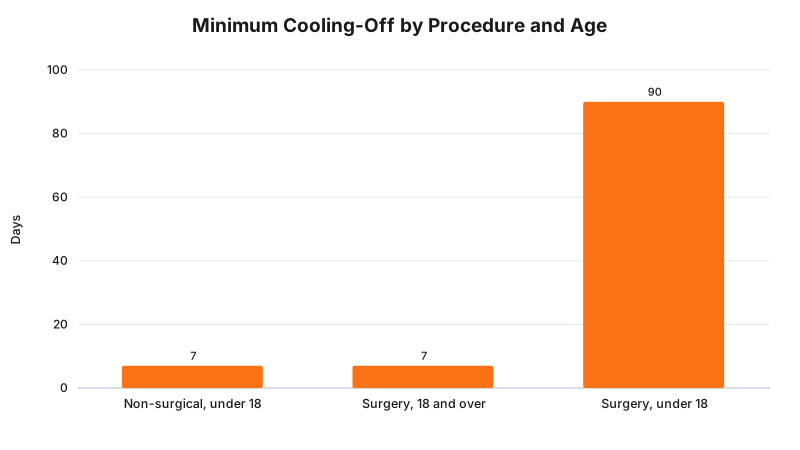
Three months has been converted to an approximate 90 days for this chart so the scale is readable. The guideline itself sets the minimum in months, not days.
Takeaway: an adult can move from consultation to injectables with no mandated wait at all, but a patient under 18 cannot, and if that same under-18 patient is instead considering surgery, the wait is roughly thirteen times longer again.
Why Surgery for Under-18 Patients Gets Extra Steps
Every cosmetic surgery patient, regardless of age, already goes through a baseline screening process. The Medical Board’s guidelines require at least two pre-operative consultations, at least one of them in person with the operating practitioner, plus a validated body dysmorphic disorder screening. If that screening flags a concern, the practitioner refers the patient to an independent psychologist, psychiatrist or GP.
For a patient under 18, that referral step is not conditional. The guidelines state that “before any cosmetic surgery, all patients under the age of 18 must be referred to, and be evaluated by, a psychologist, psychiatrist or general practitioner” who works independently of the operating practitioner, regardless of what the initial screening finds.
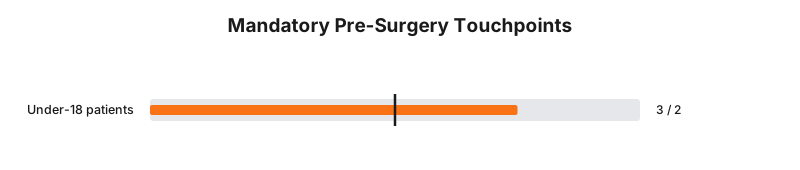
The value above counts the two baseline consultations plus the mandatory independent referral for an under-18 patient. The target marker shows the two-consultation baseline that applies to an adult patient whose screening does not flag a concern.
Takeaway: an under-18 patient cannot opt out of the independent referral by screening clear. The step is mandatory by age, not by clinical indication.
What Practitioners Must Do Before Treating a Patient Under 18
Both guidelines, the non-surgical version and the surgical version, repeat a near-identical set of extra obligations for practitioners once a patient is under 18. Beyond the cooling-off periods above, a practitioner must:
- Know and comply with any additional state or territory legislation restricting cosmetic procedures for under-18 patients in the jurisdiction where they practise
- Assess and be satisfied the patient has the capacity to consent to the procedure or surgery
- Have regard, to the extent practicable, for the views of a parent or guardian, including whether they support the procedure
- Encourage the patient to discuss their reasons for wanting the procedure with an independent practitioner during the cooling-off period: a GP for surgery, or an appropriate independent registered health practitioner for a non-surgical procedure
- Take no payment beyond the initial consultation fee until the cooling-off period has ended
National Boards go a step further on injectables specifically. The non-surgical guidelines state that “botulinum toxin and dermal fillers should not be prescribed for cosmetic purposes for persons under the age of 18,” and the Medical Board’s own guidelines carry the same restriction for medical practitioners in near-identical wording, independent of the cooling-off requirement.
Takeaway: the cooling-off period is the headline rule, but it sits inside a longer checklist that a clinic’s intake process needs to run through before a minor is ever booked in.
The Advertising Rules That Reach Your Website
The under-18 protections are not limited to what happens in a consultation room. AHPRA’s Guidelines for practitioners who advertise higher risk non-surgical cosmetic procedures, also effective from 2 September 2025, set out a separate set of rules for how a clinic markets these procedures at all:
- Images of anyone under 18 must not be used in advertising of higher-risk non-surgical cosmetic procedures
- Advertising must not be targeted or directed at people under 18, including by limiting placement in publications or media likely to have a significant under-18 audience
- Advertising of higher-risk non-surgical cosmetic procedures on social media must be identified as adult content
- Advertising must not exploit vulnerable groups by using social media algorithms, hashtags or metadata to target them
The advertising guidelines define advertising broadly enough to include “internet, including websites and social media,” and the companion non-surgical and surgery guidelines are explicit that “advertising material, including practice and practitioner websites and social media, must comply with” the advertising rules. A clinic’s own site is advertising under this framework, on the same footing as a paid Meta or Google campaign. RockingWeb can check a clinic’s website, booking pages and social accounts against this exact rule set, rather than leaving age-related exposure to guesswork.
Takeaway: the advertising rules for under-18 audiences apply to every page and post a clinic controls, not only the ones it pays to boost.
What This Means for a Clinic’s Booking Flow and Website
None of this changes what treatment a clinic can offer. It changes what a clinic’s digital front door needs to do before an enquiry from someone who might be under 18 turns into a booking.
A booking or enquiry form that captures date of birth early lets a clinic route an under-18 enquiry into the correct workflow from the first contact, rather than discovering the patient’s age at the consultation. A treatment page that states the applicable cooling-off period upfront, seven days for injectables or three months for surgery, sets an accurate expectation before the enquiry lands, which cuts down on the follow-up questions and complaints that come from a patient who assumed treatment could happen sooner. A website built for cosmetic clinics can also make sure no imagery anywhere on the site, not just in paid ads, shows anyone who appears to be under 18 in a treatment context.
Takeaway: the clinics that build the cooling-off period into their website copy and booking flow turn a compliance requirement into a clearer, calmer first conversation with every under-18 enquiry.
FAQ
What is the cooling-off period for cosmetic injectables if you are under 18 in Australia?
At least seven days between giving informed consent and having the procedure, under National Boards’ guidelines in effect since 2 September 2025. No payment other than the initial consultation fee can be taken from the patient until that period has passed.
Is the cooling-off period for cosmetic surgery different for under-18 patients?
Yes. The Medical Board of Australia’s guidelines set a minimum cooling-off period of at least three months between informed consent and surgery for a patient under 18, compared with at least seven days for an adult patient after two pre-operative consultations.
Do under-18 patients need a psychologist referral before cosmetic surgery?
Yes. Every patient under 18 must be referred to, and evaluated by, an independent psychologist, psychiatrist or general practitioner before any cosmetic surgery, regardless of what a routine screening finds. An adult patient only needs that referral if screening flags a concern.
Can a cosmetic clinic advertise to under-18 audiences in Australia?
No. Under AHPRA’s advertising guidelines, images of anyone under 18 cannot appear in advertising for higher-risk non-surgical cosmetic procedures, the advertising cannot be targeted at under-18 audiences, and any such ad on social media must be flagged as adult content. The rule covers a clinic’s own website and social accounts, not only paid campaigns.
Get Your Website and Ads Checked for AHPRA Compliance
RockingWeb reviews cosmetic clinic websites, booking flows and ad accounts against the current AHPRA and Medical Board rules, and flags every breach against the specific provision it falls under.
Sources and References
AHPRA - “Putting patients first: New guidelines for cosmetic procedures”: the 2 September 2025 effective date and the mandatory seven-day cooling-off for under-18 non-surgical procedures
AHPRA - Guidelines for registered health practitioners who perform non-surgical cosmetic procedures: the full seven-day cooling-off and under-18 prescribing provisions
AHPRA - Guidelines for practitioners who advertise higher risk non-surgical cosmetic procedures: the under-18 imagery and targeting rules, and the practice-website inclusion
Medical Board of Australia - Guidelines for registered medical practitioners who perform cosmetic surgery and procedures: the three-month cooling-off and mandatory independent referral for under-18 surgery patients
Related reading:
- Cosmetic 7-Day Cooling Off Period Advertising Rules: what the seven-day rule means for booking and urgency-based ads
- AHPRA Advertising Fines for Cosmetic Clinics: the penalty structure behind AHPRA’s advertising provisions
- Cosmetic Clinic Websites: compliant website builds for AHPRA-regulated clinics
For a website and booking flow that handle under-18 enquiries correctly from the first form field, see ClinicPipeline or talk to us about your clinic’s marketing.
Vikas Thakur
Founder of RockingWeb. 16 years of experience from working at TPG, iiNet and Monadelphous, now building websites, software and digital marketing for local businesses in Rockingham and Perth.